Storing dried chili peppers — whether ancho, chipotle, guajillo, or any other variety — becomes essential when you have more chilies than you’ll use in a short period. Drying dramatically extends a pepper’s life, but the job isn’t finished once the chilies are leathery and aromatic. Poor storage can still rob them of heat, aroma, and color over time.
Handled the right way, dried chilies can last years without significant quality loss. Below are the best practices to ensure your peppers stay as flavorful, pliable, and usable as the day they were dried.
Last update on 2026-09-03. We earn a commission if you make a purchase, at no additional cost to you.
Store in an airtight container
You’ll often hear the same advice for spices like cumin or basil, and it absolutely applies to dried chilies: oxygen is the enemy of flavor. An airtight container keeps volatile oils — the compounds that give chilies their aroma, smokiness, and heat — from slowly escaping.
Why it matters:
- Flavor preservation: Chilies stored in porous containers lose heat and complexity quickly. A dried ancho left exposed may taste flat, while a chipotle may lose its signature smoky depth.
- Texture retention: Quality dried peppers should be leathery and flexible. Exposure to circulating air makes them brittle and difficult (sometimes impossible) to rehydrate fully.
- Protection from moisture: Even a slight humidity leak-in can cause partial rehydration, making peppers susceptible to mold.
Good container options:
- Mason jars with tight-fitting lids
- Heavy-duty resealable freezer bags
- Vacuum-sealed bags (excellent for long-term storage)
- Opaque food-safe canisters (ideal when light control matters)
Whichever you choose, ensure the closure is truly airtight.
Keep dried chilies away from light
Light — especially sunlight — can degrade dried peppers quickly. Not only does it bleach vibrant peppers (reds become rusty brown, browns turn gray), but it also damages the flavor compounds responsible for heat and aroma.
Best practices:
- Choose opaque containers if you plan on storing your chilies on kitchen islands or other locations near direct light.
- If using clear glass jars (they look great), store them in a dark cabinet, pantry, or drawer.
- Avoid open countertop storage, even if the chilies look attractive on display.
If you’ve ever bought a bag of dried guajillo peppers, stored them on a sunny counter, and returned to find them dull and muted, light exposure is the reason.
Store in cool temperatures
Heat, like airflow and light, accelerates flavor loss in dried peppers by breaking down the oils that carry heat and aroma.
Keep them away from:
- Cabinets directly above the stove
- Warm drawers near the oven
- Countertops that get afternoon sunlight
- Areas near heating vents
A temperature-stable pantry or interior cabinet is ideal.
Freeze them for maximum longevity
Freezing dried chilies is one of the best ways to preserve their quality long term — especially if you buy or grow peppers in bulk.
Why freezing is effective:
- Cold temperatures slow oxidation nearly to a halt.
- Freezers block light and airflow when peppers are bagged correctly.
- Zero humidity fluctuations, preventing partial rehydration.
- Pest-proof storage (pantry moths and bugs can’t reach them).
How to freeze dried chilies:
- Remove excess air from a freezer-safe zip bag or vacuum-seal them.
- Label with pepper type (ancho, chipotle, ghost pepper, etc.). Don’t overlook this step, particularly if you aren’t familiar with dried chili shapes. There can be drastic differences in flavor and spiciness by choosing the wrong zip bag.
- Store flat for easy stacking.
Frozen dried chilies can last indefinitely with minimal flavor loss.
Rehydrate and then refrigerate
Some recipes — like homemade enchilada sauce, mole, or certain hot sauces — require you to rehydrate chili peppers. This can take 20–40 minutes, depending on pepper size and thickness.
Your best approach:
- Rehydrate your chilies ahead of time, then refrigerate them.
- Rehydrated peppers will keep 3–5 days in a sealed container in the fridge.
- Store them submerged in a little soaking liquid for best texture.
Learn more about rehydrating chilies (including a video showing the best practice) on our post: How To Rehydrate Dried Peppers for the Best Flavor.
Consider vacuum-sealing for bulk storage
If you harvest a large crop of peppers or buy dried chilies in bulk, vacuum-sealing is a game changer.
Benefits:
- Removes nearly all oxygen.
- Reduces moisture infiltration.
- Compresses peppers into space-saving packs.
- Extends freezer life dramatically.
Important: Label and date your chilies
Flavor loss is gradual, so tracking storage dates helps you use older peppers first.
Label with:
- Pepper variety
- Storage date
- Heat level (useful if you dry multiple pepper types)
- Any special notes (e.g., “toasted before drying,” “from garden harvest”)
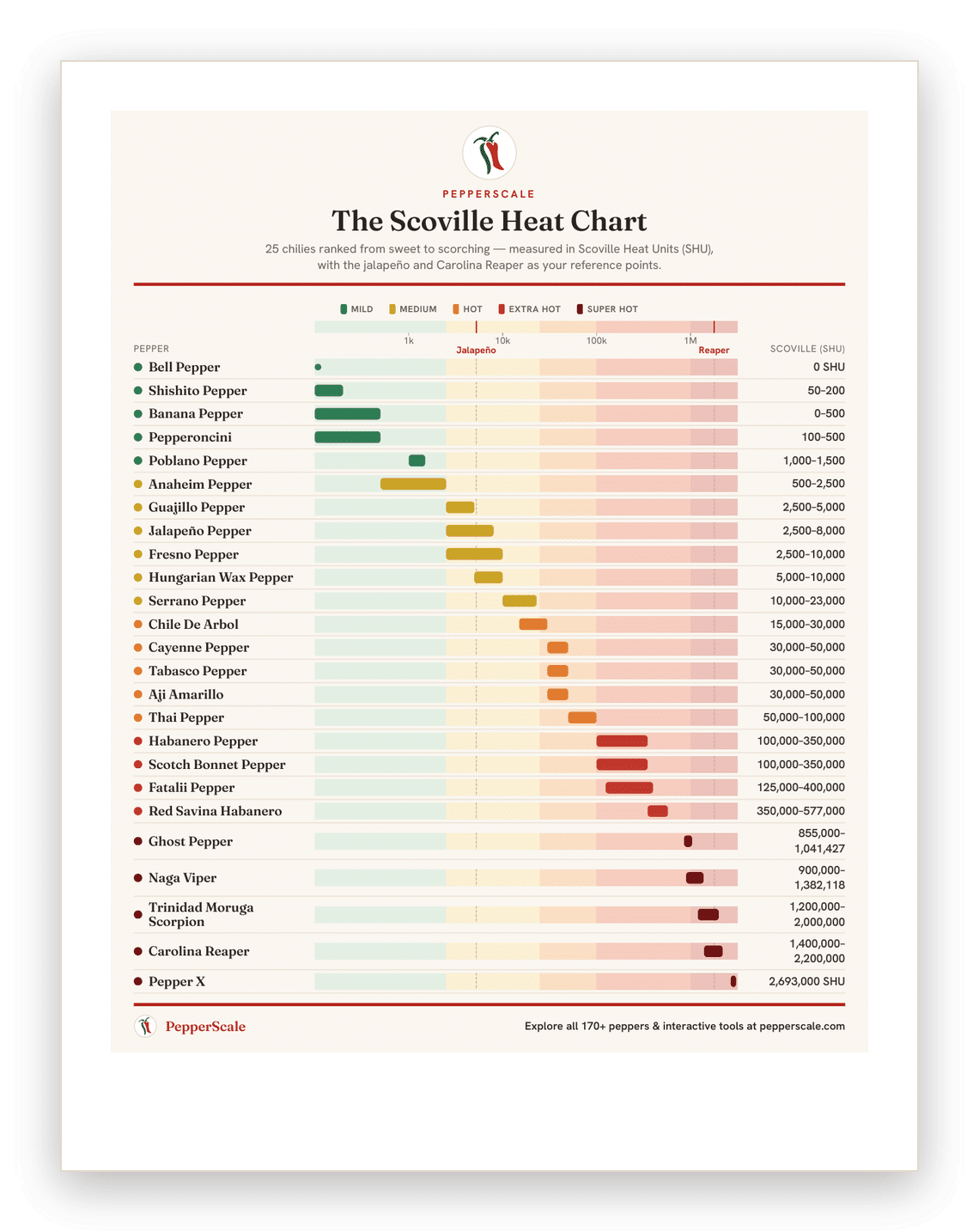
If you’re unsure about a pepper’s heat level or origins, PepperScale’s individual pepper profiles make a helpful reference. Discover them all in our hot pepper list of 170+ chilies.
Optional step: toast before storing
Lightly toasting dried chilies before storage (especially if you dehydrated them at low heat) improves both flavor and shelf stability.
Why toast?
- Removes residual surface moisture.
- Deepens aroma (especially in peppers like ancho and pasilla).
- Helps drive off any lingering raw or grassy notes.
Cool completely before storing to avoid trapping steam in the container.
When to toss dried chilies
Even well-stored peppers eventually degrade. Toss them if you see:
- Mold
- A dusty, powdery surface (spoilage, not to be confused with natural wrinkling)
- Off smells (musty, sour, or chemical)
- Brittle peppers that no longer soften when soaked
But (and this is an important but): Chilies that simply lose color or aroma aren’t unsafe — just weak in flavor.
Quick reference: Storing dried chili peppers
| Storage Method | Best For | Pros | Cons | Expected Shelf Life |
|---|---|---|---|---|
| Airtight Container (Pantry) | Everyday use; small batches | Easy access, protects flavor and texture, low cost | Vulnerable to heat/light if stored poorly | 6–12 months at best quality |
| Opaque or Dark Storage (Pantry or Cabinet) | Bright kitchens; colorful peppers | Prevents color fade and flavor loss; ideal for ancho, guajillo, chipotle | Must avoid warm areas (near stove/oven) | 1+ years at good quality |
| Freezer Storage (Freezer Bag or Vacuum-Sealed) | Long-term preservation; bulk storage | Maximizes flavor retention, blocks moisture/air/light, pest-proof | Requires freezer space; vacuum sealer recommended for best results | Indefinite (best quality for 2–4 years) |
| Vacuum-Sealed (Pantry or Freezer) | Large harvests; high-value chilies | Removes nearly all oxygen; excellent for long-term storage; compact | Requires a vacuum sealer | 2–5 years (pantry), indefinite (freezer) |
| Rehydrated + Refrigerated | Sauce prep; enchiladas; mole | Convenience—chilies ready to blend; reduces day-of prep | Short shelf life; must remain submerged or tightly sealed | 3–5 days |
| Clear Jar on Countertop (Not Ideal) | Aesthetic display only | Looks great visually | Rapid color fade, faster loss of heat & flavor; exposure to air and light | Weeks before noticeable decline |
Related posts
- Do Peppers Need To Be Refrigerated? Or can they be kept at room temperature?
- How Long Do Dried Peppers Last? What’s the shelf life that you can expect?
- Does Salsa Go Bad? What expectations should you have with an unopened jar or when refrigerated?
Is it ok to use an oxygen absorber in the mason jar with the dried chilis? I know they are not dried til they are brittle, there is a little moisture in there, so I am a little concerned about botulism. Thanks for any info, I have not really been able to find anything on that particular storage method.
How long can you keep a Chipotle pepper in the fridge after it’s been rehydrated?