The Anaheim pepper is one of the mildest true chilies you can cook with, and that mildness is exactly why it’s worth choosing a substitute carefully. Reach for the wrong one and you can lose the crisp, faintly sweet character that makes the Anaheim so useful, not just the heat. So before grabbing whatever’s on hand, decide what you actually want: the same gentle green flavor at a different heat level, or simply more or less fire.
The Anaheim sits in what we call the Green & Grassy flavor family: fresh, mild, a little sweet by absence of much else competing with it. Stay inside that family and a swap changes almost nothing but the heat. Step outside it and you change the flavor too, which is sometimes exactly the point.

Last update on 2026-10-15. We earn a commission if you make a purchase, at no additional cost to you.
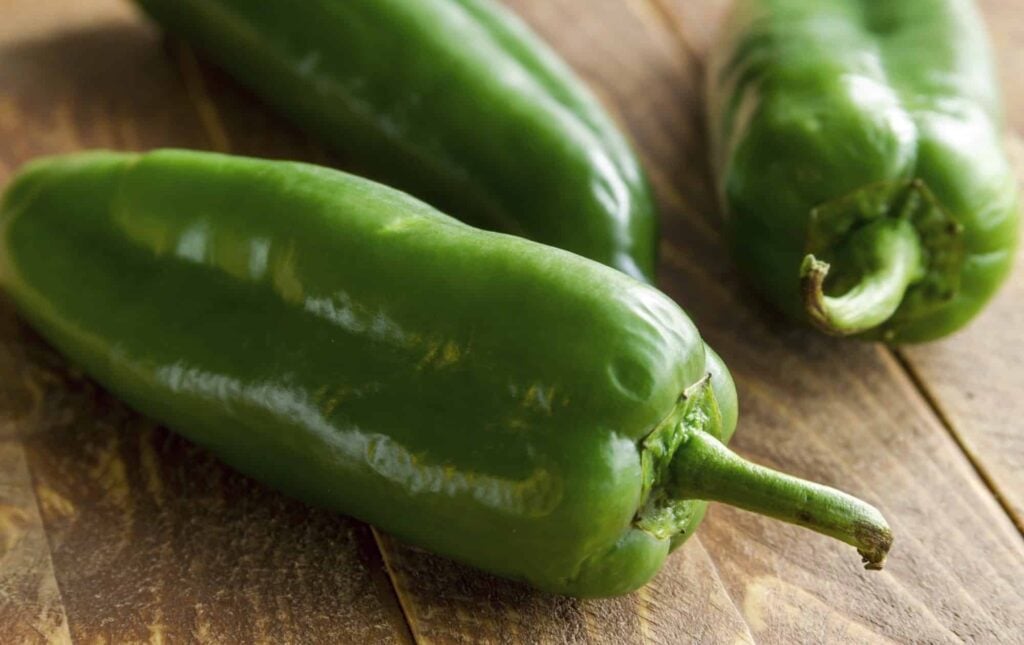
The best swaps: peppers in the Anaheim’s flavor family
These are all Green & Grassy chilies, so every one of them keeps the Anaheim’s easygoing character. They’re ordered from mildest to hottest, relative to the Anaheim’s own 500 to 2,500 Scoville heat units, so you can land exactly where you want.
Bell pepper: zero heat
Choosing the bell pepper is like switching the heat off entirely, and it’s a common Anaheim stand-in for exactly that reason. Bell peppers are everywhere, so there’s no hunting involved, and if you’re willing to trade away the one thing that makes a chili a chili, it works fine. It’s also an excellent stuffing pepper in its own right.
Banana pepper and pepperoncini: barely a whisper
A step up from a bell pepper but still well under 500 SHU, the banana pepper and pepperoncini keep that same green profile in a thinner-walled, tangier pod. They’re better suited to slicing into rings for a sandwich or salad than to stuffing.
Cubanelle: a close, gentle cousin
The cubanelle is an Italian frying pepper that runs mild too, generally under 1,000 SHU, with a sweet, thin-walled bite. It’s an easy visual match for an Anaheim and a natural pick for sautéing or frying whole.
Poblano: your closest match
The poblano looks more like a bell pepper than the very chili-shaped Anaheim, but underneath the skin the two have far more in common than you’d guess. Both carry just a whisper of heat, and the poblano’s 1,000 to 1,500 SHU range sits almost inside the Anaheim’s own, close enough that most cooks won’t notice the difference. The poblano leans a touch more earthy where the Anaheim is crisper, but the gap rarely matters in a finished dish. If you were eyeing a stuffed Anaheim recipe, the poblano is arguably the better vessel: its larger cavity holds more filling. (Here’s the full poblano vs. Anaheim comparison.)
Jalapeño: a familiar step up
Want more heat without leaving the flavor family? The jalapeño is the natural next step, 2,500 to 8,000 SHU, roughly one to three times hotter than an Anaheim and a pepper nearly every reader already has a feel for. It’s smaller than an Anaheim, so it won’t stuff the same way, but for salsas, sautés, or anywhere you want a bit more bite in that same green register, it’s an easy reach.
Hungarian wax: the biggest jump
The Hungarian wax pepper jumps well past the Anaheim, 5,000 to 10,000 SHU, roughly two to twenty times hotter. Think somewhere around a hot jalapeño up through a milder serrano and you’re in the right neighborhood. It also brings a tangier finish than the Anaheim’s cleaner crispness, a real flavor shift worth knowing about before you swap it in. Like the others here, it stuffs well too.
One to skip: Chile California
It’s tempting to reach for chile California, the dried, ripened form of the Anaheim, since it’s technically the same pepper. But drying transforms it completely: gone is the crisp, grassy snap, replaced by a soft, raisin-sweet, earthy depth that reads nothing like a fresh chili. Use it in a dish built for fresh Anaheim and you’ll lose exactly the texture and brightness the recipe was counting on. Chile California is excellent for what it actually is, the backbone of a smooth red enchilada or adobo sauce, but it’s a different ingredient with a different job, not a fresh Anaheim substitute.
Heat without the extra bulk: pantry options
Sometimes the Anaheim was only there for a little background warmth, or you’re simply out of fresh chilies. These step outside the green family, so they change the flavor, but they’ll bring the fire:
- Cayenne pepper, fresh or as a powder, brings clean, sharp heat, a good deal hotter than an Anaheim, so start with a small amount.
- Crushed red pepper flakes are the pantry rescue. A pinch stands in for the Anaheim’s warmth; taste and build from there. Our pepper conversion tool help translate a fresh pepper’s kick into the right amount of flakes or powder.
Match the substitute to the dish
- Stuffing: poblano (best cavity), bell pepper (zero heat), or Hungarian wax (more kick), all hold a filling well.
- Salsas, sautés, and sauces: jalapeño for more heat, cubanelle or banana pepper for less.
- Slicing for sandwiches or salads: banana pepper or pepperoncini, both thin-walled and tangy.
- You just need a little warmth and nothing else on hand: cayenne or red pepper flakes.
How much should you use?
Heat varies pod to pod, so treat every ratio as a starting point:
- Milder swaps (bell pepper, banana pepper, pepperoncini, cubanelle): use a bit more for the same body; add a pinch of cayenne if you miss the Anaheim’s gentle warmth.
- Poblano: a near one-for-one swap; no adjustment needed for most recipes.
- Hotter swaps (jalapeño, Hungarian wax): start with about half to two-thirds as much as the Anaheim called for, then taste and adjust.
- Powders and flakes: begin with a small pinch in place of one pepper, taste, and build. The dish heat calculator takes the guesswork out.
Pulling it all together
The Anaheim is a mild, friendly chili, and most good substitutes for it are other mild, friendly chilies. Stay in the green family, from a bell pepper’s zero heat up through a Hungarian wax’s real kick, and your dish keeps its character while only the fire changes. Reach outside that family only when heat is genuinely all you’re after.
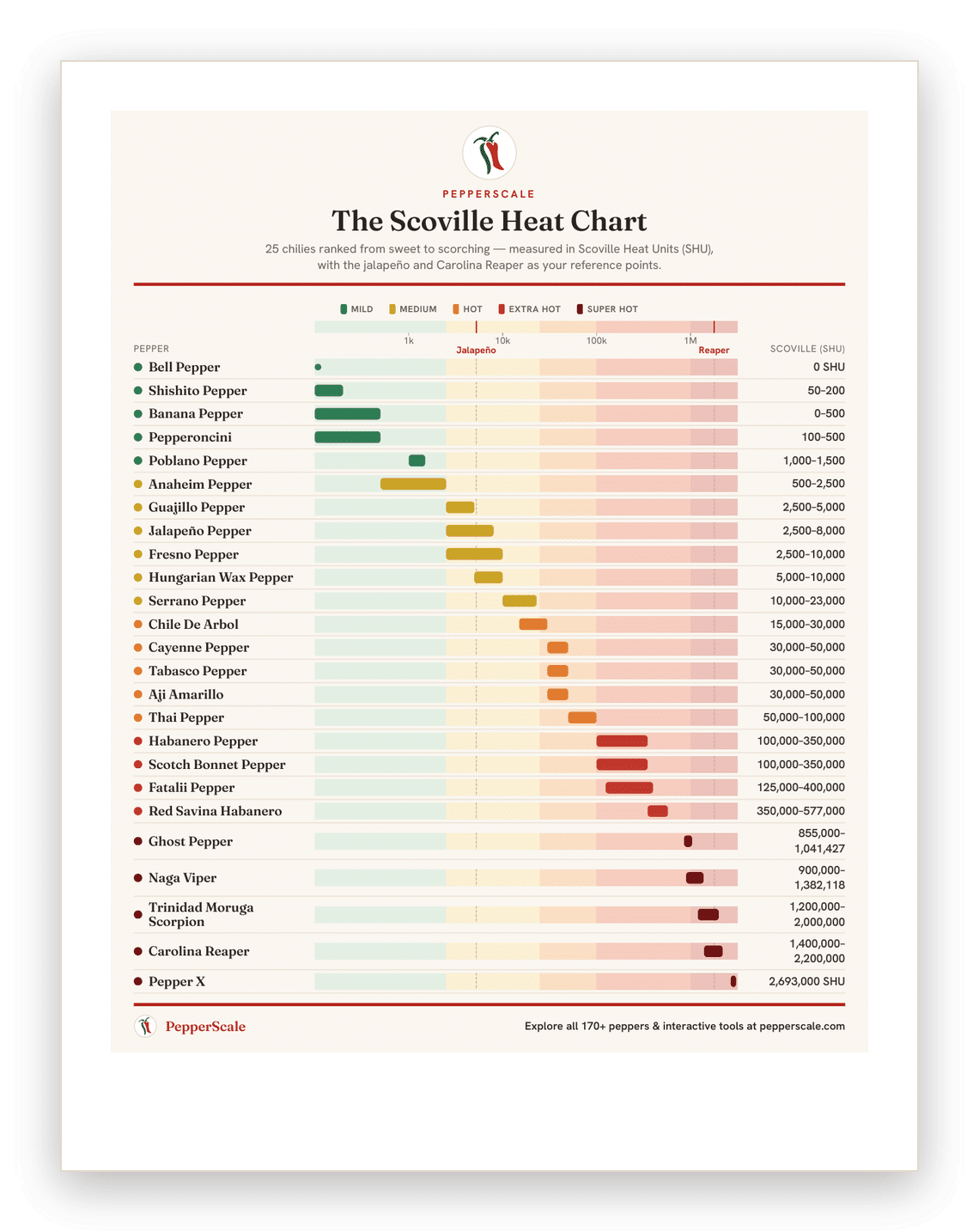
Get the free PepperScale Scoville Heat Chart
A printable, at-a-glance ranking of 25 chilies from sweet to scorching — with the jalapeño and Carolina Reaper as your reference points. Join the newsletter and we’ll send it straight to your inbox.
No spam — just Wicked Wednesday recipes and occasional extra dashes of chili pepper inspiration. Unsubscribe anytime.
Related reading
- The Hot Pepper List: If none of these are quite right, we profile over 150 chilies, searchable by heat, flavor, origin, and more.
- Anaheim Planting Guide: Grow your own if you have a green thumb, and never run short again.
- Our Hot Sauce Rankings: Explore 100-plus hot sauce reviews, searchable by the chilies used in each one.