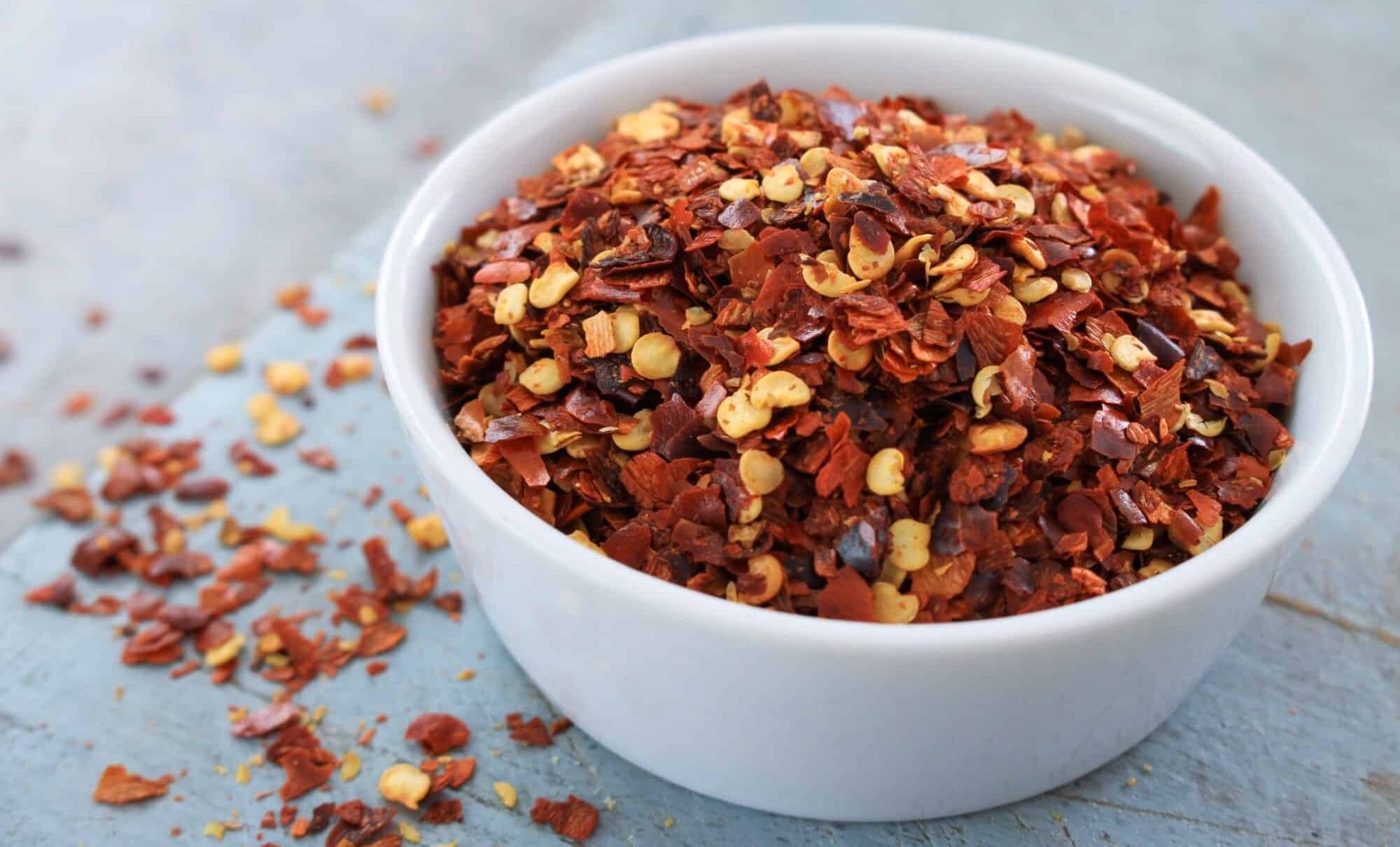
Chili flakes, a.k.a. red pepper flakes or crushed red pepper, are a kitchen spice rack staple. But just like any spice, you can run out at the most in-opportune time. Where do you turn when you need a chili flakes substitute in a pinch? We lay out the best options below. You’re bound to have one of these alternatives sitting around the cupboard.
Note: for all of the options, a 1:1 amount substitution is not recommended. Opt for under-spicing, and then spice to taste.


Last update on 2026-10-16. We earn a commission if you make a purchase, at no additional cost to you.

Your best option: Cayenne powder
Cayenne powder is a very common spice rack spice, so it’s one of the easiest of the options to find among those listed here. And it’ll heat up a meal just as well as red pepper flakes. But there are a few considerations when using cayenne as a chili flakes alternative:
- Cayenne will be much hotter than standard red chili flakes. Those flakes are a mix of various chilies. Yes, cayenne is likely in there, but it’s not typically the only pepper. So the heat of crushed red pepper won’t be near the 30,000 to 50,000 Scoville heat units you get with cayenne powder. It’s especially important here not to use a 1:1 ratio during the substitution. You can easily overheat your dish due to the density differences between flakes and powder.
- Powders react differently with foods than flakes. Flakes tend to sit atop food, while powders permeate a dish. So if you do over-spice with cayenne powder, it’s a lot harder to remove. Flakes can often be manually removed to lessen the heat.
Other 100% chili powders will work as well, so if you have chipotle powder or another sitting in that spice rack, they are viable alternatives. Cayenne is your best option, though, as its flavor is rather neutral (like crushed red pepper) compared to other chilies. Others will carry unique flavor nuances, along with the heat. For instance, chipotle powder will be both smoky and earthy in flavor.
The better (but not as common) alternative: Make your own chili flakes
Do you happen to have dried chilies around in whole pod form? Pull out that mortar and pestle and crush them down to flakes. Really any dried hot pepper will do, but the medium-heat of chile de àrbol is a very good match for the heat in your typical jar of red pepper flakes.
Two flake options worth knowing about
If your spice aisle is a decent one, there are two products already sold as flakes. That gets around the problem cayenne powder creates — you keep the texture, and you keep the option of picking some off if you overdo it. Neither is a straight swap, but both are closer in form than any powder here.
- Gochugaru: Korean chili flakes, seedless and a bright, even red. Our guide puts them at 1,500 to 10,000 SHU, so they are milder than your usual jar and you will want more. Here is how the two compare.
- Aleppo pepper: Around 10,000 SHU, so again on the mild side, and it carries a tangy, almost fruity edge that plain flakes do not have. Good where that is welcome — eggs, roasted vegetables, flatbread.
In a pinch: Chili powder seasoning
You’re likely aware that chili pepper seasoning has more than chilies in it. Garlic powder, onion powder, and cumin are often prevalent, among other spices. So only use this alternative if the other common spices will also work with the dish you’re making. To get an idea of what to expect in terms of spices, see our homemade chili powder seasoning recipe.
Other options
Chili paste
Heat levels can vary wildly with chili paste, so read the label carefully. It may be a mild chili base, and in that case additional paste will need to be used. There are also some wildly hot chili pastes out there that use Thai chilies which are easily double the heat of cayenne.
There’s also the consistency to consider. You are adding a paste (which contains liquid) which can alter the overall recipe. Because of that, this is a better option for spicy soups, stews, and sauces where the paste can dilute.
Hot sauce (recommended Sriracha)
Like chili paste, there’s a wide span of heat in hot sauces, so proceed carefully. A few drops is often enough to supply the same level of heat as a teaspoon of red pepper flakes. There’s also a wide variety of flavors here, too, from tangy Cajun hot sauces to tropical hot sauces that use fruit. These can quickly alter the overall flavor of the dish. The best option is to stick with a basic hot sauce here. In terms of similar heat, we recommend a few dashes of Sriracha. It’s a tasty basic hot sauce that won’t greatly impact your dish’s overall flavor.
One to skip: paprika
It looks exactly right, and that is the trap. Sweet paprika is ground from mild peppers, so you get the red color and a little earthy sweetness with almost none of the heat. Add enough to actually feel it and the dish just tastes of paprika. Hot paprika will do some work, but read the jar first, because most of what sits on shelves is the sweet kind. And if paprika is the thing you have run out of rather than the thing you are reaching for, that is a separate guide.
Match the substitute to the dish
- Soups, stews, and sauces: Chili paste is at its best here. The liquid it brings just disappears. Cayenne works fine too.
- Pizza, pasta, finishing at the table: You want real flakes. Crush your own, or use gochugaru or Aleppo.
- Rubs and anything seasoned before it cooks: Cayenne powder. Even coverage is the whole point.
- Anything already saucy: A few dashes of hot sauce vanish into it without changing the texture.
- Chili, tacos, Tex-Mex: Chili powder seasoning fits, because the garlic and cumin in it were headed there anyway.
How much should you use?
- Cayenne powder: Start at about a third of the flakes called for. It is hotter per spoon and it is denser.
- Your own crushed flakes: Closest to 1:1 of anything here. Still taste it, since it depends what pod you crushed.
- Gochugaru or Aleppo: Both milder, so you will be adding rather than holding back. Start at 1:1 and go up.
- Chili powder seasoning: Start around half, and remember you are adding garlic, onion, and cumin along with the heat.
- Chili paste: Depends entirely on the jar. Read the label and start small.
- Hot sauce: A few drops is often enough to match a teaspoon of flakes.
Under-spice first, every time. Adding more is easy. If you go too far the other way, here is how to pull a dish back.
Pulling it all together
Cayenne is the one you will actually have in the cupboard, and it does the job as long as you go light. If there are whole dried pods around, crushing your own gets you closest of all. Everything else works, but each one brings something extra with it — garlic and cumin from chili powder, liquid from paste, vinegar from hot sauce. Pick the one whose extras suit what you are cooking, start under, and taste as you go.
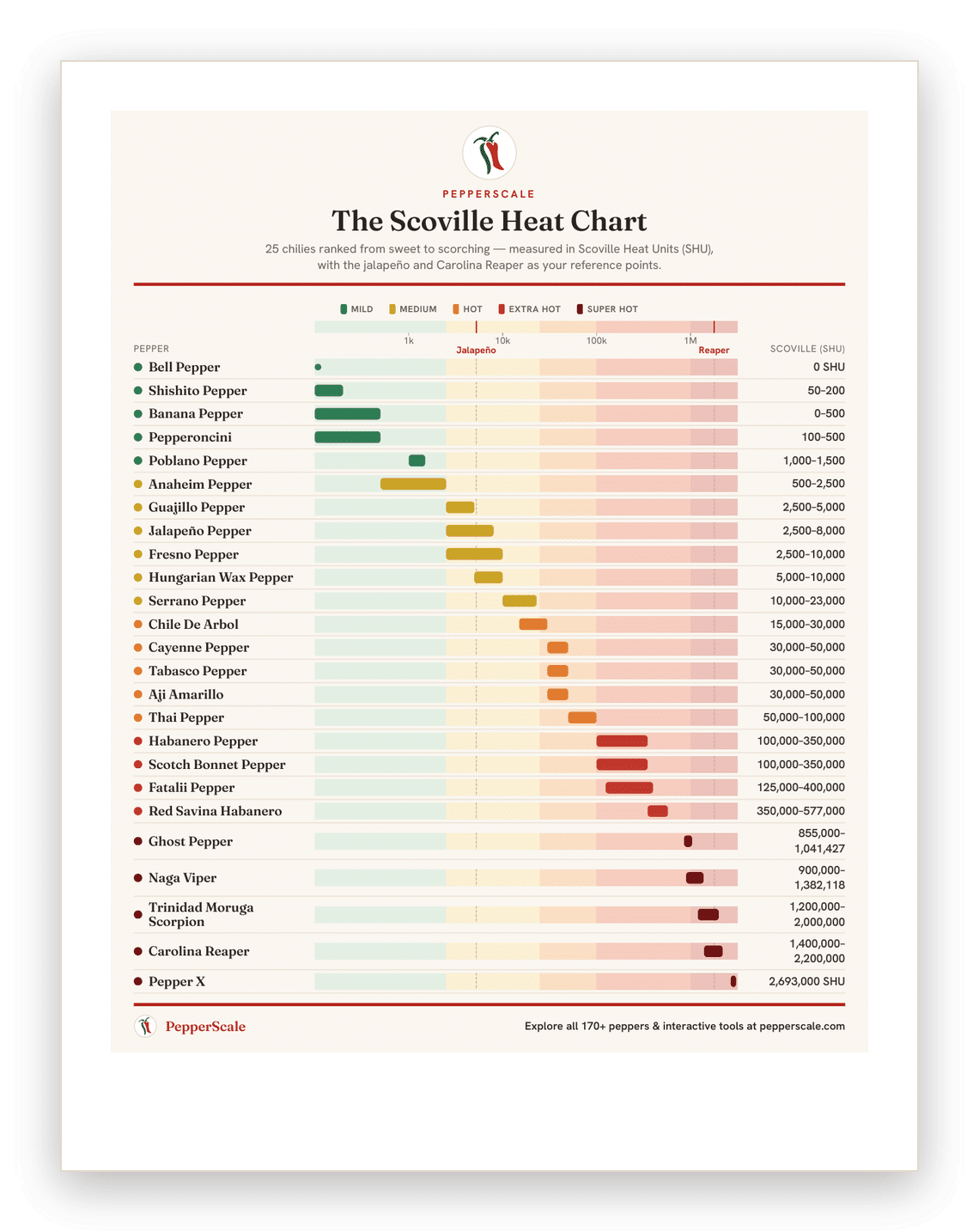
Get the free PepperScale Scoville Heat Chart
A printable, at-a-glance ranking of 25 chilies from sweet to scorching — with the jalapeño and Carolina Reaper as your reference points. Join the newsletter and we’ll send it straight to your inbox.
No spam — just Wicked Wednesday recipes and occasional extra dashes of chili pepper inspiration. Unsubscribe anytime.
Related reading
- Does Crushed Red Pepper Go Bad? What’s the shelf life of chili flakes? How long will they keep?
- Too Much Crushed Red Pepper? How To Fix The Dish: What should you do if you over-spice?
- Seven Tasty Red Pepper Flakes Uses: Enjoy some of these fun ways to play with CRP in the kitchen!