Chipotle powder answers a question that comes up constantly in home cooking: how do you get real smoke into a dish that never goes near a fire? It is ground chipotle pepper, which is a jalapeño left on the plant until it turns red and then dried over smoke. Everything the spice does traces back to that.
Most jars get bought for a rub and then sit. That is the waste, because chipotle powder is a lot more flexible than a barbecue spice. Here is what to do with the rest of the jar, grouped by what you are actually making.

Last update on 2026-10-12. We earn a commission if you make a purchase, at no additional cost to you.


What chipotle powder brings to a dish
Three things, in roughly this order: smoke, earth, then heat. The smoke is the loudest part, and it is real smoke rather than a flavoring added afterward. Under it sits a dried, raisiny depth, plus a small amount of sweetness that mostly shows up in baking and in anything built on tomato.
The heat is milder than the color suggests. Chipotle is a dried jalapeño, so it carries jalapeño heat: 2,500 to 8,000 Scoville heat units. It often reads hotter than that in a finished dish because the smoke arrives first and stays on the palate as the heat hits. Start with less than you think you need.
Not every jar tastes the same, and the reason is which chipotle it came from. Morita is the smaller, deep red one, and it reads sweeter. Meco is grey-brown and drier, with more of a dried-fruit note behind the smoke. Labels rarely tell you which you are getting, so if a new jar tastes different from the last one, that is usually why. Though, in the United States, chipotle morita is what’s typically the pepper used in commercial powders. You may find ground meco in speciality aisles, but it’s much less common.
The last thing worth knowing is that a powder behaves differently from a whole dried pod. Ground chili pepper disperses on contact and gives up its flavor immediately, so where you add it changes the result. Stirred into oil or fat early, it spreads through the whole dish. Dusted on at the end, it stays a distinct hit on the surface. Both are useful, but they are not interchangeable, which is the short version of grinding vs. chopping dried chilies.
Build it into rubs and blends
This is the category chipotle powder was practically made for, and it is where a new jar earns its keep fastest.
Dry rubs for grilled and smoked meat
Chipotle puts a smoked note on meat that a grill alone will not manage on a thick cut, which is why it works so well on pork shoulder, brisket, chicken thighs, and ribs. Pair it with brown sugar and salt and you have most of a rub already. Go easy at first. In a rub the powder is undiluted, and it is easy to end up with something that tastes only of smoke.
Homemade taco seasoning
Standard taco seasoning is chili powder, cumin, garlic, onion, and oregano. Swapping some of the chili powder for chipotle powder turns the whole blend smoky, and it makes it hotter too, since chipotle is pure pepper rather than a blend. Replace about a third of the chili powder and adjust from there. Our taco seasoning substitute guide has the rest of the ratios.
Your own chili powder blend
Chili powder is a blend, not a single spice, so there is nothing stopping you from building one. Ancho for body and sweetness as the base, a smaller share of chipotle for smoke and heat, then cumin, garlic powder, and oregano. It is the easiest way to control how hot the finished pot gets, and it keeps as long as the individual spices do.
Cook it into sauces and pots
Chipotle is at its best in something wet and slow. It needs a little time and a little fat to spread out, and the smoke gets rounder the longer it sits.
Barbecue sauce
Smoke is the point of most barbecue sauces, and chipotle powder gets you there without liquid smoke. Add it early, with the tomato and the sugar, so it disperses instead of sitting on top. Half a teaspoon in a small batch is enough to notice.
Red enchilada sauce
A red enchilada sauce built on ancho or guajillo can come out flat. A small amount of chipotle powder fixes that, adding smoke and a bit of heat without changing the color much. The same move works on any tomato-and-chile braise.
Chili, beans, and long braises
Chili powder is the default here, but chipotle can take over part of the job, and the smoke reads as though the pot cooked longer than it did. It does the same for black beans, refried beans, and pot roast. Add it with the other dry spices rather than at the end.
Pan sauces and gravy
Chipotle powder whisked into a roux or a pan sauce gives it a spine. Our chipotle chicken gravy is the version to try first.
Stir it into something cold and creamy
Fat softens chipotle without muting the smoke, which makes dairy and mayonnaise the easiest places to use it. Nothing here needs cooking, and all of it keeps for days.
Chipotle mayo
The highest-return use on this list. A quarter teaspoon of chipotle powder per half cup of mayonnaise, plus a squeeze of lime, and you have the sandwich spread, the fry dip, the burger sauce, and the base for a slaw dressing. Give it twenty minutes before you judge it, because it tastes different once the powder has had time to sit.
Sour cream, crema, and yogurt
Same idea, thinner result. Chipotle crema goes on tacos, roasted vegetables, baked potatoes, and grain bowls. Thin it with lime juice or a little water until it pours off the spoon.
Vinaigrettes and slaw dressings
A pinch in a vinaigrette gives it smoke where you would otherwise reach for bacon. It works best on salads with corn, black beans, or grilled vegetables in them.
Use it in sweet things
Chipotle and chocolate is not a novelty pairing. The smoke sits behind the cocoa, and the heat shows up late enough to read as warmth rather than spice. Aztec hot chocolate is the simplest way in, and chipotle shortbread shows it holds up in baking. It is also worth a pinch in caramel sauce, on a chocolate tart, or in anything where brown sugar and butter are doing the work.
Just dust it on top
Everything above cooks the powder into something else. This is the other half of the jar’s life: no recipe, no planning, just a dusting at the end.
- Fried eggs, scrambled eggs, and deviled eggs.
- Roasted sweet potato, cauliflower, or winter squash, tossed in oil first so it sticks.
- Grilled corn, with lime and either butter or crumbled cheese.
- Mac and cheese, stirred in or dusted over the top before it goes under the broiler.
- Guacamole and avocado toast.
- Black beans and refried beans, straight out of the pot.
- Popcorn, while the butter is still wet.
- The rim of a michelada or a margarita, cut with an equal amount of salt.
- Sliced mango, pineapple, or watermelon, with lime and salt.
How much to use, and how to keep it
Start smaller than feels right. A quarter teaspoon will announce itself in a dish for four, and half a teaspoon is already assertive. The smoke also builds as a dish sits, so something that tasted balanced coming out of the pot can be too much the next day.
Do not swap it for chili powder one for one. Chili powder is a blend with cumin, garlic, and oregano already in it, so a straight substitution gives you something hotter, smokier, and short on everything else. Replace part of it and make up the difference with the individual spices.
Powder is not interchangeable with chipotles in adobo either. The canned version brings vinegar, tomato, and moisture along with the smoke, so it changes the texture of a sauce as much as the flavor. Reach for the powder when you want the flavor and nothing else.
Ground chili pepper fades. Keep the jar sealed, out of the light, and away from the stove, and expect the smoke to soften over the course of a year. If a jar smells faint, use more of it rather than assuming the dish needs something else. Buying whole chipotles and grinding them as you go keeps things sharper, at the cost of the convenience.
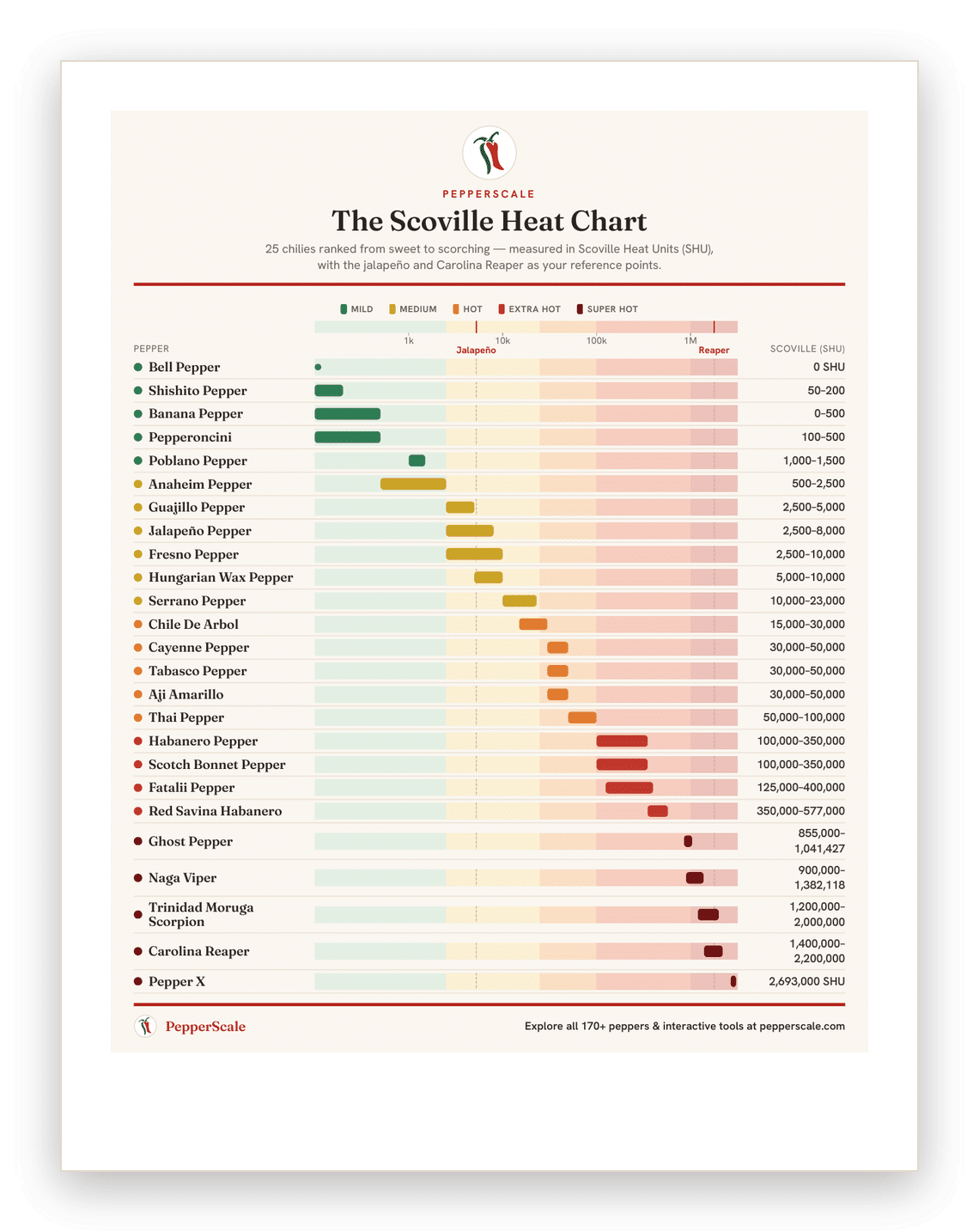
Get the free PepperScale Scoville Heat Chart
A printable, at-a-glance ranking of 25 chilies from sweet to scorching — with the jalapeño and Carolina Reaper as your reference points. Join the newsletter and we’ll send it straight to your inbox.
No spam — just Wicked Wednesday recipes and occasional extra dashes of chili pepper inspiration. Unsubscribe anytime.
Related Reading
- What’s A Good Chipotle Powder Substitute? Where to turn when the jar is empty.
- Chipotle Powder Vs. Smoked Paprika: Two smoky spices, and when each one is the right call.
- The Hot Pepper List: Every chili we cover, searchable by heat and flavor.