The habanero and the ghost pepper are two of the best-known hot peppers around, and they’re closer relatives than their heat suggests. Both are Capsicum chinense, both taste sweet and fruity, and both have a place in the record books. The difference is how much fire comes with the fruit, and it’s a lot.
| Ghost | Habanero | |
|---|---|---|
| Scoville range | 855,000–1,041,427 | 100,000–350,000 |
| Median SHU | 948,214 | 225,000 |
| Vs. jalapeño | 181× a jalapeño | 43× a jalapeño |
| Aroma family | Fruity & Tropical | Fruity & Tropical |
| Origin | India | South America |
| Uses | Culinary | Culinary |
| Loudest notes | Fruity, Sweet, Earthy | Fruity, Sweet, Smoky |
Which is hotter, the ghost pepper or the habanero?
The ghost pepper, by a wide margin. The habanero runs 100,000 to 350,000 Scoville heat units. The ghost pepper starts at 855,000 and tops out at 1,041,427 SHU. Compare the middle of each range, 225,000 against about 948,000, and the ghost pepper is a little over four times hotter.
At the edges, the gap never closes. Put the hottest habanero against the mildest ghost pepper and the ghost is still about two and a half times hotter. Put the mildest habanero against the hottest ghost and it’s more than ten times.
Want a more familiar yardstick? At the median, a habanero is about 43 times hotter than a jalapeño, and a ghost pepper is about 180 times hotter. So if the habanero is already your limit, the ghost pepper is a different league.
Is the ghost pepper still the hottest pepper in the world?
Not anymore. Guinness World Records named it the world’s hottest chili in 2007, after New Mexico State University measured it at 1,001,304 SHU. It took the title from the Red Savina, a habanero that had held it since 1994.
But its reign was short. The title changed hands three times in 2011, the Carolina Reaper took it in 2013, and the current holder is Pepper X, certified in 2023 at 2,693,000 SHU. That’s more than twice the ghost pepper’s top figure. Our list of the hottest peppers in the world keeps the standings up to date.
The ghost pepper has a botanical twist, too. It’s classed as a chinense like the habanero, but when Paul Bosland and Jit Baral ran its genetics, they found Capsicum frutescens markers alongside the chinense ones. Their 2007 paper in HortScience concluded it’s a natural hybrid of the two species, from northeast India.
How does each taste?
Closer than you’d expect from the heat gap. Both belong to our Fruity & Tropical flavor group, so they differ in degree, not character. The habanero is bright and tropical: sweet and fruity, with a touch of floral and a light smoky edge.
The ghost pepper has the same sweet fruitiness with an earthier undertone, and our ghost pepper profile notes a light smokiness as well. But the bigger difference is timing. A ghost pepper’s heat is delayed. You taste the fruit for a few seconds, then the heat builds, and for some people it lasts 15 to 30 minutes.
In a finished dish, that heat changes the math. You’ll use far less ghost pepper than habanero for the same burn, so there’s usually more habanero flavor to go around.

What does each look like?
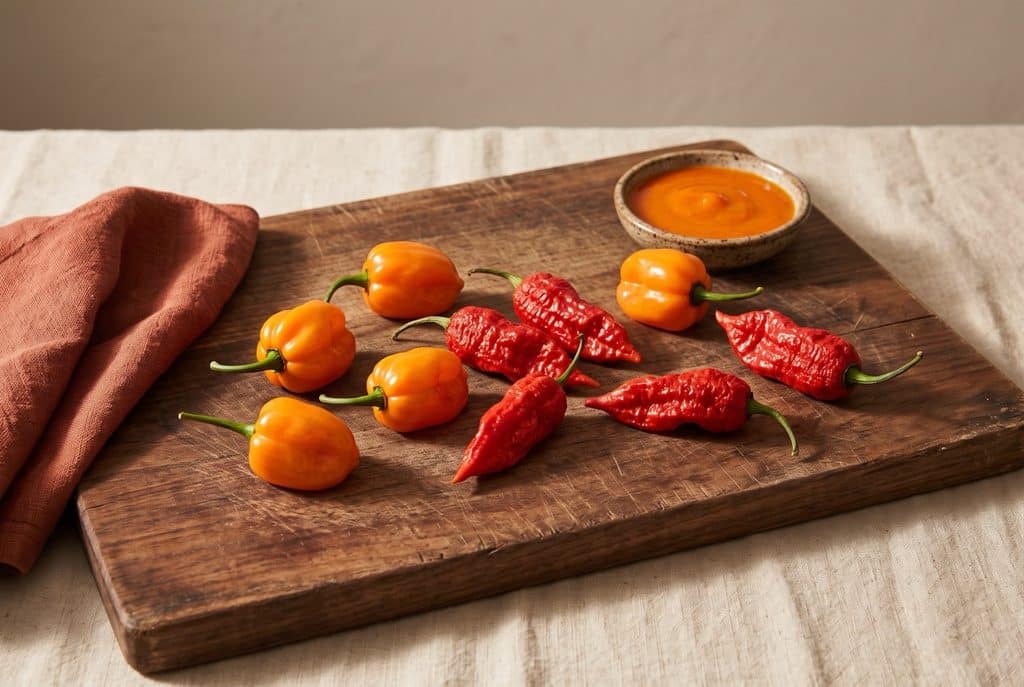
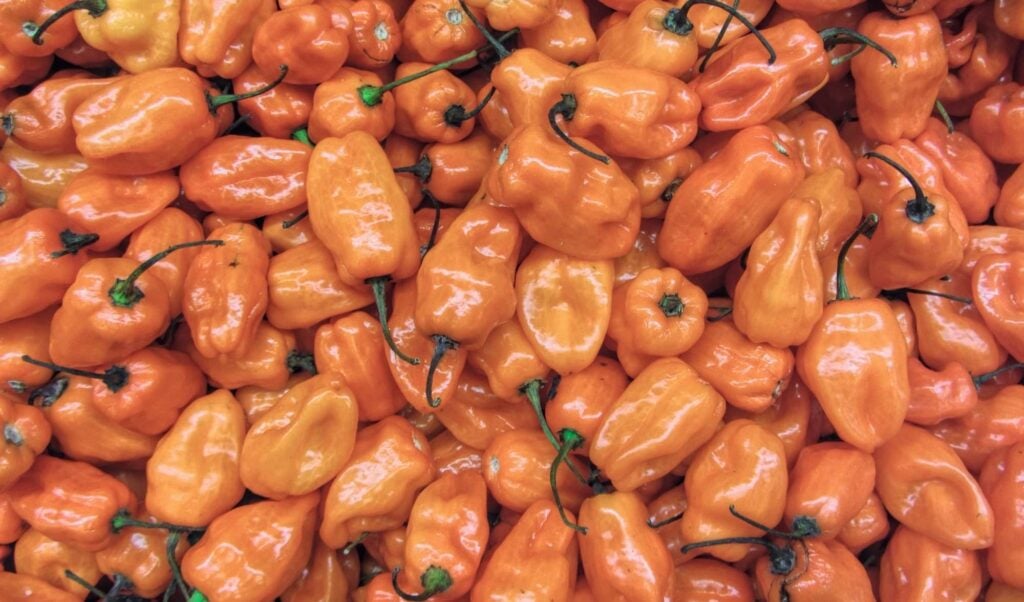
You can tell them apart at a glance. Habaneros are small and lantern-shaped, roughly an inch to two inches long, with smooth, glossy skin. Orange and red are the colors you’ll see most, though white, brown and other shades exist.
Ghost peppers are longer and slimmer, about 2 to 3 inches, and they taper to a point. Their skin is thin and wrinkled, with a bumpy, pock-marked look, and they ripen from green to red, or to yellow, orange or chocolate.
Which is easier to find?
The habanero, easily. It’s usually the hottest fresh pepper you’ll find in a normal grocery store, and you’ll see it dried and in a long list of hot sauces, too.
Fresh ghost peppers are much harder to come by. Dried ghost peppers and powder are easy to buy online, though, and the pepper turns up in plenty of bottled sauces, from Bravado’s ghost pepper and blueberry sauce to Hoff’s Smoken Ghost. If you want fresh pods, our ghost pepper planting guide will help you grow your own.
Which is more useful in the kitchen?
For most cooks, the habanero. It’s hot, but it’s still an everyday cooking pepper. It shines in fresh salsas and homemade hot sauces, and it’s a natural with fruit, as our pineapple habanero salsa and mango habanero jam show. Our habanero marinade puts it to work on meat.
The ghost pepper is a specialist. A little goes a long way in hot sauces, curries, salsas and barbecue sauces, and our profile pairs it with mango, pineapple, lime and coconut milk. Our guide to cooking with ghost peppers and our ghost pepper salsa are good places to start.
Handle both with care, and the ghost pepper with extra care. Wear gloves, keep your hands away from your eyes, and if you’re sensitive to capsaicin, our ghost pepper profile suggests eye protection as well. Scraping out the white pith will make a ghost pepper a little milder.
Can you substitute one for the other?
Yes, since the flavors are close, but watch the heat. Putting a habanero in place of a ghost pepper is the safer direction. The fruitiness carries over, and the dish just gets milder. By weight, it takes roughly four times as much habanero to match a ghost pepper at the median, so add more and taste as you go.
Going the other way, ghost for habanero, start with a quarter of the amount or less, since the hottest ghost can run more than ten times the mildest habanero. Our pepper conversion tool will do that math for you, and our habanero substitutes guide covers the gentler options.
Overall: the same fruit, very different fire
The habanero and the ghost pepper are close cousins: the same species, the same sweet, fruity character, and a habanero, the Red Savina, held the world record before the ghost pepper took it. What separates them is heat, roughly four times as much in the ghost pepper. If you’re working your way up the scale, get comfortable with the habanero before you take the jump. Pick the habanero for fruity heat you can cook with every day, and save the ghost pepper for when you want to push past it.
Get the free PepperScale Scoville Heat Chart
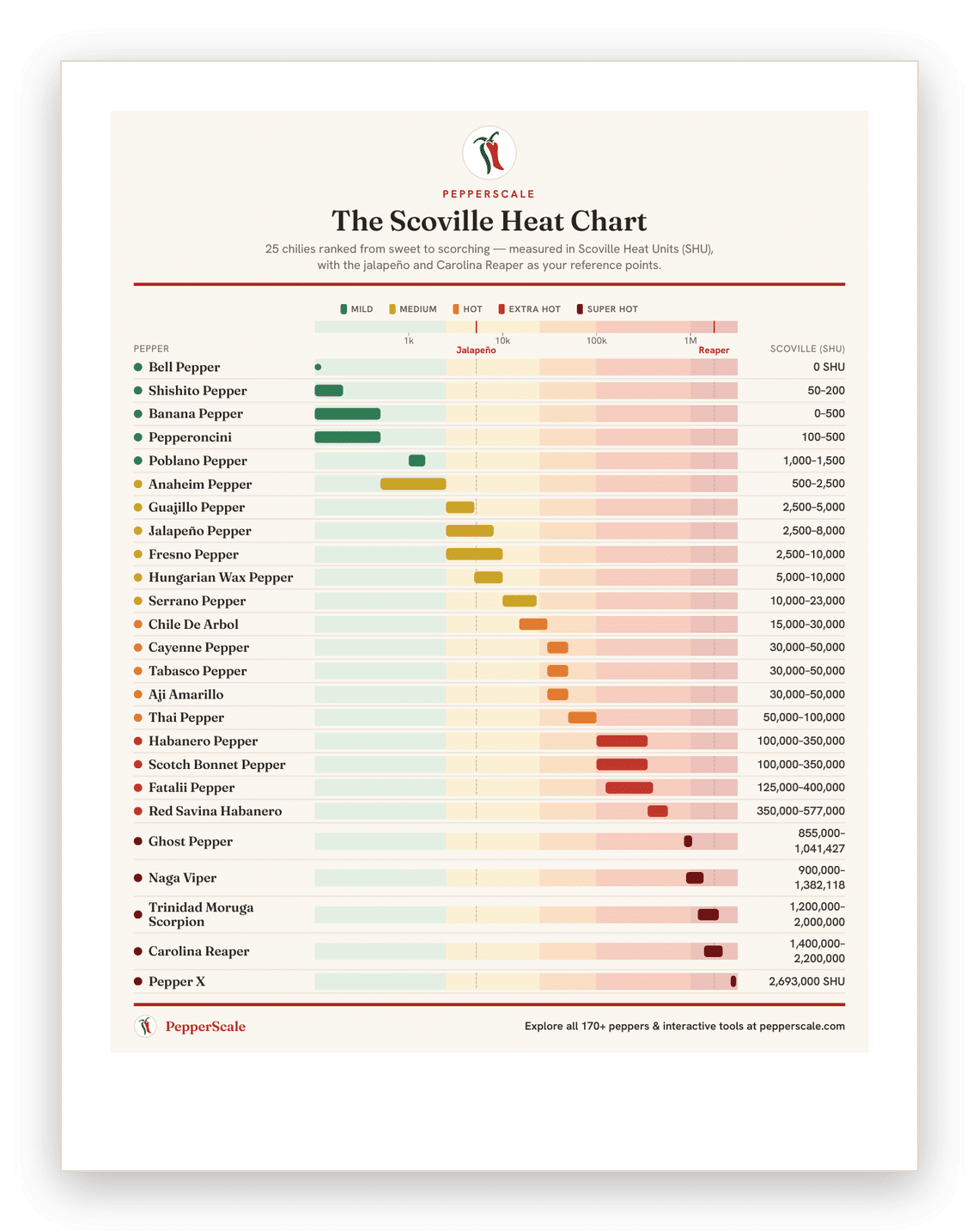
A printable, at-a-glance ranking of 25 chilies from sweet to scorching — with the jalapeño and Carolina Reaper as your reference points. Join the newsletter and we’ll send it straight to your inbox.
No spam — just Wicked Wednesday recipes and occasional extra dashes of chili pepper inspiration. Unsubscribe anytime.
Related reading
- Carolina Reaper Vs. Ghost Pepper: The next big step up the heat scale, and how far it goes past the ghost.
- Scotch Bonnet Vs. Habanero: The habanero’s closest rival, at the same heat.
- The Hot Pepper List: Sort more than 170 chilies by heat, flavor and how you’d use them.
Have eaten ghosts before, have been eating a dozen habaneros per day for a few months, about to make the switch up to ghosts, then to reapers. In fact, I’ve got a line on something even hotter than pepper x That I’d like try in the next 6 months