Habanero peppers get their name from the city of Havana in Cuba, which is La Habana in Spanish. Despite the name, they don’t come from Cuba: the pepper traces back to the Amazon basin, and these days its home base is Mexico’s Yucatán Peninsula, where it’s still grown. Habaneros are no longer at the top of the list of the hottest peppers in the world, but they are still very hot and should be used sparingly by all but the most experienced hot pepper fans.
There are many habanero varieties (including habanero-type chilies not labeled “habanero”). Here are 17 you should know: nine that carry the habanero name, from the heatless Habanada to the chocolate habanero, and eight close cousins like the scotch bonnet and the datil.
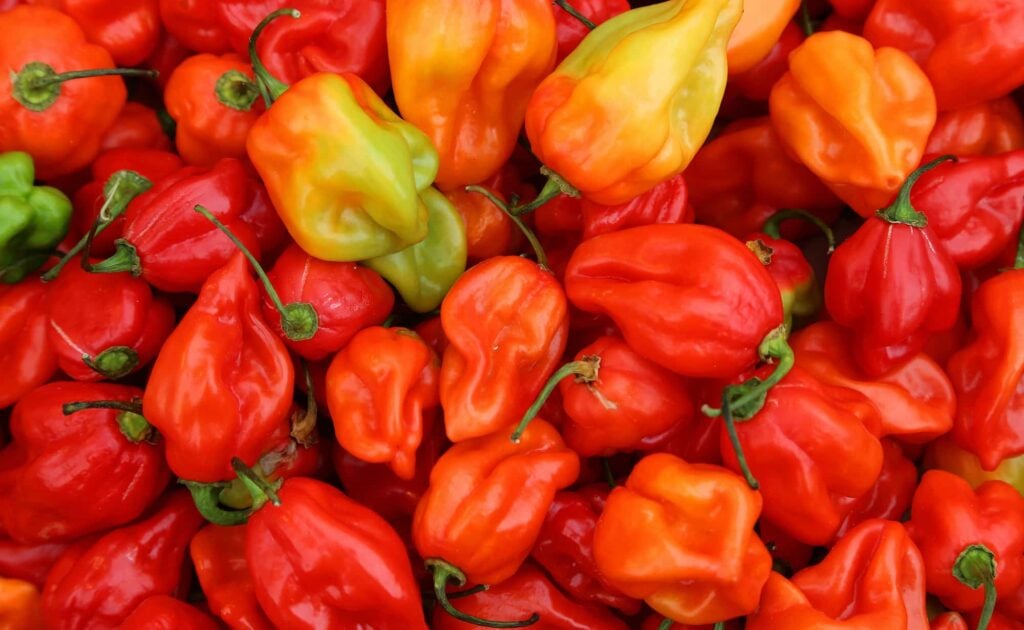
Habanero varieties at a glance
All 17, mildest first, with heat in Scoville heat units (SHU). The cousins are marked with an asterisk.
| Pepper | Heat (SHU) | Compared with a jalapeño | Ripe color |
|---|---|---|---|
| Habanada | 0 | No heat at all | Orange |
| Aji dulce* | 0 to 1,000 | Much milder | Yellow or red |
| Datil* | 100,000 to 300,000 | About 38 times hotter | Yellow-orange, then red |
| Orange habanero | 100,000 to 350,000 | About 43 times hotter | Orange |
| Peruvian white habanero | 100,000 to 350,000 | About 43 times hotter | Creamy white to pale yellow |
| Scotch bonnet* | 100,000 to 350,000 | About 43 times hotter | Red, orange or yellow |
| Goat pepper* | 100,000 to 350,000 | About 43 times hotter | Peach or orange |
| Devil’s Tongue* | 125,000 to 325,000 | About 43 times hotter | Golden yellow-orange |
| Aji chombo* | 125,000 to 325,000 | About 43 times hotter | Yellow-orange, then red |
| Madame Jeanette* | 125,000 to 325,000 | About 43 times hotter | Yellow or red |
| Peach habanero | 150,000 to 350,000 | About 48 times hotter | Creamy peach |
| Fatalii* | 125,000 to 400,000 | About 50 times hotter | Yellow |
| Hot Paper Lantern | 150,000 to 400,000 | About 52 times hotter | Orange-red |
| Roatan pumpkin habanero | 100,000 to 500,000 | About 57 times hotter | Orange |
| Caribbean red habanero | 300,000 to 445,000 | About 71 times hotter | Red |
| Red Savina habanero | 350,000 to 577,000 | About 88 times hotter | Red |
| Chocolate habanero | 425,000 to 577,000 | About 95 times hotter | Dark brown |
What makes a pepper a habanero?
Start with the species. Every pepper on this list is Capsicum chinense, the same species as the ghost pepper and the Carolina Reaper. Within it, the habanero is the lantern-shaped pod with smooth, glossy skin, sweet tropical fruit up front and 100,000 to 350,000 SHU of heat.
The Yucatán connection is official. Since 2010, Mexico has protected the name “Chile Habanero de la Península de Yucatán” for habaneros grown in Campeche, Quintana Roo and Yucatán, and the declaration describes ripe pods as orange or red. The name itself is just Spanish for “from Havana” (RAE), so the Cuban link is in the word, not the plant.
Is a scotch bonnet a habanero? Not by name. It’s the same species and the closest cousin, with the same heat range, but a squat, tam o’ shanter shape and a slightly sweeter, earthier taste. So we split the list that way: habaneros first, then the cousins that cooks treat as habanero stand-ins. Our scotch bonnet vs. habanero comparison goes deeper.
Which habanero is the hottest?
The chocolate habanero and the Red Savina both top out at 577,000 SHU, and the chocolate has the higher floor, at 425,000. But should you trust the Red Savina’s ceiling? Maybe not. That 577,000 was its breeder’s own figure, and pods from a 2005 New Mexico State University field trial came in at 248,556 SHU.
And even at their hottest, habaneros stop well short of the superhots. The ghost pepper’s range opens at about 855,000 SHU, past anything on this list.
The habaneros
These nine carry the habanero name, in order of heat.
Habanada peppers

Habanada peppers are habaneros with the heat bred out. Michael Mazourek, a Cornell professor, crossed heatless lines back to full-heat habaneros over 13 generations of selection, and Cornell’s write-up calls the result the first truly heatless habanero. What’s left is the fruit: a bright, tropical, floral flavor in elongated, tapering pods that ripen orange. Snack on them, roast them, or use them in salsas and dips when you want habanero flavor for a crowd that can’t take the heat.
Orange habanero
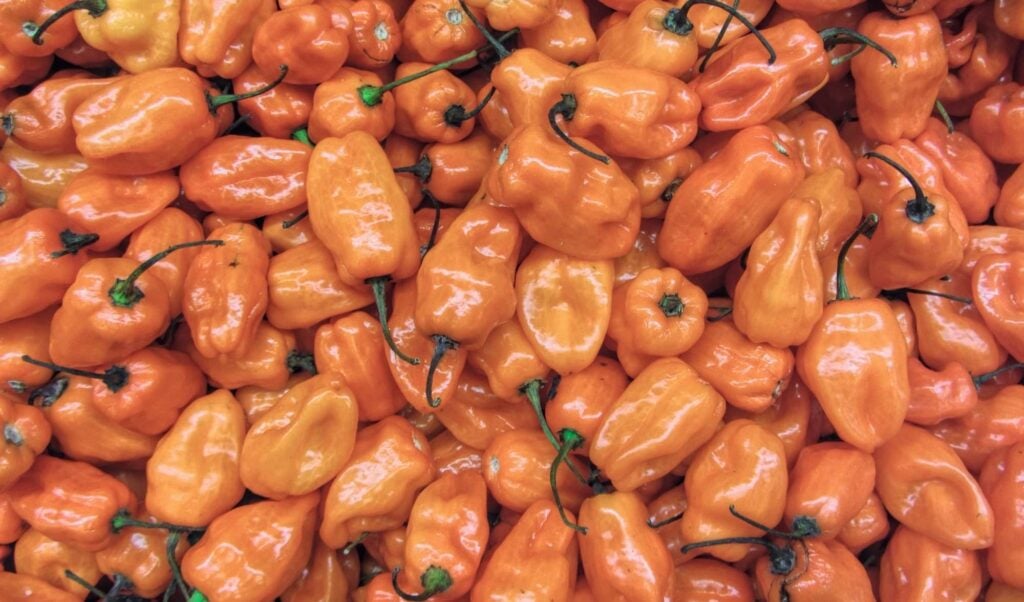
The orange habanero is the most common habanero variety, so it’s the one you’ve most likely seen in your local grocery store. Orange habaneros provide a fruity sweet flavor to go along with their heat, with a light smoky edge behind the fruit. They range from 100,000 to 350,000 Scoville heat units, and every other pepper here gets measured against them.
Peruvian white habanero

Peruvian white habaneros are a relatively uncommon habanero variety, small and pale, ripening from green to shades of creamy white and light yellow. As the name suggests, they originated in Peru. These chilies have a bean-like shape, no more than 2 inches by about ¾ inch, so they don’t look like a typical hab. Small as they are, they bring the full habanero burn. Expect sweet fruit with a crisp, citrusy edge and a touch of smoke.
Peach habanero

The peach habanero ripens from green to a creamy peach, close to the color of orange sherbet. Pods run about 2 inches long by 1 wide, a little longer than most habaneros, with wrinkled skin. Expect sweet fruit, though not quite as sweet as the common orange, at 150,000 to 350,000 SHU. Short on garden space? The plants stay compact, around 18 inches, so you can grow one in a container.
Hot Paper Lantern

The Hot Paper Lantern is a longer, more elongated habanero, up to 4 inches, still with that lantern shape. It ripens from green through orange to orange-red and runs 150,000 to 400,000 SHU. Its thin walls make it a natural for drying into powder or flakes. And if your summers run short, this is the habanero to try: it’s known for a shorter growing season than most, so it suits cooler northern gardens.
Roatan pumpkin habanero

The Roatan part of the Roatan pumpkin habanero’s name comes from the fact that this pepper is native to Roatan Island, off Honduras’s coast. The pumpkin comes from a deep orange color and a shape that tends to look quite pumpkin-like: plump, rounded and creased, up to 3 inches long. Its heat range is the widest on this list, 100,000 to 500,000 SHU. So when you cook with it, taste first: one pod can be standard habanero heat and the next well past it. The flavor is fruity, with a near-citrus edge.
Caribbean red habanero

Considerably hotter than its orange cousin, the Caribbean red habanero is a favorite in salsa. Ready for a step up from orange? This one starts at 300,000 SHU, near the top of a regular habanero’s range, and reaches 445,000. The pods keep the classic 1 to 2 inch lantern shape and ripen green to red, with a citrusy, slightly smoky flavor that suits tropical salsas and hot sauces.
Red Savina habanero

Before the arrival of the ghost pepper, the Red Savina habanero held the title of the world’s hottest pepper. Guinness named it in 1994, and it held on until 2006. Bred in California, it has the usual habanero lantern, about 2 inches long, ripening to a fire-engine red. On paper it runs 350,000 to 577,000 SHU, up to almost six times the mildest orange habanero, though that top figure has never been duplicated in testing. How does it taste? Fruity like the orange, if a little less sweet.
Chocolate habanero

The chocolate habanero gets its name from its brown color, not its flavor, and it’s sometimes referred to as a black habanero. Other names include black Congo and Jamaican hot chocolate. The pods are slightly larger and more tapered than a standard habanero, about 2 inches long, and they ripen from emerald green to dark brown. Want the hottest habanero here? This is it by floor, at 425,000 to 577,000 SHU. The flavor is more earthy and rich as well, so you can put it to work in mole and in dark salsas with dried fruit.
Habanero cousins
Why call them cousins? These eight share the habanero’s species and much of its flavor, but they’re sold under their own names. Mildest first.
Aji dulce
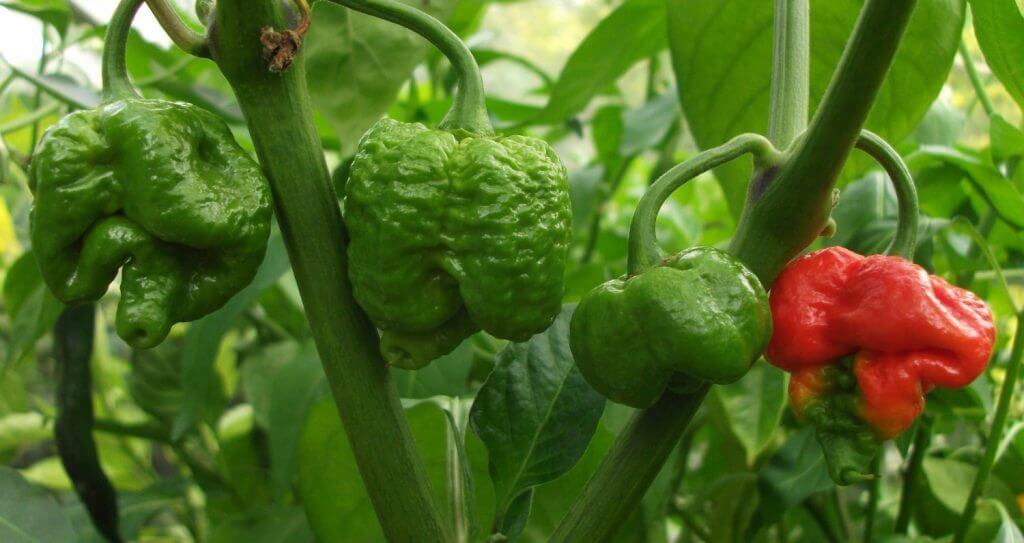
The aji dulce is a habanero doppelgänger with almost no heat: 0 to 1,000 SHU. The pods are slightly rounded and sometimes wrinkled and bonnet-like, an inch or two across, ripening to shades of yellow and red. The flavor is sweet, with hints of smoke and a little black-peppery undertone, and you’ll find it as a seasoning pepper in Cuban, Venezuelan and other Caribbean cooking. Label your plants if you grow both, since a habanero looks just like it.
Datil peppers
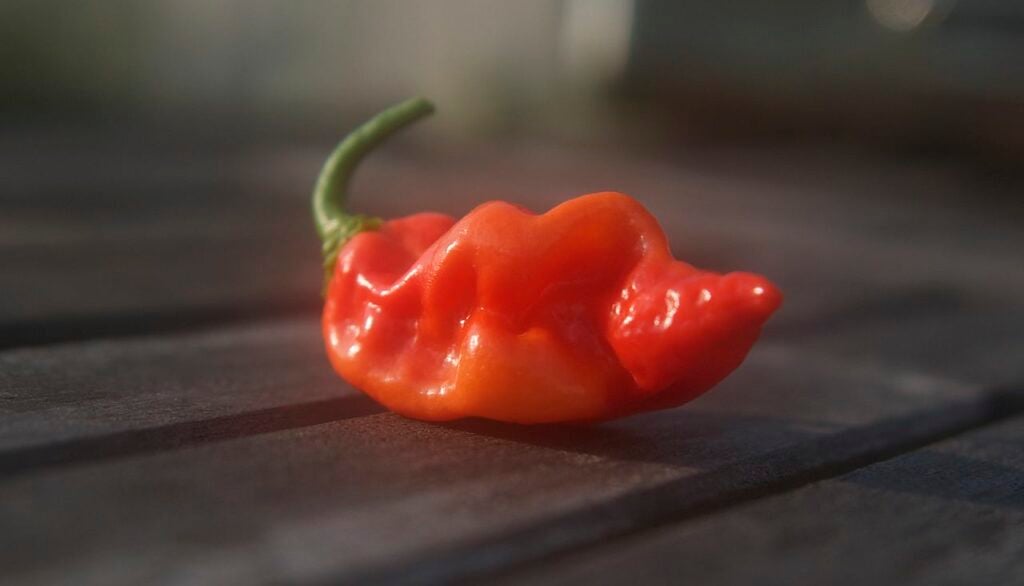
Datil peppers are the habanero’s Florida cousin. In the United States, they primarily hail from St. Augustine in North Florida, where an entire culture surrounds the datil. How the pepper got there is disputed. The city’s favorite story credits Minorcan settlers, but our datil profile finds a Cuban arrival around 1880 better documented. The pods are longer and thinner than a habanero’s, about 3½ inches and narrowing to a gentle tip, and they ripen yellow-orange. They have the same sweetness and fruitiness as a habanero, with a slightly lower ceiling of 300,000 SHU.
Scotch bonnet peppers

Despite the difference in shape, scotch bonnet chilies are the habanero’s closest relative. The name comes from the fact that its shape resembles that of a tam o’shanter hat, a type of Scottish cap. It is popular across the Caribbean and is a common source of heat in jerk seasonings and marinades for jerk dishes. Scotch bonnet peppers top out at around 350,000 SHU, which puts them on par with the common orange hab. They have a similar flavor, but with more sweetness and an earthy undertone. Most ripen through orange to red, and there are yellow types too.
Goat peppers

The Bahamian goat pepper is squat and ribbed, closer to a scotch bonnet’s shape than a habanero’s lantern, and the odd pod finishes in a little point. It ripens from dark green to peach or orange. When you bite in, expect sweet fruit, often with a bright, lemony edge, at 100,000 to 350,000 SHU. In the Bahamas it goes into conch salad and vinegar pepper sauces, and Bahamian recipes sometimes just call it a habanero.
Devil’s Tongue peppers

The Devil’s Tongue is a habanero relative that, according to pepper lore, turned up in an Amish country habanero patch in the 1990s. Its pods are 2 to 3 inches long, curved, wrinkled and tapering to a tip, so you could easily mistake it for a fatalii. It ripens golden yellow-orange, with citrusy, fruity sweetness and a slightly tangy undertone, at 125,000 to 325,000 SHU.
Aji chombo
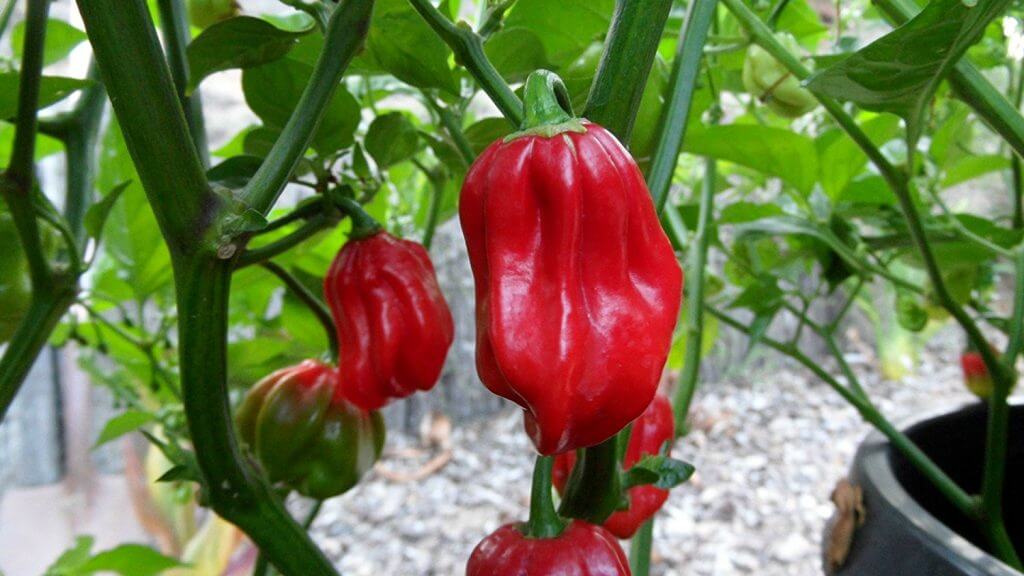
The aji chombo is Panama’s habanero-type pepper, and Panamanian hot sauces are sometimes simply called aji chombo after it. The pods are one to two inches long and usually habanero-shaped, though some come out longer or squashed like a scotch bonnet. They ripen from green to golden yellow-orange and then red. Need a stand-in? With its fruity sweet flavor and habanero-level heat, you can swap it in anywhere you’d use a habanero.
Madame Jeanette peppers

The Madame Jeanette comes from Suriname, where it’s also called the Suriname pepper. Its shape varies more than any pepper here, from a stretched-out bell to a wrinkled habanero look to a pod with a scorpion-like tail. It ripens yellow or red, at 125,000 to 325,000 SHU. If you taste one raw, the flavor is fairly subdued, but cooked it turns aromatic, with hints of pineapple and mango.
Fatalii peppers
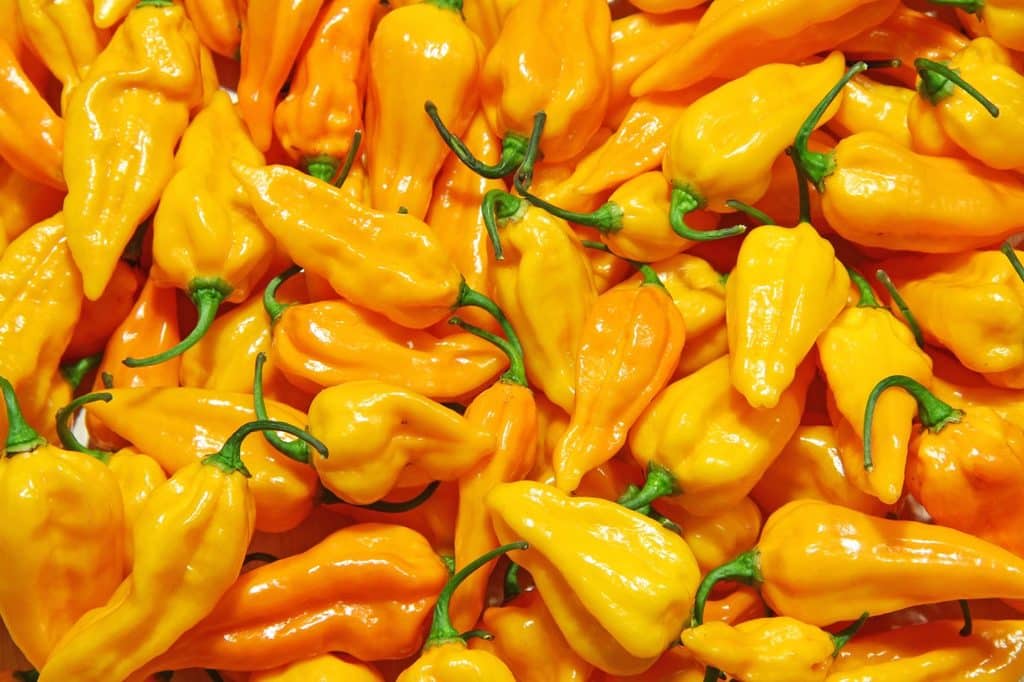
The fatalii is an African pepper, most often linked to the Central African Republic, and how its seed got there was never written down. Its yellow pods are slim and pointed, deeply wrinkled, and run 2 to 3½ inches, a good deal longer than a habanero. If you like citrus, start here. Think lemon first: it’s the most citrusy pepper on this list, and its range of 125,000 to 400,000 SHU beats the orange habanero’s at both ends.
Which habanero should you try?
Start with what you’re cooking, or how much heat you want.
- For classic habanero flavor: the orange habanero, the one you’re most likely to find in a grocery store.
- For jerk and Caribbean cooking: the scotch bonnet, or a goat pepper if you’re making Bahamian dishes.
- For citrus: the fatalii, then the Peruvian white.
- For the most heat: the chocolate habanero or the Red Savina.
- For flavor without the fire: the Habanada or the aji dulce.
- For a short growing season: the Hot Paper Lantern. Our habanero planting guide covers the rest.
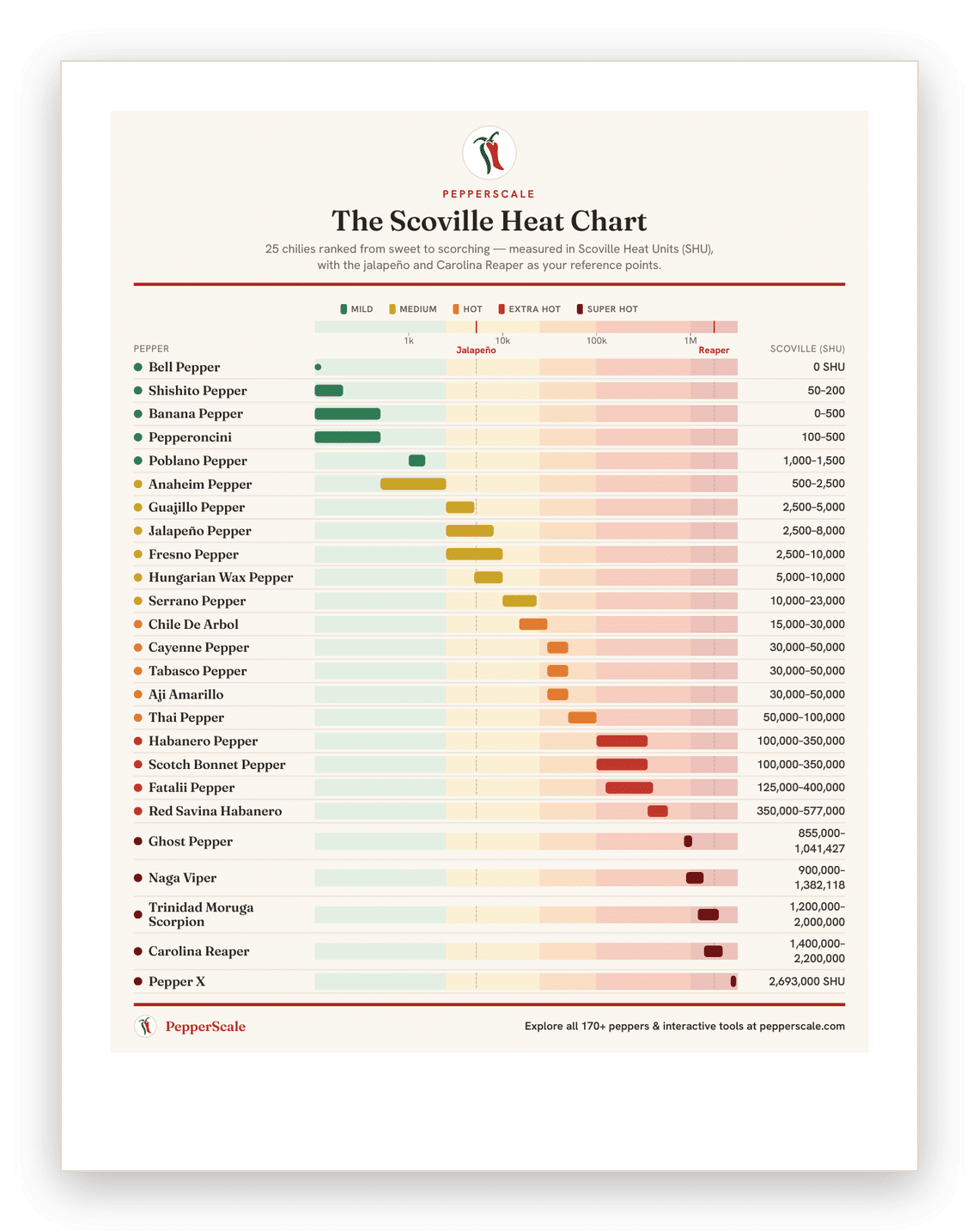
Get the free PepperScale Scoville Heat Chart
A printable, at-a-glance ranking of 25 chilies from sweet to scorching — with the jalapeño and Carolina Reaper as your reference points. Join the newsletter and we’ll send it straight to your inbox.
No spam — just Wicked Wednesday recipes and occasional extra dashes of chili pepper inspiration. Unsubscribe anytime.
Related reading
- The Hot Pepper List: Discover over 175 chili pepper types. Search by name, heat level, flavor, origin, and more.
- Pickled Habaneros Recipe: If you love the extra-hot heat, habaneros are delicious when pickled. Their natural sweetness works well with the brine tang.
- Are Dried Peppers Hotter Than Fresh?: What happens to the overall spiciness when moisture is removed from a chili?