There are quite a few ways that you can wind up with an overly spicy salsa. For one thing, many recipes will tell you to use a certain quantity of chopped jalapeño peppers but omit the fact that jalapeños can vary wildly in heat. This means that even if you follow the recipe’s measurements exactly, you could wind up with a dish that is far hotter than the writer intended. Alternatively, you may have assumed that you had a higher tolerance for hot foods than you really do. Whatever the reason, you will have two options—to throw the dish into the trash can or to salvage it. Follow the tips below to learn how to make salsa less spicy.
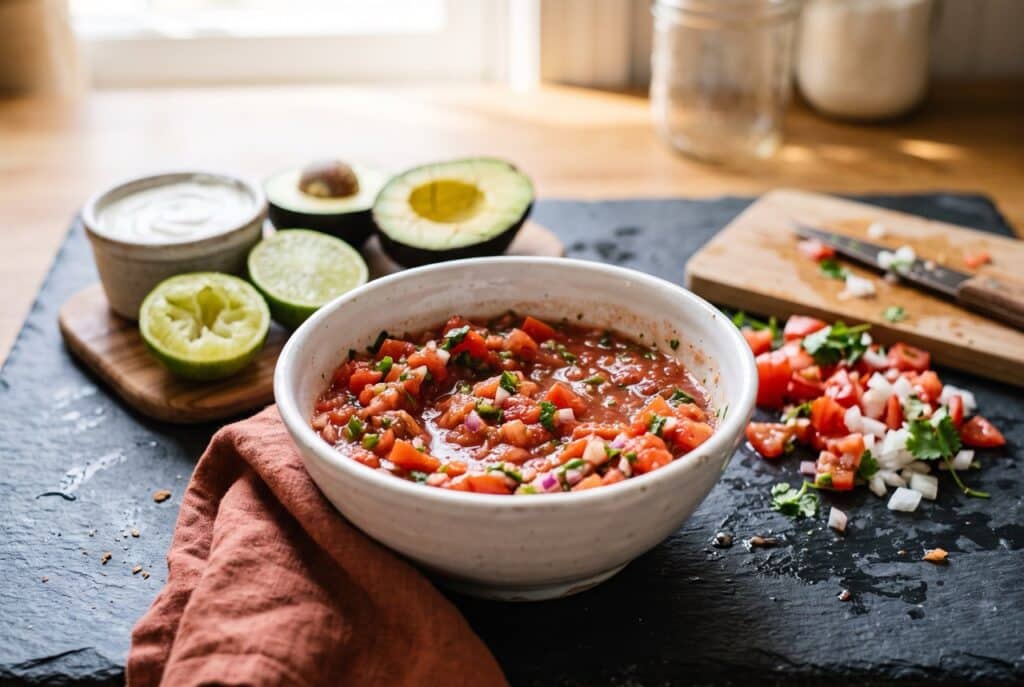
Which fix should you reach for?
Two of these actually take capsaicin out of the bowl. The rest change how much of it you feel. You’ll want both at some point, and they’re easy to mix up.
| Fix | What it does | Reach for it when |
|---|---|---|
| Take the pepper pieces out | Removes capsaicin from the bowl | Your salsa is chunky and you can still see chili in it |
| Add more of everything else | Dilutes what’s in there | You’ve got spare tomato and onion |
| Stir in fat | Gives the capsaicin somewhere to go | You don’t mind a richer salsa. Avocado is the easy one |
| Serve dairy alongside | Fat and casein lift it off the tongue | You’re fixing it at the table |
| A pinch of sugar | Competes for your attention | It’s only slightly too hot |
| More lime | Rebalances the whole bowl | It tastes flat as well as hot |
Take the peppers out first
Before you add anything, see what you can take away. If your salsa’s chunky, there are still pepper pieces sitting in it, and spooning them out is the one fix here that lowers the capsaicin rather than masking it. You won’t get all of it, since plenty’s already moved into the liquid. It still helps, and it’s free.
Dilute it
You can tame the heat in an overly spicy salsa by increasing the amount of non-spicy ingredients in relation to the spicy ingredients. In other words, you can restore a balanced flavor by adding more tomato, onion, and cilantro. You can do this simply by making another batch and adding it to the first, or you can remove half of the hot salsa and add an equal amount of ingredients to bring it back up to a full recipe.
Either of those solutions should be able to reduce the spice factor by half. If your salsa is particularly thick, you may be able to dilute it with a little water without making it too watery.
Increase the acidity
To learn how to make salsa less spicy, you will also have to learn how other flavors influence the overall flavor profile of the dish. Acidity is an important part of the salsa flavor profile; you will have to change this component without altering the others. You can do this by adding lime juice, whether or not it was in the original recipe. This will add a delightful citrus note to your salsa while also balancing out the heat from all that capsaicin.
If you do not have lime juice, consider adding a little vinegar. Adding more tomato to the dish can increase the acidity slightly while also helping to dilute the heat from peppers.
Add sweetness
A tiny amount of sugar may do the trick if your salsa is just a little too hot. Note that you do not want to use so much sugar that you wind up with a sweet salsa, but a small amount can help to lessen the heat from spice. You can get the same sweetness from other ingredients if you don’t want to add sugar to your salsa. Consider adding a small amount of tomato paste, to give it a smoother and less watery consistency in addition to taking the edge off the heat.
Stir in avocado
Avocado is the fat that belongs in salsa anyway, so it’s the easiest one to reach for. Chop half of one small, stir it through, and you’ll feel the difference. It thickens the bowl at the same time, and nobody’s going to look at salsa with avocado in it and think something went wrong. Add it just before serving, though, because it’ll brown once it’s cut.
Add fried onions
Along with providing the sweetness mentioned in the previous tip, fried onions have another benefit—they add fat. Fat is another age-old tool for lowering the heat level in spicy dishes. Capsaicin dissolves in fat and hardly at all in water. The fat from fried onions gives it somewhere to go, so less of it stays on your tongue.
Serve it with sour cream
Dairy is one of the time-tested ingredients for cutting the heat in spicy foods and salsa is no different. While it is not exactly the most authentically Latin American solution for excessive spice, serving your salsa with sour cream can help to neutralize the heat from capsaicin. The sour cream contains fat and serves as a diluent for the salsa, both of which help to reduce its heat.
What won’t work
Cooking it longer is the big one. Capsaicin holds up to heat far better than people expect. One study sat capsaicinoids at 100°C for 90 minutes and still found over 95 percent of them there at the end. Simmer your salsa down and you’ll concentrate the heat, not lose it.
A night in the fridge won’t do it either. The flavors settle and marry, which is worth doing, but the capsaicin’s exactly where you left it. And if the burn’s already reached your mouth, skip the glass of water. Capsaicin is oil soluble, so water just moves it around, which is why milk works better. We go through that in treating chili burn.
How to stop it happening next time
Salsa mostly gets too hot for one reason, and it’s the one your recipe never mentions.
- Taste the pepper before it goes in: Cut a sliver off the tip and eat it. Ten seconds, and it’ll tell you what you’re actually dealing with. Two jalapeños off the same plant can land a long way apart, which is why some jalapeños turn out mild and others take your head off.
- Take the pith out, not just the seeds: Most of the capsaicin sits in the pale membrane the seeds hang off, so scrape that out with a spoon. There’s more on it in eating pepper seeds.
- Add the chili last, and in halves: Put in half of what your recipe calls for, taste, then decide. You can always add more, and you can’t take it back out.
- Taste it at the temperature you’ll serve it: Salsa reads hotter warm than it does straight from the fridge, so a bowl you seasoned cold can surprise you once it’s on the table. Temperature changes how hot a chili tastes.
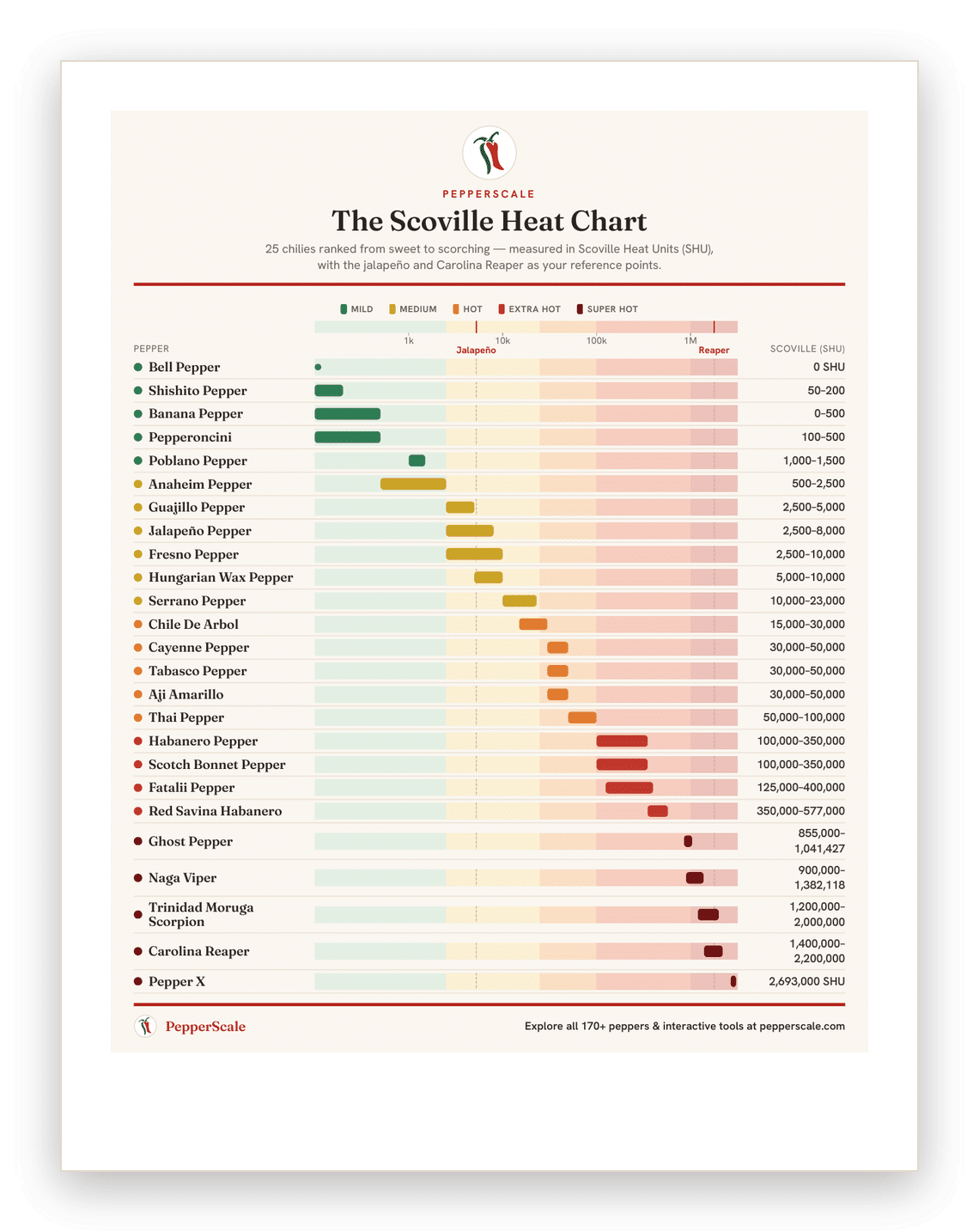
Get the free PepperScale Scoville Heat Chart
A printable, at-a-glance ranking of 25 chilies from sweet to scorching — with the jalapeño and Carolina Reaper as your reference points. Join the newsletter and we’ll send it straight to your inbox.
No spam — just Wicked Wednesday recipes and occasional extra dashes of chili pepper inspiration. Unsubscribe anytime.
Related reading
- How To Make Homemade Salsa Hotter: Have the opposite problem? You have ways to ramp up that spiciness.
- Picante Sauce Vs. Salsa: How do they compare?
- Basic Salsa Recipe: This is a good one to use as a base for fun salsa adds!