If you shake hot sauce onto almost everything, you’ve probably wondered what it’s doing for you. For the most part, hot sauce is fine for you, but good? A teaspoon of a classic pepper-and-vinegar sauce has zero calories, fat or sugar, and it adds a lot of flavor without adding much else. The catch is sodium, which run from 35 to 190 mg a teaspoon or more, and few of us stop at a teaspoon. Here’s what’s in the bottle, what the research on capsaicin does and doesn’t show, and when hot sauce can work against you.
One quick note before we get into it: we know chili peppers inside and out, but we’re not doctors. If you’re watching your blood pressure or your sodium, or spicy food gives you heartburn or stomach trouble, talk to your doctor about how much hot sauce makes sense for you. They know your health, and we know peppers.
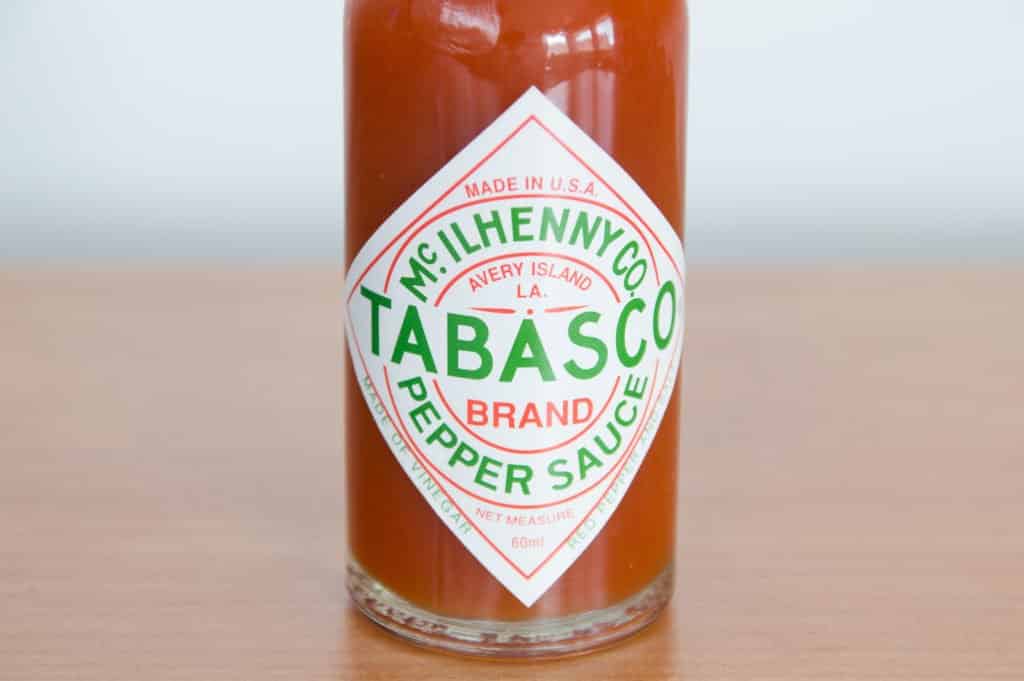
What’s in hot sauce?
Most classic hot sauces come down to three ingredients: chili peppers, vinegar and salt. Tabasco Original Red lists exactly those three, while Frank’s RedHot adds water and garlic powder to aged cayenne peppers, vinegar and salt. Mexican-style sauces like Cholula, Tapatío and Valentina list water first, and some add spices or a thickener like xanthan gum.
Then there are the sweet ones, and that’s where calories and sugar get into a bottle. Sugar is the second ingredient in Huy Fong’s sriracha, and Tabasco’s Sweet & Spicy sauce starts with it.
The heat comes from capsaicin, the compound that gives chili peppers heat. How much a sauce has depends on its peppers. Bell peppers have almost none, and habaneros have a lot, so a habanero sauce burns much hotter than a cayenne one.
What’s in a teaspoon of hot sauce?
Here’s what the labels of eight popular sauces list for a 1-teaspoon serving.
| Sauce | Calories | Sodium | Daily Value | Sugars |
|---|---|---|---|---|
| Frank’s RedHot Original | 0 | 190 mg | 8% | 0 g |
| Crystal Hot Sauce | 0 | 130 mg | 6% | 0 g |
| Cholula Original | 0 | 110 mg | 5% | 0 g |
| Tapatío | 0 | 90 mg | 4% | 0 g |
| Tabasco Sweet & Spicy | 15 | 75 mg | 3% | 3 g |
| Huy Fong Sriracha | 0 | 70 mg | 3% | 1 g |
| Valentina | 0 | 64 mg | 3% | 0 g |
| Tabasco Original Red | 0 | 35 mg | 2% | 0 g |
All but the sweet one have zero calories, and none of them have any fat. What about vitamins? Chili peppers are loaded with vitamin C, but a teaspoon of sauce holds very little pepper. Tapatío’s label lists 0 for calcium, iron and potassium, and Huy Fong’s lists 16 mg of potassium, a tiny fraction of a day’s worth. So enjoy hot sauce for the flavor, and if you’re after the vitamins, eat the peppers. Our guide to vitamin C in peppers shows which ones have the most.
How much sodium is in hot sauce?
It depends on the bottle, and it varies more than you’d think. A teaspoon runs from 35 mg in Tabasco to 190 mg in Frank’s RedHot, more than five times as much. Against the Daily Value for sodium of 2,300 mg, that’s 2 to 8 percent per teaspoon. The FDA counts 5 percent or less per serving as low, so six of the eight sauces above qualify.
But a teaspoon is a small pour. A tablespoon of Frank’s is three teaspoons, or 570 mg, about a quarter of the day’s limit. Americans already average about 3,400 mg of sodium a day, according to the FDA, and diets higher in sodium are linked to a higher risk of high blood pressure. So if you go through a bottle fast, the sodium line on the label is the one to read.
Want the heat with less salt? Pick a lower-sodium sauce, and see if a little heat lets you go lighter on the salt shaker. In a 2017 study in the journal Hypertension, 606 Chinese adults who enjoyed spicy food ate less salt and had lower blood pressure than those who disliked it, and in the researchers’ tests, capsaicin made salt taste stronger. That comparison was observational, so it doesn’t prove spicy food lowers blood pressure. But it’s an easy experiment to try at the table.
Can hot sauce help you lose weight?
A little, maybe, but don’t count on it. Capsaicin has been studied for appetite and metabolism, and the effects are small. A 2014 review of eight studies found people ate about 74 fewer calories at a meal when they’d had capsaicin. A 2018 review found it raised the calories people burned by about 59 a day, and the effect showed up only in people with a BMI over 25. And those studies used measured doses of capsaicin, so it’s hard to say what a few shakes from a bottle would do.
A 2009 trial in Clinical Nutrition gets cited a lot for this. It gave 27 people capsaicin, green tea, a mild pepper called CH-19 Sweet, or capsaicin and green tea together. Capsaicin and green tea made people feel fuller and less hungry, mostly while they were eating less than they burned. When they were eating more than they burned, only CH-19 Sweet and the capsaicin-and-green-tea combination cut how much they ate.
So hot sauce won’t melt fat, but it can make plain food taste better. A few dashes on eggs, grilled chicken, beans or steamed vegetables add a lot of flavor for zero calories, and that beats a creamy sauce if you’re counting.
Do people who eat chili peppers live longer?
Maybe, though the evidence is far from settled. In 2020, researchers presented an analysis at an American Heart Association meeting that pooled diet and health records from more than 570,000 people in the U.S., Italy, China and Iran. People who ate chili pepper regularly had a 25% lower relative risk of dying from any cause than people who rarely or never ate it, and a 26% lower risk of dying from cardiovascular disease.
But those studies were observational, so they show a link, not a cause. The lead author said the reasons are unknown, and it isn’t clear how much chili, how often, or which kind made the difference. And whether a bottle of hot sauce counts is something the research can’t tell you.
Is capsaicin a cancer fighter?
You’ll see that claim a lot, and it comes from lab work. In a 2013 lab study, capsaicin killed human cancer cells grown in a dish by triggering apoptosis, the process cells use to destroy themselves. The same paper points out that capsaicin has also been thought to promote the growth of cancer cells, and that its effects on different cell types still need to be explored.
Cells in a dish are a long way from a person eating hot sauce. We went through the research in people for do chili peppers cause cancer?, and one link held up: eating a lot of chili and esophageal cancer, in places where tobacco and very hot tea are also common. Outside of that, the research suggests normal chili eating is fine.
Is hot sauce bad for your stomach?
According to Mayo Clinic, spicy foods like hot sauce don’t cause peptic ulcers, but they can make the symptoms worse. Most ulcers come from an H. pylori infection or from regular use of pain relievers like aspirin and ibuprofen.
Heartburn is another story, since Harvard Health lists spicy foods and vinegar among the foods that may make reflux worse, and most hot sauces are both. Triggers vary from person to person, though, so if you think hot sauce is one of yours, leave it out for a while, add it back, and keep a food diary to see what happens.
And too much of a very hot sauce can make you sick. Poison Control says too much hot pepper can cause nausea, vomiting, stomach pain and diarrhea. You’re unlikely to get there with a dash of Tabasco. But some superhot sauces are made with pepper extract and run far hotter than everyday hot sauce, so check where a sauce falls on the Scoville scale and start with a single drop.
Hot sauce health claims: fact or fiction?
- “Hot sauce has no calories.” Mostly fact: classic sauces list zero per teaspoon, but sweet ones like Tabasco Sweet & Spicy have about 15.
- “Hot sauce is full of vitamins and minerals.” Fiction: a teaspoon holds too little pepper to matter, and the labels list zero or close to it.
- “Hot sauce is low in sodium.” It depends: the sauces we checked run 35 to 190 mg a teaspoon, and a heavy pour carries more.
- “Hot sauce burns fat.” Mostly fiction: capsaicin’s effects on appetite and metabolism are small, and the studies used measured doses.
- “Spicy food causes ulcers.” Fiction, though it can make ulcer symptoms worse.
- “Hot sauce fights cancer.” Unproven, since that idea comes from lab studies on cells in a dish.
- “People who eat chili live longer.” Maybe: large studies link the two, but they can’t show cause.
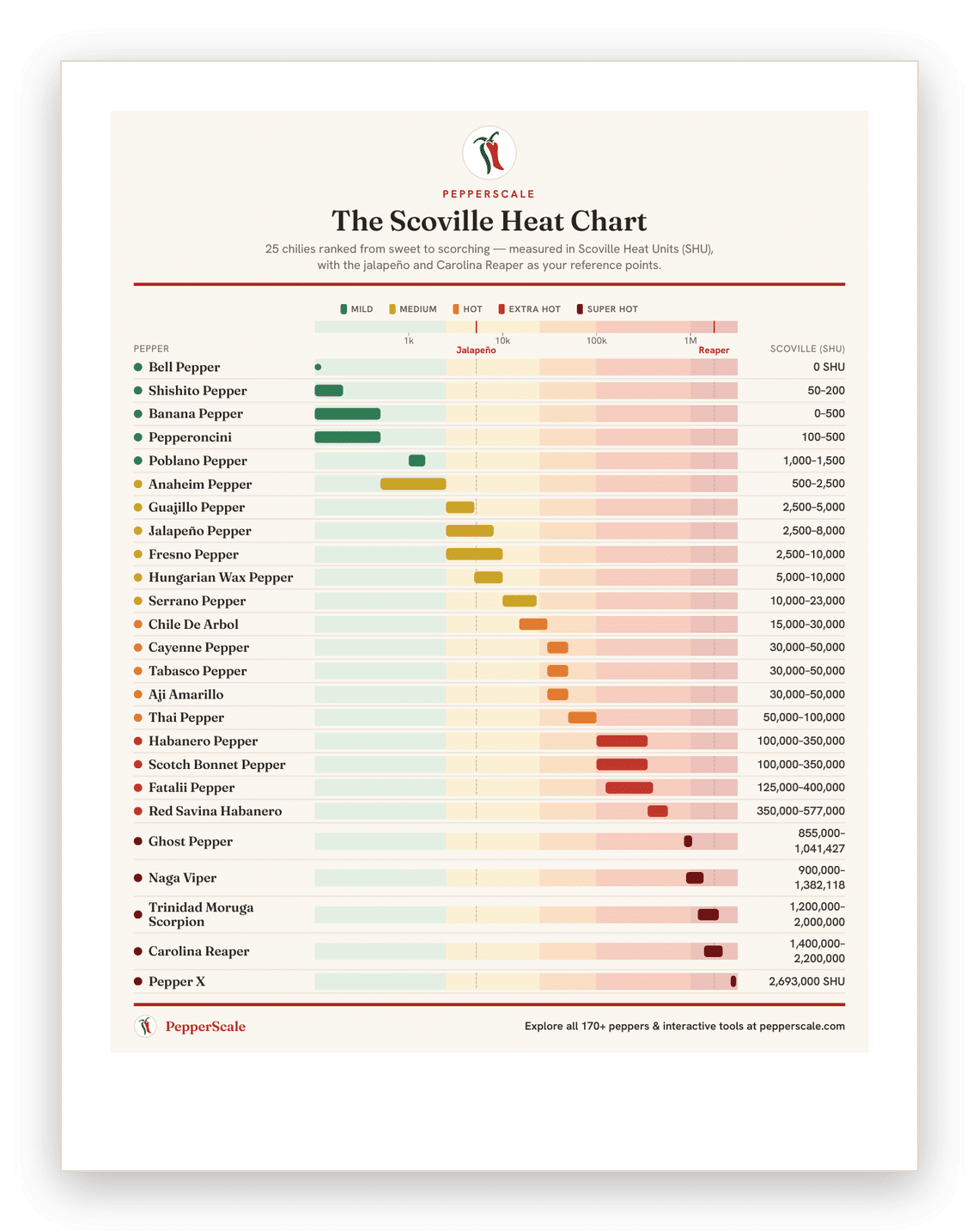
Get the free PepperScale Scoville Heat Chart
A printable, at-a-glance ranking of 25 chilies from sweet to scorching — with the jalapeño and Carolina Reaper as your reference points. Join the newsletter and we’ll send it straight to your inbox.
No spam — just Wicked Wednesday recipes and occasional extra dashes of chili pepper inspiration. Unsubscribe anytime.
Related reading
- Using Capsaicin To Lose Weight: The Fact And Fiction: What the research on capsaicin, appetite and metabolism shows, and what it doesn’t.
- Ghost Pepper Nutrition: How Healthy Are They?: The nutrition, the health research and the risks of a superhot.
- Gochujang Nutrition: How Healthy Is It?: How the Korean chili paste stacks up on sodium and sugar.