If you’re looking for a healthier snack, reaching for the salsa instead of the queso is a good instinct. For the most part, salsa is good for you. It’s mostly tomatoes, onions, chilies, lime and herbs, and it runs about 10 calories for two tablespoons, with a little fiber, potassium and lycopene in every scoop. The thing to watch is salt, since a jarred salsa can carry around 250 mg of sodium in that same two tablespoons. And chip choice aside, the chips usually matter more than the salsa does. Here’s what’s in a serving, what the chilies bring, and how to build the healthiest bowl.
What’s in a serving of salsa?
Here’s what the USDA lists for two tablespoons of ready-to-serve jarred salsa, which is about what you’d scoop onto a few chips:
| Per 2 tablespoons (36 g) | Amount |
|---|---|
| Calories | 10 |
| Sodium | 256 mg, about 11% of the 2,300 mg daily value |
| Carbohydrates | 2.4 g |
| Fiber | 0.7 g |
| Sugars | 1.4 g |
| Potassium | About 100 mg |
| Lycopene | About 2,200 mcg |
Brands vary, so check the label on yours. Sodium is the number that moves the most from jar to jar.
Is salsa good for you?
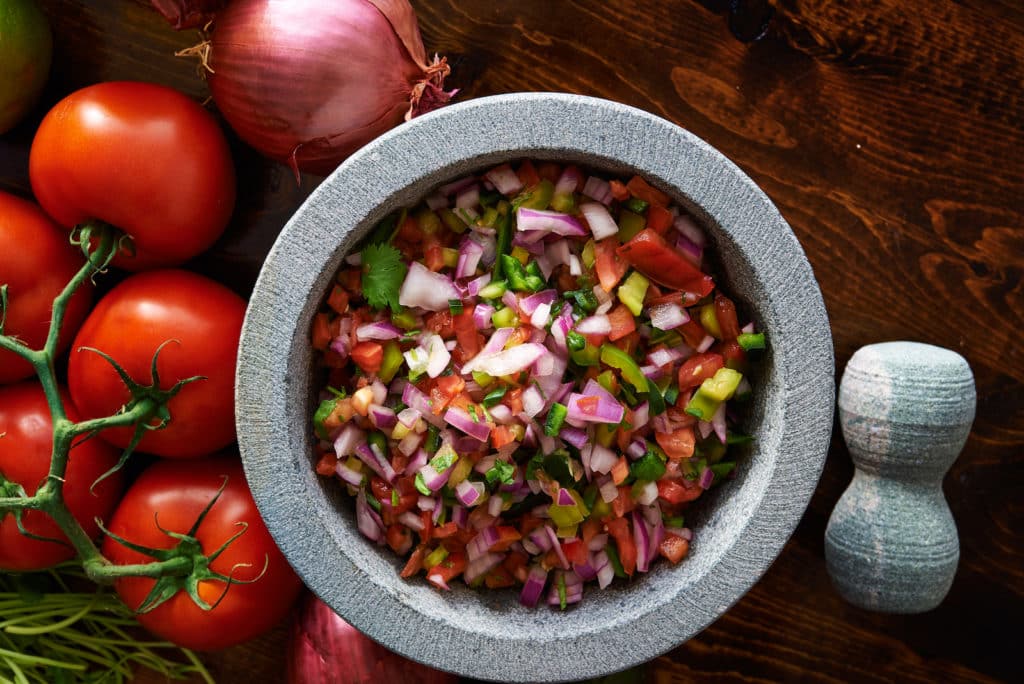
For a condiment, it’s one of the better choices on the table. You’re eating chopped tomatoes, onions, chilies, lime and herbs, with barely any fat or sugar. Swap it in for a creamy dip or a spoonful of sour cream, and you save a lot of calories without giving up flavor.
Is there a catch? Yes, and it’s the sodium, because two tablespoons won’t do much damage but a whole jar over an evening of snacking adds up fast. And since salsa almost always comes with tortilla chips, the chips bring most of the calories and fat to the snack.
One quick note before we go further: we know chili peppers inside and out, but we’re not doctors. So if you’re watching your blood pressure, dealing with reflux or managing anything else health-related, talk to your doctor about what belongs on your plate. They know you, and we only know peppers.
What do the ingredients bring?
Tomatoes are the base, and they’re one of the best sources of lycopene, the pigment that makes them red. Cooking tomatoes makes more of their lycopene available. Cornell researchers found that heating tomatoes for 30 minutes raised trans-lycopene by 164% and lowered vitamin C by 29%. So a cooked, jarred or roasted salsa tends to give you more lycopene, and a fresh one keeps more vitamin C.
Onions add flavor, crunch and a little fiber for almost no calories. Lime juice and cilantro add brightness, and the lime brings a bit of vitamin C too.
Chili peppers bring the heat, and how much depends on which ones you use. The Scoville scale runs from 0 for a bell pepper to over 2 million for the hottest chilies, and a jalapeño comes in at 2,500 to 8,000 SHU. That heat comes from capsaicin. Chilies carry vitamin C as well, and our guide to jalapeño nutrition goes into more detail.
Is the chili in salsa good for you?
Maybe, but the evidence isn’t settled. A 2020 analysis presented by the American Heart Association looked at more than 570,000 people and found that those who ate chili pepper had a 25% lower relative risk of dying from any cause, and a 26% lower risk of cardiovascular death. Those studies were observational, though, which means they show a link between eating chili and living longer but can’t prove that one causes the other. The lead researcher said as much.
Does a scoop of salsa carry much chili, anyway? Not a lot, since one jalapeño spread through a whole bowl of salsa works out to very little in each scoop you eat. Eat salsa because it tastes great and it’s mostly vegetables, and treat anything the chilies add as a bonus.
Can salsa give you heartburn?
It can, for some people. Harvard Health lists spicy foods, tomato sauces and onions among the foods that may make heartburn worse, and salsa has all three. Triggers vary from person to person, though, so plenty of people eat salsa with no trouble at all.
Think salsa might be a trigger for you? Try leaving it out for a while and then adding it back to see what happens. A milder salsa may be easier on you, too, and our tips on how to make salsa less spicy can help with that.
Fresh or jarred: which is healthier?
Both are good choices, and each one comes out ahead on something different. Fresh salsa lets you control the salt, since you add it to taste, and it keeps more of the tomato’s vitamin C because it never sees the heat of the stove. Jarred and cooked salsas usually carry more sodium, but cooking gives them more lycopene.
Watching your sodium? Then homemade wins. A fresh pico de gallo is just tomatoes, onion, jalapeño, cilantro, lime and a pinch of salt. And if you’re wondering how pico differs from other salsas, our pico de gallo vs. salsa comparison sorts it out.
How to make salsa healthier
- Salt it yourself. Make it at home and season to taste, or look for a low-sodium jar.
- Rethink the chips. Scoop it up with sliced cucumber, bell pepper strips or jicama, or use baked chips.
- Use it as a topping. It works on eggs, grilled chicken, fish, baked potatoes and rice bowls in place of heavier sauces.
- Add fruit. Fruit salsas like pineapple habanero salsa or spicy blueberry salsa bring more produce to the bowl.
There are plenty more in our collection of salsas and dips.
How long does homemade salsa keep?
University of Minnesota Extension says fresh salsa keeps in the fridge for up to a week, or in the freezer for up to a year. Freezing softens it, so thaw it in the fridge and drain off some liquid before you serve it.
Want to can it? Then use a tested recipe exactly as written. Penn State Extension warns that adding extra peppers or onions, or other ingredients like corn or beans, can make a canned salsa unsafe. If it’s your own recipe, keep it in the fridge or the freezer instead.
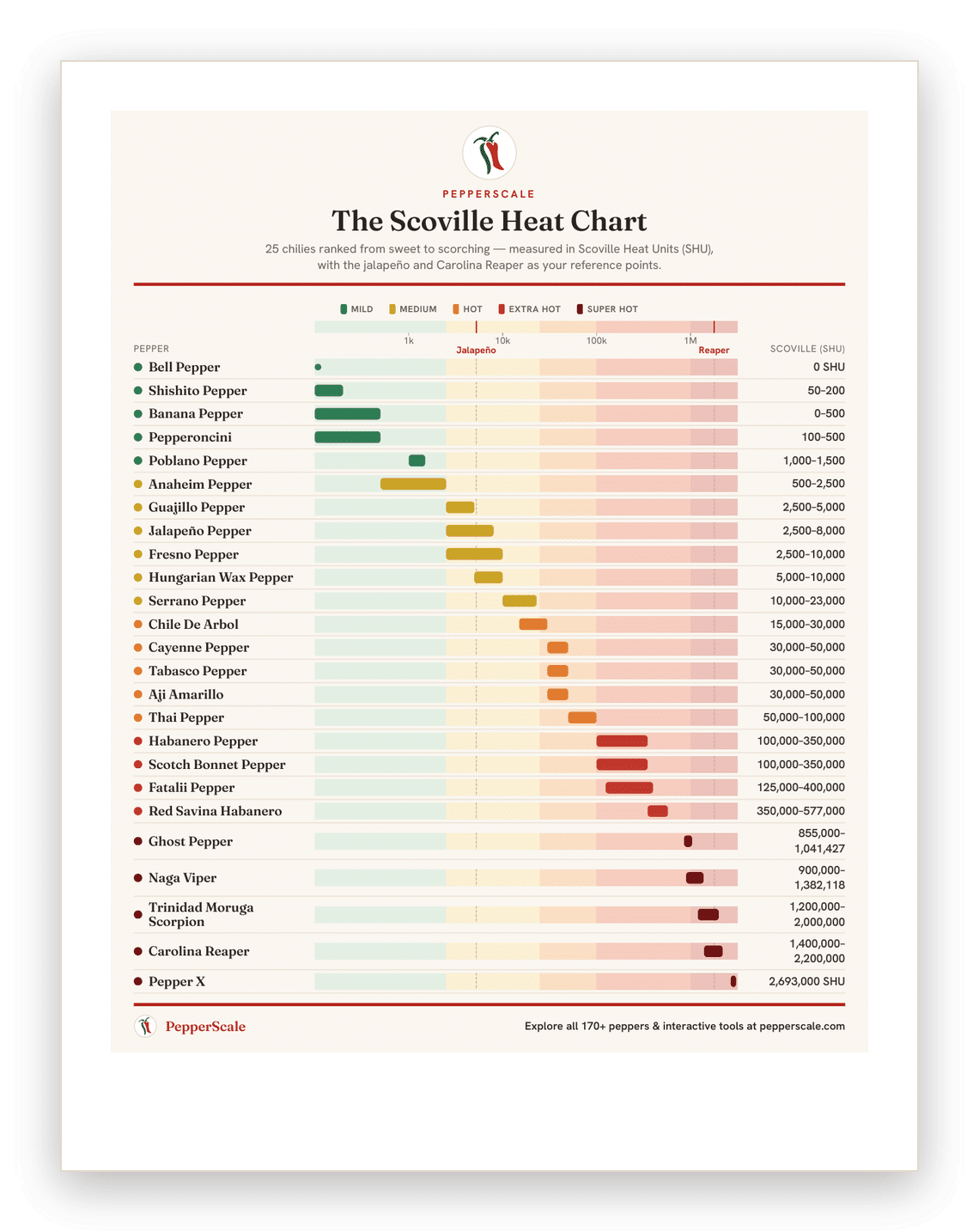
Get the free PepperScale Scoville Heat Chart
A printable, at-a-glance ranking of 25 chilies from sweet to scorching — with the jalapeño and Carolina Reaper as your reference points. Join the newsletter and we’ll send it straight to your inbox.
No spam — just Wicked Wednesday recipes and occasional extra dashes of chili pepper inspiration. Unsubscribe anytime.
Related reading
- The Hot Pepper List: Browse chilies by heat and flavor to find the right one for your next batch of salsa.
- Spicy Food for Colds: Fact or Fiction?: What chilies can and can’t do when you’re under the weather.
- Why Does Your Nose Run When You Eat Spicy Food?: The reason a good salsa sends you reaching for a napkin.