Jalapeño peppers are everywhere, so you’ll rarely be stuck without one. That makes “what’s a good jalapeño substitute?” less a rescue mission than a choice: do you want the same bright, grassy flavor with a different level of heat, do you just need fire, or do you want none at all? Answer that and the pick gets easy.
The trick is knowing what makes a jalapeño taste like a jalapeño. We file it in the Green & Grassy group: fresh, vegetal, garden-bright. Any pepper from that same family will keep your dish tasting the way you intended and simply move the heat up or down. Step outside the family and you’re changing the flavor, not just the burn, which is sometimes exactly what you want. We’ll cover both.

Last update on 2026-10-15. We earn a commission if you make a purchase, at no additional cost to you.
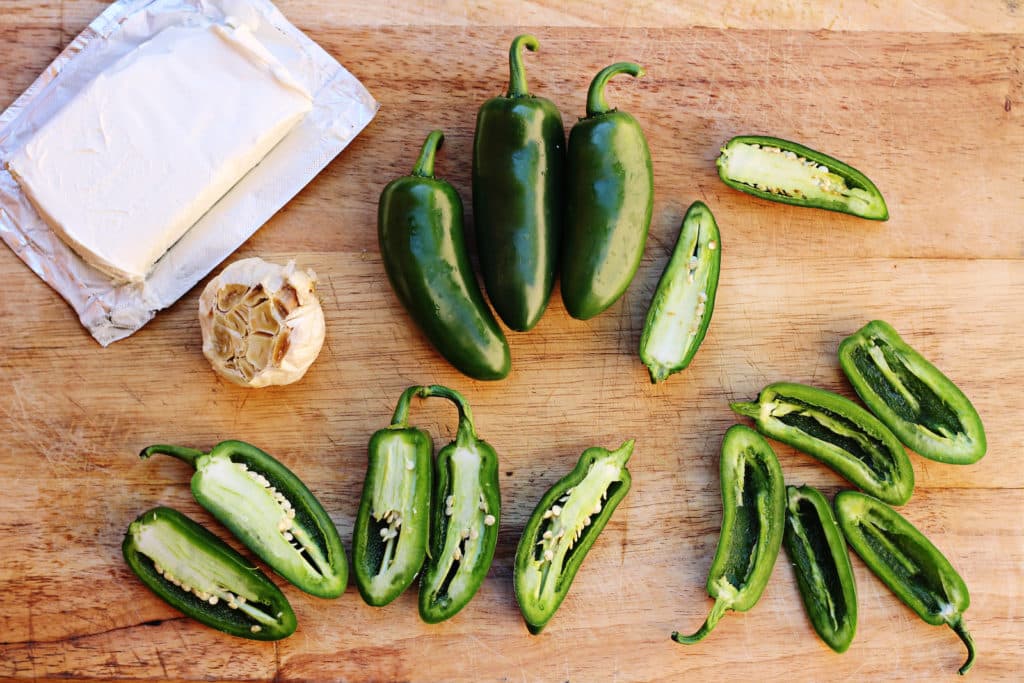
The best swaps: peppers in the jalapeño’s flavor family
These are all Green & Grassy chilies, so they keep the jalapeño’s fresh character. They’re listed from hottest to mildest, so you can dial the heat to taste.
–> Bookmark This: Our pepper substitute finder is perfect for on-the-go lookups at the supermarket or in the kitchen.
Serrano: the heat bump
The serrano is the most natural jalapeño substitute there is. Same bright, grassy taste, same look at a glance (just a little thinner-walled), so the only real difference is intensity. At 10,000 to 23,000 Scoville heat units, it runs about three times hotter than a jalapeño, so use roughly half as much and taste as you go. It shines in salsas and anywhere you want the same flavor with more punch. One thing it can’t do is stand in for a popper: the walls are too thin and the cavity too narrow to stuff. Learn more: serrano vs. jalapeño.
Fresno: the look-alike with a twist
The Fresno is so close to a jalapeño that it’s genuinely hard to tell them apart, and the heat range nearly matches (2,500 to 10,000 SHU, so a touch hotter at the top). Green, it gives you that same crisp bite. Ripened red, it turns smoky-sweet and fruity, hinting at chilies much further up the scale. Its walls sit between a jalapeño’s and a serrano’s, thick enough to stuff, which makes it one of the few swaps that works for poppers too. Read our Fresno vs. jalapeño comparison.
Hatch and green chilies: the seasonal stand-in
New Mexico Hatch chilies and other long green chilies carry the same fresh, grassy green flavor, usually a notch milder than a jalapeño and with a light roasted sweetness when charred. They’re a seasonal treat rather than a year-round staple, but when they’re around they’re a lovely swap for salsas, sauces, and anything roasted.
Anaheim: moving down in heat
Want the flavor with far less fire? The Anaheim is a mild green chili (500 to 2,500 SHU, up to sixteen times milder) that keeps a good crispness, with a slightly sweeter edge. It’s much larger than a jalapeño, so it’s no good for poppers, but it makes a terrific stuffed-and-roasted entrée pepper, a bit like a mild stuffed bell.
Poblano: the mild one built for stuffing
When you want jalapeño flavor with barely any heat and plenty of room to fill, reach for the poblano (1,000 to 2,000 SHU). It’s the mildest of the true green-family swaps, big and thick-walled, and it roasts beautifully. This is the pepper behind chiles rellenos, and it’s your best friend when a recipe wants body and a whisper of warmth rather than a real kick.
Bell pepper: the no-heat base
No heat at all? A green bell pepper gives you the vegetal, garden-fresh backbone with zero burn. On its own it’s the answer for anyone who loves the idea of a popper but not the spice: stuff and bake as usual. And if you want to add just a hint of warmth back, a few drops of hot sauce or a pinch of cayenne lets you set the heat exactly where you like it.
Heat without the green: pantry and pinch-hitter options
Sometimes the jalapeño was only ever there for heat, not flavor, or you simply have no fresh chilies in the house. These change the taste (they’re outside the green family), but they’ll deliver the fire:
- Cayenne or Thai peppers bring clean, sharp heat if you have them fresh. They’re a good deal hotter, so start small.
- Cayenne powder or crushed red pepper (red pepper flakes) are the pantry rescue. A little goes a long way, so add a small pinch, taste, and build. Our pepper conversion tool help you translate a fresh pepper’s kick into the right amount of powder.
The BBQ exception: chipotle
It’s tempting to reach for chipotle since it’s literally a smoked, dried jalapeño. But the smoking transforms it into a bold, earthy, altogether different ingredient that will take over a dish, so it’s a poor stand-in for that fresh grassy bite. The one place it earns a spot is barbecue: if a recipe could use a hit of smoke, chipotle’s your pepper. (Here’s the full chipotle vs. jalapeño story.)
Match the substitute to the dish
The best swap depends on what you’re making:
- Fresh salsa or pico: serrano (more heat), Fresno, or Hatch. All keep that raw green snap.
- Poppers and stuffed peppers: Fresno for a true swap, bell pepper for no heat, or a larger anaheim or poblano when you want a milder, roomier pepper.
- Pickling: Fresno and serrano pickle beautifully; a milder banana pepper works, too, if you want gentle and tangy.
- You just need heat: cayenne, Thai, red pepper flakes, or cayenne powder.
- You want it mild or heat-free: poblano, anaheim, or a green bell pepper.
How much should you use?
Heat varies pod to pod, so treat every ratio as a starting point and taste as you go. As a rough guide:
- Hotter swaps (serrano, Fresno): start with about half as much as the jalapeño the recipe calls for, then adjust up.
- Milder swaps (anaheim, poblano, bell): use a bit more for the same body, and add a pinch of cayenne or a dash of hot sauce if you miss the kick.
- Powders and flakes: begin with a small pinch in place of one pepper, taste, and build. Our dish heat calculator takes the guesswork out.
When in doubt, under-spice and adjust. You can always add heat, but you can’t take it back out.
The bottom line
There’s almost always a good jalapeño substitute within reach. Decide what you actually want from the pepper first: keep the fresh green flavor and you’ll stay in the family, from a fiery serrano down to a heat-free bell; chase pure heat and the pantry has you covered; want smoke and chipotle steps in. Match the swap to the job and the recipe never misses a beat.
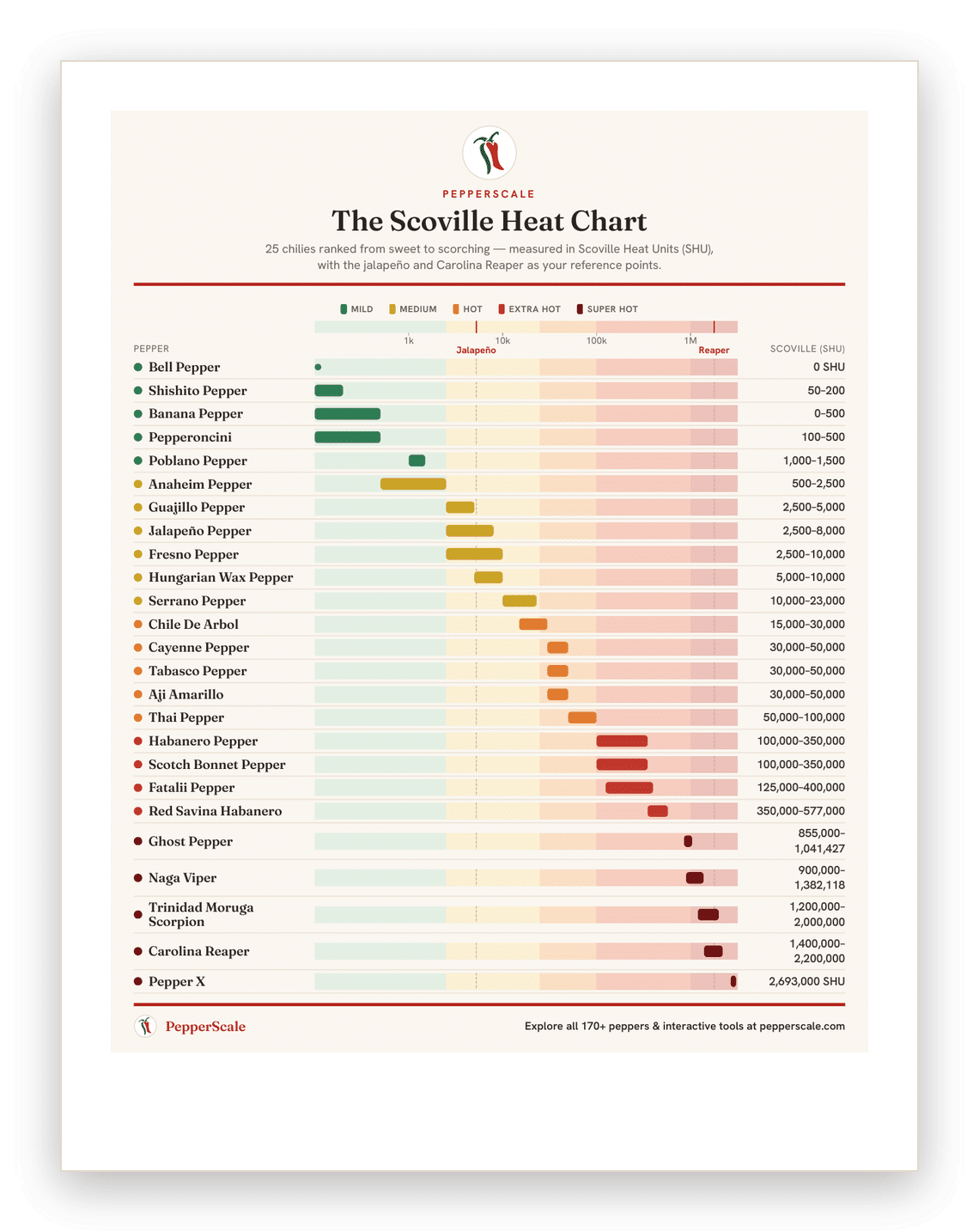
Get the free PepperScale Scoville Heat Chart
A printable, at-a-glance ranking of 25 chilies from sweet to scorching — with the jalapeño and Carolina Reaper as your reference points. Join the newsletter and we’ll send it straight to your inbox.
No spam — just Wicked Wednesday recipes and occasional extra dashes of chili pepper inspiration. Unsubscribe anytime.
Related reading
- Red Jalapeño vs. Green Jalapeño: The two shades of jalapeño, and how ripeness alone changes the flavor before you ever swap peppers.
- Fried Jalapeño Slices: Got extra jalapeños or serranos on hand? This crunchy, spicy appetizer puts them to work.
- Do Peppers Need to Be Refrigerated?: How to store your fresh chilies so your substitutes last as long as possible.
What is the ratio to substitute chili pepper for jalapeño? My recipe calls for a jalapeño but I only have 2 chili peppers. Thanks!
I don’t have either of those peppers,and I don’t really like heat so can I use sweet peppers to make poppers?