Got a recipe that calls for Old Bay and none in the house? Or maybe you eat plenty of seafood and fries and Old Bay’s flavor just isn’t your thing. Either way there are a few swaps that work, and which one you want depends on how close you’re trying to get.
Old Bay is a crab boil seasoning first, but it turns up on fries, popcorn, soup, and roasted vegetables. The flavor is complex without being loud — celery salt, paprika, a little heat, and a warm background of baking spices. You won’t match all of that from the spice rack. You can get close enough that nobody asks.


Last update on 2026-10-15. We earn a commission if you make a purchase, at no additional cost to you.
Make a homemade Old Bay substitute
If your spice rack is in decent shape, this is the best option here and the most flexible. The label tells you more than you’d expect. It reads celery salt (salt, celery seed), spices including red pepper and black pepper, and paprika, in that order. Ingredient lists run heaviest first, so celery salt is the bulk of the tin and paprika is the smallest of the three named things in it. That’s your backbone.
The word doing all the hiding is “spices.” McCormick doesn’t break it out. Wikipedia and a long run of copycat recipes settle on roughly the same list, and our what’s in Old Bay seasoning breakdown works from that same source:
- Bay leaf
- Mustard powder
- Mace
- Nutmeg
- Allspice
- Ginger
- Cloves
- Cardamom
You don’t need all eight. One or two of the warm spices over the celery salt and paprika base gets you most of the way there. Go light. Old Bay is aromatic rather than aggressive, and cloves in particular will take the whole thing over if you let them.
For a tested starting point, our homemade Old Bay seasoning is a measured version that works on seafood, chicken, and vegetables. It also lets you set the salt and the heat yourself, which the tin doesn’t.
A simpler “basic” option: celery salt and paprika
Barebones spice rack? This is the one that holds up. Celery salt and paprika are the two flavors people actually recognize as Old Bay, and since celery salt is the bulk of the tin, two ingredients get you further than it sounds like they should.
Start with equal parts and adjust from there. Add black pepper or crushed red pepper if you have them. Even the two-ingredient version does fine in simple dishes.
What you give up is the aromatics. On fries, roasted potatoes, eggs, or lightly seasoned fish you probably won’t notice. In a crab boil, where the blend is the whole point, you will.
Salt-free option: Use crushed celery seed in place of the celery salt and salt the dish separately.
Seasoning alternatives: Cajun or Creole seasonings
Cajun and Creole blends overlap with Old Bay on paprika, black pepper, garlic, and herbs. They land somewhere different, though.
Cajun runs hotter and more garlic-forward. Creole is more herb-driven and a little gentler. Neither tastes like a crab boil, but both work in most of the places Old Bay would have.
Start with less than the recipe asks for. Adding more is easy. Taking heat back out isn’t.
Our Old Bay vs. Cajun seasoning comparison covers where the swap holds up and where it falls apart. If Creole is the direction you’re heading, there’s a Creole seasoning substitute guide and a homemade Creole seasoning as well.
If you have it (an “in a pinch” solution): seasoned salt
Seasoned salt’s whole advantage is that everyone already has it. It’s usually salt, paprika, black pepper, garlic powder, onion powder, and sometimes a little red pepper.
It won’t give you the celery or the warm spices, but it keeps a dish from tasting flat, which is sometimes all you actually need. It works best where Old Bay was a finishing sprinkle rather than the main event.
Read the label first. Seasoned salts vary a lot in how salty they are, and you may need to pull the salt back elsewhere in the recipe.
Paprika-based seafood seasonings
Plenty of stores carry a generic seafood seasoning that leans on paprika and celery salt without ever mentioning Old Bay. These are the closest thing to a drop-in swap on this page, and they do the job on boiled shrimp, crab, and a fish fry.
Brands vary, so taste before you commit — especially if you’re seasoning for a crowd. And if paprika is the thing you’re actually short on, our paprika substitute guide covers that on its own.
Quick reference
| Substitute | Flavor Match | Heat Level | Best Uses |
|---|---|---|---|
| Homemade Old Bay blend | Very close | Mild | Seafood, fries, vegetables |
| Celery salt + paprika | Moderate | Mild | Fries, eggs, roasted vegetables |
| Cajun seasoning | Moderate | Medium to hot | Chicken, shrimp, stews |
| Creole seasoning | Moderate | Mild to medium | Seafood, rice dishes |
| Seasoned salt | Low to moderate | Mild | General seasoning, finishing |
| Seafood seasoning blends | Moderate | Mild | Crab boils, shrimp, fish |
Final thoughts
Old Bay is distinctive but it isn’t irreplaceable. Build the blend if you have the jars. Fall back on celery salt and paprika if you don’t. Reach for Cajun or Creole when you don’t mind the dish going somewhere slightly different. Season lighter than you think you need to and taste as you go, and most of these will get you where you were going.
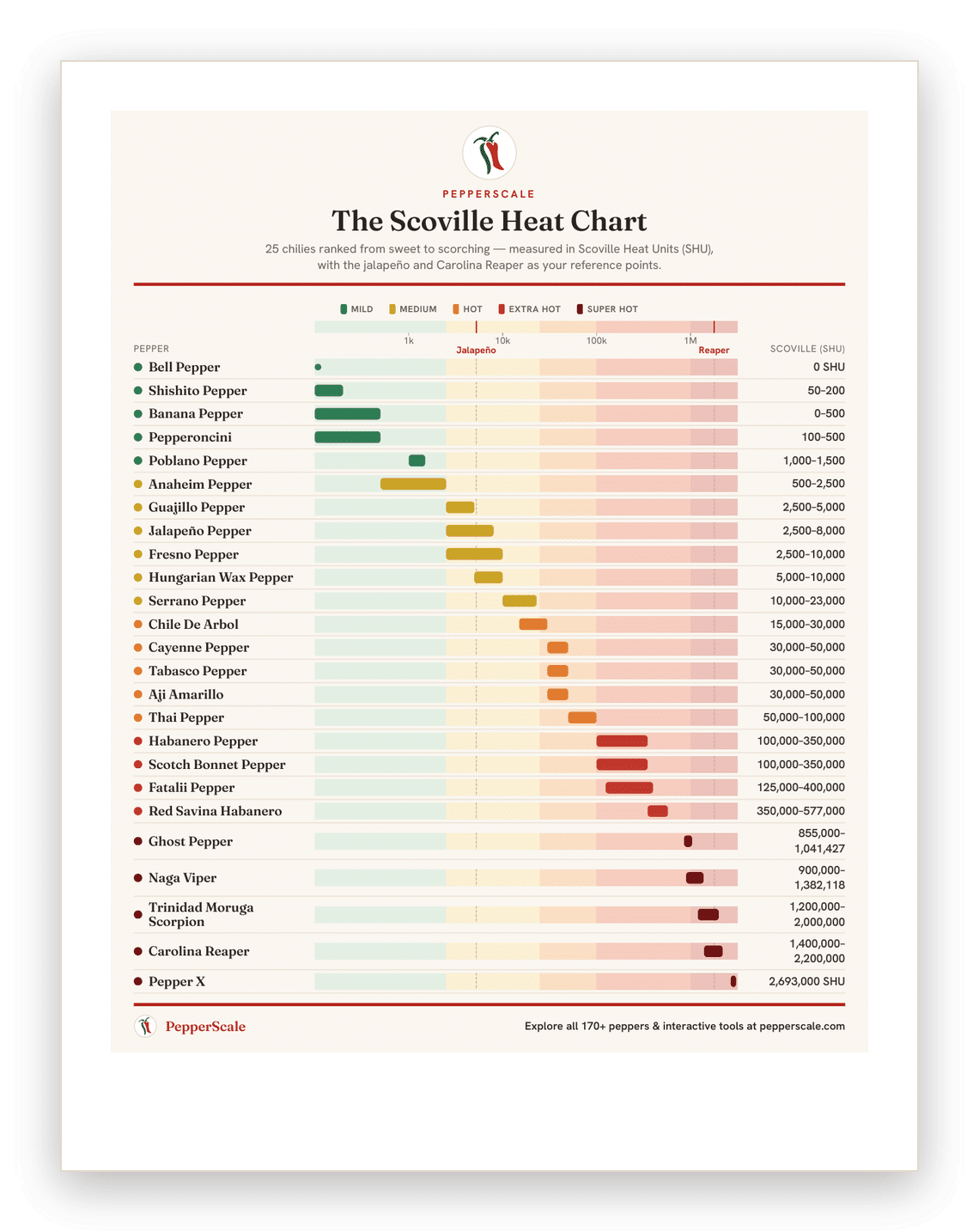
Get the free PepperScale Scoville Heat Chart
A printable, at-a-glance ranking of 25 chilies from sweet to scorching — with the jalapeño and Carolina Reaper as your reference points. Join the newsletter and we’ll send it straight to your inbox.
No spam — just Wicked Wednesday recipes and occasional extra dashes of chili pepper inspiration. Unsubscribe anytime.
Related posts
- Old Bay Hot Sauce Review: If you love the spice blend, you’ll love the hot sauce.
- Honey Old Bay Wings Recipe: Honey and the crab seasoning work incredibly well together.
- Old Bay Pickles Recipe: This seasoning blend works incredibly well with pickling recipes. These may be your new favorite pickles.