Tabasco and sriracha are two of the most recognisable bottles on the hot sauce shelf, and plenty of people treat them as interchangeable. They aren’t. One is three ingredients aged for years in oak barrels, the other a thick, garlicky sauce built on a single autumn harvest, and about the only thing they genuinely share is how hot they are.
Last update on 2026-10-12. We earn a commission if you make a purchase, at no additional cost to you.
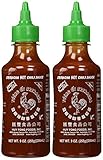
A quick note before we start: Tabasco is a brand, while sriracha is a style of sauce that anyone can make, and plenty of companies do. Here it means Huy Fong’s Sriracha Hot Chili Sauce, the bottle with the rooster, because that is the one most people picture. We’ve reviewed both in full, the Sriracha Hot Chili Sauce Review and the Tabasco Original Red Hot Sauce Review, so here we’re putting them side by side.
🌶️ Quick comparison
| Tabasco Original Red | Huy Fong sriracha | |
|---|---|---|
| Heat | 2,500 to 5,000 SHU | 2,200 to 2,500 SHU |
| Chili used | Tabasco pepper, 30,000 to 50,000 SHU | Red jalapeño, 2,500 to 8,000 SHU |
| Ingredients | Three: aged red peppers, salt, distilled vinegar | Chili, sugar, salt, garlic and vinegar, plus preservatives and a thickener |
| How it’s made | Mash aged up to three years in white oak barrels | Mash made in a two-month window each autumn |
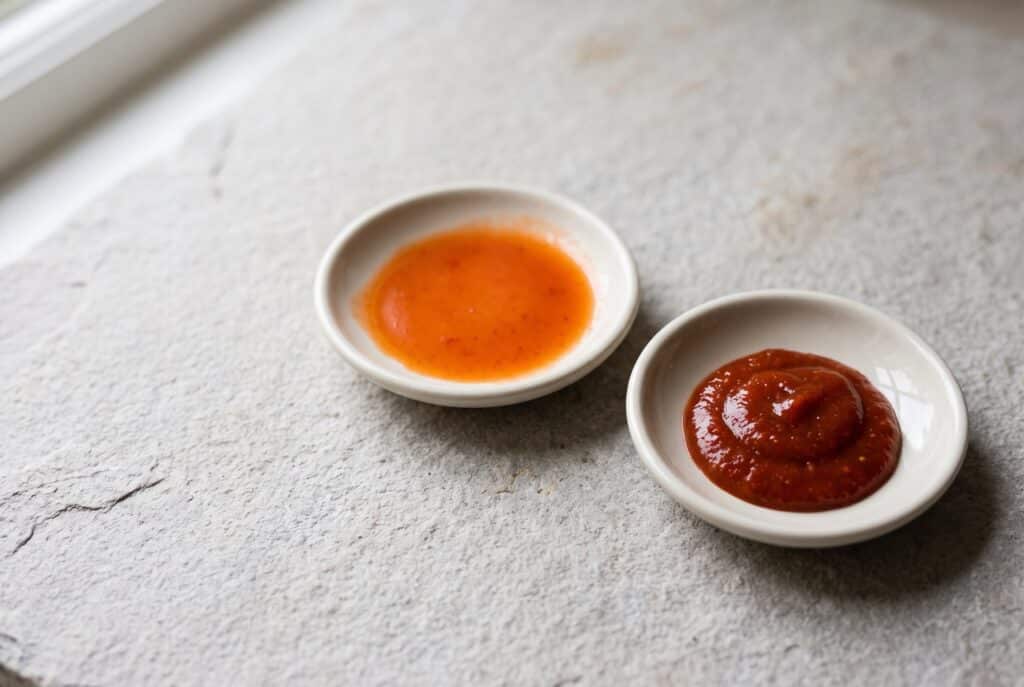
| Texture | Thin enough to splash | Thick enough to spoon |
| Leads with | Vinegar tang, with sweetness and smoke behind it | Garlic and sugar, with the chili right alongside |
| Best on | Cajun and southern food, eggs, fried food, wings, a Bloody Mary | Noodles, rice, sandwiches, roasted vegetables |
| Watch for | It can overpower a delicate dish | Supply gaps when the harvest falls short |
Which is hotter, Tabasco or sriracha?
Tabasco, and by less than you would guess. Both sauces land squarely in jalapeño territory, where most everyday tolerance lives. The gap between them is in fact narrower than the spread within jalapeños themselves, which run 2,500 to 8,000 Scoville heat units.
The odd part is what each sauce is built from. Tabasco uses the tabasco pepper, a frutescens chili running 30,000 to 50,000 SHU, while sriracha uses the red jalapeño at 2,500 to 8,000. So Tabasco starts with a pepper six to twelve times hotter and finishes barely hotter at all.
Proportion explains it. Tabasco is mostly vinegar with a little pepper mash in it, so the chili gets diluted hard. Sriracha is mostly chili, and its sauce heat tracks its pepper heat closely. If you’ve ever wondered why a sauce made from a serious chili tastes tame, that’s your answer.
What is in each one?
Tabasco is famously spare, with three ingredients and nothing else: aged red peppers, salt from Avery Island in Louisiana, and distilled vinegar.
Sriracha runs longer. Chili, sugar, salt, garlic and vinegar, then potassium sorbate and sodium bisulfite as preservatives and xanthan gum as a thickener. The sugar and the garlic are doing most of the work that makes it taste unlike Tabasco. And the xanthan gum is the reason it holds its shape on a plate instead of running off.


How is each one made?
Here’s the difference the labels don’t show you, and it matters more than the ingredient lists do.
Tabasco ages. The pepper mash goes into white oak barrels with salt and stays there for up to three years before it’s blended with vinegar and bottled. That’s a whiskey timescale, and it’s why the sauce tastes rounded instead of raw.
Sriracha doesn’t get that time. Huy Fong produces most of a year’s chili mash in a two-month window during the autumn harvest, and the sauce is built to taste of fresh chili and garlic. Neither approach beats the other, because they’re aiming at different things.
How does each taste?
As a Louisiana-style hot sauce, Tabasco leads with vinegar and that tang is the first thing you get, with the pepper arriving just behind it and a little sweetness and smoke underneath. The heat builds and then clears quickly. And it’s thin enough to splash, so a few drops season a dish without touching its texture.
Sriracha leads with garlic and sugar. Vinegar is in there as a background note instead of the headline, and the chili sits alongside the garlic rather than behind it. It’s thick enough to spoon, and that changes what it does to food: Tabasco seasons a dish, while sriracha joins it.
So the cuisines split along the same line. Tabasco belongs with Cajun and southern cooking, eggs, fried food, wings and a Bloody Mary, and it will bully a delicate dish if you’re heavy handed. Sriracha started out alongside Asian food and has since gone everywhere, working as a sauce in its own right on noodles, rice, sandwiches and roasted vegetables.
Can you substitute one for the other?
Not well, and the similar heat is what makes the mistake tempting. Two red sauces at roughly the same Scoville level look swappable on the shelf, but a vinegar-forward dasher and a sweet garlic sauce do very different jobs. Swap them on a fried egg and you’ll get away with it. Swap them in a recipe and you have changed the dish.
When you’re out of one, our sriracha substitutes guide covers the closer matches, and most of them are other thick chili-garlic sauces instead of anything Louisiana-style.
Which is easier to find?
Both are in nearly every supermarket, so on an ordinary week it is a tie. Over a longer stretch, though, Tabasco is the safer bet.
Huy Fong halted sriracha production in 2022, again in 2023 and again in 2024 after chili supply fell short, and shelves emptied each time. That two-month harvest window is the vulnerability, because one bad season leaves no second chance at it until the next one. Tabasco’s barrels hold years of mash at any given moment, and sriracha lacks that buffer.
Overall: same heat, different jobs
These two aren’t rivals so much as different tools that happen to meet at the same Scoville reading. Tabasco is a seasoning, aged and sharp, and it belongs at the table next to the salt. Sriracha is closer to an ingredient, sweet and garlicky and thick enough to matter in a bowl.
Most kitchens end up with both, and that’s the right answer. But if you can only keep one, pick by what you cook: vinegar for southern food and eggs, garlic for everything else.
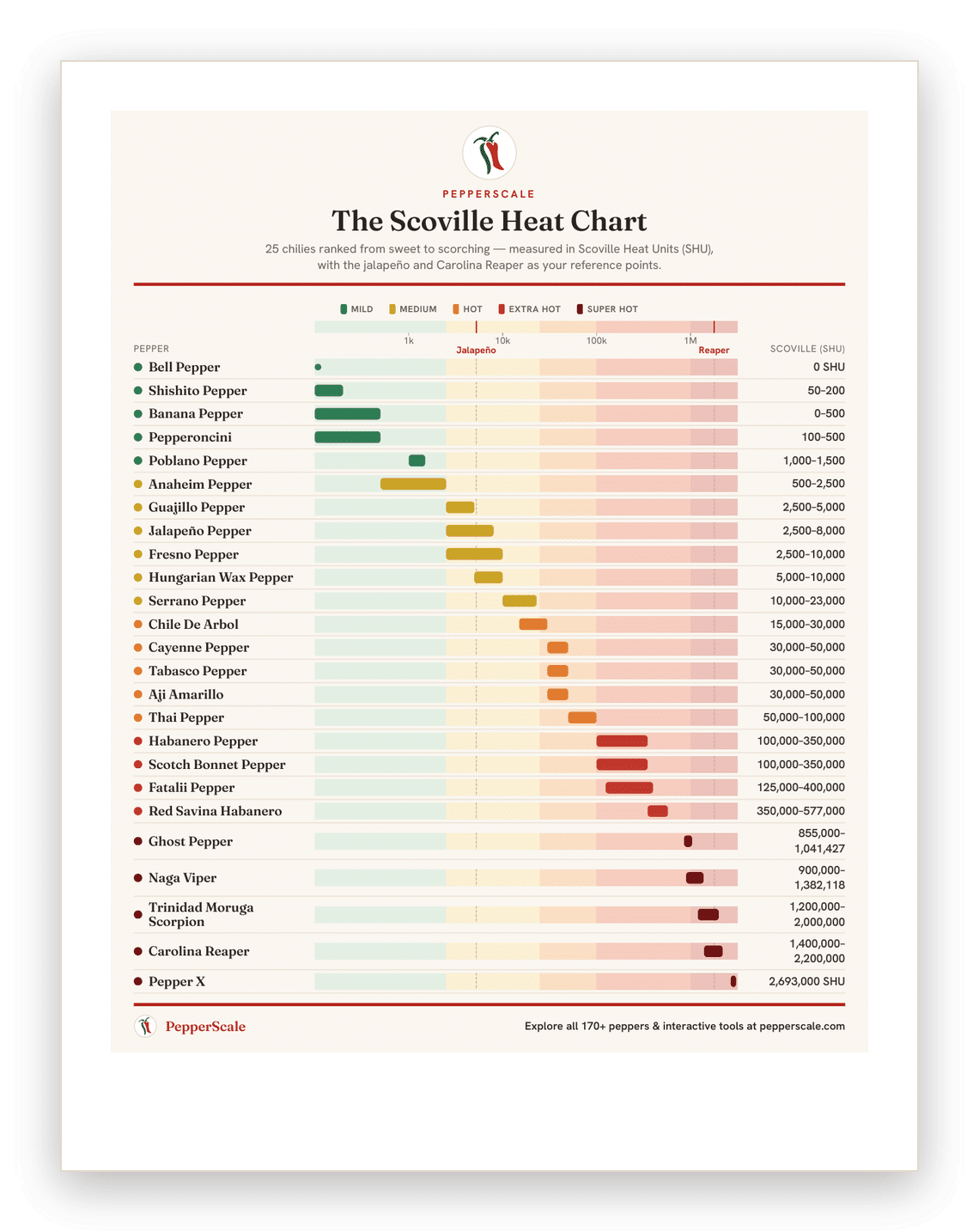
Get the free PepperScale Scoville Heat Chart
A printable, at-a-glance ranking of 25 chilies from sweet to scorching — with the jalapeño and Carolina Reaper as your reference points. Join the newsletter and we’ll send it straight to your inbox.
No spam — just Wicked Wednesday recipes and occasional extra dashes of chili pepper inspiration. Unsubscribe anytime.
Related reading
- Tabasco Scorpion Pepper Sauce Review: The hottest in Tabasco’s line, built on scorpion chilies. Worth knowing how far the brand goes.
- Our Hot Sauce Rankings: We rank over 100 hot sauces by flavor, heat balance, usability and collectibility.
- Homemade Sriracha Powder: Turn the sauce into a seasoning blend you can keep in the spice rack.