The California chile and the ancho are two of the mildest, most versatile dried chilies in the Mexican pantry — the gentle, sweet-earthy foundations under so many red sauces and moles. Both belong to the same Nutty, Earthy & Dried flavor family on our flavor map, which makes them frequent partners as much as rivals. Here’s how they stack up.

Last update on 2026-07-12. We earn a commission if you make a purchase, at no additional cost to you.
| California Chile | Ancho | |
|---|---|---|
| Scoville range | 500–2,500 | 1,000–1,500 |
| Median SHU | 1,500 | 1,250 |
| Vs. jalapeño | about 4× milder than a jalapeño | about 4× milder than a jalapeño |
| Aroma group | Nutty, Earthy & Dried | Nutty, Earthy & Dried |
| Origin | Mexico | Mexico |
| Uses | Culinary | Culinary |
| Loudest notes | Earthy, Sweet, Fruity | Earthy, Smoky, Sweet |
Which is hotter, the California chile or the ancho?
This one’s practically a tie. The California chile runs 500 to 2,500 Scoville heat units, and the ancho sits at 1,000 to 1,500 SHU, a range that fits neatly inside the California chile’s own. The ancho has a slightly higher floor, the California chile a slightly higher ceiling, but in a finished dish you’d be hard-pressed to tell them apart on heat. Both are firmly mild, several times gentler than a jalapeño.
How does each taste?
Since they share the Nutty, Earthy & Dried flavor family, the difference is one of depth and intensity within a common character — a same-group comparison, not a flavor-family change.
The California chile is the lighter, more neutral of the two: mellow sweet dried-fruit over a soft, earthy base, smooth and easygoing. The ancho takes that same profile and deepens it — richer and sweeter, with pronounced raisin and prune notes and a distinct undercurrent of cocoa. If the California chile is the clean “color and body” base, the ancho is the one that brings sweetness and mole-like depth. Neither is hot; the contrast is entirely about richness.
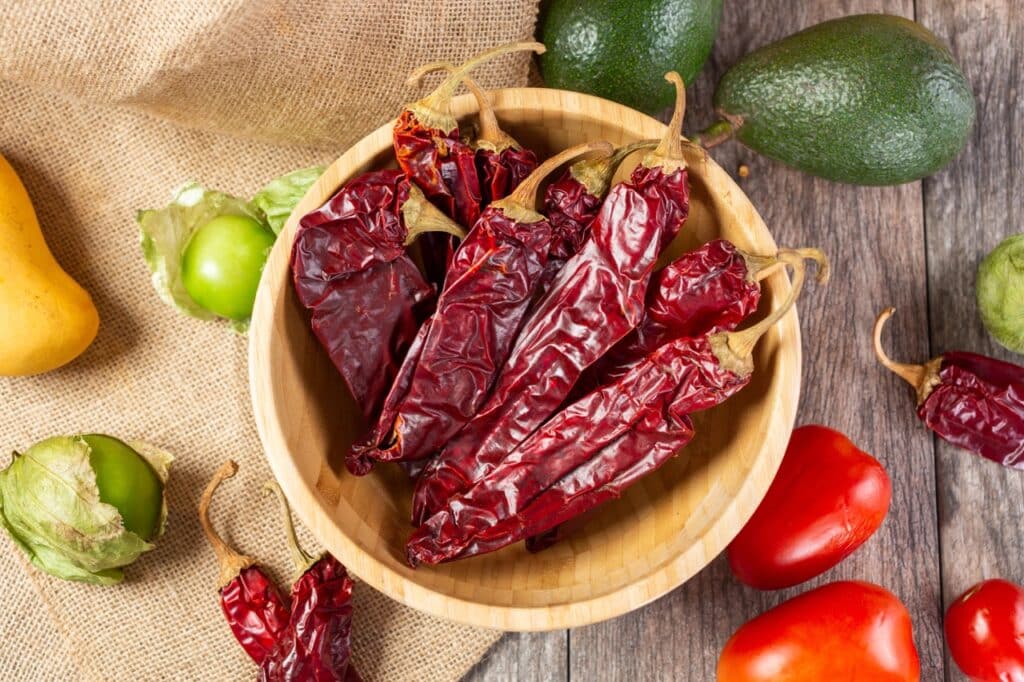

What does each look like?
The California chile is a flat, fairly smooth, deep brick-red pod, five to seven inches long and pliable. The ancho is unmistakable next to it: wide and heart-shaped, heavily wrinkled, and so dark a reddish-brown it can look nearly black. That wrinklier, thicker pod also carries more flesh, part of why the ancho blends into such a full-bodied sauce.
Which is easier to find?
The ancho has the availability edge — it’s arguably the single most common dried Mexican chili on North American shelves, a staple of the Latin aisle. The California chile is easy to find in the Southwest and in Latin markets, but it’s sometimes sold under other names (the similar “chile California” or chile seco del norte), so it can take a bit more looking by name.

Last update on 2026-07-12. We earn a commission if you make a purchase, at no additional cost to you.
Which is more useful in the kitchen?
Both are mild sauce-and-mole chilies, and they’re often used side by side. The California chile shines as a smooth, sweet, color-and-body base — the backbone of a gentle red enchilada sauce or chile Colorado. The ancho is the sweetness-and-depth chili pepper, a cornerstone of mole poblano and rich adobos, and one-third of the classic mole trinity with guajillo and pasilla. Reach for the California chile when you want mellow and clean; reach for the ancho when you want deeper and sweeter.
Overall: same family, different depth
The California chile and the ancho are close cousins that mostly differ in richness. The California chile is lighter and more neutral, an easy base that lets other flavors lead; the ancho is sweeter, deeper, and more assertive, bringing raisin-and-cocoa body of its own.
That kinship is why the ancho is one of the best California chile substitutes (expect a sweeter, richer result) and why a guajillo-and-ancho blend is the reliable way to rebuild the California chile’s mellow middle when you’re out of it.
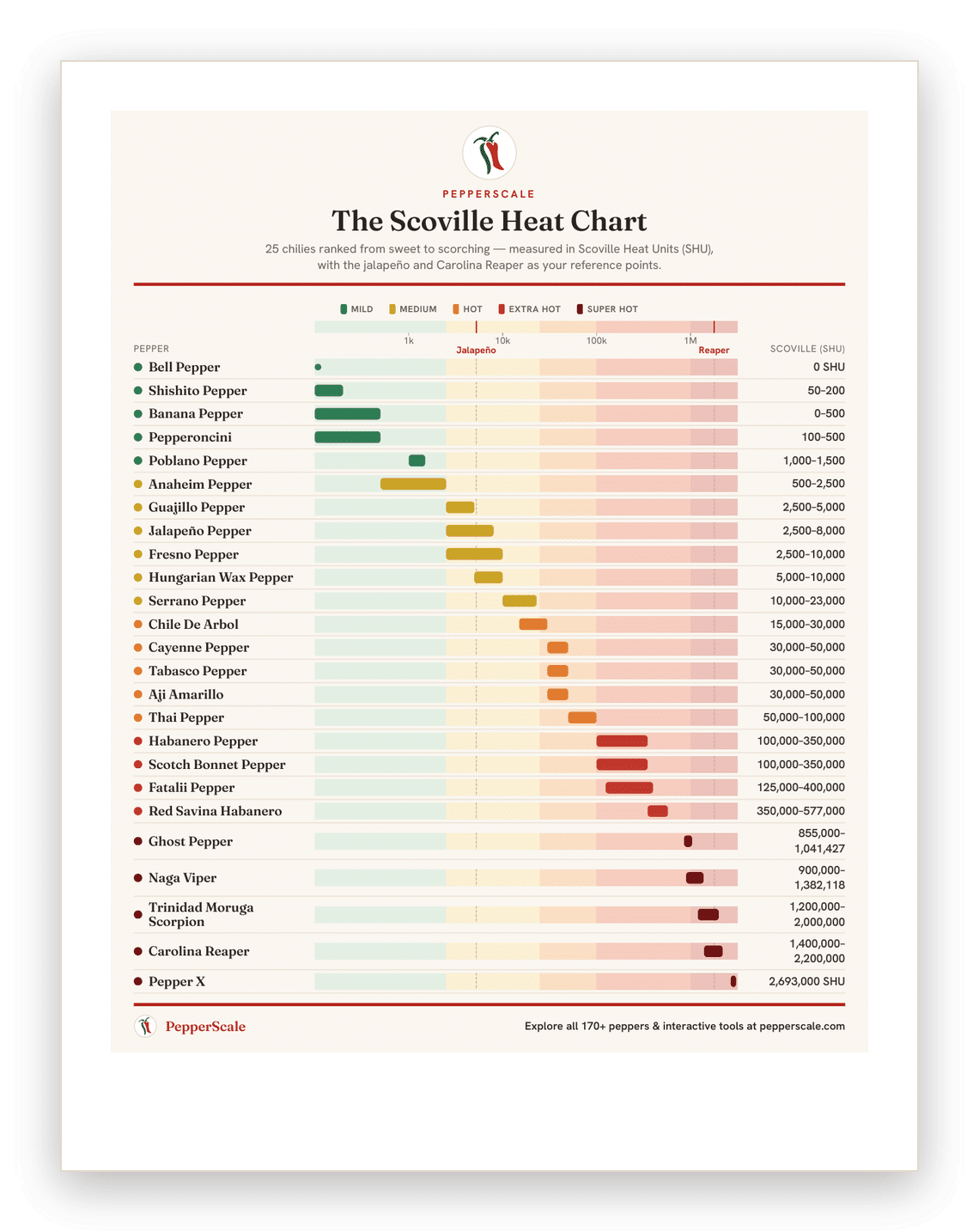
Get the free PepperScale Scoville Heat Chart
A printable, at-a-glance ranking of 25 chilies from sweet to scorching — with the jalapeño and Carolina Reaper as your reference points. Join the newsletter and we’ll send it straight to your inbox.
No spam — just Wicked Wednesday recipes and occasional extra dashes of chili pepper inspiration. Unsubscribe anytime.
Related reading
- The Hot Pepper List: Explore 170-plus chilies, searchable by name, flavor, heat, and origin.
- How To Rehydrate Peppers: Learn the best practices to get the most flavor from your dried chilies.
- Our Hot Sauce Rankings: 100-plus hot sauce reviews, searchable by the chilies used in each one.