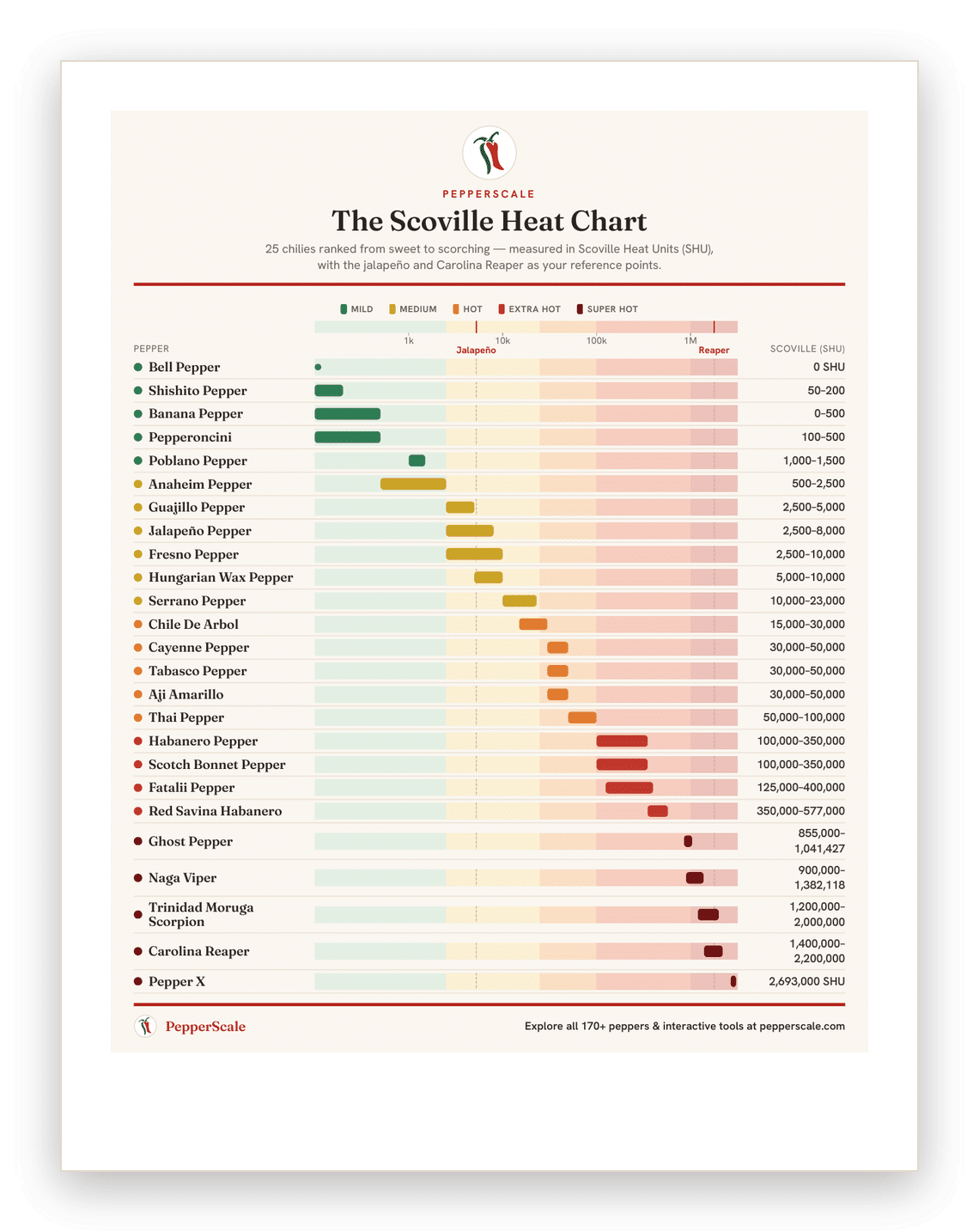
A pepper’s Scoville rating tells you how fierce that chili is on its own — but it says surprisingly little about how hot your finished dish will be. The moment a pepper goes into the pot, its heat spreads across every other ingredient, so a couple of fiery peppers in a big batch of soup can land far milder than their rating suggests.
This calculator does that math for you: choose the pepper you’re using, how much, and the total size of the dish, and it estimates the effective heat of the finished food instead of the raw pepper. It’s the difference between knowing a habanero is hot and knowing whether your salsa will be.
Take our tools with you! Every PepperScale tool lives in one free app that runs right on your phone, even offline, perfect for real-time supermarket and kitchen support. Save it to your home screen for one-tap access:
- iPhone (Safari): tap Share, then Add to Home Screen.
- Android (Chrome): tap the menu (⋮), then Add to Home Screen.
Estimate the effective Scoville heat of a finished dish by spreading one pepper's heat across the total weight of food.
Pick a pepper to load its published SHU range, or enter a sauce/extract rating directly.
Total weight of everything in the finished dish — the heat gets spread across all of it. Pick a common dish for a typical weight, or enter your own.
None of these change the measured concentration — they change how hot it tastes, and they stack with each other.
▶ Model assumptions (editable)
Published SHU is treated as the fresh-pepper concentration. The form factors scale heat-per-gram relative to fresh; dried forms are more concentrated because water is gone. If your source rating is already for the dried/powder form, set the fresh and dried factors closer to equal.
- It's a concentration, not perceived heat. Fat, dairy, sugar, acid, and starch all blunt the burn without changing the chemistry — a creamy dish reads milder than the math says.
- Cooking doesn't destroy it. Capsaicin is fat-soluble and heat-stable, so simmering or roasting barely touches the total heat.
- Servings don't change heat-per-bite. Splitting the dish into more portions only lowers the total dose each person eats, not how hot a mouthful tastes.
- Treat the output as a range and a band, never a single confident SHU figure. The inputs (especially dish weight and seed removal) carry real uncertainty.
The method behind the heat: why mango lifts a habanero, why fat tames the burn, and how to pair any chili by flavor instead of guesswork. A field guide to 30 peppers, three pairing principles, and a dozen real dinners that put it all on the plate.
Wicked Wednesday subscribers save 15% — join free.