Somewhere along the way, a tidy little rule took hold: bell peppers come in male and female, and you can tell which is which by flipping one over and counting the bumps on the bottom. It spreads every year across social feeds and produce aisles, usually with a confident diagram attached. It’s wrong. But it’s wrong in a way that opens a door onto some genuinely strange and wonderful pepper botany, so it’s worth doing more than just saying “nope.”

The theory, stated fairly
The claim goes like this. The lobes, those rounded bumps on the blossom end of a bell pepper, reveal its sex. Three bumps means male; four means female. And the sex supposedly tells you how to use it: males are leaner, better for cooking, while females carry more seeds, taste sweeter, and are the ones to eat raw. It sounds authoritative, it gives you a quick shortcut at the store, and that’s exactly why it has legs. There’s just one problem. A pepper can’t be male or female in the first place.
The heart of it: a pepper is a fruit
Here’s the category error the whole myth is built on. A bell pepper is a fruit. Botanically it’s a berry, the ripened ovary of the plant’s flower, grown up around its seeds. And a fruit doesn’t have a sex any more than an apple or a tomato does. Sex, in a plant, is a property of the flower, not of the fruit the flower leaves behind. So asking whether a pepper is male or female is a bit like asking whether an egg is left-handed. It’s the wrong question aimed at the wrong part of the plant.
What actually happens at the flower (and it’s both at once)
Follow it back to the flower and the picture gets more interesting, not less. Pepper plants produce what botanists call perfect flowers: each single blossom carries both the male parts (the pollen-bearing stamens) and the female parts (the pistil, with the ovary at its base). One flower, both sexes, fully equipped. Peppers are also largely self-pollinating, so that lone flower can fertilize itself with nothing more than a breeze or the buzz of a passing bee to shake the pollen loose.
Every pepper you’ve ever eaten, then, is the fruit of a flower that was thoroughly male and female at the same moment. The pepper isn’t one sex or the other. If anything, it’s the leftover of something that was both. The whole nightshade family works this way, which puts peppers in the same club as tomatoes, eggplants, and potatoes.
So what are the bumps, really?
If the lobes don’t mark a sex, what do they mark? Anatomy. As that ovary swells into a pepper, it’s divided inside into segments called carpels, the chambers you see when you cut one open and find the seed-studded core split into rooms. Each carpel pushes out a matching lobe on the outside, so counting the bumps is really just counting the pepper’s internal chambers from the outside in. Bell peppers commonly run two to five lobes, not the neat three-or-four the myth insists on, and how many a given pepper has comes down to its variety and growing conditions. The most popular U.S. bell has been bred toward four blocky lobes, which is a big part of why the number four feels so “normal.” It’s genetics and breeding, not gender.
–> Go deeper: Pepper Anatomy: What’s Inside Your Chili Pepper?
The one real thing the lobes do tell you
Now, the people who swear by counting bumps aren’t imagining things entirely, and it’s worth giving them their due. Lobe count really does track one thing: shape, and the flesh that comes with it. A four- or five-lobed pepper is blockier and meatier, with thicker, flatter walls, and it tends to sit upright on its base, which makes it the better pick for stuffing and the better value if you’re buying by the pepper and want the most edible flesh for your money. A two- or three-lobed pepper is usually more tapered and curved. So counting the bumps is a perfectly good habit. It just tells you about a pepper’s build, not its sex or its sweetness.
What actually makes a pepper sweet (or hot)
Sweetness, the real prize behind the myth, has nothing to do with lobes. It’s driven by ripeness above all: a green bell is simply an unripe one, and if you leave it on the plant to turn red, yellow, or orange, its sugars climb and it grows markedly sweeter, three lobes or four. Variety, soil, sun, and water fill in the rest.
Heat works the same way for the spicy members of the family. A chili’s burn comes from capsaicin concentrated in the pale inner ribs, and how much it carries is a matter of variety, of ripeness, and of how hard the plant had to work. A pepper stressed by heat and thirst will often fruit hotter than a pampered one. None of that is written in the bumps either. If you want to dig in, we’ve covered whether cooking changes a pepper’s heat and the truth about eating pepper seeds.
Why the myth sticks
Part of it is that a good shortcut is irresistible, and “just count the bumps” is a great shortcut, so we want it to be true. Part of it is confirmation bias: buy a four-lobed pepper that happens to be sweet, and the rule feels confirmed, while the times it fails quietly slip your memory.
You can watch it happen in the wild, too. Ask around and you’ll hear people insist the four-bump peppers are the firm ones for cooking and the three-bumps are the sweet, tender ones for salads, which is the exact reverse of the “official” version of the legend. When two versions of a rule contradict each other and both have loyal believers, that’s a strong sign the rule is really just coincidence wearing a lab coat.
The twist: some plants genuinely do have a sex
Here’s what makes the myth forgivable. The instinct behind it isn’t botanically crazy. It’s just aimed at the wrong plant.
Plenty of plants really are male and female. Holly, kiwi, asparagus, date palms, ginkgo, and cannabis are dioecious, meaning individual plants are one sex or the other, and you need both a male and a female nearby to get berries or fruit at all. Others, like squash, cucumbers, and corn, are monoecious: a single plant, but with separate male flowers and female flowers on it. So the idea of male and female in the plant world is real and important, and any gardener growing holly or kiwi has to think about it carefully. Peppers simply aren’t that kind of plant. They pack both sexes into every flower and hand you a genderless fruit at the end.
A strange bonus: the pepper inside a pepper
Once you know peppers grow from a self-contained little reproductive package, one of their odder tricks makes more sense. Slice open a bell now and then and you’ll find a small, pale, deformed second pepper growing inside the cavity, as if the fruit were carrying its own offspring. It’s called internal proliferation, and gardeners affectionately call the result a “pepper baby.” It’s thought to be triggered by cool temperatures and hormonal quirks while the fruit is forming, prompting the internal seed structures to develop into a miniature, usually seedless fruit of their own. It’s harmless, perfectly edible, and a fittingly weird footnote for a plant this reproductively self-sufficient.
Tying it all together
There is no such thing as a male or a female pepper. The pepper is a fruit, sex belongs to the flower, and the pepper flower is both sexes at once. The bumps on the bottom are real and worth reading, just for the pepper’s shape and flesh rather than its imaginary gender. Want a sweeter pepper? Buy one that’s ripened past green into full color. Want the most to eat, or a sturdy vessel for stuffing? Go blocky and heavy. And when someone flips a pepper over to check its sex at the store, you’ve now got a far better story to tell them.
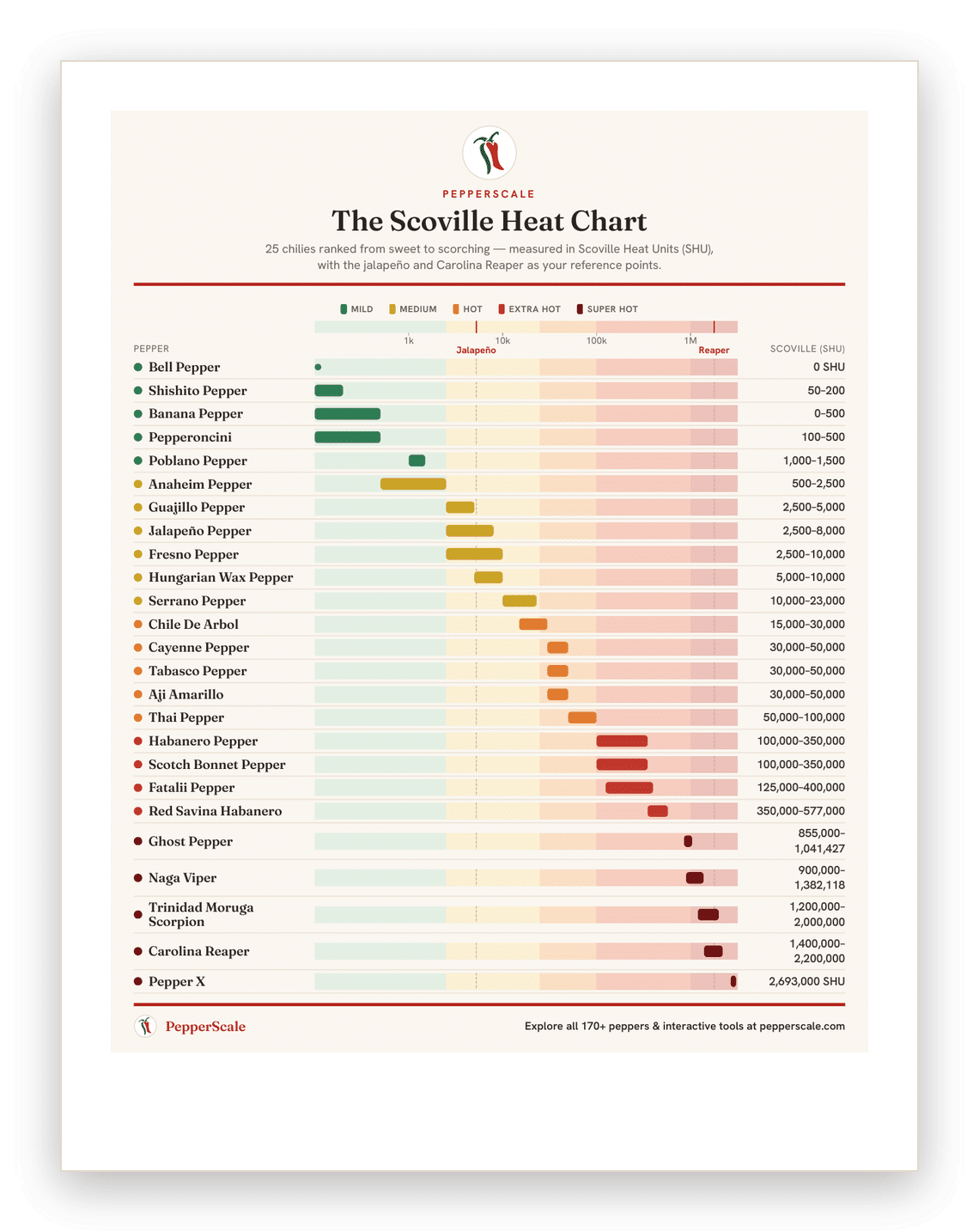
Get the free PepperScale Scoville Heat Chart
A printable, at-a-glance ranking of 25 chilies from sweet to scorching — with the jalapeño and Carolina Reaper as your reference points. Join the newsletter and we’ll send it straight to your inbox.
No spam — just Wicked Wednesday recipes and occasional extra dashes of chili pepper inspiration. Unsubscribe anytime.
Related reading
- Is Spicy a Flavor?: Another Fact or Fiction, digging into whether “spicy” is a taste at all or something else entirely.
- Does Cooking Peppers Make Them Hotter?: What actually happens to a chili’s heat in the pan.
- Eating Pepper Seeds: The Fact and Fiction: Can you eat them, and do they really make a dish hotter?
As a former Senior Journeyman Produce clerk I can say that I have heard this before, but as a frugal shopper let me point out that bell peppers are most often sold by the each. This means buy the biggest ones getting more for your money, and the four lobed ones should have more edible flesh than those with less lobes. I’m sure this varies ,but this should hold true in relation to the the stock with which it was picked.
I heard this, don’t know about the sex thing, but I like my green peppers with my scrambled cheese eggs. So, I saute some 4 bumps and 3 bumps in a skillet, The 4’s stayed firm, 3’s were to soft… Put some of each in a salad and 4’s were to firm, 3’s were sweet and tender..
Thanks very much for the info. This makes so much sense especially since some cites say one thing and others say the opposite thing. My husband & I were checking which amount of bumps was for eating & which for cooking since he was going to the store to buy for both uses.
Thanks again for solving our dilemma.