If you grow banana peppers, you already know the problem: the plant doesn’t hand you two or three at a time, it hands you thirty. And if you buy them, you’ve probably defaulted to the same move every time, which is slicing a few rings onto a sandwich and forgetting the rest in the crisper drawer.
There’s a lot more here than that. Banana peppers take to pickling better than almost any chili, they freeze without fuss, they stuff, they char, and they turn into a very good jam. Below is what to actually do with them, sorted by whether you’re trying to save a big harvest, cook something, or just top a plate.

Last update on 2026-10-15. We earn a commission if you make a purchase, at no additional cost to you.

What banana peppers bring to a dish
Tangy and fresh, with a little sweetness and almost no heat. They top out around 500 Scoville heat units, and plenty of pods land at zero, so they sit much closer to a bell pepper than to anything that will make you sweat. If you want that comparison drawn properly, we put them head to head with the jalapeño.
That mildness is the whole point. A banana pepper adds brightness and a little crunch without taking over, which is why it works in places a hotter chili would bully. Their shape helps too: long, tapered, hollow, and thin-walled, which makes them ideal for slicing into rings and roomy enough to stuff.
One thing worth watching for. Banana peppers and pepperoncini look close to identical in a jar, and they’re frequently mislabeled at the deli counter. If a jar tastes sharper and more bitter than you expected, you probably bought pepperoncini.
Preserve a glut of them
Pickle them
This is the best thing you can do with a big pick, and it’s genuinely easy. Sliced into rings in a vinegar brine, they keep for weeks in the fridge and get tangier as they sit. Our pickled banana peppers recipe is a refrigerator pickle, so there’s no canning equipment involved. One nice bonus: they hold their pale yellow-green color better than most peppers do in a brine. A pickled jalapeño turns a drab olive, while banana rings come out looking close to how they went in.
Cook them into a jam or jelly
Pepper jelly is the most underrated thing on this list, and it turns a large pile of mild peppers into a condiment you will use on cheese boards, sandwiches, and roast pork all year. It takes more than pureed peppers and pectin, though: you need a lot of sugar and an acid, usually vinegar or lemon juice, or it won’t set and it won’t keep. Our spicy red pepper jam leaves the chilies up to you, so banana peppers drop straight into it for a milder, sweeter batch.
Freeze them
The lowest-effort option by a wide margin. Slice them into rings, spread them on a tray to freeze loose, then bag them. No blanching needed. Freezing does cost you the crunch, so treat frozen rings as a cooking ingredient rather than a salad one: they go straight from the freezer into sautés, soups, chili, and anything baked.
Save the brine (for pickled banana peppers)
When the jar is finally empty, don’t tip the brine down the sink. It’s seasoned, acidic, and free, and it works as a marinade for chicken, a splash in potato salad or coleslaw, or the acid in a salad dressing. We wrote up nine uses for leftover pepper brine for pepperoncini juice, and every one of them applies here.
Cook with them
Stuff and bake them
They’re narrower than a bell pepper, so think appetizer rather than dinner: halved lengthwise, filled, and baked until the filling browns. Cream cheese, sausage, breadcrumbs, and a sharp grated cheese all work. Our cheese stuffed cherry peppers adapt directly, and banana peppers are the easier pepper to work with because you can actually get a spoon into them.
Char or roast them
Thin walls mean they blister fast under a broiler or over a flame. Charring does what it does to any pepper, trading the raw green snap for something softer and sweeter, and it’s the fastest way to make a mild pepper taste like more than it did raw. Peel the blackened skin off if you want them silky, or leave it for the smoke.
Sauté them with sausage and onions
The classic sausage-and-peppers move, and banana peppers are a better fit for it than most people realize. They soften quickly, they hold enough tang to cut the fat of the sausage, and they won’t overpower the fennel and pork the way a hotter chili does. Pile the result into a roll or serve it over polenta.
Blend them into a salsa
A mild salsa where the pepper is the flavor rather than the heat. Banana peppers bring the acidity to work with tomatoes and cilantro directly, so you need less lime than a jalapeño salsa asks for. Add a single hotter chili if you want a floor of heat under it.
Pile them on
Everything above changes the pepper. This is the category where you just put the rings on top of something, and it’s the reason most jars get bought:
- Subs and cold cuts: The obvious one. The tang cuts through cured meat and cheese the way a pickle does, with more of a fresh, green edge.
- Pizza: They stand up to the oven and go particularly well with pepperoni and other cured meats, plus onions or arugula.
- Hot dogs and burgers: Use them in place of cucumber pickles, or as the pepper on a cheesesteak.
- Salads and slaws: Raw rings for crunch and sweetness, or pickled ones to cut through a creamy, mayonnaise-based dressing.
- Tacos: Not traditional, but the tang and the crisp texture do the same job a pickled jalapeño does with none of the burn.
- Eggs: Chopped into scrambled eggs, an omelette, or a frittata, where the acidity keeps things from tasting flat.
Fresh or pickled: which should you use?
Reach for fresh when texture is the point. Raw rings in a salad, a slaw, or a salsa keep a real snap that a pickled pepper has traded away, and fresh peppers taste greener and more vegetal, which is what you want when they’re going into a pan.
Reach for pickled when you want the tang to do work. On anything rich, fatty, or cured, the acidity is the whole reason the pepper is there, and pickling amplifies exactly the sharpness the pepper already has. Pickled rings also last for weeks instead of days, so if the peppers are about to turn, the jar is the answer.
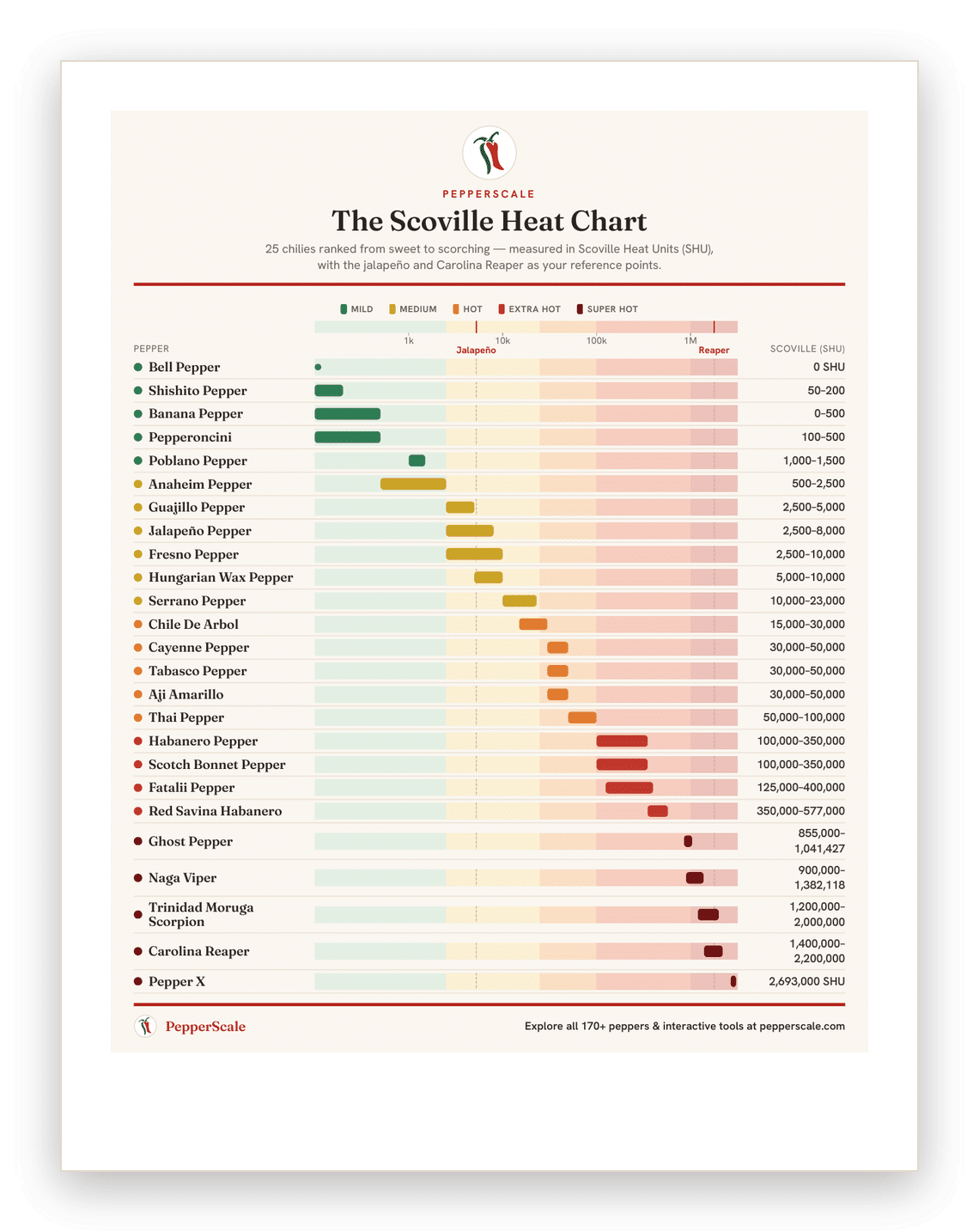
Get the free PepperScale Scoville Heat Chart
A printable, at-a-glance ranking of 25 chilies from sweet to scorching — with the jalapeño and Carolina Reaper as your reference points. Join the newsletter and we’ll send it straight to your inbox.
No spam — just Wicked Wednesday recipes and occasional extra dashes of chili pepper inspiration. Unsubscribe anytime.
Related Reading
- The Hot Pepper List: Browse 170-plus chilies by name, heat, flavor, and origin to find your next favorite.
- The Banana Pepper Planting Guide: If this list has you eyeing a bigger harvest, here’s how to grow them well.
- What’s A Good Banana Pepper Substitute?: Caught mid-recipe without any, or want the same shape with more kick.