The California chile and the ancho are two of the mildest, most versatile dried chiles in the Mexican pantry, the gentle, sweet-earthy foundations under so many red sauces and moles. Both are dried peppers rather than fresh, both belong to our Nutty, Earthy & Dried flavor family, and both earn their keep as background builders rather than heat sources. That shared job makes them frequent partners as much as rivals, and it’s exactly why cooks so often want to know which one a recipe really needs. Here’s how they stack up.

Last update on 2026-10-15. We earn a commission if you make a purchase, at no additional cost to you.
| California Chile | Ancho | |
|---|---|---|
| Scoville range | 500–2,500 | 1,000–1,500 |
| Median SHU | 1,500 | 1,250 |
| Vs. jalapeño | about 4× milder than a jalapeño | about 4× milder than a jalapeño |
| Aroma family | Nutty, Earthy & Dried | Nutty, Earthy & Dried |
| Origin | Mexico | Mexico |
| Uses | Culinary | Culinary |
| Loudest notes | Earthy, Sweet, Fruity | Earthy, Smoky, Sweet |
Which is hotter, the California chile or the ancho?
This one’s practically a tie. The California chile runs 500 to 2,500 Scoville heat units, and the ancho sits at 1,000 to 1,500 SHU, a range that fits neatly inside the California chile’s own. The ancho has a slightly higher floor, the California chile a slightly higher ceiling, but in a finished dish you’d be hard-pressed to tell them apart on heat.
For scale, a jalapeño runs 2,500 to 8,000 SHU, so even the hottest California chile only reaches a jalapeño’s mild end, and both of these chiles usually land well below it. And because they’re almost always toasted, soaked, and blended into a sauce that then simmers, whatever modest heat they carry spreads thin across the whole dish. In practice, neither pepper is chosen for spice at all. They’re chosen for what they bring underneath it.
How does each taste?
Both sit in our Nutty, Earthy & Dried flavor family, so this is a difference of depth and richness within a shared character, not a jump from one flavor world to another. The California chile is the lighter, more neutral of the two: a mellow, sweet dried-fruit note over a soft, earthy base, smooth and easygoing. The ancho takes that same profile and deepens it, richer and sweeter, with pronounced raisin and prune notes and a distinct undercurrent of cocoa. If the California chile is the clean “color and body” base, the ancho is the one that brings sweetness and mole-like depth. Neither is hot; the contrast is entirely about richness.
Part of that gap traces back to what each pepper starts as. The ancho is a dried, fully ripened poblano, and that ripening is where its raisin-and-cocoa sweetness comes from. The California chile is the dried form of a mild Anaheim pepper, a lighter, cleaner pepper to begin with, which is why it dries down to something more restrained. A quick toast in a dry pan wakes both of them up before they go into a sauce, blooming their oils and deepening the flavor, but be careful: dried chiles this thin scorch fast, and a burnt one turns bitter in seconds.

What does each look like?
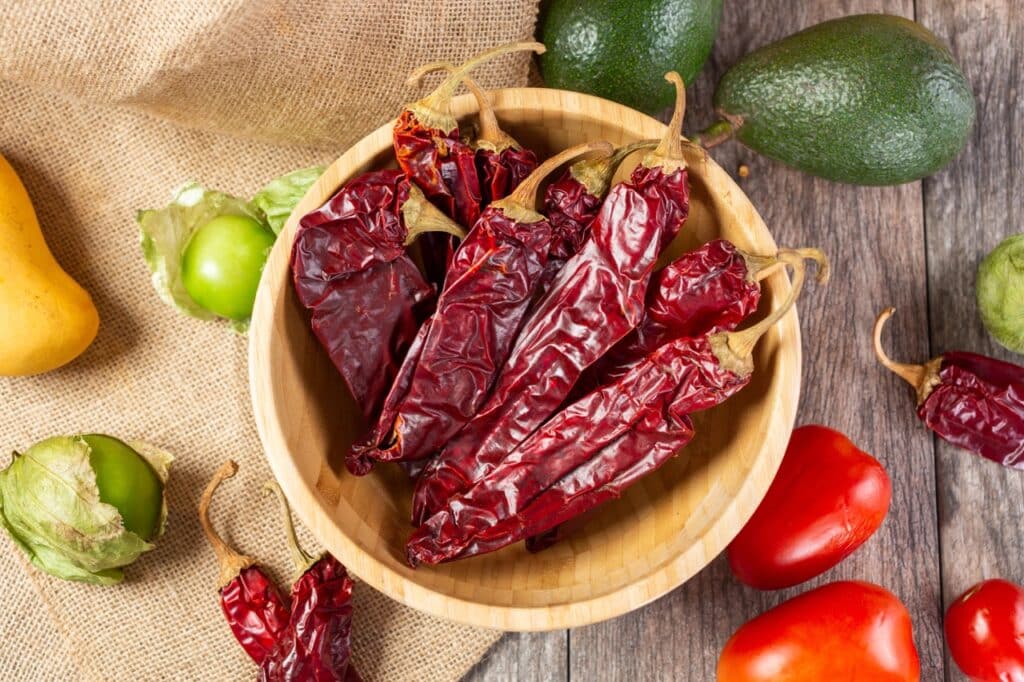
The California chile is a flat, fairly smooth, deep brick-red pod, five to seven inches long and pliable. The ancho is unmistakable next to it: wide and heart-shaped, heavily wrinkled, and so dark a reddish-brown it can look nearly black. That wrinklier, thicker pod also carries more flesh, part of why the ancho blends into such a full-bodied sauce.
With any dried pepper, the tell for freshness is flexibility. A good pod still bends and folds like soft leather; one that’s gone brittle and snaps has dried out too far and will have lost much of its aroma. The ancho’s meatier walls help it stay supple longer, while the thinner California chile can cross into brittle sooner on the shelf, so it’s worth a quick squeeze before you buy either one.
Which is easier to find?
The ancho has the availability edge. It’s arguably the single most common dried Mexican chili pepper on North American shelves, a staple of the Latin aisle in most supermarkets. The California chile is easy to find in the Southwest and in Latin markets, but it’s sometimes sold under other names (chile California or chile seco del norte), so it can take a bit more looking by name.
There’s a second naming trap worth knowing: the California chile is closely related to, and easily confused with, the dried New Mexico chile. They come from the same broad Anaheim family, but the New Mexico version tends to run hotter and a touch more assertive, while the California chile is the milder, mellower sibling. If a bag simply reads “dried red chile” with no origin, a taste (or a look at the Scoville range on the label, if there is one) is the surest way to know which you’ve actually got.

Last update on 2026-10-15. We earn a commission if you make a purchase, at no additional cost to you.
Which is more useful in the kitchen?
Both are mild sauce-and-mole chiles, and they’re often used side by side rather than in place of each other. The California chile shines as a smooth, sweet, color-and-body base, the backbone of a gentle red enchilada sauce or chile Colorado. The ancho is the sweetness-and-depth pepper, a cornerstone of mole poblano and rich adobos, and one-third of the classic mole trinity with guajillo and pasilla. Reach for the California chile when you want mellow and clean; reach for the ancho when you want deeper and sweeter.
Using either one follows the same short ritual, which is worth knowing if you’ve only ever cooked with fresh chilies or powders. Stem and seed the pods, toast them briefly in a dry skillet until fragrant, then soak them in hot water until soft, usually fifteen to twenty minutes, and blend the softened flesh into a smooth paste or sauce. That soaking liquid picks up plenty of flavor too, so many cooks reserve it to thin the sauce or build a broth. It’s a small extra step compared to a jar of chili powder, but it’s the whole reason these dried chilies taste so much rounder and deeper than any powder can.
Overall: same family, different depth
The California chile and the ancho are close cousins that mostly differ in richness. The California chile is lighter and more neutral, an easy base that lets other flavors lead; the ancho is sweeter, deeper, and more assertive, bringing raisin-and-cocoa body of its own.
That kinship is why the ancho is one of the best California chile substitutes, though expect a sweeter, richer result, and why a guajillo-and-ancho blend is the reliable way to rebuild the California chile’s mellow middle when you’re out of it. Keep both in the pantry and you can dial a red sauce anywhere from clean and gentle to deep and chocolatey just by shifting the ratio between them.
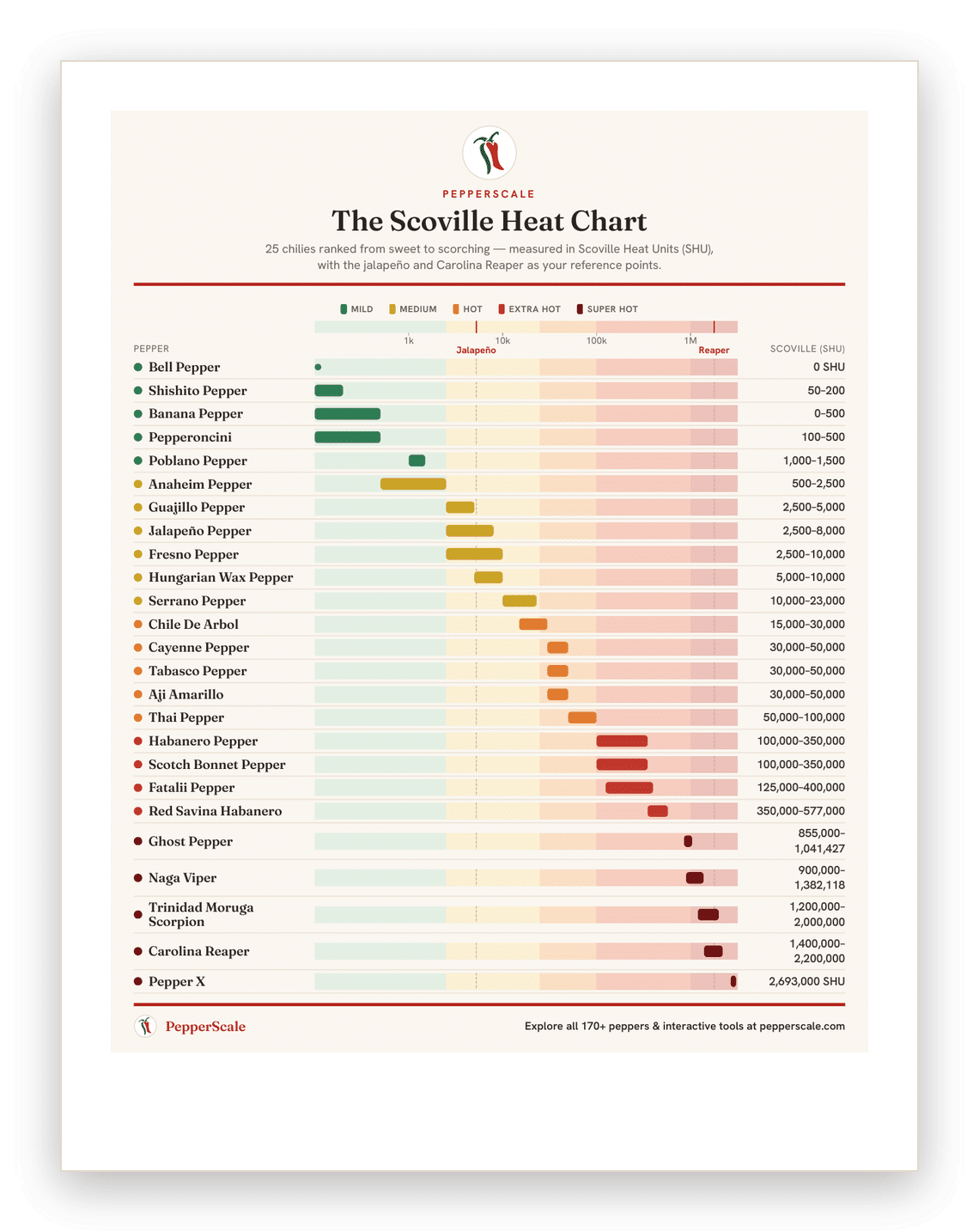
Get the free PepperScale Scoville Heat Chart
A printable, at-a-glance ranking of 25 chilies from sweet to scorching — with the jalapeño and Carolina Reaper as your reference points. Join the newsletter and we’ll send it straight to your inbox.
No spam — just Wicked Wednesday recipes and occasional extra dashes of chili pepper inspiration. Unsubscribe anytime.
Related reading
- The Hot Pepper List: Explore 170-plus chilies, searchable by name, flavor, heat, and origin.
- How To Rehydrate Peppers: The technique behind every dried-chile sauce, step by step.
- Guajillo Vs. Ancho: Two more of the mole workhorses, side by side.