Cayenne is good for you in small ways. A teaspoon of the ground spice has about 6 calories, 4 percent of your daily vitamin A and a little vitamin E. But most of the big numbers you’ll see quoted for it are figured on servings nobody eats, or on old nutrition labels. Here’s what’s in a teaspoon, what the research behind the health claims tested, and where those claims fall short.
One quick note first: we know chili peppers and the spices made from them, but we’re not doctors. If you’re thinking about cayenne, or a cayenne supplement, for your weight, your blood sugar, your heart or anything else health-related, talk it over with your doctor. They know your health, and we know peppers.
What is cayenne pepper?
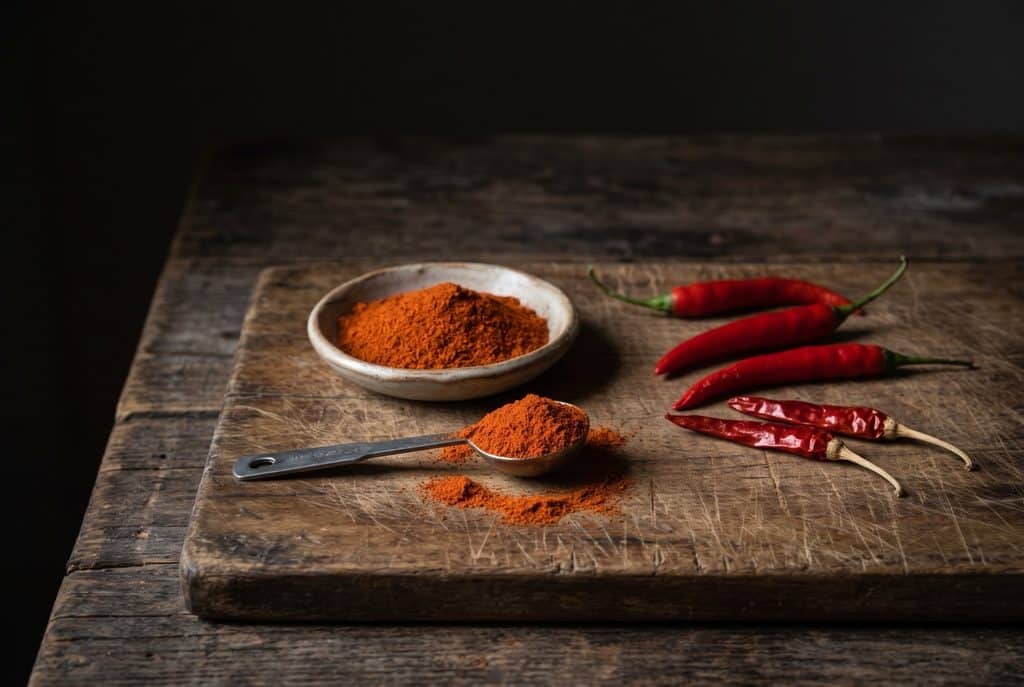
Cayenne is a thin red chili, usually 3 to 5 inches long, that is dried and ground into the powder in most spice racks. It runs 30,000 to 50,000 Scoville heat units, several times hotter than a jalapeño. Our cayenne pepper profile covers its flavor and how to cook with it.
What’s in a teaspoon of cayenne?
USDA lists ground cayenne as “Spices, pepper, red or cayenne.” Here is what USDA’s FoodData Central shows for a level teaspoon (1.8 grams) and a tablespoon (5.3 grams), with the percent of the daily values used on today’s nutrition labels.
| Nutrient | 1 teaspoon | % DV | 1 tablespoon | % DV |
|---|---|---|---|---|
| Calories | 5.7 | 17 | ||
| Vitamin A | 37 mcg | 4% | 110 mcg | 12% |
| Vitamin E | 0.5 mg | 4% | 1.6 mg | 11% |
| Vitamin B6 | 0.04 mg | 3% | 0.13 mg | 8% |
| Fiber | 0.5 g | 2% | 1.4 g | 5% |
| Vitamin C | 1.4 mg | 2% | 4 mg | 4% |
| Manganese | 0.04 mg | 2% | 0.11 mg | 5% |
| Vitamin K | 1.4 mcg | 1% | 4.3 mcg | 4% |
| Iron | 0.14 mg | 1% | 0.4 mg | 2% |
| Potassium | 36 mg | 1% | 107 mg | 2% |
| Sodium | 0.5 mg | under 1% | 1.6 mg | under 1% |
How much of that will you eat? Most recipes call for a pinch to a teaspoon in a dish that serves four or more, so your plate gets a fraction of the first column. The heat keeps the amounts small, and that’s the catch with every nutrition claim below.
Is cayenne high in vitamin A?
For a spice, yes. The vitamin A in cayenne comes from carotenoids like beta-carotene, which your body turns into vitamin A, and a teaspoon gives you 37 micrograms, or 4 percent of the daily value.
You may have read that a 5-gram serving covers almost half your vitamin A. That figure comes from older nutrition labels, which measured vitamin A in international units against a daily value of 5,000. By that math, 5 grams of cayenne did come to about 42 percent. Today’s labels use a unit that credits plant carotenoids with much less vitamin A, and on those the same 5 grams is about 12 percent. And 5 grams is close to 3 teaspoons, which is a lot of cayenne.
Is it the top spice for vitamin A? Close, but gram for gram, paprika has a little more, as our look at paprika nutrition shows.
Does cayenne have more vitamin C than an orange?
Gram for gram, yes. Ground cayenne has about 76 milligrams of vitamin C per 100 grams, and a raw orange has about 53. But one orange is a serving on its own, and a medium one gives you about 70 milligrams. A teaspoon of cayenne gives you 1.4. You’d need around 50 teaspoons to match one orange.
A 5-gram serving doesn’t come near 10 percent of your daily vitamin C, either, as you may have read. It works out to about 4 percent. If vitamin C is what you’re after, fresh peppers are the better bet, and our guide to vitamin C in peppers ranks them.
Is cayenne a good source of potassium or manganese?
Not at spice amounts. You’ll see it said that 100 grams of cayenne gives you almost half your daily potassium, and on paper it does, at about 2,000 milligrams. But 100 grams is more than 50 teaspoons. A teaspoon has 36 milligrams, about 1 percent of the daily value, and its manganese and iron come in at 2 percent or less.
What does capsaicin do?
Capsaicin is the compound behind the heat in cayenne, and it is behind most of the health claims, too. When you read that it kills prostate cancer cells, that comes from a 2006 study on cells in a dish and on mice. The researchers put the mouse dose at roughly three to eight habaneros’ worth of capsaicin, three times a week, for a 200-pound man. Our look at chili peppers and cancer covers what the research in people shows.
What about congestion? A Cochrane review found that a capsaicin nasal spray eased nonallergic rhinitis, a stuffy, runny nose that isn’t caused by allergies, though the four trials were small and the evidence limited. That’s a measured spray, not a spoonful of cayenne. Our guide to spicy food for colds covers what eating it does.
Capsaicin also goes into creams and a prescription skin patch used for some kinds of pain, but those work on the skin, not through your diet.
Can cayenne help you lose weight?
A little, maybe, and less than you’d hope. Studies on capsaicin have found it can raise the calories you burn and take the edge off your appetite, but the effects are small. One review put the extra burn at about 50 to 70 calories a day, and only in people carrying extra weight.
That is real, but it comes to about the calories in a small cookie. Our guide to capsaicin and weight loss goes through the trials.
Is cayenne good for blood sugar?
One study is behind this claim, and it’s more modest than it sounds. In a 2006 Australian trial, 36 adults ate 30 grams a day of a chili blend, 55 percent cayenne, for four weeks. After a meal with chili, their insulin rose less than after a bland meal, and the effect was strongest after the chili month.
So it was a small study of one blend, at a daily amount of chili most people don’t eat, and it measured insulin after meals, not long-term blood sugar control. If you have diabetes, talk to your doctor before you count on any food to manage it.
Does cayenne cause stomach ulcers?
No. According to the National Institute of Diabetes and Digestive and Kidney Diseases, most peptic ulcers come from H. pylori infection or from pain relievers like aspirin and ibuprofen, and researchers haven’t found that diet plays an important role in causing them. It doesn’t recommend avoiding particular foods to prevent or treat ulcers, either.
You’ll also read that cayenne kills ulcer bacteria and protects your stomach lining. That evidence comes mostly from lab and animal studies, so it isn’t a reason to treat an ulcer with cayenne. And if spicy food leaves your stomach sore, ease off.
Is cayenne good for your heart?
It may go along with a longer life, but that’s as far as the evidence goes. A 2017 study followed more than 16,000 Americans for a median of almost 19 years and found that people who ate hot red chili peppers had a 13 percent lower risk of dying during that time. Deaths from heart and blood vessel disease trended lower too, but that difference could have been chance.
It was an observational study, so it can’t show the peppers caused the difference, since chili eaters may differ from everyone else in other ways. We couldn’t find solid human evidence for the old claim that cayenne lowers cholesterol and triglycerides, so we’ve left it out.
How much cayenne is too much?
In food, cayenne is generally safe, and your mouth tells you when you’ve had enough. According to Memorial Sloan Kettering, too much can bring sweating, eye and nose irritation and an upset stomach.
Supplements are another matter, since they’re stronger than what you’d cook with. The advice from MSK on cayenne as an herbal remedy: avoid it if you’re pregnant or breastfeeding, and check with your doctor first if you have high blood pressure or a heart condition, or take blood pressure medicine.
Overdid it in the pot? Our guide to fixing too much cayenne has the fixes.
Cayenne health claims: fact or fiction?
- “Cayenne is high in vitamin A.” Fact, for a spice, at about 4 percent of the daily value per teaspoon and 12 percent per tablespoon.
- “A serving gives you almost half your vitamin A.” Outdated. That came from the old label math on 5 grams, close to 3 teaspoons, and today it’s about 12 percent.
- “Cayenne has more vitamin C than oranges.” True per gram, but you’d need about 50 teaspoons to match one orange.
- “Cayenne boosts your metabolism.” Slightly, by about 50 to 70 calories a day in studies.
- “Capsaicin kills cancer cells.” In a dish and in mice. It hasn’t been shown to treat cancer in people.
- “Spicy food causes ulcers.” Fiction. Most ulcers come from H. pylori or pain relievers, and cayenne hasn’t been shown to heal them, either.
- “Cayenne lowers cholesterol.” Not shown in people, as far as we could find.
- “Chili eaters live longer.” Linked in one large study, but it can’t show the peppers are the reason.
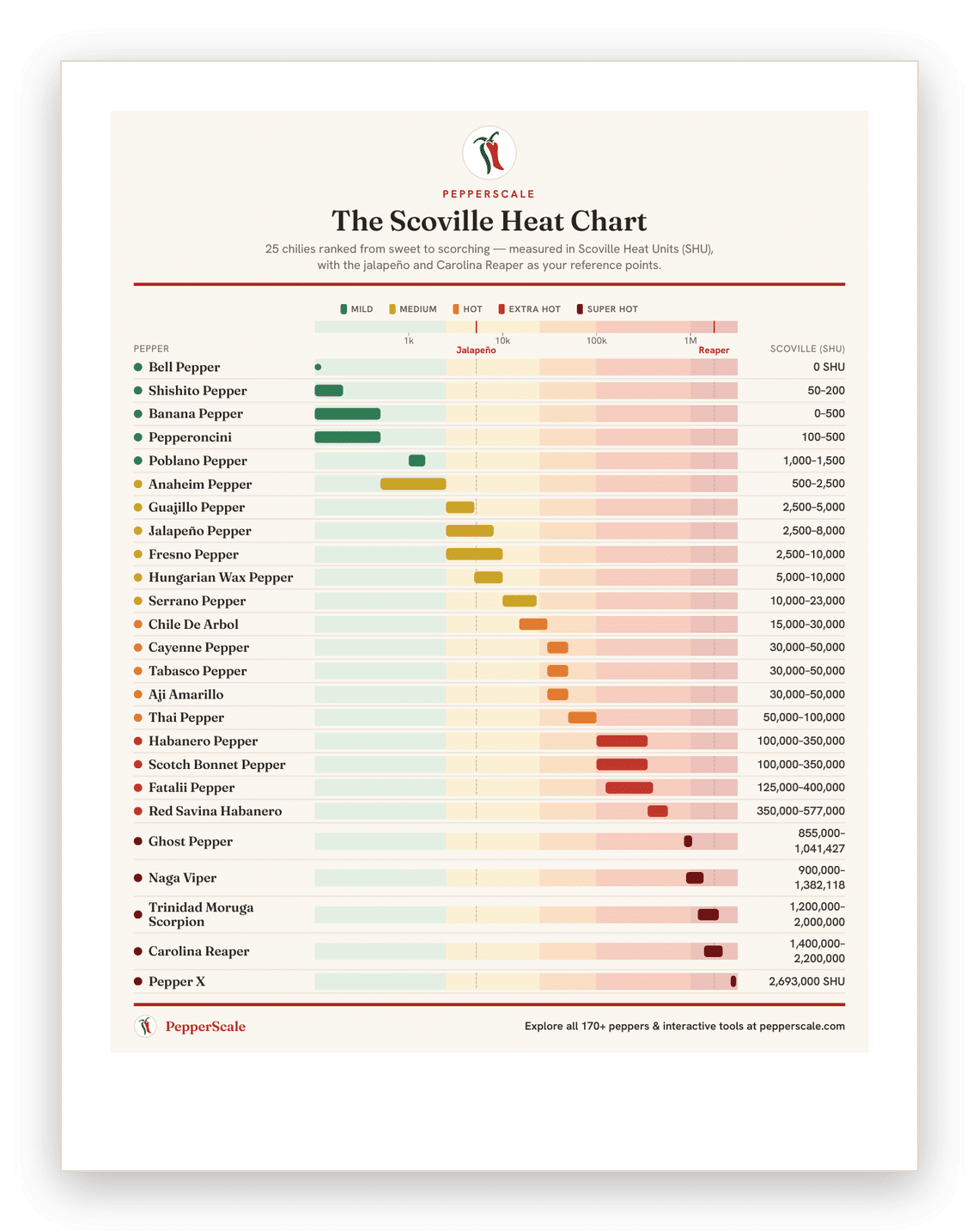
Get the free PepperScale Scoville Heat Chart
A printable, at-a-glance ranking of 25 chilies from sweet to scorching — with the jalapeño and Carolina Reaper as your reference points. Join the newsletter and we’ll send it straight to your inbox.
No spam — just Wicked Wednesday recipes and occasional extra dashes of chili pepper inspiration. Unsubscribe anytime.
Related reading
- Ghost Pepper Nutrition: How Healthy Are They?: What a superhot offers, and how little of it anyone eats.
- Vitamins In Peppers: How Much You Get, Pepper By Pepper: How fresh peppers compare.
- Is Hot Sauce Good For You?: What a few dashes do and don’t give you.