Cayenne is one of the most useful chilies you can keep, and replacing it is trickier than its reputation suggests. What you are actually replacing is two things at once: a solid medium heat, 30,000 to 50,000 Scoville heat units, and the fact that cayenne brings almost no flavor of its own. Most substitution guides worry about losing a pepper’s character. Here the risk runs the other way: nearly everything you would reach for brings more flavor than cayenne does, and that new flavor lands in your dish whether you wanted it or not.
The other thing to settle first is which cayenne you are out of. The dried powder in the spice rack and a fresh red pod are different problems with different answers, so this covers both.


Last update on 2026-10-15. We earn a commission if you make a purchase, at no additional cost to you.

| Pepper | Scoville | Vs. Cayenne | Use |
|---|---|---|---|
| Cayennewhat you're replacing | 30,000–50,000 | — | — |
| Tabasco Sharp Closest match | 30,000–50,000 | about the same | 1:1 |
| Serrano Green & Grassy Dials the heat down · flavor change | 10,000–23,000 | ~2.4× milder | — |
| Thai Sharp Easy to find | 50,000–100,000 | ~1.9× hotter | 1.9× less |
| Jalapeño Green & Grassy Easy to find · flavor change | 2,500–8,000 | ~7.6× milder | — |
The Best Swaps For Ground Cayenne
Cayenne powder is the everyday form, and it is the easier of the two to replace because the spice rack is full of near-misses.
Hot paprika
This is the closest match on the shelf, with one condition: read the label. Paprika comes in a range of heat levels, and if the jar just says “paprika” you should assume it is mild. Generic paprika sits at the bottom of the scale, near pimento heat, and it will not get you anywhere near cayenne.
Anything labeled hot paprika is a different story. Both Hungarian and Spanish paprika come in varieties that run up toward cayenne’s range, and those are what you want. Expect a little sweetness that cayenne does not have. It is not enough to redirect a dish, but it is there, and it is the main reason this is a very good swap rather than a perfect one. Our cayenne versus paprika comparison goes deeper on the difference.
Red chili flakes
This is the best quick fix in most kitchens, because cayenne is usually the base of crushed red pepper in the first place. The flavor is close. Two other things change, though, and both matter more than you would expect.
The first is heat. Crushed red pepper is a blend, typically three or four chilies, and the others are milder: serrano, jalapeño, ancho, sometimes even bell pepper. That cuts the cayenne down, and commercial crushed red pepper generally lands around 15,000 to 30,000 SHU overall, roughly half a cayenne. So plan on using more, not the same.
The second is form. Flakes sit on top of food where ground cayenne permeates it. Even stirred in thoroughly, flakes tend to give you spotty heat, with some bites hotter than others, where powder spreads its heat evenly through the whole dish. Flakes are also visible, which cuts both ways: anyone at the table can push them aside, but they will change how the dish looks. See cayenne versus crushed red pepper for the full comparison.
Other options already in your kitchen
- Generic chili powder: common on the spice rack and nowhere near as hot, since it is a blend of several spices rather than pure chili. Expect it to bring a Tex-Mex flavor along with the heat, scaling with how much you use.
- A few drops of original Tabasco sauce: workable when the recipe can take something liquid. It is much milder at 2,500 to 5,000 SHU, and you are also signing up for the vinegar tang of a Louisiana hot sauce.
One To Skip: Chipotle Powder
Ground chipotle is on plenty of spice racks, and the logic for grabbing it looks sound. Chipotles are dried jalapeños, and a fresh jalapeño is on the list of fresh cayenne substitutes below. So why not?
Because the word doing the work is smoked. A chipotle is a smoked, dried jalapeño, and that smokiness in the powder is assertive enough to redirect the whole dish. It is the opposite of what you want from cayenne, which earns its place by staying out of the way. Our cayenne versus chipotle comparison lays out how far apart they are. Reach for chipotle when you want smoke, not when you want heat.
The Best Swaps For A Fresh Cayenne
Fresh cayenne is hard to find, which is usually why you are here. Worth knowing up front: none of these are neutral the way cayenne is, so with a fresh swap you are accepting a flavor change and choosing which one you would rather have.
Tabasco pepper
The tabasco pepper shares cayenne’s heat range exactly, 30,000 to 50,000 SHU, which makes it the closest match on fire. It is a juicier pepper, though, and it carries a sweet, fruity edge cayenne does not have, so it will show up in the finished dish. For salsas and hot sauces, where the extra juice is welcome, it works well. The catch is availability: fresh tabascos are about as scarce in stores as fresh cayennes.
Thai peppers
Fresh Thai peppers turn up in some stores, and dried ones are stocked in the international aisle of most groceries, which makes this the most findable option here. The trade is heat. At 50,000 to 100,000 SHU they run to roughly double a cayenne, with a fruitier character. If you like your food hot, that is a feature. If cayenne is already at the edge of what you enjoy, pick something below.
Serrano or jalapeño peppers
The easy-to-find pair, and both are milder. A serrano is the closer of the two at 10,000 to 23,000 SHU, about half a cayenne’s heat. A jalapeño is milder still at 2,500 to 8,000 SHU, though it is the one you can buy anywhere.
Both taste different from a cayenne in the same direction: brighter, fresher, more grassy. That reads clean rather than wrong, which is why they are a reasonable swap in fresh applications. If you can find a red jalapeño rather than a green one, it is the closer match, since it is sweeter and its color will not stand out in a red sauce.
Match The Substitute To The Dish
- Soups, stews, rubs, and anything where the heat should disappear into the dish: hot paprika. It is the one swap that keeps the heat even and does not announce itself.
- A quick fix mid-cook: red chili flakes, using more than the recipe’s cayenne and accepting that the heat will be less even and you will see them.
- Salsas and hot sauces: a fresh tabasco if you can get one, since the juice helps rather than hurts.
- You want it hotter than the recipe intended: Thai peppers, used sparingly.
- Fresh salsa, guacamole, anything raw: serrano, or a red jalapeño for a milder, sweeter result.
- Baking and desserts: hot paprika only. Flakes are wrong texturally, and every fresh option brings moisture and vegetal flavor you do not want.
How Much Should You Use?
Heat varies pod to pod and jar to jar, so treat all of these as starting points and taste as you go:
- Hot paprika: start at roughly one for one, then adjust. Paprika heat is inconsistent between brands, so this is the swap that most rewards tasting rather than measuring.
- Red chili flakes: closer to double, since the blend runs milder than pure cayenne. Judge by mouthfuls rather than by the pot, because the heat will not be evenly spread.
- Generic chili powder: you will need noticeably more to reach the same heat, which means noticeably more of its other seasonings too. Better in dishes that already lean Tex-Mex.
- Tabasco pepper: one for one.
- Thai peppers: start with about half as much and build.
- Serrano: roughly double. Jalapeño: more than double, and accept you may not get all the way there.
Our pepper conversion tool translates one chili’s heat into another’s, and the dish heat calculator will tell you where the whole dish lands before you commit.
Pulling It All Together
Cayenne’s job is to add heat without adding much else, so the best substitute is whichever option brings the least baggage along with the fire. For the powder that is hot paprika, with red chili flakes close behind if you can live with uneven, visible heat and remember to use more of them. For a fresh pod, a tabasco matches the heat and a serrano is the one you will actually find, and either way you are accepting some flavor you did not ask for. Skip chipotle powder unless you want the dish to taste smoked.
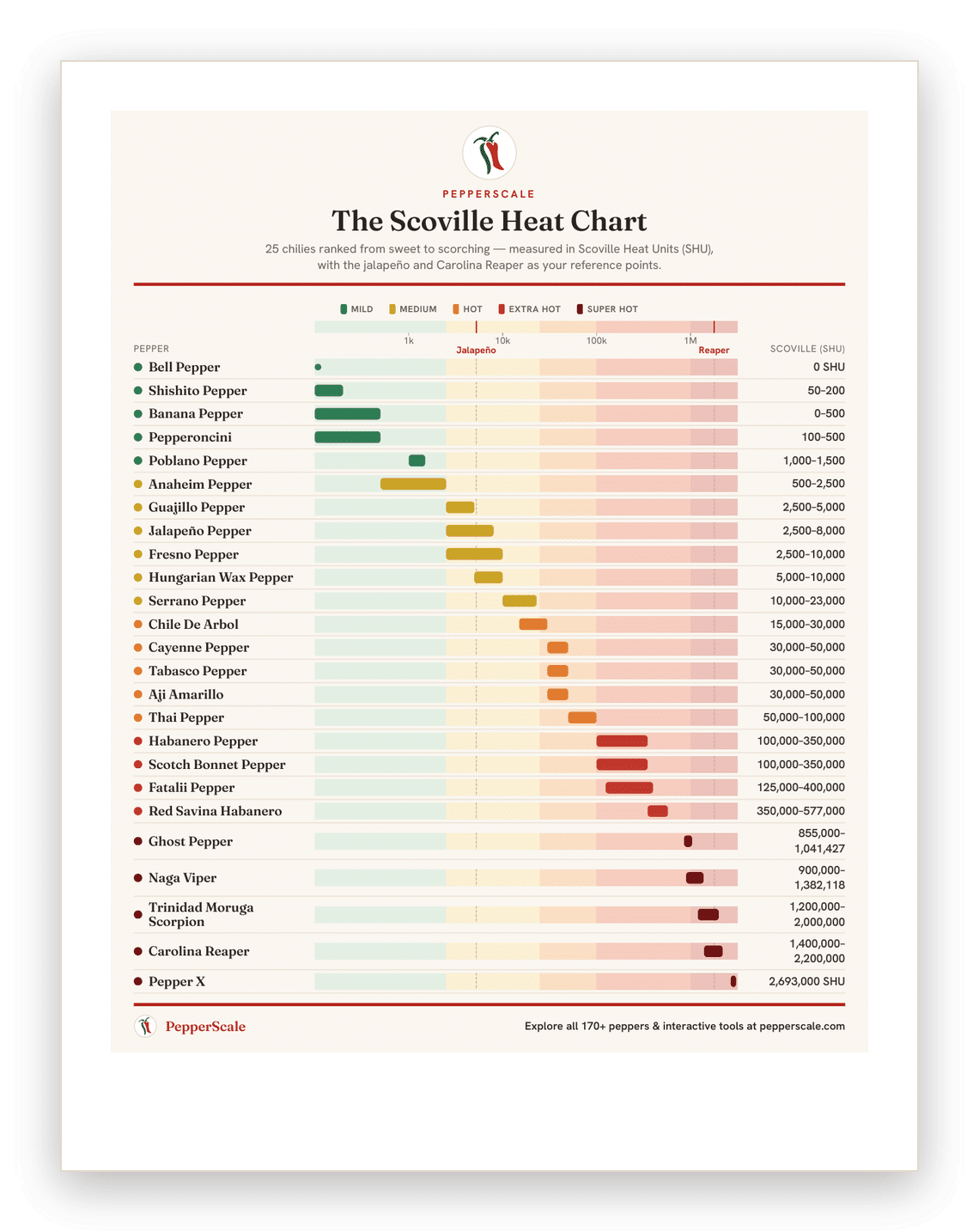
Get the free PepperScale Scoville Heat Chart
A printable, at-a-glance ranking of 25 chilies from sweet to scorching — with the jalapeño and Carolina Reaper as your reference points. Join the newsletter and we’ll send it straight to your inbox.
No spam — just Wicked Wednesday recipes and occasional extra dashes of chili pepper inspiration. Unsubscribe anytime.
Related Reading
- The Hot Pepper List: If none of these are quite right, we profile 170-plus chilies, searchable by heat, flavor, and origin.
- Cooking With Paprika: Since hot paprika is the pick here, this is what to know about using it well.
- Homemade Crushed Red Pepper: Make your own flakes and you control the heat and which chilies go in.
What about banana peppers? Are they as effective as capsaicin powder or liquid?