It may surprise some that paprika, one of the most common spices in the kitchen cabinet, comes from chili peppers. So is paprika spicy? It depends. Paprika’s made from dried, ground red peppers, usually mild ones of the same species as bell peppers and pimentos. But it comes in a lot of varieties, and some of them carry real heat. Here’s how hot regular, Hungarian, Spanish and smoked paprika get, and how to tell what’s in your tin.

Last update on 2026-11-02. We earn a commission if you make a purchase, at no additional cost to you.

How hot is regular paprika?
If you pick up a jar labeled just “paprika” in the spice aisle, chances are it’ll be mild. Regular paprika usually runs about 100 to 500 Scoville heat units (SHU) on the Scoville scale, so it’s at least five times milder than a jalapeño. That’s a long way from cayenne pepper, which runs 30,000 to 50,000 SHU.
How hot is Hungarian paprika?
It depends on the grade. Hungarian paprika comes in eight, and what’s usually sold outside Hungary is édesnemes, or noble sweet, which is bright red and only slightly pungent. Hungarian hot paprika exists, too, and it’s got a real kick.
Hungary doesn’t rate its paprika on the Scoville scale. Instead, its protection rules measure capsaicin, the compound that’s behind a chili’s heat. Under the Szeged rules, paprika with up to 100 mg of capsaicin per kilogram counts as non-pungent, and anything over 200 mg is hot.
Here are the eight grades, roughly from mildest to hottest:
- Különleges (special quality): the mildest and brightest red
- Csípősmentes csemege (delicate, without heat): mild, with a rich flavor
- Csemege (exquisite delicate): a little more pungent
- Csípős csemege (pungent exquisite delicate): more pungent again
- Rózsa (rose): pale red, with mild heat
- Édesnemes (noble sweet): bright red and slightly pungent
- Félédes (half-sweet): a blend of mild and hot paprika, with medium heat
- Erős (hot): light brown, and the hottest of the eight
Hungarian paprika wasn’t always this mild. In 1859, the Pálfy brothers of Szeged came up with a machine that removed the pods’ veins and seeds before grinding, which made a milder paprika possible, and breeders later went after sweet varieties.
How hot is Spanish paprika?
Spanish paprika, or pimentón, is simpler. It’s got three types: dulce (sweet), agridulce (bittersweet) and picante (hot). The rules for pimentón de la Vera describe dulce as completely sweet, agridulce as a little sharp with some heat, and picante as decidedly hot.
Murcia, Spain’s other famous paprika region, only makes the sweet kind, and its rules cap the capsaicin so low that there’s almost no heat in it. If you’d like a little warmth without much burn, you’ll want agridulce. For more on how the two countries’ paprikas differ, see our Hungarian vs. Spanish paprika comparison.
Is smoked paprika spicy?
Not necessarily, since smoke and heat aren’t the same thing. Pimentón de la Vera, Spain’s famous smoked paprika, is dried over oak fires for 10 to 15 days, and it’s sold in all three types: sweet, bittersweet and hot. So a tin of smoked paprika could be completely mild or quite hot, and you can’t tell from the smoke. If it just says “smoked paprika,” check the label for dulce, sweet, picante or hot.
How can you tell if paprika is hot?
The label’s your best guide. Here’s what to look for:
- Sweet, with little or no heat: édes or édesnemes on a Hungarian tin, dulce on a Spanish one.
- A little heat: félédes (half-sweet) on a Hungarian tin, agridulce (bittersweet) on a Spanish one.
- Hot: erős or csípős on a Hungarian tin, picante on a Spanish one.
If there’s nothing on the label to go on, taste a pinch before you add a spoonful.
Which paprika should you choose?
That depends on the recipe, what you need it for and your heat tolerance. It’s good to have a regular paprika or a Hungarian sweet paprika as a staple in the spice cupboard, since they’re all-purpose. But if you’re looking to bring some authentic flavor to your Hungarian or Spanish dishes (or you simply like your spices on the hotter side), you may want to pick up a more pungent paprika. Whichever you choose, paprika burns easily, so you’ll want to add it to warm oil over low heat or near the end of cooking. No matter what, this is a spice no kitchen should be without.
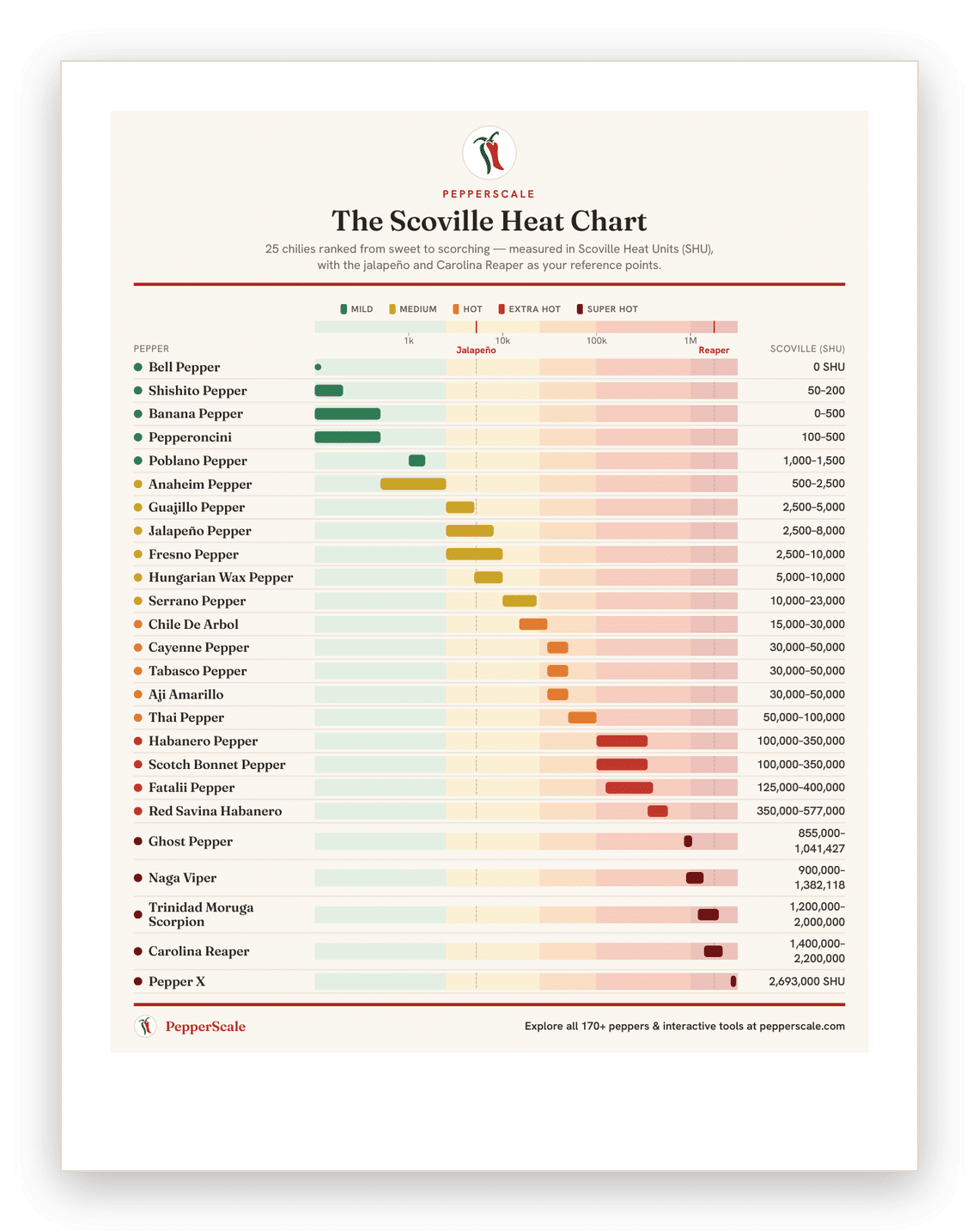
Get the free PepperScale Scoville Heat Chart
A printable, at-a-glance ranking of 25 chilies from sweet to scorching — with the jalapeño and Carolina Reaper as your reference points. Join the newsletter and we’ll send it straight to your inbox.
No spam — just Wicked Wednesday recipes and occasional extra dashes of chili pepper inspiration. Unsubscribe anytime.
Related reading
- Smoked Paprika Vs. Paprika: PepperScale Showdown: See how these two versions of paprika are the same and different.
- Six Delicious Smoked Paprika Uses: Fun ways to use this earthy, smoky variety in the kitchen.
- Paprika Vs Chili Powder: PepperScale Showdown: We compare the spice and the seasoning blend so you can see what makes each tick.