Spanish paprika, or pimentón, is ground dried red pepper from Spain, and two regions are famous for it. In La Vera, in Extremadura, the peppers are dried over oak fires, so the paprika is smoked. In Murcia, in the southeast, they’re dried in the sun or with hot air, so it isn’t. It comes sweet, bittersweet or hot. Like Hungary’s passion for paprika, Spain’s love affair with this shock-red spice runs deep. And there’s a lot more to it than the smoked tin that’ll probably come to mind first. Here’s where it comes from, what the types mean, and how to use them.

Last update on 2026-10-18. We earn a commission if you make a purchase, at no additional cost to you.
What makes Spanish paprika different?
Two things set it apart. The first one’s smoke. Pimentón de la Vera is probably the smoked paprika you know, and its smoky flavor is a big part of Spanish cooking. The second is that Spanish paprika is sold by heat as well as by region, with three types: dulce (sweet), agridulce (bittersweet) and picante (hot).
Both La Vera and Murcia paprika are protected designations of origin in the EU. So when you buy a tin with the PDO seal, the peppers were grown and processed there, following rules on how they’re dried, ground and labeled.
How is pimentón de la Vera made?
La Vera is in the north of the province of Cáceres, and its paprika is smoked because it has to be. The region’s damp climate doesn’t allow the peppers to dry in the sun. So growers dry them over fires of oak or holm oak for 10 to 15 days, until most of their water’s gone. The peppers are then ground in stone mills. That slow smoke-drying is what gives pimentón de la Vera its smoky aroma, deep red color and flavor that holds up well over time.
It’s been made this way for a long time. According to the official PDO specification, Hieronymite friars were growing peppers at the Monastery of Yuste in the 16th century. Smoke-drying and stone milling go back to the 1600s, and production grew in the 1700s, when the dried peppers were ground in water-powered mills. You’ll find a numbered label from the regulating council on each tin of protected pimentón de la Vera.
What is pimentón de Murcia?
Murcia’s paprika is made from the Bola, a small, round, sweet pepper. The ripe red peppers are dried in the sun for several days, or with hot air, then ground. There’s no smoke, so you just taste the pepper. Pimentón de Murcia is bright red, with a strong aroma and a sweet, rich flavor, and it’s only made sweet. Its rules cap the capsaicin so low that it’s essentially free of heat.
The Guadalentín Valley is the region’s largest growing area, and the protected zone also reaches into parts of Almería, Granada and Alicante.
What are dulce, agridulce and picante?
Here’s what you can expect from each type of pimentón de la Vera, with the pepper varieties the PDO rules allow for each. Murcia only makes the sweet one.
| Type | In English | La Vera peppers | What to expect |
|---|---|---|---|
| Dulce | Sweet | Bola and Jaranda | Completely sweet, with no heat. |
| Agridulce (ocal) | Bittersweet | Jaranda and Jariza | Slightly sharp, with a little heat. |
| Picante | Hot | Jeromín, Jariza and Jaranda | Decidedly hot. |
Agridulce isn’t a mystery blend, by the way. It’s made from its own group of local peppers, called the ocales, and those peppers give the paprika an even stronger color than the Bola does.
Is all Spanish paprika smoked?
No. Only pimentón de la Vera is always smoked. Most other Spanish paprika, including Murcia’s, isn’t smoked unless the label says so. If a recipe calls for smoked paprika, look for “pimentón de la Vera” or “smoked” on the tin. Our smoked paprika vs. paprika comparison goes into how differently the two behave in a dish.
How hot is Spanish paprika?
Dulce and agridulce don’t have much heat, if any, and even picante is a paprika first, with the pepper’s flavor still front and center. Murcia’s rules cap capsaicin at 0.003%, which is so low it’s essentially mild. Most regular paprika runs just 100 to 500 Scoville heat units, and sweet pimentón’s about as mild.
If you’d like a little warmth, start with agridulce. Picante will give you a noticeable kick, so taste a pinch before you use it in place of sweet paprika.
How do you cook with Spanish paprika?
Pimentón is what makes chorizo chorizo. It’s added at 1% to 3% of the meat’s weight, and without it, you’d have chorizo blanco, or white chorizo. Some chorizos, like Chorizo de Cantimpalos, have to be made with pimentón de la Vera, which is where their smoky flavor comes from.
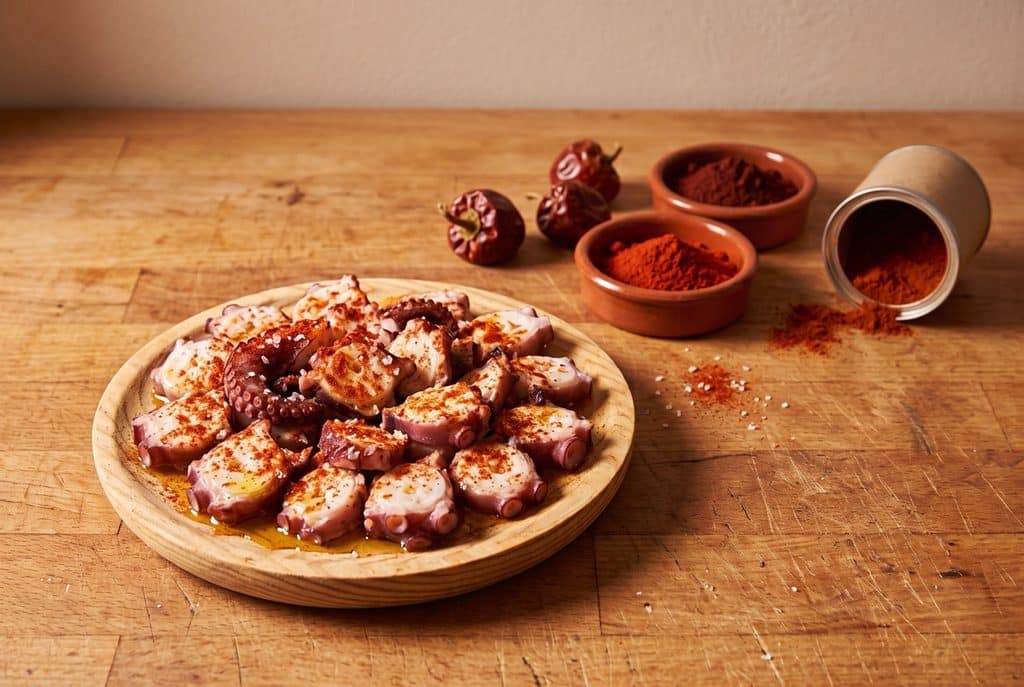
It’s also the finishing touch on pulpo a la gallega, Galician octopus that’s boiled, sliced and sprinkled with coarse salt, sweet and hot paprika, and olive oil. You’ll find it in stews, rice dishes, potatoes and sauces like our spicy romesco, too.
Like any paprika, pimentón burns easily, and burnt paprika turns bitter. Stir it into warm oil over low heat for a few seconds, or add it near the end. Sprinkle it on just before serving, too, the way it goes on the octopus.
How is it different from Hungarian paprika?
The biggest difference is smoke. Traditional Hungarian paprika isn’t smoked, and it’s known for a sweet, fruity flavor, with eight grades running from mild to hot. Spanish paprika keeps it simpler with three heat levels, and it offers smoked or unsmoked. If you’re cooking a Spanish recipe, use pimentón. If it’s Hungarian, like goulash, sweet Hungarian paprika’s the better match. We compare them side by side in Hungarian paprika vs. Spanish paprika.
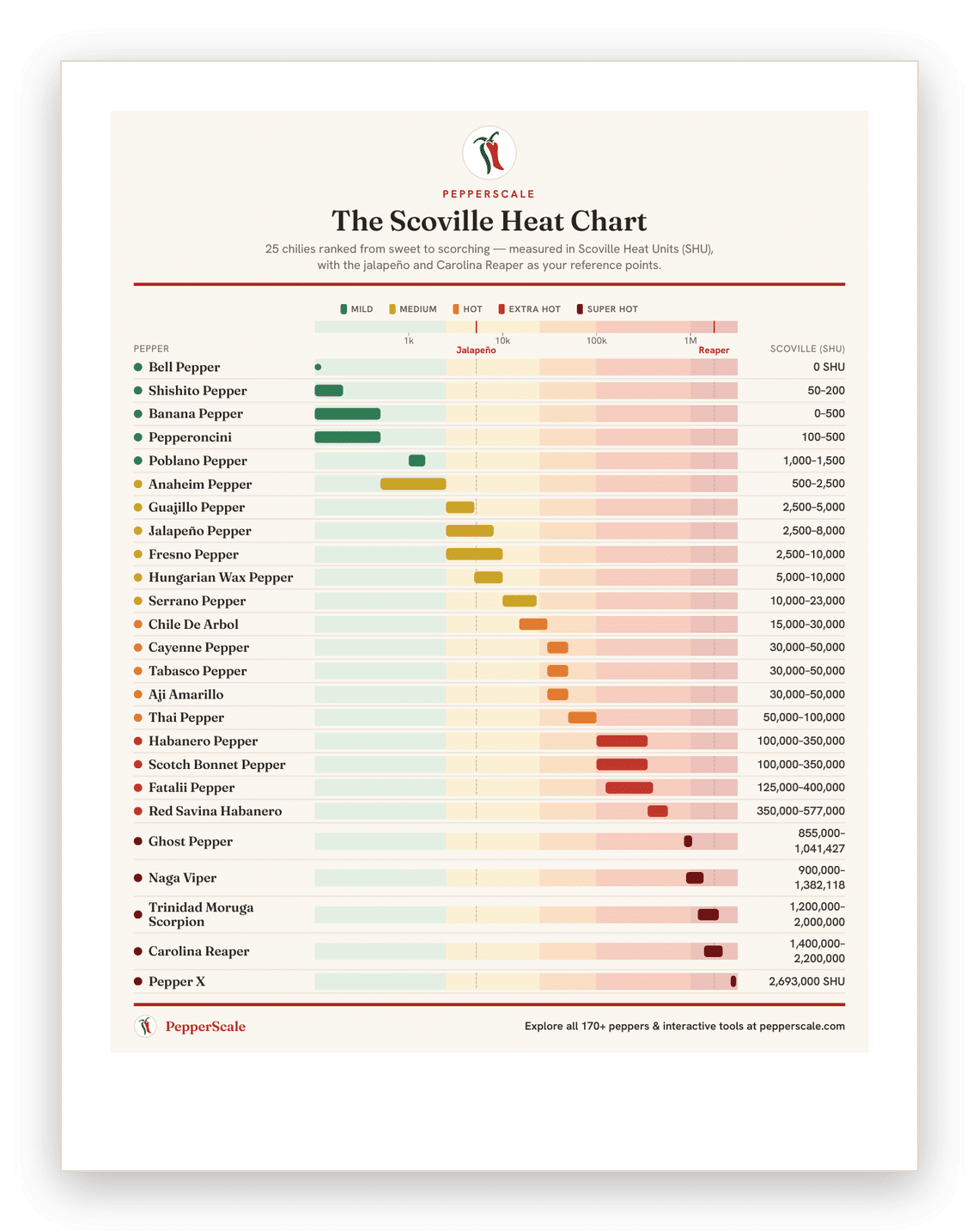
Get the free PepperScale Scoville Heat Chart
A printable, at-a-glance ranking of 25 chilies from sweet to scorching — with the jalapeño and Carolina Reaper as your reference points. Join the newsletter and we’ll send it straight to your inbox.
No spam — just Wicked Wednesday recipes and occasional extra dashes of chili pepper inspiration. Unsubscribe anytime.
Related reading
- Six Delicious Smoked Paprika Uses: Where pimentón de la Vera’s smoke does the most good.
- Smoked Paprika Substitutes: What To Use When You’re Out: Other ways to get that smoke into a dish.
- What’s A Good Paprika Substitute?: What to use when the tin runs out.