With its many hues and dark foliage, the Chinese 5-color pepper is a real beauty in the garden. It’s multi-colored, like the aurora pepper or Bolivian rainbow, but what makes it stand out from the pack is the unexpected shades it takes. Layers of purple and cream are in play, along with the more familiar yellows, oranges, and reds. Best of all, the Chinese 5-color pepper, even with its significant medium heat, delivers in the taste department, too, more than most other ornamental peppers, so it’s a great fit for edible landscaping projects.

Last update on 2026-11-08. We earn a commission if you make a purchase, at no additional cost to you.

- Species
- C. annuum
- Origin
- China
- Uses
- Ornamental
How hot is a Chinese 5-color pepper, really?
Like most ornamental peppers, there’s a good amount of kick to the Chinese 5-color pepper. It shares the same heat profile as the popular spice-rack staple, cayenne pepper: 30,000 to 50,000 Scoville heat units (SHU). Putting that in perspective against our jalapeño reference point, the Chinese 5-color is at least 4, but up to 20 times hotter than a jalapeño pepper, depending on the chilies tested. Taking the midpoint of each range, it’s about 8 times hotter. That’s real heat for such a small pod.
How does it compare with its colorful cousins? It matches the aurora and the NuMex Twilight, which share its range. The Bolivian rainbow is milder, at 10,000 to 30,000 SHU. And the pods gain heat as they change color, as most chilies do, so a red one usually bites harder than a purple one. Our red pepper vs. green pepper guide covers how ripeness changes a pepper’s heat.
What a Chinese 5-color pepper actually tastes like
The taste is unexpected, too. Many ornamental peppers offer little in terms of flavor. They’re bred for their looks, and plenty of them run hot and bitter. The Chinese 5-color pepper has a real sweetness to it, and more flavor than most other ornamentals. It’s not a complex chili flavor by any means, but it can serve a dual purpose in the garden and the kitchen.
So what should you expect? A fresh, green taste up front, with that sweetness behind it, a little bitterness and a touch of tang. The cayenne-level heat arrives right along with it, so start small and taste as you go.
How to pair a Chinese 5-color pepper
Want to play up its fresh side? Cilantro, white onion, tomatillo and cucumber all bring out its green notes, and tomato and garlic give it a simple, savory base, the way they do for cayenne.
Then give the heat something to push against. Mango and pineapple play off its sweetness, while avocado, cream cheese and a sharp cheddar cushion the burn. A squeeze of lime cuts through all of it.
Our Chili Pepper Flavor Pairing Tool doesn’t list the Chinese 5-color yet. Its jalapeño and serrano pages make a good guide to the fresh flavor, as long as you allow for a lot more heat.
Cooking with Chinese 5-color peppers
In the kitchen, the Chinese 5-color is a good pickling pepper, especially with its varied hues. A jar of mixed colors looks as good as it tastes. Our pickled jalapeños make a ready template. Slice the pods into rings and use them in place of the jalapeños. You’ll want fewer of them, though, unless you like the heat.

They also make good drying peppers, whether to be ground into powder or flakes, or rehydrated down the road. With their sweeter flavor, you’ll find them pretty tasty fresh, too, though with a decent amount of pop that may be too much for many to handle. They’re a good base for a colorful salsa, or simply chop them to add some color to salads and soups. When you cut a batch, wear gloves.
How to spot a Chinese 5-color pepper
“5-color” is in the name, so it’s no surprise that there’s a lot of color to this ornamental. What’s unique is the shades themselves, and the variations within them add up to a lot more than five colors in total. Chinese 5-color peppers are small conical peppers, about an inch to an inch and a half long. They run from shades of purple, then age into a beautiful cream color (not common), followed by shades of yellow, orange and red. Each plant can carry all of these at once, since the peppers mature at different speeds through the growing season. The leaves are green with purple veins, and some take on a purple blush.
Look for the cream. That stage is the easiest way to tell it from its look-alikes. The Bolivian rainbow and NuMex Twilight go purple, yellow, orange and red with no cream in between, and the aurora starts green and turns a creamy violet before orange and red.
You’ll also see it sold as Chinese Five-Color or Chinese 5 Color. Seed sellers give its origin as China, and one heirloom seed house lists it among varieties introduced before 1940, but we haven’t found a documented history for it.
Growing Chinese 5-color peppers
As these are ornamentals, you’re more likely to find seeds than fresh peppers. If you want your own, look online for Chinese 5-color pepper seeds or try a well-stocked gardening center. For landscaping, the Chinese 5-color pepper is one of the best ornamental peppers around. It works both in gardens and containers, and it performs reasonably well indoors with enough light. Our guide to growing hot peppers indoors covers that setup.
How big do they get? Seed sellers put the plants anywhere from 18 inches to 4 feet tall. Expect the first purple pods about 70 to 90 days after transplanting, and fully red ones about a month after that. Our Chinese 5-color planting guide covers sowing, transplanting and picking, and the Pepper Grow Planner turns your zip code into sowing and transplant dates.
The best Chinese 5-color pepper substitute
For cooking, cayenne is the simplest stand-in. It has the same heat and is far easier to find, fresh or dried, though it’s sharper and plainer, without the 5-color’s sweetness.
Is it the look you’re after? The NuMex Twilight and the aurora bring the same heat and a similar run of colors. The Bolivian rainbow gives you the colors with less heat. None of them has the cream stage, and all three taste plainer.
The bottom line
The Chinese 5-color pepper is one of the few ornamentals that earns its place in the kitchen as well as the flower bed. These are uniquely beautiful chilies and relatively easy to grow, so for those with even modest green thumbs, don’t be afraid to give this pepper a chance. You’ll be rewarded both in the garden and kitchen.
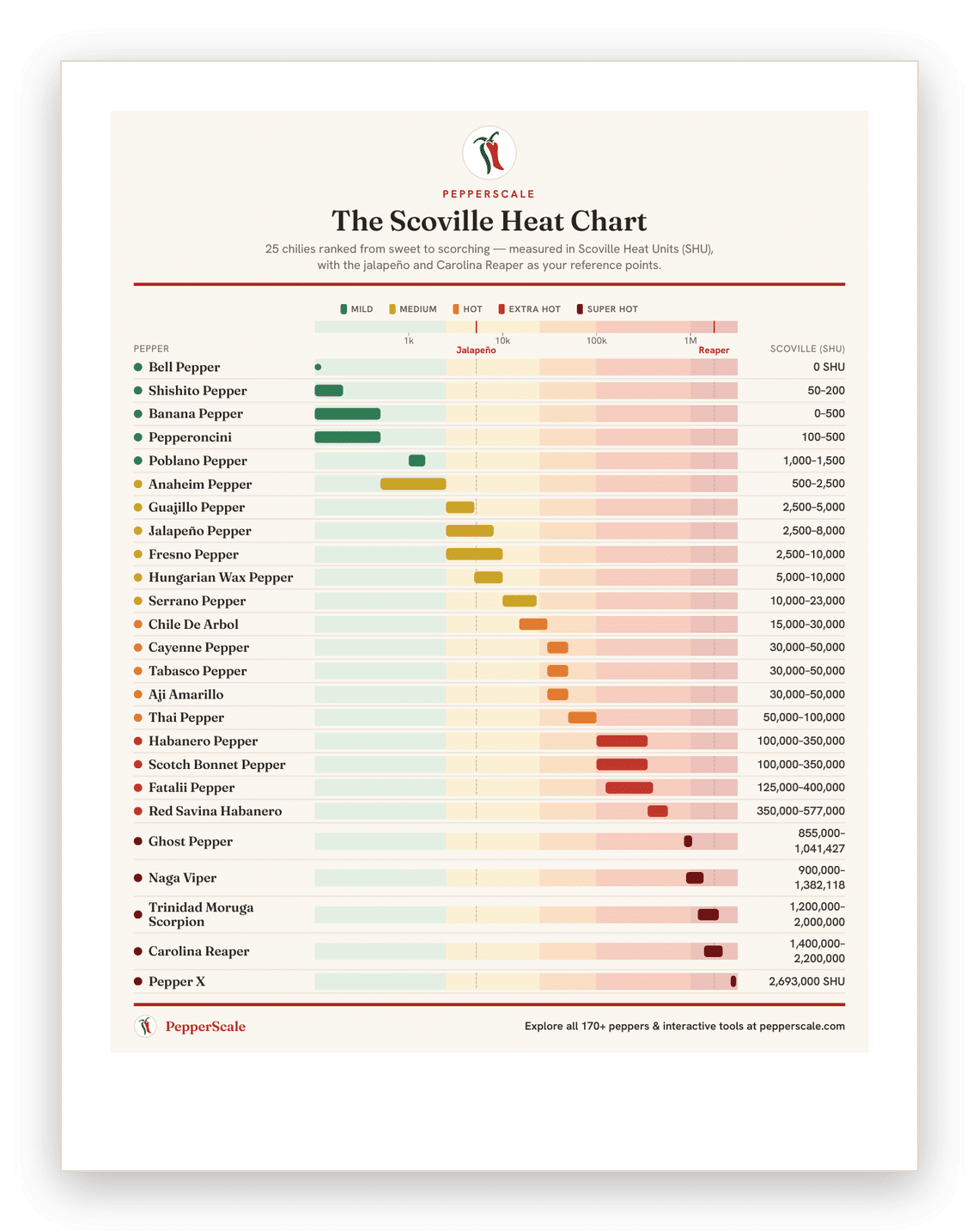
Get the free PepperScale Scoville Heat Chart
A printable, at-a-glance ranking of 25 chilies from sweet to scorching — with the jalapeño and Carolina Reaper as your reference points. Join the newsletter and we’ll send it straight to your inbox.
No spam — just Wicked Wednesday recipes and occasional extra dashes of chili pepper inspiration. Unsubscribe anytime.
Related reading
- Colorful Peppers Guide: Fifteen peppers that ripen through a rainbow of colors, the Chinese 5-color among them, and which are worth growing.
- Ornamental Peppers Guide: From the sweet Tangerine Dream to the fiery prairie fire, the ornamentals that earn a place in the garden.
- The Hot Pepper List: See where the Chinese 5-color lands among over 175 chilies, ranked by Scoville rating or grouped by flavor.