Let’s first set the stage. All peppers are colorful, and it’s one of the beautiful things about this fruit, but our colorful peppers guide covers the real rainbows of the pepper scale. These are the chilies that spring forth in multiple bright hues, adding real vibrancy to a garden or landscaping. Most of the hot peppers on our list are considered ornamental peppers, though there is a notable exception (see fish pepper). If you want to explore the full world of ornamental color, take a look at our ornamental peppers guide. There you’ll find a world of rainbows, blacks, and everything in-between.
Below are 15 of them, from the barely warm Sedona Sun to prairie fires with the heat of a Thai pepper, plus the colors each one passes through.
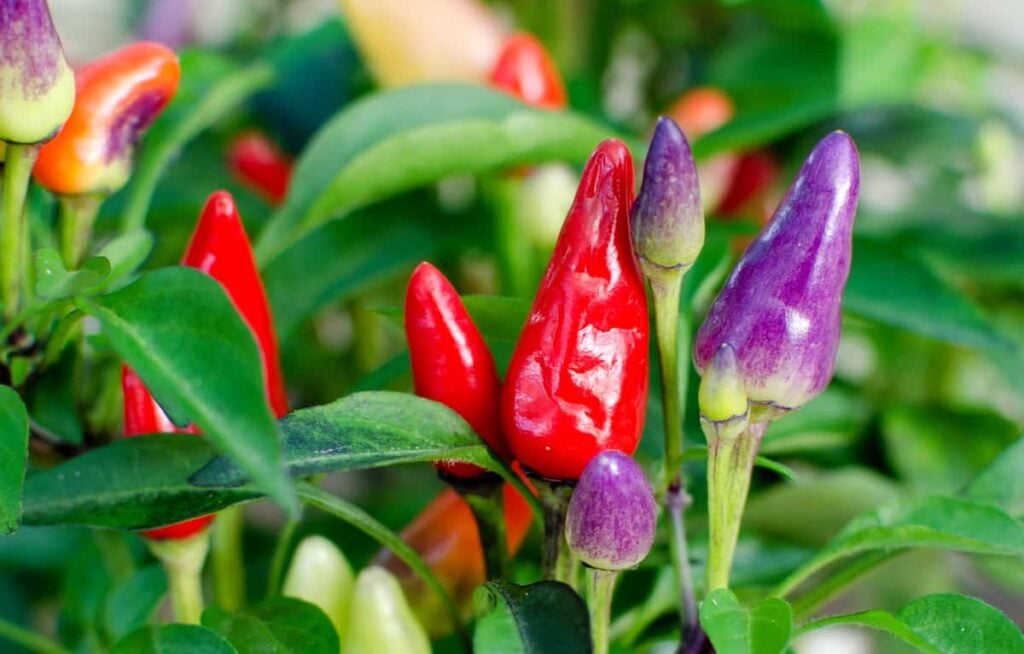
Colorful peppers at a glance
This table has all 15, mildest first, with heat in Scoville heat units (SHU) and each pepper’s colors in the order they come.
| Pepper | Heat (SHU) | Compared with a jalapeño | Colors as it ripens |
|---|---|---|---|
| Sedona Sun | 0 to 1,000 | Much milder | Purple, yellow, orange, red |
| Medusa | 1 to 1,000 | Much milder | Ivory, yellow, orange, red |
| Chilly Chili | 1 to 100 | Much milder | Pale yellow, yellow, orange, red |
| NuMex Centennial | 1,000 to 5,000 | About half as hot | Purple, yellow, orange, red |
| Fire and Ice | 1,000 to 5,000 | About half as hot | Creamy white, yellow, orange, red |
| Sangria | 1,000 to 5,000 | About half as hot | White, yellow, orange, red, purple |
| Fish pepper | 5,000 to 30,000 | About 3 times hotter | White, cream, green, red, often striped |
| Bolivian Rainbow | 10,000 to 30,000 | About 4 times hotter | Purple, yellow, orange, red |
| Loco | 15,000 to 30,000 | About 4 times hotter | Purple, yellow, orange, red |
| Little Elf | 20,000 to 30,000 | About 5 times hotter | Green, yellow, orange, purple, red |
| NuMex Twilight | 30,000 to 50,000 | About 8 times hotter | Purple, yellow, orange, red |
| Aji omnicolor | 30,000 to 50,000 | About 8 times hotter | Pale yellow, yellow, orange, red |
| Aurora | 30,000 to 50,000 | About 8 times hotter | Green, violet, orange, red |
| Chinese 5-color | 30,000 to 50,000 | About 8 times hotter | Purple, cream, yellow, orange, red |
| Prairie fire | 70,000 to 80,000 | About 14 times hotter | Green, purple, cream, yellow, orange, red |
Why do these peppers turn so many colors?
How does one plant show five colors at once? Each pod changes color as it ripens, often passing through purple or cream, then yellow and orange on its way to red. These plants keep flowering and setting fruit for weeks, so young pods and ripe ones hang side by side, and you see every stage on one plant. That’s the Christmas-light look these chilies are known for.
So the color tells you roughly how ripe a pod is. On most of these plants, the red pods are the ripe ones, and the pale or purple ones are the youngest.
Can you cook with colorful peppers?
You can. Every pepper here is edible, and our post on whether you can eat ornamental peppers covers the details. Most ornamentals were bred for looks, so many taste plain and peppery behind their heat. A handful are worth growing for the kitchen, though: the fish pepper, the sweet Medusa, the fruity aji omnicolor and prairie fire, and the Chinese 5-color.
Check the heat before you hand one to a child. The mild ones are mild, but a Bolivian Rainbow or a prairie fire looks just as candy-like and can carry several times a jalapeño’s heat.
Are there peppers with colorful leaves?
Want color in the leaves too? A few plants bring it. The fish pepper has green-and-white striped leaves. The Purple Tiger has green, white and purple leaves under its striped pods. And the Calico pepper has green leaves splashed with purple and cream, behind black-to-red pods.
Mild colorful peppers
These barely register on the heat scale, so they’re the safest picks for a family garden.
Sedona Sun peppers

If you love the variations in color of a Western sunset, then you’ll love the Sedona Sun pepper. Purples lead to multiple shades of yellow and orange, and it all ends with a lovely red hue when they mature. The small, cone-shaped pods cluster on the plant, and the heat tops out at 1,000 SHU, with some pods carrying none at all. The flavor is mildly sweet, with some bitterness in the younger fruit, so pick them ripe if you plan to cook with them. Want a pepper your kids can pick? This is a good one.
Medusa peppers

With fruits that age from ivory white to a sultry red, and a world of oranges and yellows in-between, the Medusa pepper is a colorful looker. The two-inch chilies grow in clusters and straight up from the vine, twisting as they go, reminiscent of Medusa’s serpent mane. It looks like it should be a much hotter chili, but the Medusa is rather tame, closer to a zero-heat sweet pepper than a jalapeño. It tastes sweet, too. The plant stays compact, up to about a foot tall, so it suits a container.
Chilly Chili peppers

Yellows and reds dominate the Chilly Chili, though in-between it can take on multiple hues of orange. It’s a burst of color in the garden, with the two- to three-inch fruits reaching up from the plant in clusters. The heat has been bred almost out of it, so it barely registers. It’s neutral in taste, peppery but with little nuance, so it does more for a garden than a recipe.
Medium-heat colorful peppers
Expect anything from half a jalapeño’s heat to a few times more, so they’re hot enough to notice but easy to cook with.
NuMex Centennial

These small bulbous chilies are like colorful Christmas lights on a plant. The NuMex Centennial ages with jewel-tone hues: purple first, then yellow, orange and finally red. New Mexico State University bred it, and the name marks the university’s centennial. The spiciness can reach that of a jalapeño, but like with other ornamentals the flavor is simple, bright and a little bitter. It’s secondary to the colorful scene the NuMex Centennial paints in your landscaping.
Fire and Ice peppers
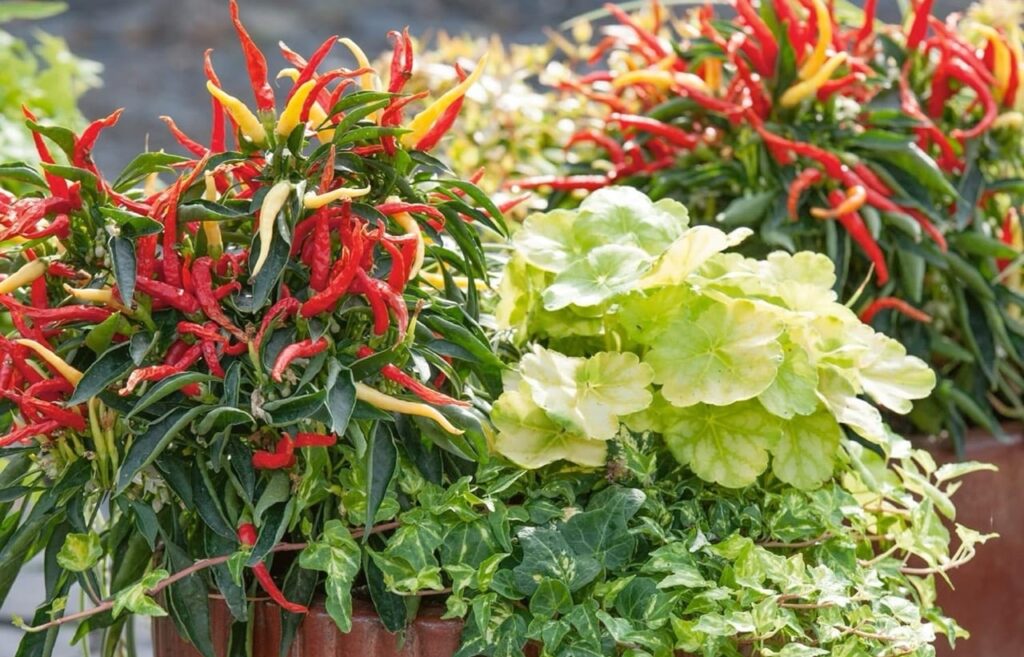
Its name describes its color run. Pods on the Fire and Ice pepper start a creamy white, the ice, and ripen to a rich red, the fire, passing through yellow and orange on the way. They’re thin and three to four inches long, with a slightly sweet flavor and a low heat that makes them easy to use in everyday cooking.
Sangria peppers

Think of the Sangria pepper as confetti in the garden, with pods in white and yellow, orange and red, and purple too, all on the same plant. The cones run two to three inches long, and the heat is gentle for an ornamental, with a plain, peppery taste behind it. It does well in containers, too, so it can bring all that color to a small patio.
Fish peppers

The fish pepper isn’t an ornamental pepper, and it’s not as bright as some of the other chilies on our colorful peppers list. But its coloring is still quite unique for the pepper scale. The pods start white, turn cream and green, and finally ripen red, and they’re often striped along the way, so one pod can show several colors at once. The leaves are variegated, too.
Fish peppers are loved for their flavor, with the fresh bite of a green serrano and a heat that ranges from a jalapeño to a cayenne. They’re an heirloom of the mid-Atlantic, where African American cooks put the young, still-white pods into cream sauces for seafood, since they added heat without changing the color.
Bolivian Rainbow peppers
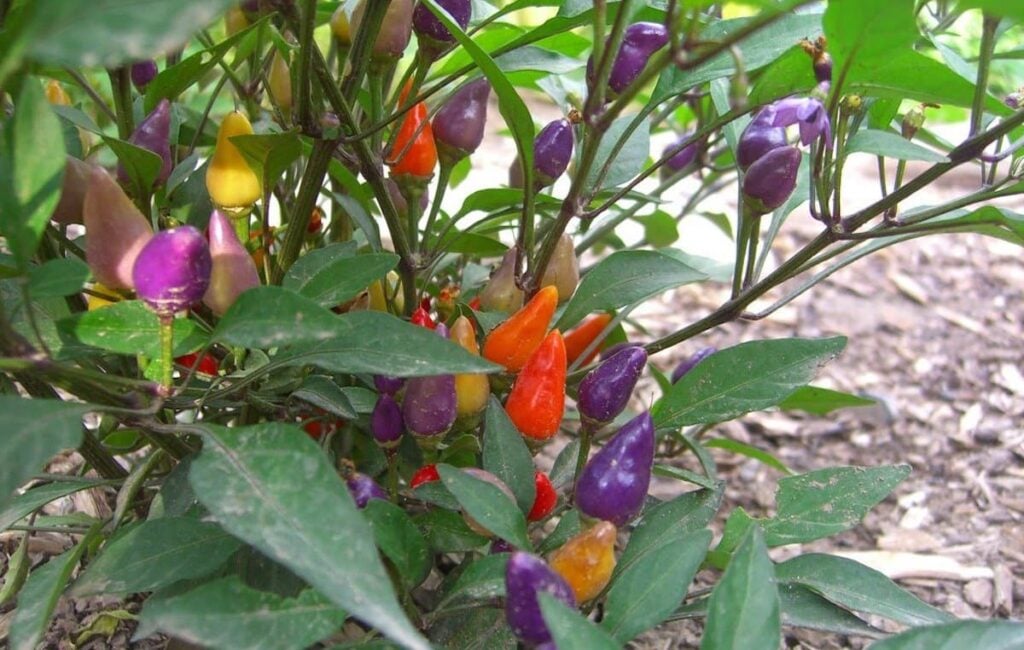
Want the most color you can get from one plant? Arguably the most vibrant colorful pepper on the list, the Bolivian Rainbow pepper ages from purple, to shades of yellow and orange, and finally red. The colors are Easter-like, somewhere between pastel and jewel-tone, which makes the inch-long fruits look a little candy-like. The heat is nothing like candy, though, ranging from serrano pepper spiciness to the heat of a mild cayenne pepper. Flavor-wise, it’s neutral, like most ornamentals, which makes it better for color in a salsa than for flavor.
Loco peppers

Loco peppers begin purple and age into beautiful shades of yellow and orange, then finally red. They’re rounder than most of the chilies on our list, one to two inches across. And they cluster on compact plants about a foot and a half tall. So take care: there’s heat here that can touch a cayenne at its heights. In terms of flavor, there’s a little sweetness, but, like most ornamentals, the flavor isn’t complex.
Little Elf peppers

Green, yellow, orange, purple and red all fit on one compact Little Elf pepper plant, and its tiny cone-shaped pods, about half an inch long, cluster like holiday lights. Short on space? It grows wide rather than tall, so you can tuck it into a container or a low border. The flavor is a little earthy, and the heat reaches the bottom of the cayenne range.
Cayenne-hot colorful peppers
These match a cayenne, at 30,000 to 50,000 SHU, so you’ll want to use them by the pinch.
NuMex Twilight

Like the Bolivian Rainbow, the NuMex Twilight brightens up a space with shades of purples, yellows, oranges, and reds. They could compete well with the Bolivian Rainbow for the title of most colorful pepper, though they hit in a different weight class in terms of heat. They have the same heat profile as a cayenne pepper, which may be too hot for some. New Mexico State University bred it from a Thai ornamental. The NuMex Twilight also has more of a salty, bitter flavor, which doesn’t make it a great culinary choice. Still, it’s all about the colorful looks, which this chili has in spades. Too hot for you? The NuMex Centennial gives you the same colors with far less heat.
Aji omnicolor

The aji omnicolor starts pale yellow, almost white, and turns yellow, then orange, then red. A single plant carries dozens of pods at every stage. Those soft early colors belie a significant medium heat, the same Scoville rating as a cayenne pepper. But best of all, these are quite flavorful chilies, particularly for an ornamental pepper: sweet and fruity, like the Peruvian aji it is. They are delicious for a colorful salsa.
Aurora peppers

The aurora pepper takes the Latin word for dawn as its name. Its pods run green, then a creamy violet, before orange and red. They’re rounded, bulb-shaped and up to two inches long, so a plant full of them looks like strings of big holiday bulbs. The heat matches a cayenne, behind a plain, peppery flavor.
Chinese 5-color peppers

Chinese five-color peppers are tiny conical chilies, about an inch long, that pop in landscaping. What to expect from this chili is all in the name. Five colors star: purple, cream, yellow, orange, and red, and the cream stage is one you don’t see often. Their heat equals that of a cayenne pepper, and there’s more flavor here than you’ll find in most other ornamentals, so they’re worth a spot in an edible garden.
Extra-hot colorful peppers
One pepper on our list runs well past a cayenne.
Prairie fire peppers

Prairie fire peppers are tiny chilies, about an inch long and bulbous with a pointed tip, and they show a lot like Christmas lights. Greens, purples, creams, yellows, oranges and reds cover the plant, making them another contender for the most colorful pepper on the list. There’s quite a bit of heat here, with a spiciness that rivals Thai peppers, and a fruity, tangy flavor that’s better than most ornamentals. They make a mean colorful salsa while brightening up your garden. Making one? Start with a single pod.
Which colorful pepper should you grow?
Start with what you want the plant to do.
- For the most colors at once: prairie fire, Bolivian Rainbow, Sangria or Chinese 5-color.
- For a family garden: Sedona Sun, Medusa or Chilly Chili.
- For a container: Medusa, Sangria, Loco or Little Elf.
- For cooking: fish pepper or aji omnicolor, with prairie fire if you like it very hot.
- For colorful leaves too: fish pepper or Purple Tiger.
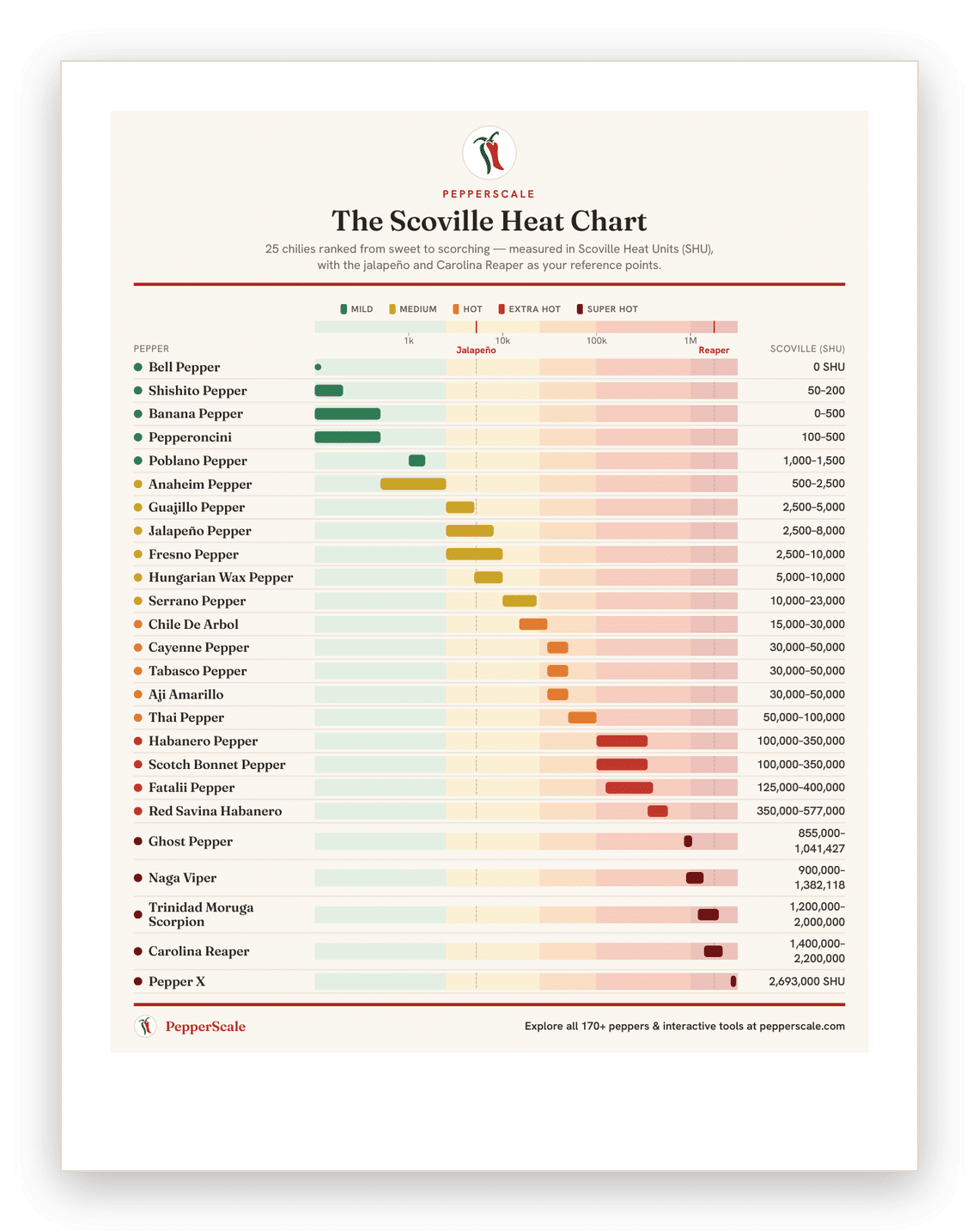
Get the free PepperScale Scoville Heat Chart
A printable, at-a-glance ranking of 25 chilies from sweet to scorching — with the jalapeño and Carolina Reaper as your reference points. Join the newsletter and we’ll send it straight to your inbox.
No spam — just Wicked Wednesday recipes and occasional extra dashes of chili pepper inspiration. Unsubscribe anytime.
Related reading
- Yellow Peppers Guide: Looking for more of this bright shade to liven up your landscaping? We have you covered.
- The Hot Pepper List: We profile over 175 peppers. Search them by name, heat level, flavor, and more.
- Black Peppers Guide: If you’re one for something more dramatic, these chilies add a real sense of drama to your space.