Chili powder doesn’t go bad the way fresh food does. Kept dry, it won’t spoil, but it does fade: the color dulls, the aroma weakens and the heat slowly drops. Plan on about two years of good flavor, and give an older jar a quick look, sniff and taste before you cook with it.
Chili powder seasoning consists of various ground spices and at least one herb. This spice blend was invented as a convenience product for American cooks. It encapsulated the flavors of Mexican cooking in one mixture and saved cooks the trouble of seeking out multiple spices. As such, it is more of a Texan spice blend than a truly Mexican one. William Gebhardt of New Braunfels, Texas, was selling bottles of his Eagle Brand Chili Powder by 1896, and our look at what’s in chili powder covers the blend itself. However, you may not have many uses for chili powder if you do not regularly cook Tex-Mex dishes, which is how a jar ends up at the back of the cupboard for years.


Last update on 2026-11-17. We earn a commission if you make a purchase, at no additional cost to you.

Note: in this article, we discuss chili powder, the seasoning blend that utilizes multiple herbs and spices. But much of the same holds true for chili powders made with 100% hot pepper powder.
How long does chili powder last?
How long is “good”? The Food Keeper guide from Cornell, the Food Marketing Institute and USDA gives chili powder two years, opened or sealed. Other ground spices get two to three, and McCormick puts chili powder with its ground spices at two to four years. Here’s how the numbers compare:
| Product | Best quality | Source |
|---|---|---|
| Chili powder | 2 years, opened or unopened | Food Keeper guide |
| Ground spices | 2 to 3 years | Food Keeper guide |
| Ground spices, including chili powder | 2 to 4 years | McCormick |
| Seasoning blends | 1 to 2 years | Food Keeper guide, McCormick FAQ |
| Whole spices | 3 to 4 years | Food Keeper guide |
Treat these as quality windows rather than safety deadlines. McCormick says its own dates are “for optimum usage for flavor,” and that older spices are harmless. Its jars carry a best-by date. If a jar is missing a date entirely, McCormick’s FAQ says it’s well past its recommended shelf life.
Can old chili powder make you sick?
Because chili powder consists of dry spices, it does not go bad in the same way that a moist spice blend or chili paste might. Compare it to a spicy chili paste like gochujang, which carries enough moisture that the tub tells you to refrigerate it once it’s open. No such precautions are required for chili powder.
Is a dry jar sterile, then? It isn’t. FDA’s risk profile on spices found Salmonella in 6.6% of imported spice shipments it tested, and notes that it can survive more than a year in dry spices. It’s when a spice gets wet that bacteria and mold get a foothold. So the risk isn’t age. It’s water getting into the jar.
Most chili powder gets cooked, in chili con carne or taco meat. But it also goes on raw, over fruit, popcorn or corn on the cob, so keep the jar dry and the spoon clean.
How to tell if chili powder has gone bad
If you spot signs that water has gotten inside a package of chili powder, you may want to discard it and purchase some more. Mold and other problems caused by moisture can make you sick. Check these before you use an old jar:
- Mold or damp, hard clumps: Throw it out. Soft clumps that break with a fingertip just mean some humidity got in. Hard, damp ones, or any fuzz, mean water did.
- A musty smell: Chili powder should smell earthy and warm. Musty means it’s going in the trash.
- Tiny beetles: Cigarette beetles feed on chili powder and paprika, according to Ohio State University Extension. Bag up the jar and throw it out, then check the rest of the cupboard.
- Dull, brownish color: It’s safe, just tired. A faded jar has lost flavor along with its color.
- Weak aroma: Rub a pinch between your palms and smell it. If you have to hunt for the cumin and chili, so will your dinner.
The more common way that chili powder becomes unusable is when it loses its flavor. You do not have to discard it, but you may have to use more of it to ensure that you get the right taste. If you have had chili powder in your spice cabinet for more than a year, smell and taste a small amount before you add it to a dish. A smell and taste test allows you to determine how much flavor it has lost. Remember that there should be more to the flavor profile than just heat.
And if a jar is on its way out, use it generously rather than letting it sit. A faded jar can still season a big pot of chili if you add a little more. Overdid it? Our guide to too much chili powder has the fixes.
Does chili powder lose its heat over time?
Yes, but more slowly than it loses color. In a 2014 study in Food Research International, red chili powder stored a year at room temperature kept about 75% of its capsaicinoids, the compounds behind the heat. Its free carotenoids, the red pigments, fell to 20% of where they started. Frozen samples kept nearly all their heat.
That study tested pure ground chili rather than a blend, but it matches what most cooks notice. An old jar can still bring some heat while tasting flat, because the cumin, oregano and garlic fade along with the red. How hot was it to begin with? That depends on the chilies in the blend.
Does chili powder need to be refrigerated?
You don’t have to. A sealed jar in a cool, dark cupboard is fine. But if you want to keep the color longer, the cold does help. McCormick’s FAQ says to store “members of the red pepper family, including paprika and chili powder, in the refrigerator” to keep their color and freshness, and the Food Keeper guide says the same. One study on paprika found 27% color loss after 150 days at room temperature against 15% in the fridge.
What’s the catch? Condensation. McCormick warns that taking jars in and out of the freezer again and again can let moisture form inside, and says freezing doesn’t extend the shelf life of dried spices anyway. If you do refrigerate it, keep the lid tight and put it back right after use.
How to store chili powder so it lasts
In most cases, how you store chili powder determines how long it lasts. As with all dry spices, you should keep chili powder away from light. It lasts the longest when you keep it in the dark. Heat can have the same effect, so you should keep it cool as well. Ideally, the container for your spices should be airtight. A few habits help:
- Not over the stove: The Food Keeper guide also rules out spots near the dishwasher, the sink and a sunny window.
- Measure away from the pot: Shaking the jar over a steaming pan speeds flavor loss and can cause caking, the Food Keeper guide warns.
- Dry spoons only: A damp measuring spoon brings in the water you’re trying to keep out.
- Lid on tight: Close it as soon as you’re done, so air and kitchen humidity stay out.
- Buy small: If you only make chili a few times a year, a small jar you finish beats a big one that fades.
- Date it: Write the month you opened it on the lid, so you don’t have to guess later.
How long does homemade chili powder last?
What about a jar you mixed yourself? A homemade blend is only as fresh as the spices that went into it. Mixing a new batch from a two-year-old jar of cumin won’t reset the clock. Spices bought as seeds and pods, like cumin seed and dried chilies, keep three to four years by the Food Keeper guide. Grind them yourself and your blend starts out fresher than most store jars. Make small batches, keep them sealed somewhere cool and dark, and taste before you use them.
Our recipe takes five minutes, and you can set the heat with the cayenne:

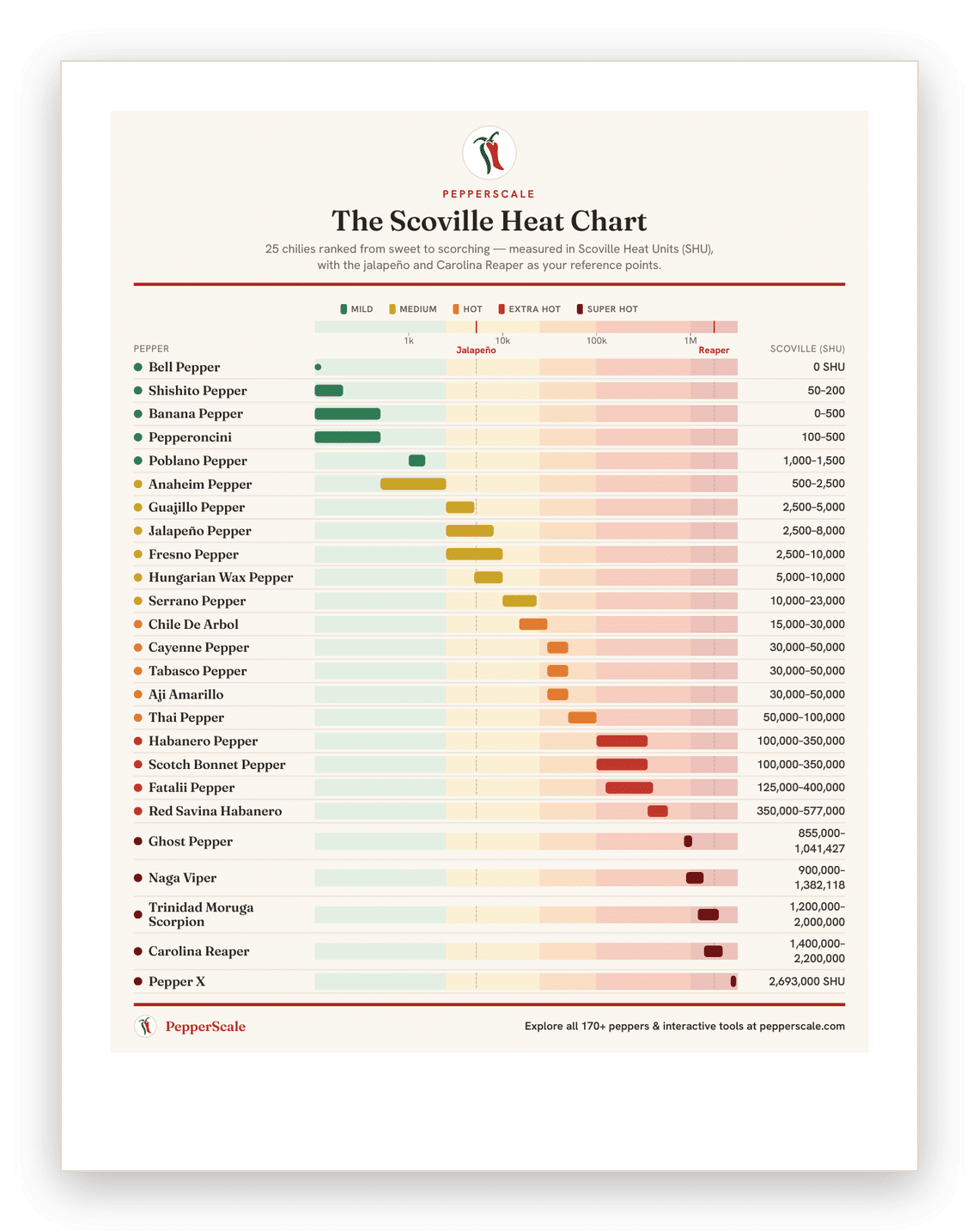
Get the free PepperScale Scoville Heat Chart
A printable, at-a-glance ranking of 25 chilies from sweet to scorching — with the jalapeño and Carolina Reaper as your reference points. Join the newsletter and we’ll send it straight to your inbox.
No spam — just Wicked Wednesday recipes and occasional extra dashes of chili pepper inspiration. Unsubscribe anytime.
Related Reading
- Is Chili Powder Spicy? Yes, it’s a mix of spices, one being a hot pepper. But how fiery does it really get?
- Crushed Red Pepper Vs. Chili Powder: How do these two common seasonings compare?
- Does Crushed Red Pepper Go Bad? The same questions for the jar of flakes next to it.