It’s not only your mouth that can catch fire with spicy chilies. Your hands, your eyes, really anywhere you have skin, can suffer from chili burn. But hands, of course, are the most common, and they can transfer the pain elsewhere if you don’t deal with it quickly. Maybe you seeded a batch of jalapeños bare-handed, or crumbled a few dried chilies into a pot, and an hour later your fingertips are throbbing. The fix is simpler than you might think: soak your hands in cool water or cold milk, work some vegetable oil into your skin if the pain lingers, then wash with soap. Here’s how to do each step, plus what doesn’t help and when to call for backup.

A quick word of caution first: we aren’t doctors, and these are home remedies. If blisters form, the pain keeps getting worse, or pepper fumes leave you short of breath, see the section on when to get help below.
Why do peppers make your hands burn?
Blame the capsaicin, the compound behind a pepper’s heat. It sets off the same nerve sensors in your skin that respond to real heat, so your fingers feel scalded even though nothing hot touched them. Capsaicin also barely dissolves in water, so a quick rinse at the sink won’t clear all of it.
The longer and more often your hands touch the cut pepper, the worse it tends to get. In a 1987 study from New Mexico, the researchers noted that peeling roasted chilies bare-handed, as many cooks there do, can cause prolonged burning, irritation and redness. How bad can it get? Bad enough that severe cases have a name in emergency medicine: “Hunan hand,” a contact dermatitis from handling chili peppers.
How do you stop hands burning from peppers?
So what brings relief? Work through these in order:
- Soak in cool water or cold milk. Both work. In the New Mexico study, volunteers who had soaked their hands in a slurry of green chilies got quicker relief from cool tap water than from vegetable oil. And when researchers tested remedies on skin hit with pepper spray, milk did as well as water. If you use milk, keep it cold, and pour in fresh milk from the fridge as it warms.
- Move to vegetable oil if the sting lingers. Capsaicin dissolves in oil, and in the same study the oil-soaked hand did better over the long run. Rub cooking oil into your hands or soak your fingertips in a shallow bowl of it. Health guides suggest leaving it on for at least an hour.
- Wash with soap and water. Once the pain eases, a good lather gets the oil and any pepper residue off your skin, including under your nails.
- Keep your hands off your face. Until you’ve washed, treat your fingers as if the pepper is still there. That means no eye rubbing and no touching contact lenses.
Does water make pepper burn worse?
You might have read that water spreads capsaicin around and makes things worse. We used to say so too. But the research does not back it up. Water dissolves very little capsaicin, so some stays behind after a rinse, yet in the New Mexico study cool tap water brought faster relief than oil. In every study we found that tested it, water helped.
So go ahead and use the sink, then follow it with oil and soap to deal with the capsaicin that’s still on your skin.
Is milk better than water for burning hands?
About the same, as it turns out. Milk is the classic fix for a burning mouth, and our guide to treating chili burn covers why. On skin, though, milk performed about the same as water in testing. Use whichever is closer, and keep it cold.
You may also hear that milk works because it’s acidic and breaks capsaicin down. That idea is a myth, since milk is close to neutral, and the research points to other reasons it soothes a burning mouth: its fat, its protein and its cold.
Do vinegar, antacids or other remedies help?
A few other fixes show up on poison center and health sites. Do any of them hold up? Here’s what we found:
- Liquid antacid. Poison Control lists antacids like Maalox among the things that may help. In a poison center study, 70 percent of callers who smoothed an antacid onto their skin reported relief. But there was no comparison group, and in the pepper spray study it did no better than water.
- Diluted vinegar. Poison Control also lists soaking in vinegar diluted with water. We found no testing of it on chili burn, though.
- Lemon juice, rubbing alcohol, petroleum jelly. These turn up on plenty of remedy lists, but we have not seen evidence that any of them work on skin.
How long do pepper burns on your hands last?
They usually last longer than a burning mouth, and in the New Mexico study the soaks ran for 75 minutes. Health guides suggest keeping oil or another treatment on for at least an hour. A heavy session with very hot peppers can linger for hours, and in one case Poison Control describes, a woman’s hands were still red and cracked the next day.
When should you get medical help?
Most cases ease with the steps above, but call your poison center at 1-800-222-1222 (in the U.S.), or use its online tool, if:
- Blisters form, or severe pain keeps climbing despite treatment.
- The burn has spread to your eyes. Rinse with plenty of clean water for 15 minutes first, and follow our steps for getting jalapeño out of your eye.
- You’re unsure what to do, especially with a child.
If cooking or handling hot peppers leaves anyone with trouble breathing or chest discomfort, call 911.
How do you keep peppers from burning your hands?
Sure, some chilies are worse than others for chili burn, but all hot chilies can cause it. If you’re handling chilies, whether it’s a medium-heat jalapeño or a much spicier habanero, it’s best to take precautions from the start:
- Wear gloves. Poison Control recommends rubber, latex or nitrile gloves when working with hot peppers. Peel them off inside out when you’re done so the outside never touches your skin.
- Wash everything that touched the peppers. Knives, cutting boards and countertops can pass chili oils back to bare hands, so give them soap and hot water.
- Don’t forget dried peppers and powders. Crumbling dried chilies or rubbing in a cayenne-heavy spice rub can burn too.
- Open a window. Cooking hot peppers can put capsaicin in the air, so Poison Control suggests fresh air while you work.
Want to know what you’re up against before you start? Our hot pepper list ranks every chili by heat.
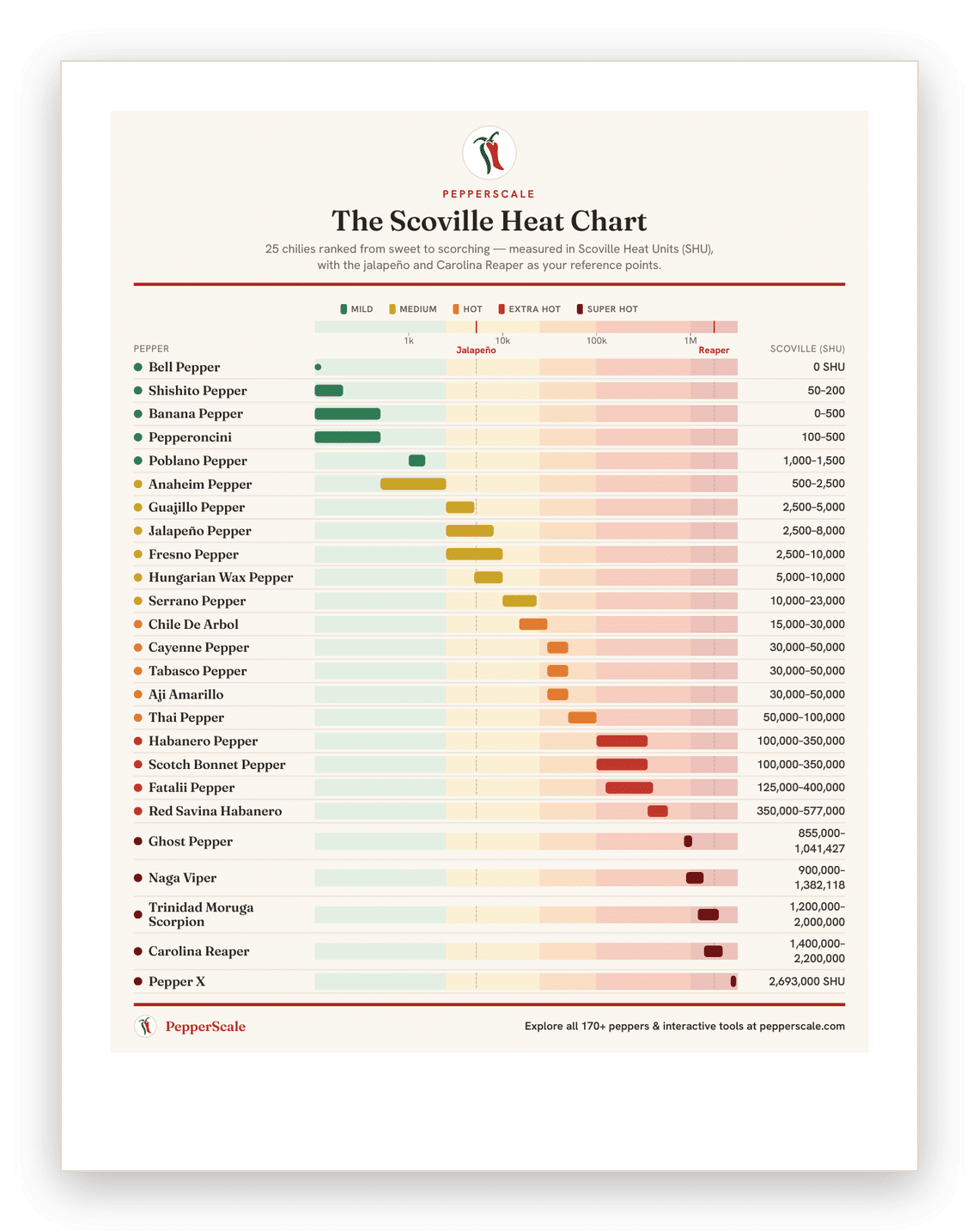
Get the free PepperScale Scoville Heat Chart
A printable, at-a-glance ranking of 25 chilies from sweet to scorching — with the jalapeño and Carolina Reaper as your reference points. Join the newsletter and we’ll send it straight to your inbox.
No spam — just Wicked Wednesday recipes and occasional extra dashes of chili pepper inspiration. Unsubscribe anytime.
Related reading
- Craving Spicy Food?: Learn what makes us want it and why.
- Why Does Your Nose Run When You Eat Spicy Food?: The reason all comes back to capsaicin.
- Are Dried Peppers Hotter Than Fresh?: Or do fresh chilies contain more heat?
My hands are on fire 🙁 does this help immediately?
hey,so my hand was on fire but this helped me a lot