Like your chilies with some earthy oomph? Here are the ones you’ll want, from sweet peppers with no heat at all to super-hots. They’re perfect for barbecue rubs, rustic marinades, and earthy salsas and hot sauces. Not every pepper on this list has been near a fire, though. Some are smoked, some are dried or fire-roasted, and a few have a light smoky note when they’re fresh. Here’s how each one gets its smoke, how hot it is, and what to do with it.

Smoky peppers at a glance
Everything below is collected in one place, sorted from mildest to hottest. Heat is measured in Scoville heat units (SHU), and the third column tells you how each pepper compares with a jalapeño.
| Pepper | Heat (SHU) | Compared with a jalapeño | Where the smoke comes from |
|---|---|---|---|
| Peperone di Senise | 0 | No heat at all | Dried or fresh |
| Santa Fe Grande | 500 to 700 | Much milder | The pepper itself (fresh) |
| Piquillo | 500 to 1,000 | Much milder | Roasted over a wood fire |
| Ñora | 500 to 1,000 | Much milder | Sun-dried |
| Ancho | 1,000 to 1,500 | About ¼ as hot | Dried |
| Aji panca | 1,000 to 1,500 | About ¼ as hot | Dried |
| Espelette | 500 to 4,000 | About half as hot | Dried and ground |
| Mulato | 2,500 to 3,000 | About half as hot | Dried |
| Guajillo | 2,500 to 5,000 | A little milder | Dried |
| Chimayo | 4,000 to 6,000 | About the same | Sun-dried |
| Chipotle (morita and meco) | 2,500 to 8,000 | About the same | Smoked and dried |
| Pasilla de Oaxaca | 15,000 to 20,000 | About 3 times hotter | Smoked and dried |
| Chile de árbol | 15,000 to 30,000 | About 4 times hotter | Dried |
| Chocolate habanero | 425,000 to 577,000 | Nearly 100 times hotter | The pepper itself |
| Chocolate bhut jolokia | 800,000 to 1,001,304 | About 170 times hotter | The pepper itself |
| Trinidad Scorpion Chocolate | 1,200,000 to 2,000,000 | About 300 times hotter | The pepper itself |
Where does the smoky flavor come from?
A pepper can pick up a smoky flavor in a few ways. The most obvious one’s actual smoke. Chipotles are red jalapeños that have been smoked and dried. The pasilla de Oaxaca is smoked in the mountains of Oaxaca, and smoked paprika’s ground from peppers smoked over oak.
Drying’s another. Plenty of dried chiles, like the ancho, mulato and guajillo, taste smoky without ever being smoked. The same goes for fire-roasting, which is how piquillos are prepared before they’re jarred. And a few fresh peppers carry a light smoky note of their own, though it’s much more subtle than in a dried or smoked chile.
Mild smoky peppers
These bring the flavor with little or no burn, so they’re the easiest place for you to start.
Peperone di Senise

Peperone di Senise is a sweet pepper from the Basilicata region of Italy, with no heat at all. It’s sweet, a little nutty and a little smoky, and it’s eaten fresh as a frying pepper and dried. Crushed into a powder, it seasons soups, stews and other rustic dishes, so it’s a good pick for families and anyone who doesn’t like spicy food.
Santa Fe Grande peppers

Very mild and slightly smoky, the Santa Fe Grande pepper is a fresh pepper that works as a bell pepper substitute. The smoke is light, just an undertone beneath its sweetness, and it pairs well with barbecue meats. If you’ve got a grill going, try it there, since grilling brings the smoke forward.
Piquillo peppers

Piquillo peppers are small Spanish peppers that are roasted over a wood fire, peeled and jarred, and that’s where their smoky edge comes from. They’re sweet with a little tang and almost no heat. Stuff them, slice them onto tapas or blend them into a dip or sauce.
Ñora peppers

The ñora pepper is a small, round Spanish pepper that’s picked when it’s fully mature and dried in the sun. That’s what gives it a sweet, lightly earthy and smoky flavor with very little heat, and you’ll see it in many traditional Spanish dishes.
Ancho peppers

Part of the holy trinity of chilies used in Mexican mole sauces, the dried ancho pepper is full of flavor. It’s smoky and a little sweet, and its flavor is reminiscent of earthy coffee or raisins. The ancho is a dried poblano pepper, and drying is what brings out that smokiness. It’s mild, which makes it a great go-to for barbecue rubs at family gatherings.
Aji panca

Aji panca is a Peruvian chili, and it’s the earthy counterpart to the bright, sunny aji amarillo. It’s smoky with a berry-like fruitiness and only mild heat, and you’ll usually find it dried, or as a paste.
Espelette pepper
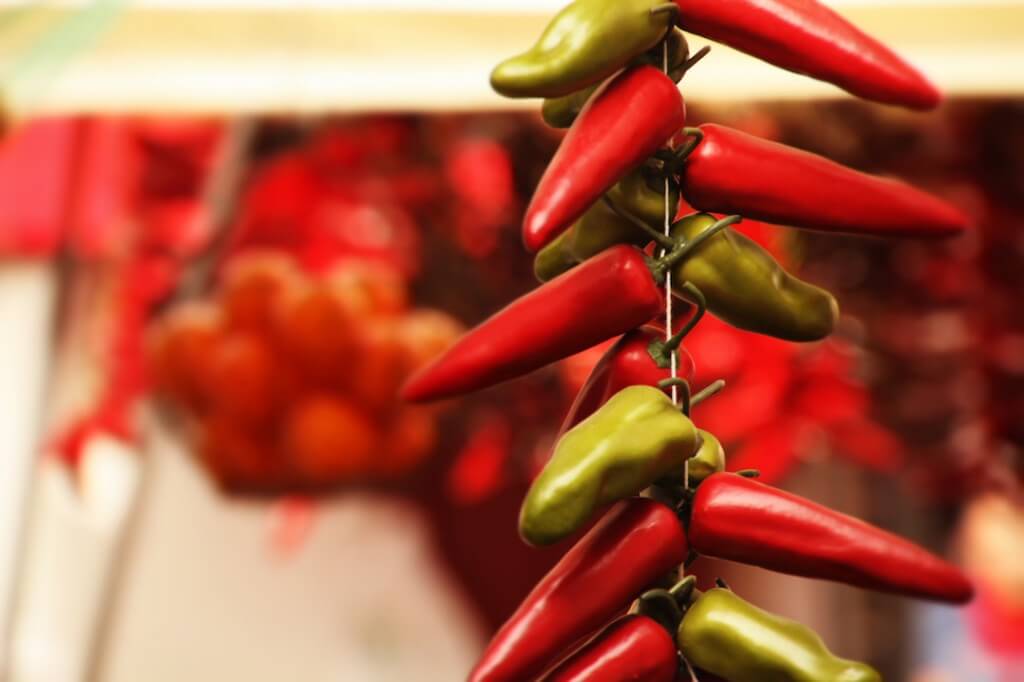
The Espelette pepper, or piment d’Espelette, comes from the Basque region of France. It’s usually sold as a rustic red powder that’s mild, slightly smoky and slightly citrusy, with a heat that can run from barely there to about a jalapeño’s. Use it the way you’d use paprika.
Medium smoky peppers
This is where you’ll find real smoke. Most of these are close to a jalapeño in heat, and two of them run a few times hotter.
Mulato peppers

The mulato pepper is a close cousin of the ancho, dried from a poblano variety that spends a little longer on the vine. That extra time gives it a bit more heat, and it’s got the same smoky, sweet and earthy flavor, so you can use it anywhere you’d use an ancho.
Guajillo peppers

Guajillo peppers are dried mirasol chilies, and they’re used all over Mexican cooking. The smoke’s lighter here. Guajillos are better known for a bright, tangy flavor with hints of cranberry and tea, and their mild heat makes them easy to cook with in salsas and sauces.
Chimayo peppers

The Chimayo pepper comes from the mountains of northern New Mexico, and its sun-dried skin and smoky taste depend so much on that region that it’s hard to find commercially. It’s a medium heat at 4,000 to 6,000 SHU, and it’s worth buying if you see it.
Chipotle peppers (morita and meco)


The chipotle pepper is the king of smoky peppers. The name comes from a Nahuatl word meaning smoked chili, and that’s what it is: a ripe red jalapeño that’s been smoked and dried. So there’s real heat, but it’s a level most anyone can enjoy. You’ll find chipotle powder on most spice racks next to the ground cayenne pepper, and chipotle in adobo sauce is a staple for sauces and stews. You’ll also find plenty of chipotle rubs and marinades built around it.
There are two kinds. The morita is the chipotle you’ll usually see in North American stores. The chipotle meco is smoked for longer, so it turns tan or grayish with a stiff, leathery texture and a deeper smoke. They’ve got the same jalapeño-level heat.
Pasilla de Oaxaca
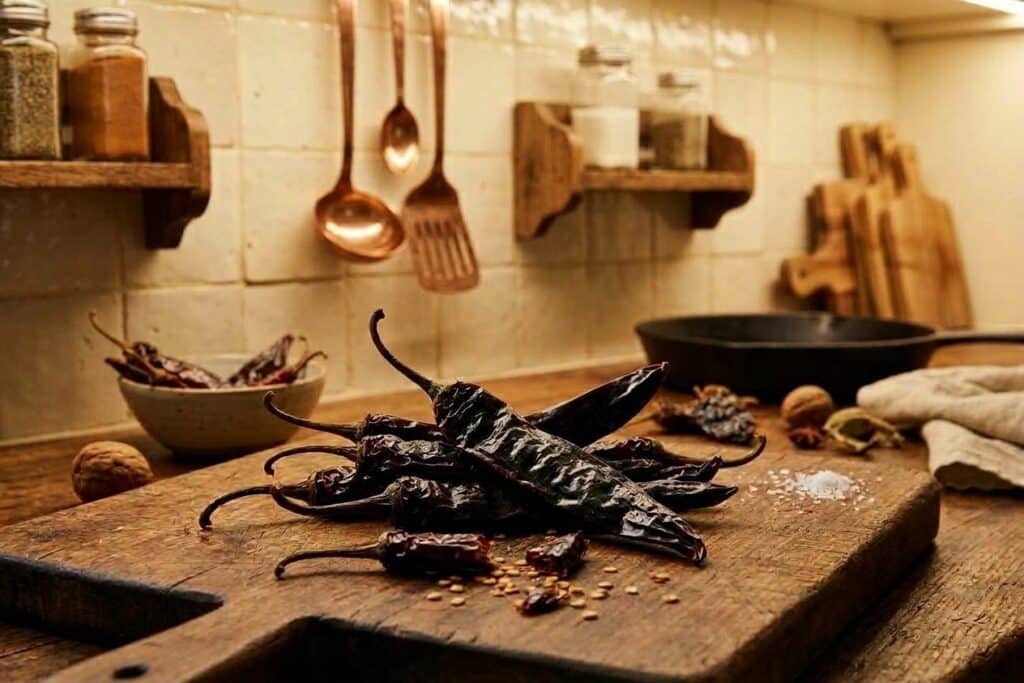
The pasilla de Oaxaca is a smoked chili from one small corner of Mexico, the Sierra Mixe in northeastern Oaxaca. It tastes of deep, meaty smoke over a dried-fruit sweetness, with more heat than a chipotle. Don’t confuse it with the regular pasilla, a dried chilaca with no smoke at all. It’s hard to find and it isn’t cheap, but Oaxacan cooks use it in moles, salsas and beans.
Chile de árbol

Chile de árbol is a small, slim red chili that’s most often used dried. Drying gives it a slightly nutty and smoky flavor, but heat’s the main event, at about four times a jalapeño. It’s a common pick for Mexican sauces, soups and stews, and for homemade hot sauce.
Super-hot smoky peppers
The smoke gets a lot harder to taste up here, but it’s there. The brown, “chocolate” versions of super-hot peppers tend to be earthier and a little smokier than the red ones. Wear gloves and eye protection when you handle any of these, and know how to combat chili burn.
Chocolate habanero

The chocolate habanero is a brown habanero that’s hotter than the Red Savina, with earthy and smoky undertones under the usual habanero sweetness. It’s the most approachable smoky super-hot here, if anything this hot can be called approachable.
Chocolate bhut jolokia

The chocolate bhut jolokia is the chocolate version of the ghost pepper. It’s a little sweeter, with a hint of smoke that’s typical of chocolate chili varieties. Used with extreme care, it’s great in barbecue sauces, hot sauces and marinades.
Trinidad Scorpion Chocolate

The Trinidad Scorpion Chocolate is one of the hottest peppers in the world, at 1.2 to 2 million SHU. Next to the red Trinidad Moruga Scorpion, it’s mellower and less acidic, with smoky undertones and a hint of earthy sweetness.
You’ll sometimes see the 7 Pot Brain Strain on smoky lists too. There’s a slight smokiness behind its burn, but fruit is the main flavor, and the heat is the predominant experience.
Smoked paprika and other smoky spices
You don’t always need the pepper itself. Smoked paprika is the easiest way to add smoke without much heat. Look for Spanish pimentón de la Vera, which is smoked over oak and comes sweet, bittersweet or hot. Chipotle powder brings smoke along with jalapeño-level heat, so it’s great in rubs and chili.
Urfa biber, a Turkish pepper usually sold as dark red flakes, is often described as smoky and raisin-like, but it isn’t smoked. The peppers are sun-dried, then sealed and left to “sweat” in the sun before a second drying, which turns them that dark color.
Which smoky pepper should you use?
It depends on how much heat you want and what you’re cooking.
- For real smoke: Chipotles (morita or meco), pasilla de Oaxaca, or sweet smoked paprika if you don’t want any heat.
- For depth without much heat: Ancho, mulato or ñora, especially in sauces, stews and rubs.
- For a brighter, tangier chili: Guajillo, in salsas and sauces.
- For heat with a little smoke: Chile de árbol, in hot sauces and salsas.
- For extreme hot sauces: One of the chocolate super-hots, used a little at a time.
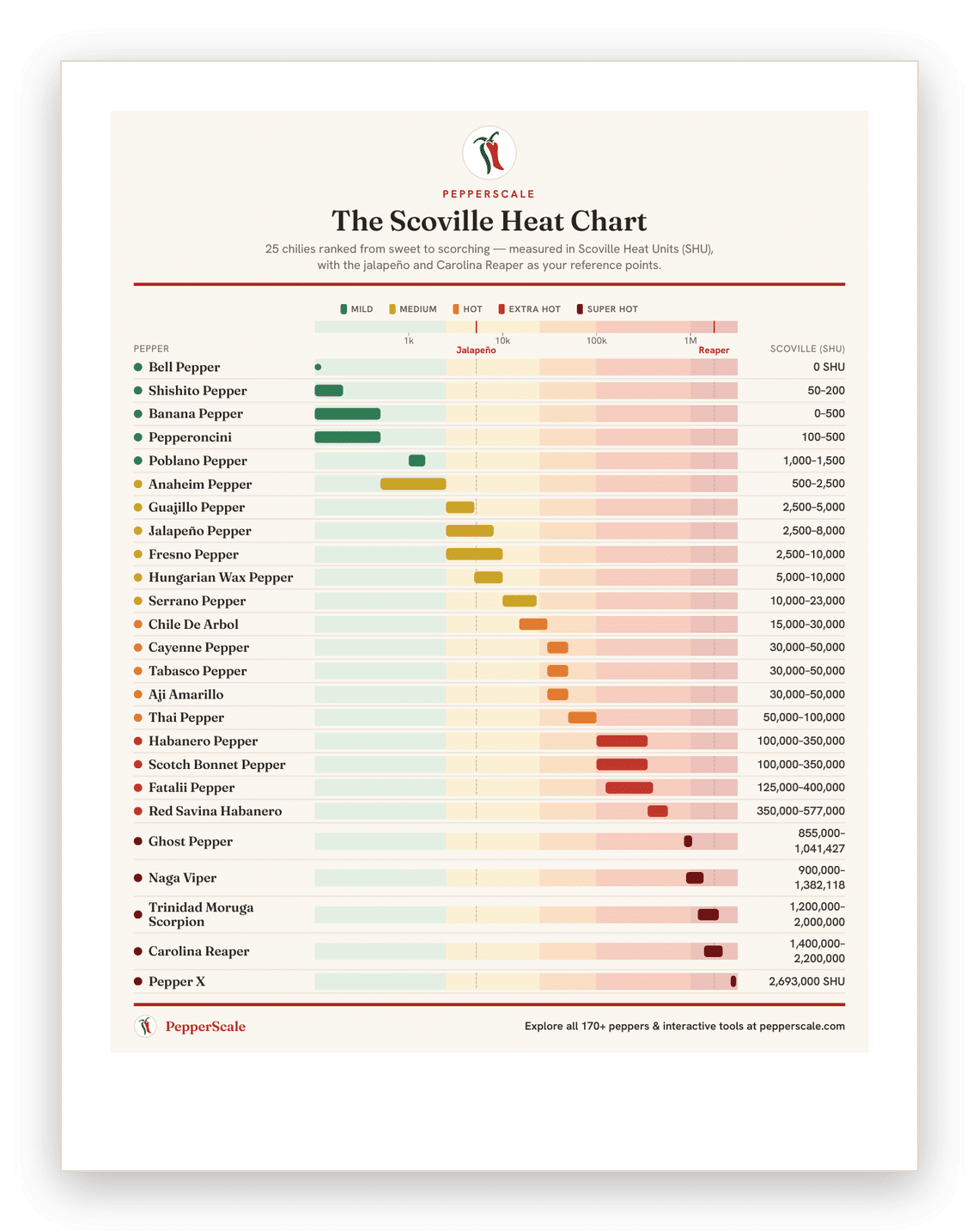
Get the free PepperScale Scoville Heat Chart
A printable, at-a-glance ranking of 25 chilies from sweet to scorching — with the jalapeño and Carolina Reaper as your reference points. Join the newsletter and we’ll send it straight to your inbox.
No spam — just Wicked Wednesday recipes and occasional extra dashes of chili pepper inspiration. Unsubscribe anytime.
Related reading
- Ancho Vs. Chipotle: How Do They Differ?: Two of the most common smoky chilies, and when to use each one.
- What’s A Good Chipotle Pepper Substitute?: What to use when you’re out of the king of smoky peppers.
- Smoked Paprika Substitutes: What To Use When You’re Out: Other ways to get smoke into a dish without the tin.
I’ve tried to grow these super hot peppers but with little success. would love some growing tips.