Old Bay seasoning is mostly celery salt, with red pepper, black pepper, paprika and a mix of other spices McCormick keeps to itself, for 18 herbs and spices in all. If you have any Maryland roots, it’s a tin you’ve lived with for a long time. It’s the classic seasoning for Chesapeake Bay crabs, and these days it turns up on fries, popcorn, wings and just about everything else. Here’s what the label tells you, what it doesn’t, and where that little kick of heat comes from.


Last update on 2026-10-22. We earn a commission if you make a purchase, at no additional cost to you.
What is Old Bay seasoning?
Old Bay is a ground seasoning blend made for seafood, sold in a yellow and blue tin with a red lid. It was created in Baltimore around 1939, and McCormick has owned it since 1990.
Old Bay is also the best-known member of a bigger family. Around the Chesapeake, crab seasoning is a category of its own, and several companies make one. Old Bay is the one you’ll find in every supermarket. But if you’re eating steamed crabs at a Maryland crab house, the seasoning on your fingers may not be Old Bay at all. Plenty of crab houses use J.O. No. 2, a crab house spice from J.O. Spice Company outside Baltimore.
Where does Old Bay seasoning come from?
Old Bay was created by Gustav Brunn, a German-Jewish spice merchant who’d been grinding and selling spices to sausage makers back home. As Nazi persecution grew, he moved his business to Frankfurt. On Kristallnacht in November 1938 he was arrested and sent to Buchenwald. His family paid a lawyer to get him released, and within weeks they’d left Germany for the United States.
They settled in Baltimore, where Brunn took a job at McCormick. It didn’t last long: his son Ralph said he was fired once the company learned he was Jewish, while another account puts it down to his English. So Brunn went out on his own and opened the Baltimore Spice Company on the second floor of 26 Market Place, across the street from the city’s wholesale fish market.
The idea came from that fish market. Its seafood sellers kept asking for spices to season their steamed crabs and shrimp, so Brunn made a blend for them. He first sold it as Delicious Brand Shrimp and Crab Seasoning. McCormick dates it to 1939, though some local histories put it a year later.
Brunn died in 1985, and the next year his family sold the business to a British conglomerate. Then in 1990, McCormick bought Old Bay. So the company that had let Brunn go half a century earlier ended up owning his seasoning.
Why is it called Old Bay?
It’s named for the Old Bay Line, the nickname of the Baltimore Steam Packet Company. Its steamships carried passengers and freight overnight down the Chesapeake Bay between Baltimore and Norfolk, Virginia, from 1840 until 1962. So the bay in the name is the Chesapeake. It isn’t a nod to bay leaves, although bay leaf does show up on most people’s guesses for what’s in the tin.
What is in Old Bay seasoning?
Here’s the full ingredient statement on the tin: celery salt (salt, celery seed), spices (including red pepper and black pepper), and paprika. That’s all it says. McCormick describes the blend as 18 herbs and spices, so most of them are hiding inside that one word, “spices.”
Why does the label look like that? US food labels have to list ingredients from heaviest to lightest, and the rules let a company group its spices together under the single word “spices.” Paprika is treated differently because it counts as a coloring as well as a spice. It has to be named, or labeled “spice and coloring,” so it can’t disappear into the group.
And that means you can read a fair amount from the order. Celery salt comes first, so it’s the biggest single ingredient in the tin, and salt is the bigger part of the celery salt. The other spices, red and black pepper included, come next as a group. Paprika is last, so there’s less of it than all the other spices put together.
| Ingredient | Where it shows up on the tin | What it brings |
|---|---|---|
| Celery salt | First, as “celery salt (salt, celery seed)” | Salt, plus the savory, slightly grassy celery flavor you taste first |
| Red pepper | Named inside “spices” | Most of the heat |
| Black pepper | Named inside “spices” | A sharp, peppery bite |
| Other spices | Inside “spices,” not named | Warm, aromatic notes, often guessed to be mustard, bay leaf, ginger and cloves |
| Paprika | Last, named on its own | Brick-red color and a mild, sweet pepper flavor |
So what’s in the rest of the “spices” group? McCormick doesn’t say. The same names come up again and again in copycat recipes and reference guides: bay leaf, mustard, ginger, cloves, cardamom, mace, allspice and nutmeg, with cinnamon on some lists. Treat those as educated guesses. Nobody outside McCormick has published the real formula.
McCormick also labels Old Bay non-GMO and gluten-free.
Is Old Bay spicy?
Only a little. Old Bay is mild, with a gentle warmth that shows up after the salt and celery, and most people wouldn’t call it hot.
That warmth comes mainly from the red pepper, with the black pepper adding some bite. Paprika sometimes gets the credit, and it doesn’t deserve much of it. Plain paprika is ground from mild red peppers, the pimento among them, and usually comes in around 100 to 500 Scoville heat units. It’s in there for color and a sweet pepper flavor.
Why so gentle? There isn’t much red pepper in the tin. It’s one part of that “spices” group, and the whole group comes after celery salt. How hot your food ends up depends on how much you use. A light dusting on fries barely registers. A heavy coat on a pile of steamed crabs gives you noticeably more warmth.
Want more heat? McCormick makes Old Bay Hot Seasoning, which it describes as the classic flavor “with a kick of red pepper.” Or stir a pinch of cayenne into the regular stuff before you use it.
What does Old Bay taste like?
Salty and savory first. Celery salt leads, so you get that grassy, slightly bitter celery flavor right away. Then comes the pepper, with a little bite from the black and a slow warmth from the red. Underneath is a warm, aromatic edge from the rest of the spices, and paprika gives Old Bay its brick-red color.
If you’ve ever picked crabs at a Maryland crab feast, it’s the taste left on your fingers, or something close to it.
How to use Old Bay seasoning
Seafood first, then anything salty and crunchy. Since it’s mostly salt, start with less than you think you need and add more at the end. Here are the places it shines:
- Steamed crabs. The Maryland classic. Blue crabs go into the pot and come out with a thick crust of seasoning on the shells.
- Shrimp. Cooked in the shell, like our spicy boiled Old Bay shrimp, then peeled at the table.
- Fish. Salmon, cod and other fillets, like this grilled Old Bay salmon.
- Wings. Old Bay and honey make a sweet, salty pair in these honey Old Bay wings.
- Snacks. Popcorn, peanuts and sunflower seeds all take it well.
- Sauces and dips. Stir it into mayonnaise for an Old Bay aioli or tartar sauce, or into a creamy jalapeño crab dip.
- Fries and potatoes. A shake over fries straight out of the fryer, or over roasted potatoes.
- Corn and eggs. Butter an ear of corn and dust it, or use it on deviled eggs in place of paprika.
- A Bloody Mary rim. Dip the wet rim of the glass straight into it.
That crab-seasoning flavor shows up in snacks, too. If you ever get your hands on a bag of Utz’s The Crab Chip, you’re in for a treat. Utz seasons those with its own crab spice blend, not Old Bay, but it’s the same idea.
Is there a low-sodium or hotter Old Bay?
Yes, both. Salt is the first ingredient, so it adds up. McCormick lists the classic at 125 mg of sodium per quarter teaspoon, and its 30% Less Sodium version at 85 mg. Watching your salt? Taste the dish before you add any more, since the Old Bay has already brought plenty.
For more heat, there’s Old Bay Hot Seasoning. The line also includes Garlic Herb, Lemon Herb and Blackened seasonings. And there’s an Old Bay hot sauce, which gets its own review here on PepperScale.

Last update on 2026-10-22. We earn a commission if you make a purchase, at no additional cost to you.
Can you make Old Bay at home?
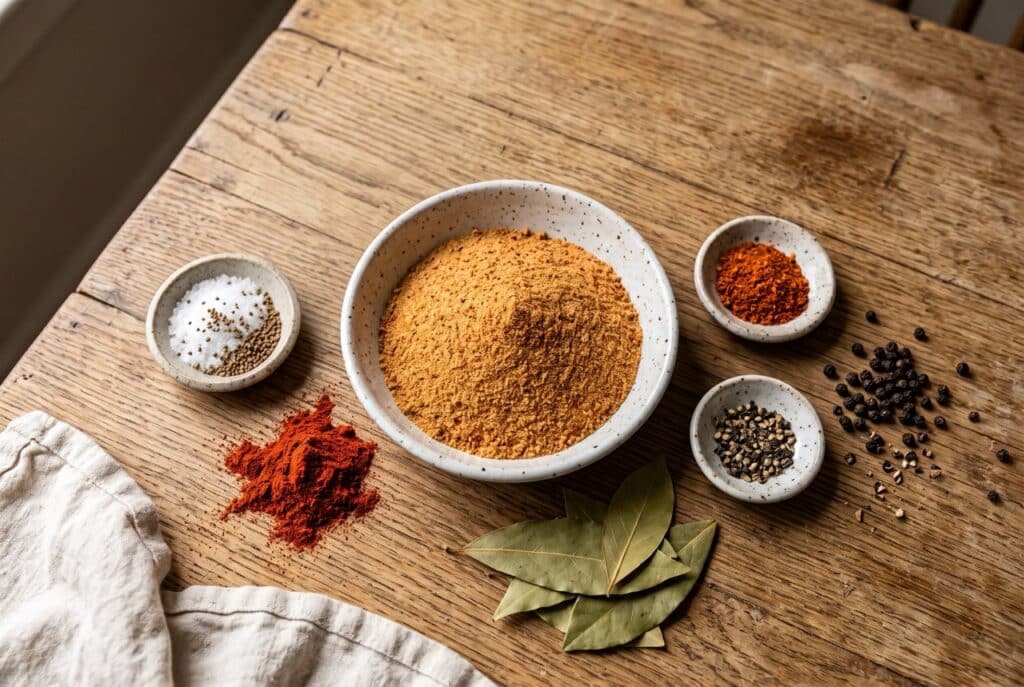
Yes, and it’s easy if your spice rack is in decent shape. Our homemade Old Bay seasoning starts by grinding dried bay leaves with crushed red pepper. Then in go celery salt, paprika, black pepper, mustard and ginger, plus small amounts of allspice, nutmeg, cloves, cardamom, mace and cinnamon. Celery salt gets the biggest measure, so it’s built the same way as the tin. It won’t be an exact copy, since nobody outside McCormick knows the formula, but it gets you close. And you get to set the salt and the heat yourself.
Out of Old Bay and short on spices? Celery salt and paprika alone get you further than you’d expect. Our Old Bay substitute guide covers that and a few other options, and Old Bay vs. Cajun seasoning explains when a Cajun blend can stand in.
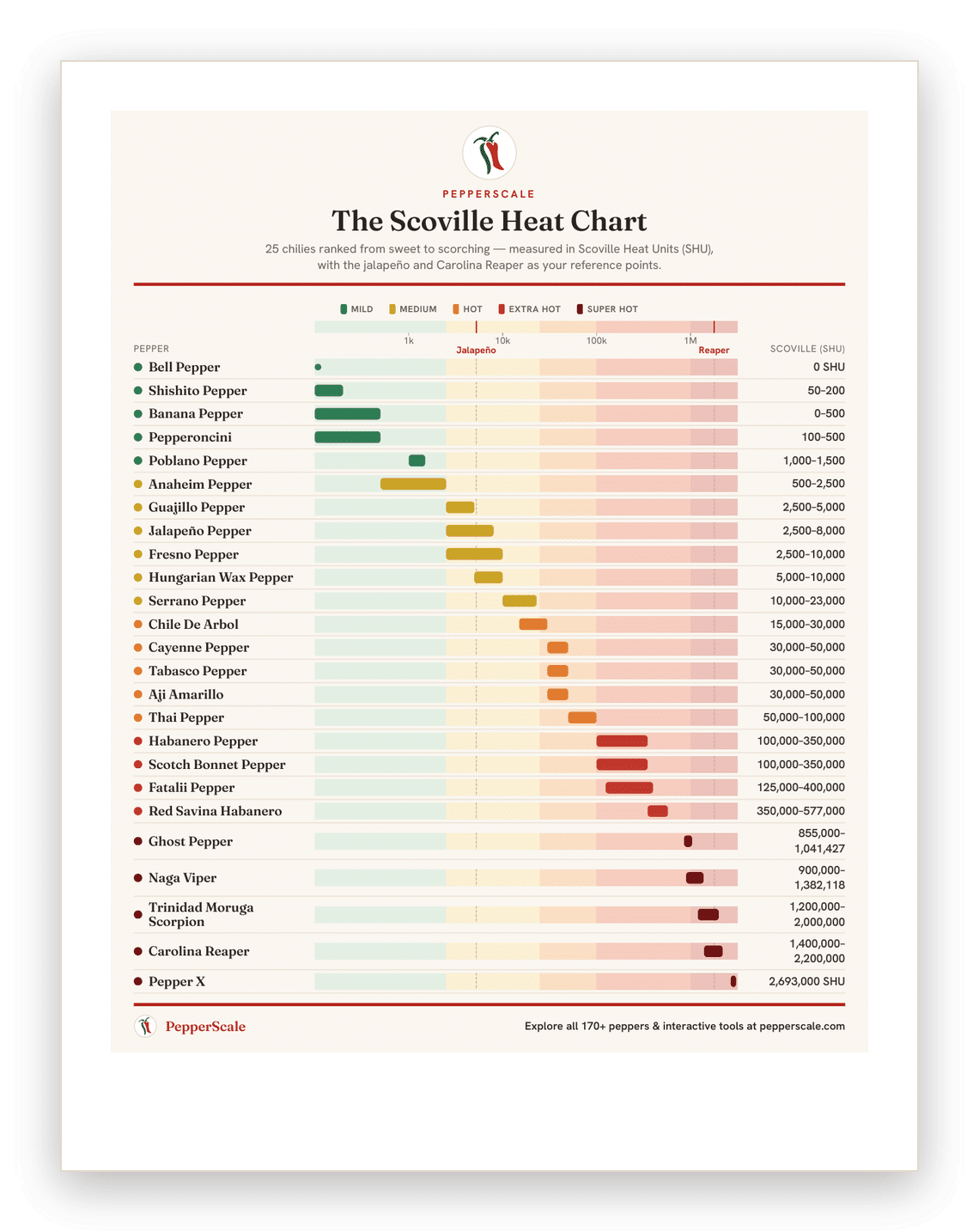
Get the free PepperScale Scoville Heat Chart
A printable, at-a-glance ranking of 25 chilies from sweet to scorching — with the jalapeño and Carolina Reaper as your reference points. Join the newsletter and we’ll send it straight to your inbox.
No spam — just Wicked Wednesday recipes and occasional extra dashes of chili pepper inspiration. Unsubscribe anytime.
Related reading
- The Hot Pepper List: Browse chilies by heat and flavor, from the mild pimento all the way up to the superhots.
- What Is Paprika?: What goes into the red powder at the end of the Old Bay label, and why Spain and Hungary are the names to know.
- Cheddar Old Bay Biscuits: Cheddar and Old Bay baked into a batch of homemade biscuits.