Poblano peppers are known for their mild heat and earthy flavor, and they’re very versatile because they are large with thick walls. They are perfect stuffing peppers for those looking for something a little bolder than a bell pepper. If you end up with extra poblanos, there are many fun ways to use them up. Here’s what to do with poblano peppers that are taking up space in your kitchen.
We’ve sorted the ideas by what they do with the pepper. First comes how to roast and peel them, since most of the other uses start there. Then there are ways to keep them for later, sauces to blend them into, dishes to cook them in, and a list of quick ways to use up just one or two.

What poblanos bring to a dish
Mostly flavor, with a little warmth. A poblano’s heat tops out at 1,500 Scoville heat units (the floor is 1,000), so it’s two to eight times milder than a jalapeño, depending on the pods you compare. That means you can use them by the handful in places where a hotter chili would take over.
Raw, a green poblano tastes fresh and green, with an earthy undertone and a slightly bitter edge. Roasting deepens that earthiness and adds some char. Let them ripen to red on the plant, and you’ll get a sweeter, slightly hotter pepper.
Then there’s the shape. A poblano is about 4 inches long, with a wide cavity and thick walls, so it holds a filling and stands up to roasting. Its waxy skin is tough when raw, but it slips off once the pepper has been charred. One shopping note: some stores label fresh poblanos as pasillas. A true pasilla is a dried chilaca, so our pasilla vs. poblano breakdown will help you sort out the bin.
Start by roasting and peeling them
Why start here? Roasting takes care of that tough skin and brings out the pepper’s earthy side, and most of the dishes below call for roasted poblanos anyway. You can do it three ways:
- Over a gas flame: Set the peppers right on the burner grate and keep turning them with tongs until every side is charred and blistered.
- Under the broiler: Lay them on a baking sheet and broil until the skin blisters, about 5 minutes, then flip them and give the other side a few minutes more.
- In the oven: Bake them at 400°F on a lined pan for 20 to 30 minutes, turning them halfway. This is the hands-off option for a big batch.
Once they’re charred, trap the steam. Put the hot peppers in a covered bowl or a sealed bag for about 10 minutes, and the skins will loosen. Then rub or peel them off, and pull out the stem, seeds and veins. A few flecks of char left behind are fine and add flavor.
Save them for later
Fresh poblanos last anywhere from 4 days to 2 weeks in the fridge, according to USDA’s FoodKeeper. That’s not long if you’ve got a big bag of them, so set some aside before they start to wrinkle.
Roast and freeze them
This is the best way to save a glut. Roast and cool them as above, then freeze them with the skins on and peel them after they thaw. Spread them out on a tray so they freeze separately, then bag them. Our guide to preserving chili peppers covers this and the other options in more detail.
Freeze them raw
No time to roast? Raw poblanos freeze fine, too. Wash and stem them, cut them into strips or pieces, and freeze them, with no blanching needed. They’ll soften once they thaw, so save them for anything you’ll cook, like soups, chili and fajitas.
Dry the red ones into anchos
Did some of your poblanos turn red? Those are the ones to dry. Dried red poblanos are called ancho peppers, and they are a staple of Mexican cuisine, including the popular Mexican mole sauce.
There are many ways to dry poblano peppers. Take a look at our best methods for drying chilies post to consider your best options. And learn the best way to rehydrate peppers for when you want to get the most flavor. Grind a few into powder for the mole below, or soak two for our ancho BBQ sauce.


Last update on 2026-11-15. We earn a commission if you make a purchase, at no additional cost to you.

Blend them into sauces
Make a poblano cream sauce
Poblano cream sauce is a fast and easy way to use up extra poblanos, and the cream sauce provides a lot of versatility in use. Try it over chicken or turkey. It’s delicious, too, over white fish. And, of course, adding it to pasta is always a tasty option.
Our poblano cream sauce recipe uses three poblanos, roasted in the oven and blended with sautéed onion and garlic, then finished with Mexican crema.

Make a green enchilada sauce (also great as a dipper)
Don’t get stuck on the name here. Enchilada sauce can be used for a lot more than enhancing enchiladas. It’s also delicious on tacos, burritos, and other Tex-Mex cuisines. Plus, it’s perfect as a tortilla dip.
Green poblanos are perfect for making a green enchilada sauce. Our recipe broils three of them along with tomatillos and two fresh jalapeños, then blends it all with cilantro and lime.
Make a Chilean pebre sauce
While not traditionally Mexican, pebre sauce is a really tasty way to use up extra peppers, especially if you’re looking for a topping for grilled meats. Think of pebre sauce like a pico de gallo designed for Chilean barbecue. It has a fresh, earthy tang that just works. Our recipe calls for a jalapeño, so dice up a poblano in its place for a milder batch.
Cook them into a meal
Stuff them
This is what poblanos are best known for. Chiles rellenos start with roasted, peeled poblanos, slit open and stuffed, and often battered and fried. The wide cavity and sturdy walls are what make them work.
Then there’s chiles en nogada, from Puebla, the state the poblano is named for. The roasted chile is stuffed with a picadillo of meat and fruit, then covered in a white walnut sauce. Pomegranate seeds and parsley go on top, so the plate shows the green, white and red of the Mexican flag. It’s mostly served from August to early October, around Mexican Independence Day on September 16. For more fillings and sides, see what goes well with stuffed peppers.
Make rajas con crema
Rajas means slices, and you won’t find many easier dishes. Roast and peel the poblanos, cut them into strips, sauté them with sliced onion, then simmer them in cream. Some cooks add corn, garlic or cheese. Spoon it into warm tortillas, serve it with chips, or put it out as one of the fillings at a taco night.
Whip up a poblano corn chowder
Homemade vegetable soups of any type are a great way to use up extra poblanos. Really any soup that calls for bell pepper is an option for poblano use instead. That said, poblano corn chowder is one of our favorite ways to use up some extra chilies quickly. It’s rich, earthy, and hearty, perfect for cold days (or any day where comfort food is a must!). Take a look at our recipe here.

Or just chop one into something
Only have one or two left? Chop them up and add them to whatever you’re making:
- Fajitas or a stir-fry: Slice them into strips and cook them with or in place of bell peppers.
- Eggs: Fold chopped roasted poblano into scrambled eggs or an omelet.
- Quesadillas: Layer roasted strips with a melting cheese.
- Burgers and sandwiches: Pile roasted strips on top, or chop them into the mayo.
- Fresh salsa: Dice a raw one into pico de gallo for green flavor without much heat.
- Rice, beans and grain bowls: Stir in chopped roasted poblano at the end.
- Pizza: Scatter roasted strips over the top before you bake it.
Raw or roasted, green or red?
Raw or roasted? Raw poblanos keep their crunch and fresh, green taste, along with a touch of bitterness, and they’re fine diced into salsa or cooked in a stir-fry or fajitas. Roast them whenever the skin would get in the way, as it does in sauces, soups, rajas and anything you plan to stuff.
Green or red? Green poblanos are the ones you’ll find in most stores, and they’re what the fresh-poblano recipes above call for. Red ones are riper, sweeter and a little hotter, and they’re also the ones that become anchos. If your plants are still producing, our poblano planting guide covers when to pick.
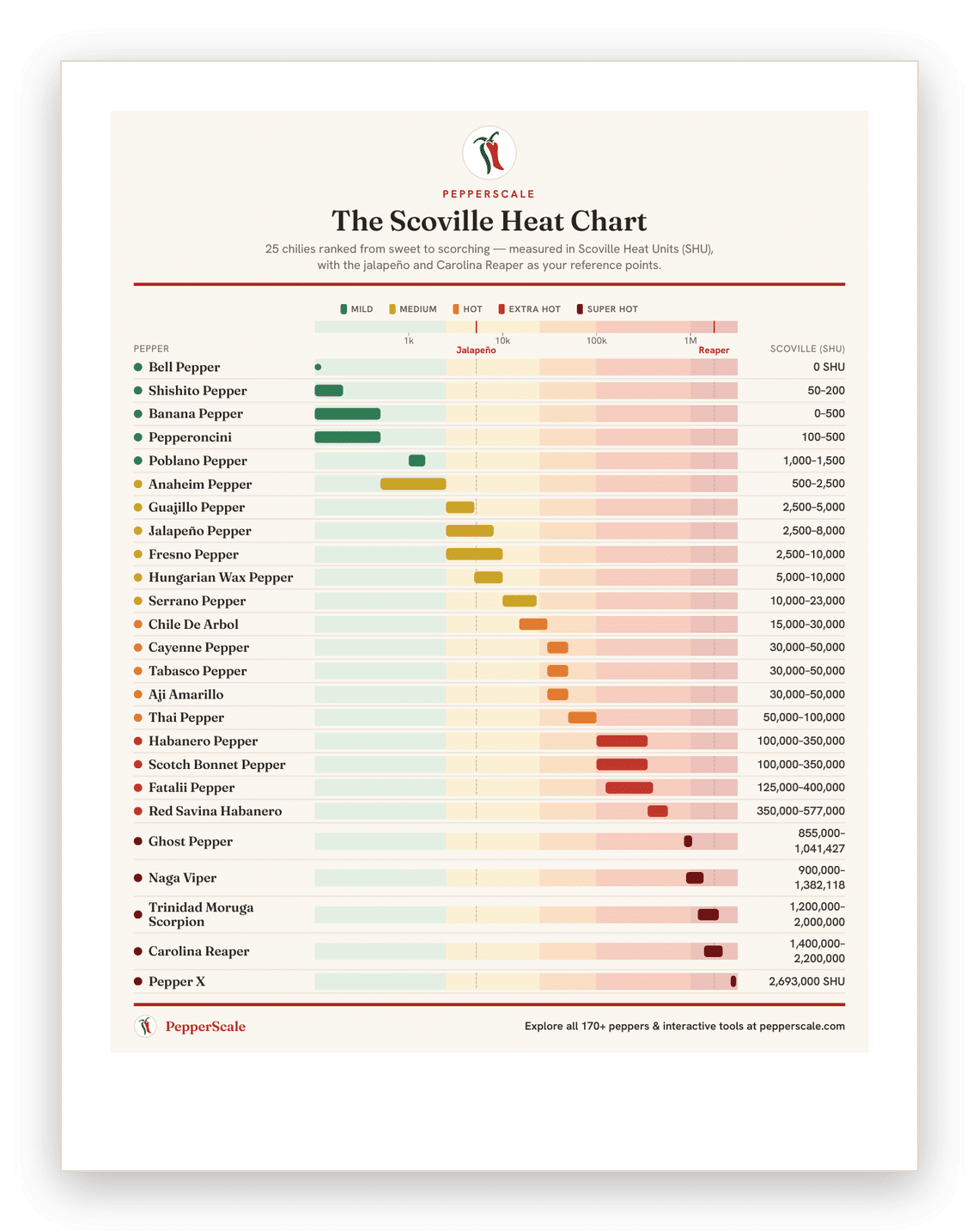
Get the free PepperScale Scoville Heat Chart
A printable, at-a-glance ranking of 25 chilies from sweet to scorching — with the jalapeño and Carolina Reaper as your reference points. Join the newsletter and we’ll send it straight to your inbox.
No spam — just Wicked Wednesday recipes and occasional extra dashes of chili pepper inspiration. Unsubscribe anytime.
Related reading
- Here’s What To Do With A Lot Of Jalapeños: Another common (yet quality) problem! Whether your plants produced more than expected or you simply picked up way too many from the store, we have ways to use these chilies.
- What’s The Best Poblano Substitute?: If you’re reading this post, you likely don’t need this now. But be prepared for when that bumper crop of extras could turn into a lack!
- Poblano Vs. Jalapeño: These are both popular Mexican chilies, but how much are they alike? Different? We go into it.