The California chile is the dried, ripened form of the Anaheim pepper — the same familiar chili picked red instead of green, then dried until it turns a deep, leathery brick color. In that form it takes on a whole new personality. Where a fresh green Anaheim is bright and lightly grassy, the dried California chile goes quiet and deep: sweet like dried fruit, gently earthy, and barely warm. It’s one of the foundational chilies of Mexican and Southwestern cooking — the pepper behind mild red enchilada sauces, chile Colorado, and countless everyday salsas and braises.

Last update on 2026-07-12. We earn a commission if you make a purchase, at no additional cost to you.
- Species
- C. annuum
- Origin
- Mexico
- Uses
- Culinary
- Closest swap
- Ancho
How hot is the California chile?
The California chile is a mild chili through and through, holding the same 500 to 2,500 Scoville heat unit range as the fresh Anaheim it’s made from. Drying concentrates flavor, but it doesn’t add heat, so a finished sauce built on California chiles reads as gentle warmth rather than spice.
To put that in perspective against our reference point, the jalapeño (2,500 to 8,000 SHU): the California chile runs from roughly equal heat at its very top end to around 16 times milder at the bottom. It’s right in line with the poblano (1,000 to 1,500 SHU) and can dip as mild as a banana pepper. This is a chili nearly everyone at the table can enjoy, which is exactly why it shows up in so many family-friendly red sauces. One caveat carries over from its fresh form: pods grown in New Mexico soil can climb higher than California-grown ones, so taste a small piece of the rehydrated flesh if you want to judge a given batch.
What does the California chile look and taste like?
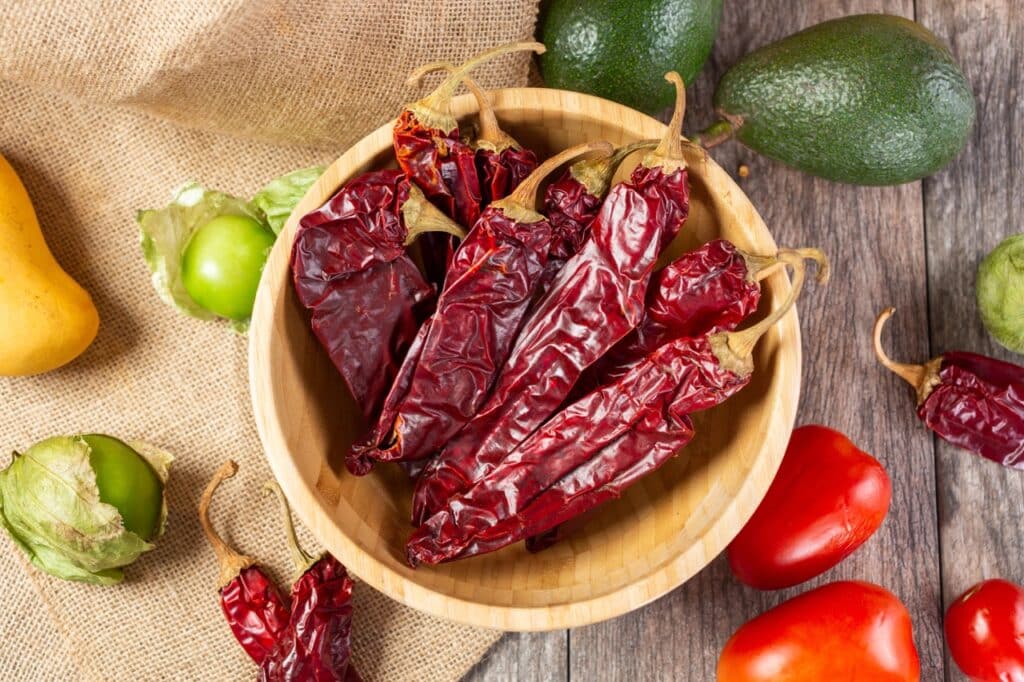
A dried California chile is a flat, smooth-skinned, deep red pod, usually five to seven inches long, wrinkled and pliable when fresh-dried. A good one bends without cracking. Held to the light it’s slightly translucent. It’s less tough and less crinkled than a guajillo, which makes it quicker to soften when you rehydrate it.
The flavor is where drying earns its keep. The fresh green Anaheim is peppery and lightly sweet; the dried red California version leans fully into sweet, dried-fruit territory — raisin and dried cherry — over a soft, earthy base. There’s a whisper of smoke and only the faintest bitterness in the skin. It’s mellow and round, without the sharp acidity of a fresh salsa chili. That combination of gentle sweetness and earthy depth is what lets it anchor a red sauce: it brings color and body without ever shouting.
Related peppers and forms
The California chile is one point on a family tree of names for the same pepper, all depending on color and whether it’s fresh or dried:
- Anaheim (green): The fresh, unripe form — bright, grassy, and the version most Americans know from the produce aisle.
- Anaheim / New Mexico (red): The ripened fresh pod, sweeter than green, sometimes sold as a California red chile.
- Chile seco del norte: The traditional Mexican name for the dried red pod — literally “dried chile of the north.”
- Chile Colorado: Both a name for the dried red chili pepper and the classic braise built from it (colorado meaning “colored red,” not the state).
What is a good California chile substitute?
The closest single swap is the guajillo: similar mild heat and deep red color, though noticeably more tangy and bright. For a match closer to the California’s mellow sweetness, reach for the ancho (dried poblano), which brings the same raisiny depth with a touch more richness. Best of all is a 50/50 blend of the two — the guajillo supplies color and brightness, the ancho supplies sweet depth, and together they land right in the California chile’s smooth middle. For more options, see our California chile substitutes guide.
Cooking with the California chile
This is a sauce chili first. To use whole dried pods, wipe them clean, then stem and seed them. Toast lightly in a dry pan for just a few seconds per side until fragrant. Stop short of scorching, since burnt chilies turn bitter. Cover with hot water and steep 15 to 20 minutes until soft, then blend the flesh with a little of the soaking liquid into a smooth, deep-red purée. That purée is the backbone of red enchilada sauce, mild mole, chile Colorado, tamale sauces, and slow braises.
More tips:
- Toast, don’t torch. A few seconds of dry-pan heat wakes up the aroma; a few seconds too long turns it acrid. Watch it closely.
- Save the soaking liquid (but taste it first.) It carries flavor and can thin a sauce nicely, though over-toasted pods can leave it bitter. Taste before you add it back.
- Reach for it when you want color without heat. If a red sauce needs body and a deep brick hue but no added spice, the California chile is the go-to.
- Build a blend. The California chile is often the “body and color” base in a dried-chili trio. Pair it with a brighter guajillo and a deeper ancho for a rounded, restaurant-style red sauce.
How to pair the California chile
The California chile sits in our Nutty, Earthy & Dried flavor group, sweet dried-fruit riding on an earthy base, with almost no fresh or floral edge. Once you know a chili’s group, pairing it is less guesswork and more method. We sort partners three ways: congruence (echo a flavor the pepper already has), contrast (set an opposing element against it to balance), and synergy (combine with something to build a flavor neither has alone). Try a few from each and you’ll see how the same mild chili pepper can read as comforting, bright, or deeply savory depending on what you put beside it. (Explore more with our Chili Pepper Flavor Pairing Tool.)
Congruence — echo what’s already there. These partners double down on the chili’s sweet-earthy core.
- Raisin: Stacks the same dried-fruit note the dried pepper already carries — reinforcing depth in moles and adobos.
- Cumin: Earthy and warm, it deepens the chile California’s own earthy base. A natural in chili and red adobo.
- Tomato: Sweet-earthy and just acidic enough, it’s the backbone of classic enchilada and Colorado sauces.
- Garlic: Its savory depth grounds the chili’s sweetness, tying a red sauce together.
- Corn: Sweet and toasty, a garden-fresh Southwest match for tamales and salsas.
Contrast — set an opposite against it. The California chile is soft and sweet, so sharp or bitter partners keep a dish from turning one-note.
- Lime: Bright acid cuts the mellow, sweet depth and lifts a finished sauce.
- Mexican oregano: Its faint bitterness balances the dried-fruit sweetness.
- Onion: Sweet-sharp, it adds lift and structure to a blended sauce.
- Dark chocolate: Cocoa’s bitterness offsets the sweetness — the move that turns a sauce toward mole.
- Crema: Cool, tangy, and rich, it softens a deep red sauce on the plate.
Synergy — build something new. Slow cooking marries the pepper with these partners into a flavor bigger than either.
- Pork: Braised low and slow in the chili’s purée, the two become chile Colorado — the classic example.
- Beef: Lends deep red body and gentle warmth to birria-style and stewed-beef dishes.
- Cinnamon: A small amount plays into the raisin notes and steers a mild mole toward warm, layered spice.
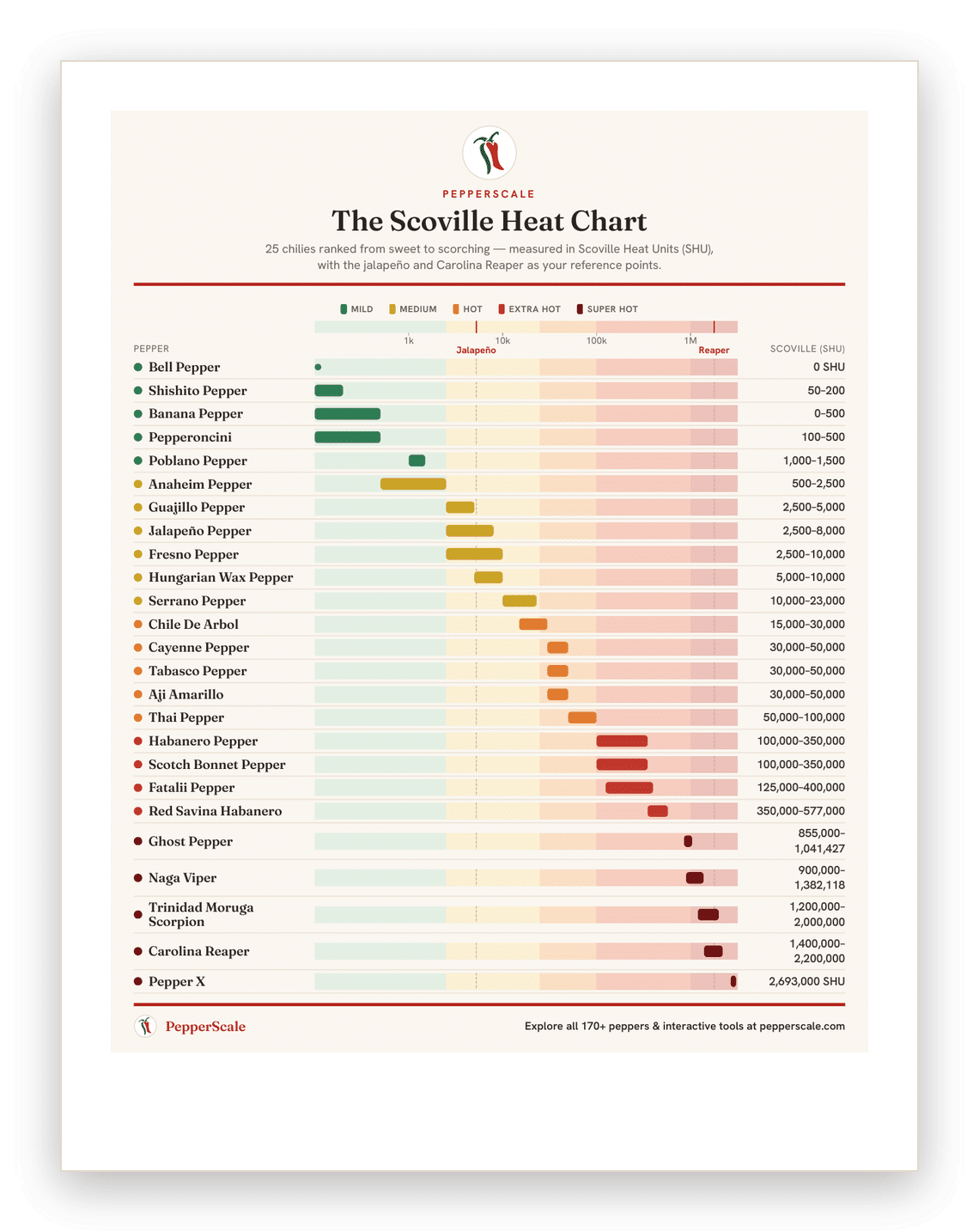
Get the free PepperScale Scoville Heat Chart
A printable, at-a-glance ranking of 25 chilies from sweet to scorching — with the jalapeño and Carolina Reaper as your reference points. Join the newsletter and we’ll send it straight to your inbox.
No spam — just Wicked Wednesday recipes and occasional extra dashes of chili pepper inspiration. Unsubscribe anytime.
Related reading
- Hatch Pepper Guide: The famous New Mexico cousin from the same chile lineage — a useful reference point for how growing region shapes a mild chile’s heat and flavor.
- Pasilla Pepper Guide: Another mild, dark dried Mexican chile in the same sauce-and-mole world, worth knowing once you’re comfortable building red sauces with the California.
- Are Dried Peppers Hotter Than Fresh? Learn how the drying process impacts chilies and what you should expect in terms of overall spiciness.