The California chile and the guajillo are two of the workhorse dried red chiles of the Mexican kitchen — both mild, both prized for the color and body they lend to a sauce rather than for heat. They even share a flavor family: on our flavor map, both sit in the Nutty, Earthy & Dried group. So how do you choose between them? Let’s compare.

Last update on 2026-07-12. We earn a commission if you make a purchase, at no additional cost to you.
| California Chile | Guajillo | |
|---|---|---|
| Scoville range | 500–2,500 | 2,500–5,000 |
| Median SHU | 1,500 | 3,750 |
| Vs. jalapeño | about 4× milder than a jalapeño | about 1× milder than a jalapeño |
| Aroma group | Nutty, Earthy & Dried | Nutty, Earthy & Dried |
| Origin | Mexico | Mexico |
| Uses | Culinary | Culinary |
| Loudest notes | Earthy, Sweet, Fruity | Smoky, Earthy, Tangy |
Which is hotter, the California chile or the guajillo?
The guajillo is the hotter of the two, though “hot” is relative here. This is a gentle corner of the pepper scale. The California chile runs 500 to 2,500 Scoville heat units, while the guajillo climbs to 2,500 to 5,000 SHU. In other words, the guajillo’s floor is roughly the California chile’s ceiling, making it about one to two times hotter pod for pod.
Even at its top end, though, the guajillo stays in the low-medium range — around the heat of a milder jalapeño (2,500 to 8,000 SHU) and no more. Both chilies are easy, family-friendly heat that nearly everyone at the table can enjoy.
How does each taste?
Because they’re in the same Nutty, Earthy & Dried family, this is a comparison of accents within a shared character, not two different worlds — exactly the kind of same-group “heat-and-nuance” swap that works oh so well in a pinch.
The California chile is the mellow one: sweet dried-fruit (think raisin and dried cherry) over a soft, earthy base, with only a whisper of smoke and a very round, gentle finish. The guajillo keeps that dried-chili backbone but leans brighter and tangier, with a berry or cranberry edge and a touch more smokiness. It’s less sweet and more lively. Put simply, the California chile brings smooth, sweet body; the guajillo brings brightness and lift.
What does each look like?
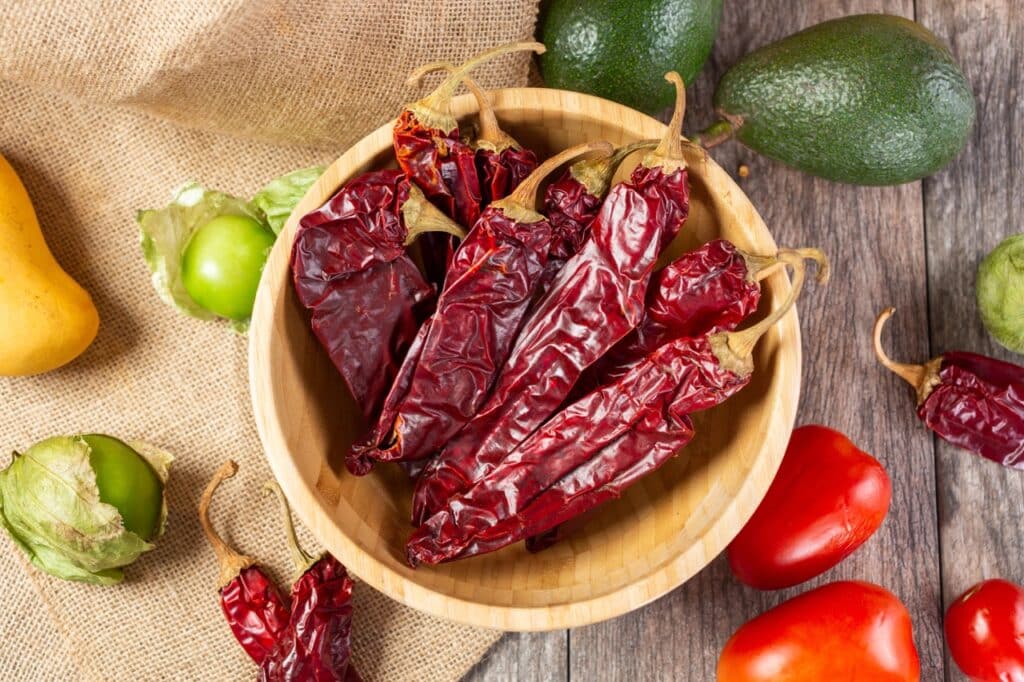
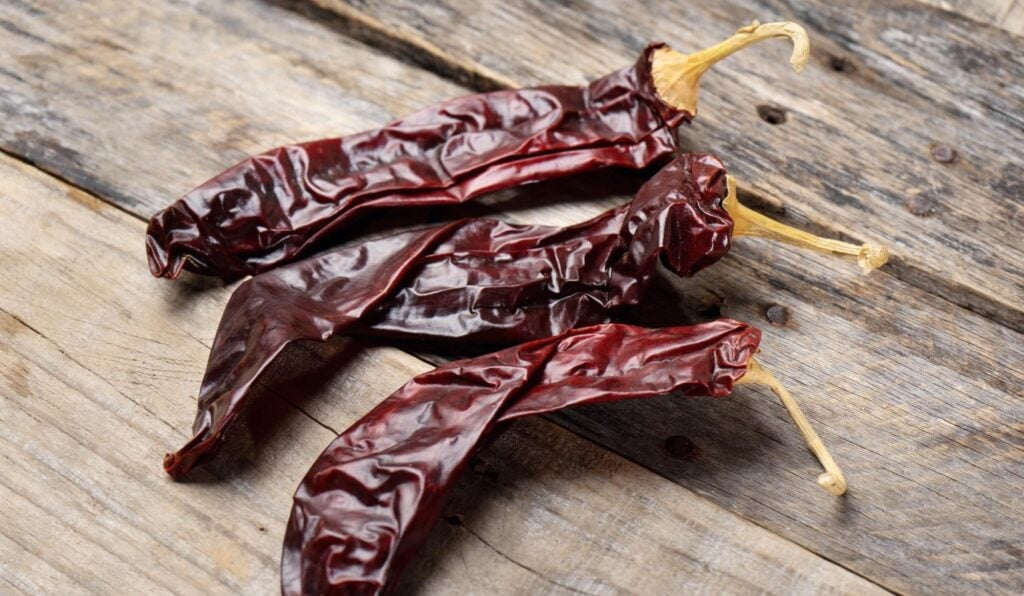
The California chile is a flat, fairly smooth, deep brick-red pod, usually five to seven inches long and pliable enough to bend without cracking. The guajillo is smaller and narrower, roughly four to six inches, tapered, with a shiny reddish-brown skin that’s noticeably tougher and more leathery. That thicker skin means guajillos generally need a longer soak to soften before blending.
Which is easier to find?
The guajillo has the edge on availability. It’s one of the most widely stocked dried Mexican chiles, common in the Latin aisle of most well-supplied supermarkets. The California chile is easy to find across the Southwest and in Latin markets, but it’s sometimes sold under other names (the flip-flopped name “chile California” or chile seco del norte), so it can take a little more hunting by name.

Last update on 2026-07-12. We earn a commission if you make a purchase, at no additional cost to you.
Which is more useful in the kitchen?
Both are sauce chilies first, the foundation of red enchilada sauces, adobos, moles, and braises. The California chile is the classic “color and body” base: mild, smooth, and sweet, it’s the backbone of a gentle red enchilada sauce or a pot of chile Colorado. The guajillo is a member of the classic mole trinity (alongside ancho and pasilla), where its brightness balances sweeter, deeper chilies. In practice the two are often used together, and one is the natural stand-in for the other.
Overall: same family, different accent
The California chile and the guajillo are close relatives that do similar jobs, so the choice comes down to what a dish needs. Want smooth, sweet, mellow body and a deep red color with almost no heat? Reach for the California chile. Want a little more brightness, tang, and a small step up in warmth? Go guajillo.
That closeness is also why the guajillo is the go-to California chile substitute. Just expect a bit more lift and heat, or blend it with a sweeter ancho to land right on the California chile’s mellow middle.
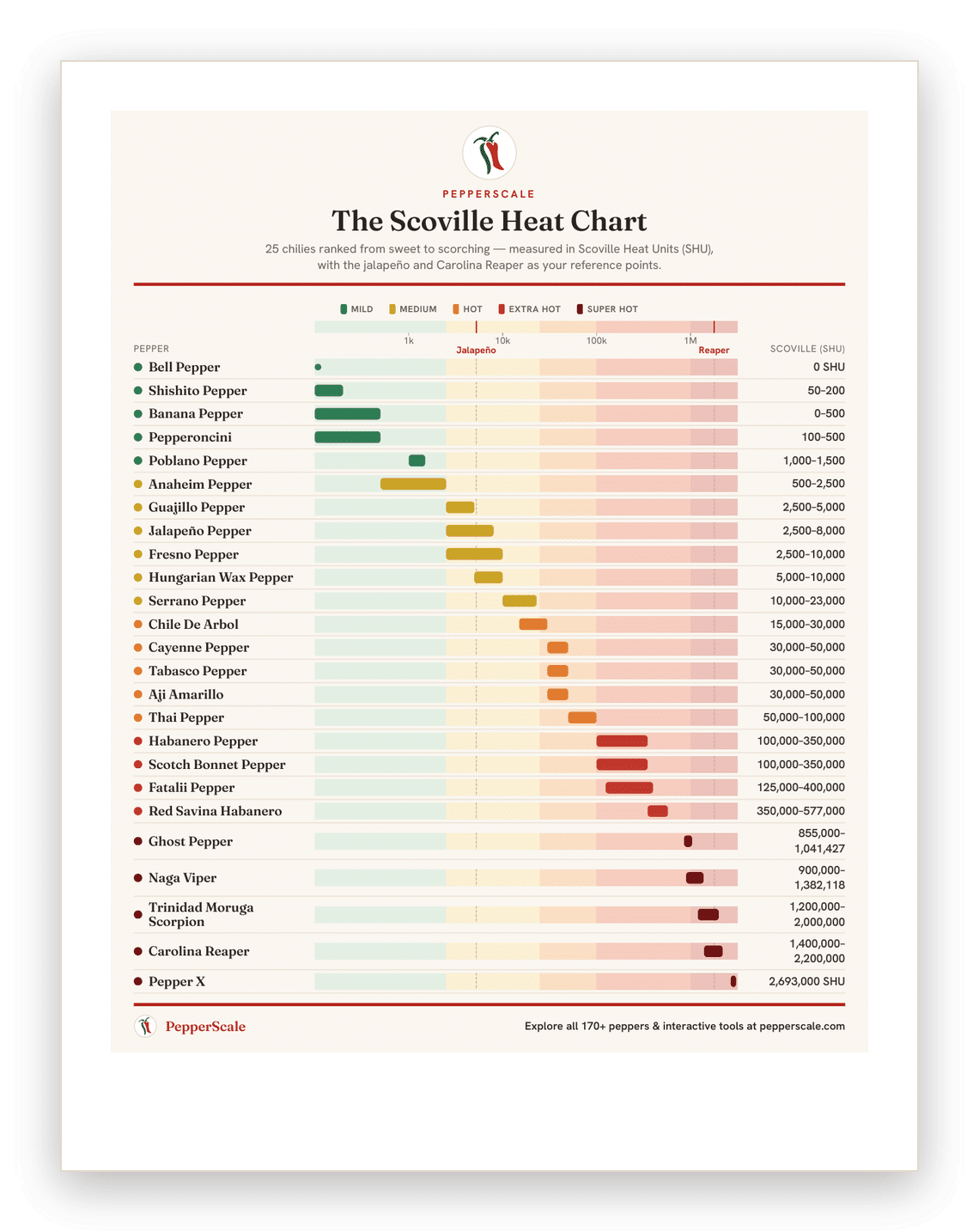
Get the free PepperScale Scoville Heat Chart
A printable, at-a-glance ranking of 25 chilies from sweet to scorching — with the jalapeño and Carolina Reaper as your reference points. Join the newsletter and we’ll send it straight to your inbox.
No spam — just Wicked Wednesday recipes and occasional extra dashes of chili pepper inspiration. Unsubscribe anytime.
Must-read related posts
- The Hot Pepper List: Explore 170-plus chilies, searchable by name, flavor, heat, and origin.
- What’s A Good Guajillo Pepper Substitute? Need more ideas for swapping out guajillo? Start here.
- Our Hot Sauce Rankings: 100-plus hot sauce reviews, searchable by the chilies used in each one.
