Chili crisp and chili oil sit side by side on the same shelf, look related through the glass, and get used almost interchangeably in English. They aren’t the same thing. The short version is that chili oil is a flavored oil and chili crisp is a flavored oil packed with crunchy solids, and that one difference changes the texture, the heat, and what each one is actually good for.


Last update on 2026-09-21. We earn a commission if you make a purchase, at no additional cost to you.
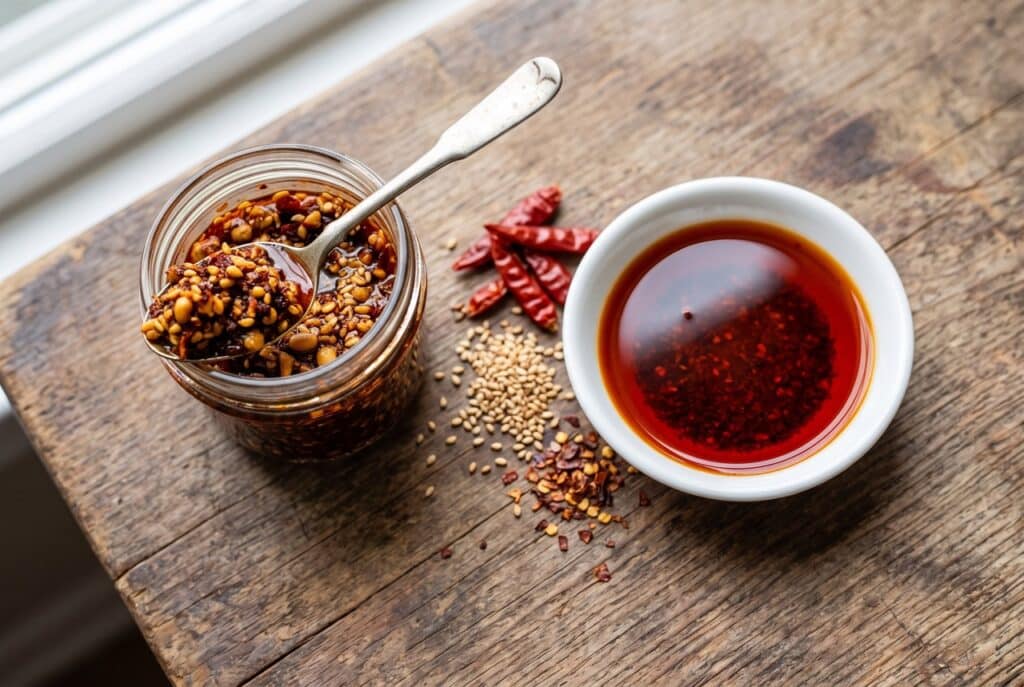
What’s the difference between chili crisp and chili oil?
Chili oil is oil that has taken on the flavor and color of dried chilies. The solids either get strained out or settle to the bottom of the jar, and what you use is the fragrant red oil on top. Chili crisp keeps the solids and makes them the point. Fried garlic, fried shallots, coarse chili flakes, toasted sesame seeds, and often fermented soybeans stay suspended in the oil, and there are enough of them that a spoonful comes out chunky. How chunky varies a lot by brand. Some jars pack in so much that the solids settle into a thick layer, others run looser and oilier, and there’s no standard ratio that makes a jar official.
So the test is simple. Tip the jar. If it pours, it’s chili oil. If you have to spoon it, it’s chili crisp.
Naming muddies this, because the labels don’t always agree with the contents. Plenty of jars sold as “chili oil” are chunky enough to qualify as crisp, and “chili crunch” is just chili crisp under a different word. Read the jar rather than the name.
How is each one made?
They start from the same idea and split on technique.
Chili oil is about controlled infusion. The traditional Sichuan version uses caiziyou, a roasted rapeseed oil with enough body to cling to cold noodles, heated until it smokes to cook off its raw edge. That hot oil then goes over ground chilies, and temperature is the whole game. Too hot and the chilies scorch and turn bitter, too cool and you get color without much fragrance, which is why many cooks pour in more than one go rather than dumping it all at once. Classic là jiāo yóu, also called hóng yóu or “red oil,” is not much more than chilies and oil. Plenty of good recipes skip the rapeseed entirely and use a neutral high-smoke-point oil instead.
Chili crisp is about frying. The aromatics get sliced thin and even, then cooked slowly in oil, often for twenty minutes or more, until they turn golden and stay crunchy. Rushing this is the classic mistake, because garlic that browns fast turns bitter and garlic that never fully dries out goes soft in the jar. Everything then rests in the oil, which is what preserves the texture.
Which is hotter, chili crisp or chili oil?
Chili oil usually reads hotter, though not because it contains more chili. Capsaicin dissolves into fat rather than water, so in a chili oil the heat rides in the liquid you’re actually spooning out and coats the mouth on contact. In chili crisp that same heat gets buffered by savory, salty, crunchy solids that give your palate something else to do. Chili crisp also separates in the jar, so a scoop off the top and a scoop from the bottom aren’t the same thing. Stir it before you use it.
Both are milder than newcomers expect. Most jars of either land somewhere in the mild-to-medium range. Brand matters far more than category, and a hot chili oil will beat a gentle chili crisp every time.
How does each taste?
Chili oil tastes like toasted chili. That’s the whole ambition, and a good one is deeply fragrant, a little smoky, and clean enough that you can taste the chilies underneath rather than a pile of seasoning. Traditional Sichuan versions often blend two chilies on purpose, a fragrant variety for aroma and a hotter one for bite.
Chili crisp is savory in a way chili oil isn’t. Fried garlic and shallots bring sweetness and a deep browned flavor, fermented soybeans add a salty, funky backbone, and sesame contributes nuttiness. Many Sichuan-style versions also carry ground Sichuan peppercorn, which adds a citrusy, buzzing, faintly numbing tingle that people often mistake for heat. It isn’t heat, but it’s a big part of the appeal.
Which is more useful in the kitchen?
This is where the two genuinely part ways.
Chili oil tends to work as an ingredient. It dresses cold noodles and vegetables, forms the base of the sauce for wontons in red oil and for dan dan noodles, and gets whisked into dipping sauces where a chunky condiment would just sink. Because it’s a liquid, it distributes. It’s also perfectly good spooned over a finished dish, so this isn’t a rule so much as where it shines.
Chili crisp leans the other way, toward finishing. It goes on at the end, by the spoonful, over a fried egg, a bowl of rice, dumplings, roasted vegetables, or steamed fish. Stir it deep into a sauce and you lose the crunch you paid for, which is usually the point of buying it.
If you cook a lot of Sichuan food, you want chili oil. If you want one jar that makes ordinary weeknight food more interesting, you want chili crisp.
Can you substitute one for the other?
Sometimes, with an adjustment.
Chili crisp can stand in for chili oil if you spoon off the oil that pools at the top and use that, leaving the solids behind. You’ll get close, though the oil carries some of the crisp’s garlic and soybean flavor with it.
Going the other direction is harder. Chili oil can’t replace chili crisp, because texture is the entire difference and no amount of chili oil adds crunch. If crisp is what a dish needs, chili oil plus something toasted, like fried garlic or sesame seeds, gets you nearer than chili oil alone.
Which should you buy, and how do you store it?
Buy chili crisp first. It’s the more versatile jar for most home kitchens and it needs nothing from you but a spoon. Add a chili oil when you start cooking dishes that call for one by name.
Store-bought jars are made under commercial processing controls, and the label will tell you how to keep them, before opening and after. Follow the jar. Homemade is a different situation, because your kitchen has none of those controls. A homemade batch belongs in the refrigerator with the solids submerged under the oil, served with a clean dry spoon, and used within about a month. Fresh garlic and other low-acid ingredients held in oil at room temperature carry a real botulism risk, which is why every reputable recipe tells you to keep the jar cold.
Our homemade chili crisp recipe walks through the fry-and-bloom method, including how to dial the heat up or down with hotter flakes like chile de árbol.
The bottom line
Chili oil is a seasoning you cook with. Chili crisp is a topping you finish with. They share ancestry and a shelf, but they solve different problems, and once you’ve had both in the fridge you stop reaching for the wrong one.
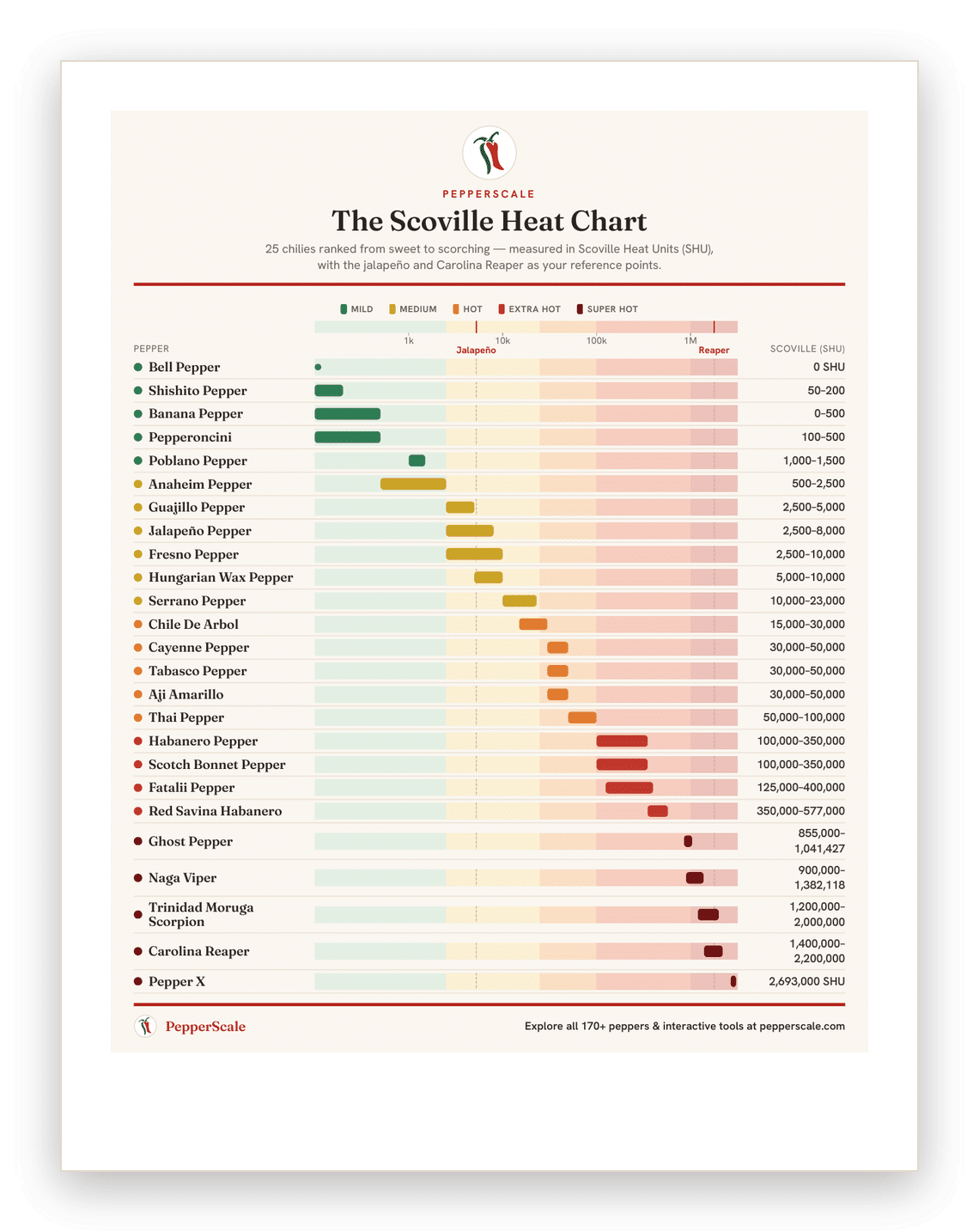
Get the free PepperScale Scoville Heat Chart
A printable, at-a-glance ranking of 25 chilies from sweet to scorching — with the jalapeño and Carolina Reaper as your reference points. Join the newsletter and we’ll send it straight to your inbox.
No spam — just Wicked Wednesday recipes and occasional extra dashes of chili pepper inspiration. Unsubscribe anytime.
Related Reading
- The Hot Pepper List: Browse chilies by heat level and flavor to find your next favorite.
- Grinding vs. Chopping Dried Chilies: How you break down a dried pod changes the flavor it gives up.
- Homemade Crushed Red Pepper: Make your own flakes and control exactly how hot the jar gets.