You reach for the jar, and it’s empty. Chili crisp is one of those condiments that quietly becomes load-bearing, and once a fried egg or a bowl of rice has had it, plain doesn’t taste like enough anymore. The good news is that plenty of things can stand in. The trick is knowing which part of the jar you’re actually replacing.
Chili crisp is doing three jobs at once. It brings heat from dried chilies, savory depth from fried aromatics and often fermented soybeans, and crunch from solids that stay crisp because they’re sitting in oil. Most so-called substitutes cover one or two of those and quietly drop the third, and it’s almost always the crunch that goes. So decide what your dish needs before you swap. If you’re stirring it into a sauce, a smooth chili oil will do fine. If you’re spooning it over something as the finishing move, texture is the whole point and you need a stand-in that has some.


Last update on 2026-09-21. We earn a commission if you make a purchase, at no additional cost to you.
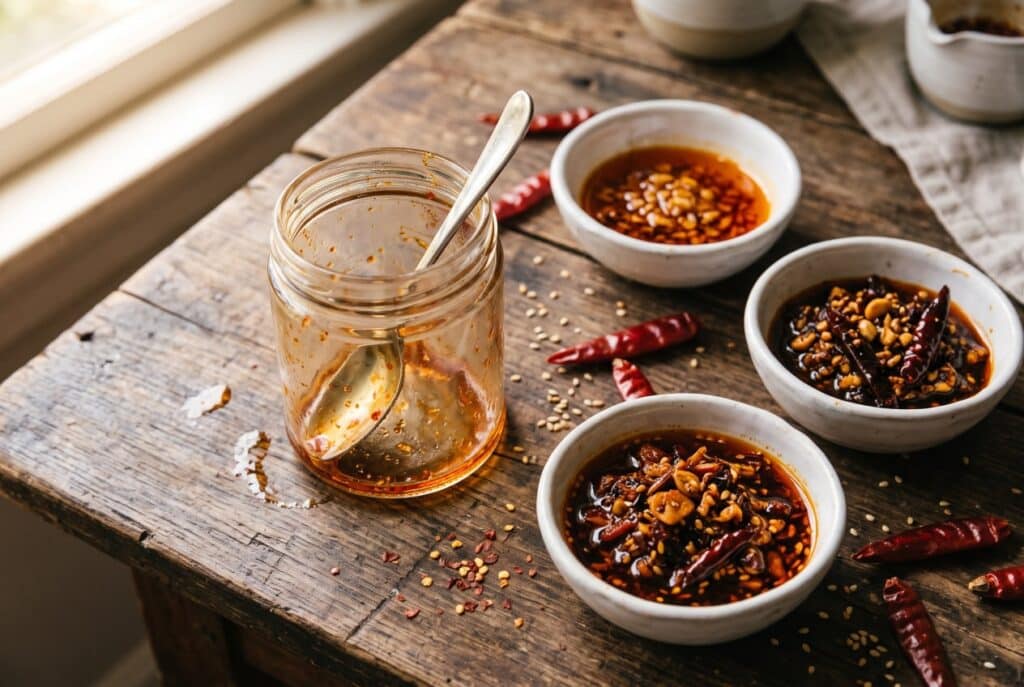
The best swaps: condiments built the same way
These are all oil-based, chunky, and meant to be spooned rather than poured, which is what puts them in the same category. They’re ordered by how close they land and how easy they are to find.
Chiu Chow chili oil: the supermarket answer
If your grocery store has an Asian aisle, it very likely has this one, and it’s the closest thing to a like-for-like swap you can buy without a special trip. Lee Kum Kee’s version is built on soybean oil, dehydrated garlic, and dried chilies, in that order on the label, and it’s chunky enough that the company sells it under the chili crisp name. It’s more garlic-forward than a Sichuan-style crisp, and there are no sesame seeds to crunch on and none of the Sichuan peppercorn buzz, so you lose some of the fragrance. But the oil, the heat, and the crunch are all there, and it behaves the same way on a plate.
Salsa macha: Mexico’s version of the same idea
Salsa macha is chili crisp’s structural twin from a completely different kitchen, arrived at independently rather than borrowed. It’s generally traced to Veracruz, and it’s built the same way: dried chilies and garlic fried in oil, then ground coarse with peanuts or sesame seeds and left chunky rather than strained. Swap it in and the architecture of the dish holds up perfectly. What changes is the flavor family. Where chili crisp goes savory and funky, salsa macha goes nutty and a little sweet, and the chilies steer the rest. Chile de árbol versions run sharp and hot, while ones built on morita, a smoked chipotle, come out deep and smoky. Use it on eggs, roasted vegetables, or anything grilled and it’s arguably an upgrade.
Taberu rayu: the Japanese take
Regular la-yu is smooth Japanese chili oil and won’t help you here, but taberu rayu, which translates to “eating chili oil,” absolutely will. It’s the same concept as chili crisp: a chili oil carrying crunchy fried aromatics, usually garlic and onion, sometimes ginger or green onion. It’s typically milder and cleaner tasting than a Chinese-style crisp, without the fermented black bean funk, so it’s a good pick if the jar you ran out of was on the gentle side, or if you’re feeding people who found the original too much. Look for jars labeled crunchy garlic chili oil, which is how it’s usually sold in English.
XO sauce: a sideways swap with a much bigger flavor
XO sauce is chunky, spicy, oil-slicked, and spooned on at the end, so mechanically it slots right in. It’s also a completely different flavor. Developed in Hong Kong in the 1980s and named after XO cognac purely to signal luxury, it’s built on dried scallop, dried shrimp, cured ham, chili, and garlic, which makes it intensely savory in a seafood direction. It also costs a few times what a supermarket jar of chili crisp does, and still a premium over the boutique brands. Reach for it on noodles, fried rice, steamed fish, or tofu, where that depth is welcome. Skip it on anything sweet or delicate, and don’t expect anyone to mistake it for the real thing.
One to skip: wet chili sauces
The chili sauces most people already have in the fridge are the wrong tool here, and this is the swap that disappoints most often. Sriracha, sambal oelek, chili garlic sauce, and gochujang all share the thing that disqualifies them: none of them is built on oil, and none of them contains anything fried. Sambal oelek is close to nothing but chilies, salt, and vinegar. They bring heat, and in gochujang’s case real fermented depth, but there’s no toasty aromatic sweetness, no oil to carry the flavor, and nothing that crunches. Each one also brings something chili crisp doesn’t have. Sriracha and sambal oelek carry a vinegar tang, and gochujang is frankly sweet from the glutinous rice it’s fermented with. Those flavors read as wrong rather than merely different.
They’re not useless, though. They’re the starting point for the pantry build below.
Building a stand-in from what you already have
You can get remarkably close in about a minute, because the crunch and the oil can be added separately.
- Chili oil plus something toasted. This is the best quick fix. Spoon on chili oil for the heat and the fat, then add fried shallots, fried garlic, or toasted sesame seeds for texture. Jarred crispy fried shallots or onions, the ones sold for topping salads and noodle bowls, are the single most useful thing to keep on hand for this. Our chili crisp vs. chili oil breakdown covers exactly what the two do and don’t share.
- A wet chili sauce plus oil plus crunch. Same principle, one more step. Use about half as much sauce as you would chili crisp, loosen it with a spoonful of neutral oil or sesame oil, then top with something fried or toasted. It won’t fool anyone, but it puts all three jobs back on the plate.
- Chili flakes bloomed in hot oil. Heat a few tablespoons of oil to somewhere around 275°F for dry flakes, or up to about 325°F for coarser or moister ones, pour it over the flakes with a little salt, and you’ve made the simplest possible chili oil in the time it takes to toast bread. Hot enough to sizzle, nowhere near smoking. The flakes matter more than the oil does: supermarket pizza-style flakes are roasted harder before crushing, so they give up a duller color and flavor than Sichuan-style ones. Homemade crushed red pepper lets you set the roast and the grind yourself.
- Just make the real thing. If you have forty-five minutes, our homemade chili crisp recipe beats every jar on this page, and you control the heat. Keep a homemade batch in the refrigerator with the solids under the oil and use a clean dry spoon, since fresh garlic held in oil at room temperature carries a real botulism risk.
Match the substitute to the dish
- Fried eggs, rice, and avocado toast: salsa macha or Chiu Chow chili oil. Both hold their crunch against a soft base, which is the whole reason you wanted chili crisp here.
- Noodles, dumplings, and steamed fish: Chiu Chow chili oil, taberu rayu, or XO sauce if you want to make a meal of it.
- Roasted or grilled vegetables: salsa macha, easily. The nuttiness suits anything charred.
- Stirred into mayo, dressings, or a dipping sauce: any chili oil works, and you can skip the crunch entirely, because it was going to dissolve anyway.
- Soups and braises: a wet chili sauce is fine here. Crunch has no future in liquid.
- When someone at the table doesn’t want much heat: taberu rayu, which tends to be the mildest of the group.
How much should you use?
Jarred condiments vary far more than pepper varieties do, so taste as you go rather than trusting any number.
- Chiu Chow chili oil, salsa macha, taberu rayu: roughly one for one. Salt reaches the Chiu Chow jar three separate ways on its label, so pull back a little if the dish is already well seasoned.
- XO sauce: start with about half and build. It’s assertive and expensive, and a little goes further than you’d think.
- Wet chili sauces: about half as much, plus a spoonful of oil and something crunchy on top.
- Chili oil on its own: one for one, and add the texture separately rather than pouring more oil to compensate. More oil makes a dish greasy, not crunchier.
- Stir the jar first, whatever you use. Chili crisp and its relatives all separate, and a scoop off the top is mostly oil while a scoop from the bottom is mostly solids.
Pulling it all together
Chili crisp is heat, savory depth, and crunch in one spoon, and the best substitutes are the condiments built the same way: Chiu Chow chili oil, salsa macha, taberu rayu, and at the luxurious end, XO sauce. The chili sauces already in your fridge can cover the heat, but you’ll have to add the oil and the crunch back yourself. And if you find you’re doing that often, that’s the sign it’s time to make a batch of your own.
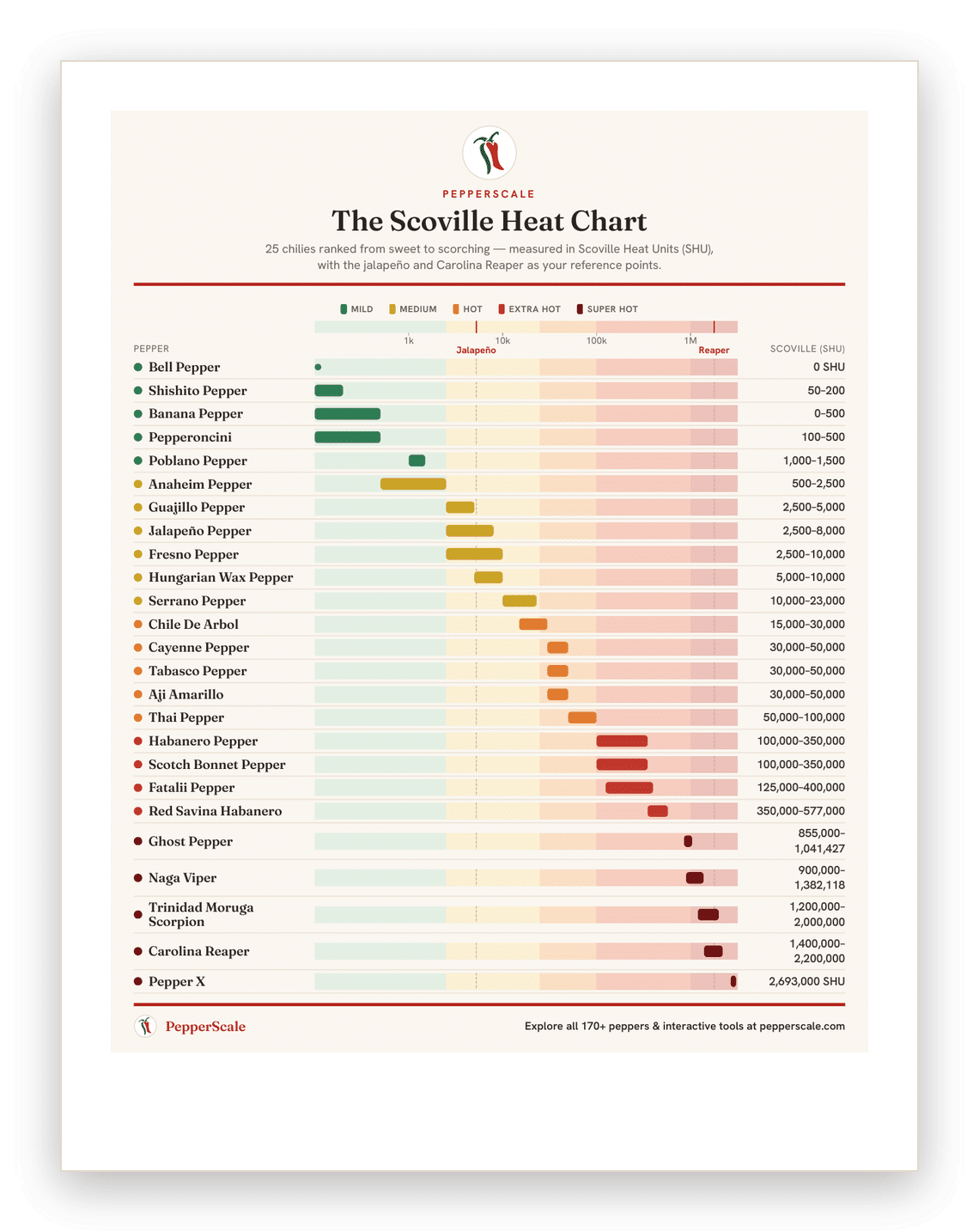
Get the free PepperScale Scoville Heat Chart
A printable, at-a-glance ranking of 25 chilies from sweet to scorching — with the jalapeño and Carolina Reaper as your reference points. Join the newsletter and we’ll send it straight to your inbox.
No spam — just Wicked Wednesday recipes and occasional extra dashes of chili pepper inspiration. Unsubscribe anytime.
Related Reading
- The Hot Pepper List: Browse chilies by heat level and flavor to find your next favorite.
- Our Hot Sauce Rankings: Our picks for the best bottles out there, sorted by heat and by style.
- Grinding vs. Chopping Dried Chilies: How you break down a dried pod changes the flavor it gives up.