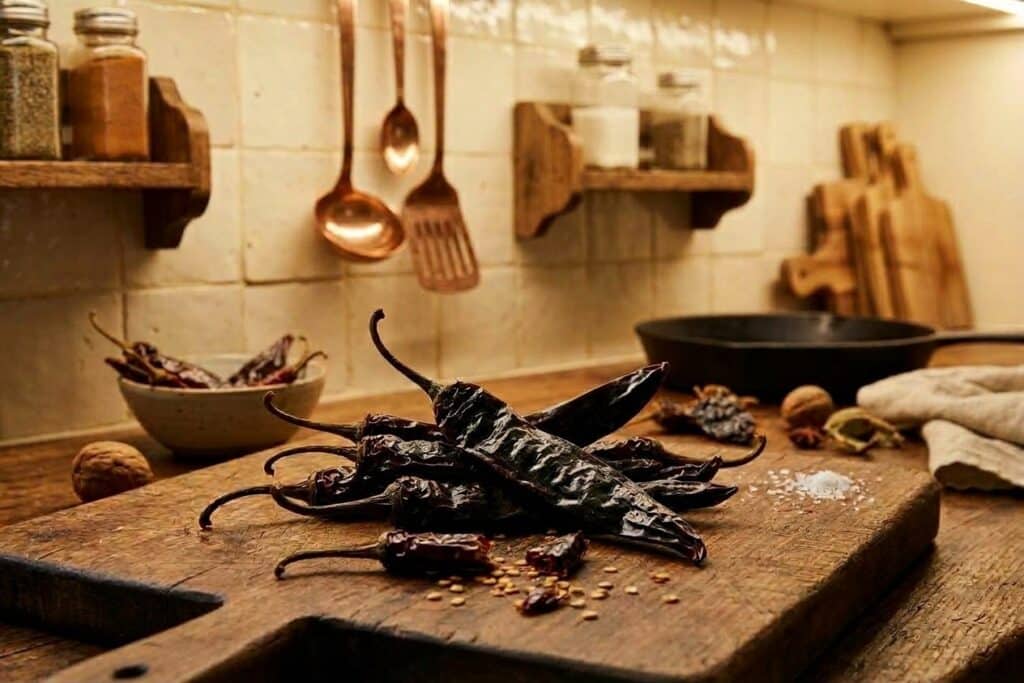
The pasilla de Oaxaca is a smoked chili pepper from one small corner of Mexico: the Sierra Mixe, in the mountains of northeastern Oaxaca, and nowhere else. It shares a name with the everyday pasilla, but in the kitchen they’re not the same thing. The regular pasilla is a dried chilaca with no smoke to it. The Oaxacan one is a local crop, sold fresh as chile mixe, that’s dried over a wood fire for days until it turns wrinkly and dark burgundy.
What comes out is deep, meaty smoke over a dried-fruit sweetness, with more heat than the pasilla you’d find at the grocery store. Oaxacan cooks use it in moles, salsas, and beans, and they save the biggest pods for stuffing. It’s hard to find and it isn’t cheap, since the whole supply comes from a few mountain towns.
How hot is a pasilla de Oaxaca, really?
The spice sellers who carry the pasilla de Oaxaca rate it around 15,000 to 20,000 Scoville heat units. That’s well above a jalapeño (2,500 to 8,000 SHU), somewhere between two and eight times hotter, and a long way above the regular pasilla (1,000 to 2,500 SHU), which barely registers as hot.
Treat that number loosely, though. Other descriptions put it anywhere from a little milder than chipotle to not especially hot for a dried chili pepper, and nobody has published lab results for it. This is a small-batch chili from a handful of growers, and pods likely vary.
What a pasilla de Oaxaca actually tastes like
Smoke comes first, and it’s the deep, savory kind rather than a light campfire note. The chilies are smoke-dried over oak. Under the smoke there’s a dark, dried-fruit sweetness (cherry and prune are commonly tasted notes), and some people pick up a hint of tobacco. The heat is real but it doesn’t bury the rest.
On the plant, the pods go from bright green to a burnt orange and finally to a deep red that’s close to black. Dried, they’re wrinkled and dark reddish-brown.
How to pair a pasilla de Oaxaca
The partners that suit it best are the deep, dark flavors of Oaxacan cooking. Mexican chocolate is the classic, the way the two meet in Oaxacan moles. Black beans, toasted sesame, and avocado leaf, with its faint anise edge, all sit right alongside the smoke and fruit.
To keep all that smoke from getting heavy, you can also contrast it; give it something bright and tart. Tomatillo is the go-to. Simmer some tomatillos, then blend them with soaked pasillas, garlic, and salt for a simple table salsa that’s great on carnitas or grilled chicken.
It’s also a natural with slow-braised pork, so don’t be shy about putting a few pods in the pot for a long braise.
(Explore more with our Chili Pepper Flavor Pairing Tool.)
Cooking with pasilla de Oaxaca
Most recipes treat it like any other dried chili pepper. Snap off the stem, shake out the seeds, and pull out the veins. Toast it lightly in a dry pan until it softens and smells toasty, then cover it with hot water and let it soak for 15 to 20 minutes. From there it goes into a blender for salsa, mole, or a marinade, or into a pot of beans or soup.
A few tips:
- Save the big ones for stuffing. Chiles rellenos made with pasilla de Oaxaca are regionally popular, and the largest pods are prized for it. Note, this is stuffing a dried chili, which take rehydrating the pepper and careful cutting.
- Try it in vinegar. Slice one into a chili vinegar to create a quick and easy hot sauce alternative . If you do, go easier on any other hot sauce in the dish.
- Glove up. This isn’t a normal pasilla. It carries real medium heat, and the oils stay on your fingers. Know how to treat chili burn just in case.
Pasilla de Oaxaca vs. regular pasilla
They share a name and a wrinkled, dark look, and that’s about it. The regular pasilla, sometimes sold as pasilla negro, is a dried chilaca: mild, earthy, raisiny, and not smoked at all. The pasilla de Oaxaca is grown only in the Sierra Mixe, where locals call their chile pasilla whether it’s fresh or dried, and it’s smoked, fruitier, and hotter. If a recipe from Oaxaca calls for pasilla, it almost always means this one. If a store sells a bag labeled “pasilla” without saying Oaxaca or mixe, it’s almost certainly the regular kind.
The best pasilla de Oaxaca substitute
A chipotle morita is the closest easy swap: dark, smoky, and a little sweet. A chipotle meco works too if you can find it; see chipotle meco vs. morita for how the two differ. Another option is to blend an ancho with a chipotle, the ancho for the dried-fruit sweetness and the chipotle for the smoke. The regular pasilla gets you the fruit without the smoke or the heat, so it works in a pinch but won’t taste like the real thing.
The bottom line
The pasilla de Oaxaca is the chile to go looking for when you want smoke, dried fruit, and heat in the same pod. It’s rare, it costs more than most dried chiles, and it comes from a few mountain towns in one region of Mexico. If you cook Oaxacan food, it’s worth the hunt.
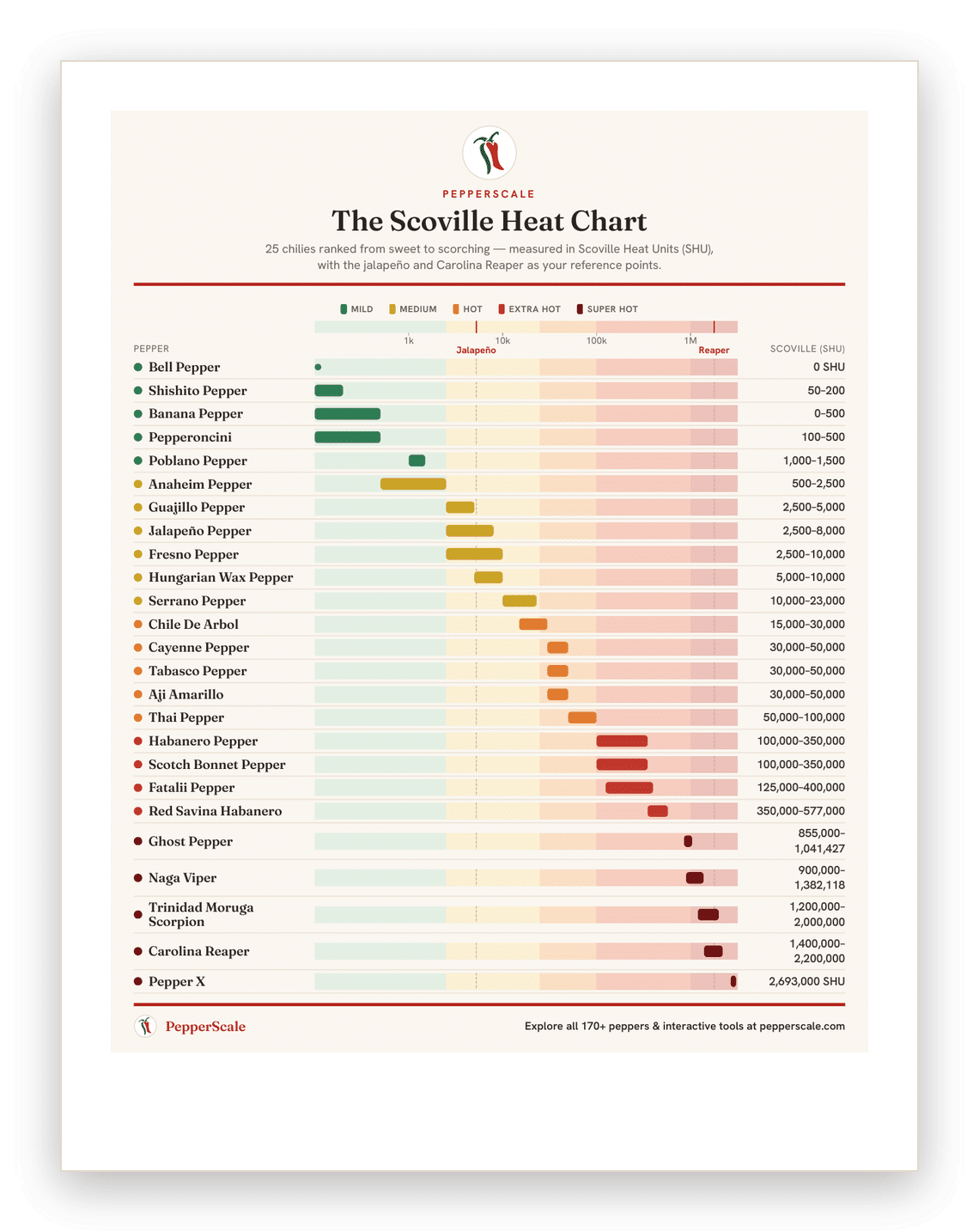
Get the free PepperScale Scoville Heat Chart
A printable, at-a-glance ranking of 25 chilies from sweet to scorching — with the jalapeño and Carolina Reaper as your reference points. Join the newsletter and we’ll send it straight to your inbox.
No spam — just Wicked Wednesday recipes and occasional extra dashes of chili pepper inspiration. Unsubscribe anytime.
Related Reading
- The Hot Pepper List: Explore 170-plus chilies, searchable by name, flavor, heat, and origin.
- Pasilla Pepper Guide: The everyday pasilla, for when you want its dried-fruit side without the smoke.
- Morita Pepper Guide: The smoked chile you’re most likely to find in a store, and the easiest stand-in here.