They share a name and a dark, wrinkled look, so it’s easy to assume the pasilla de Oaxaca is just a fancier version of the everyday pasilla. It isn’t. Both bring an earthy, dried-fruit sweetness, but the Oaxacan one’s smoked over a wood fire for days and runs about ten times hotter. One’s a mild pantry staple you’ll find in most Mexican aisles. The other’s a rare, smoky chili from a few mountain towns in Oaxaca. Here’s how they stack up.

Last update on 2026-10-01. We earn a commission if you make a purchase, at no additional cost to you.
| Pasilla de Oaxaca | Pasilla | |
|---|---|---|
| Scoville range | 15,000–20,000 | 1,000–2,500 |
| Median SHU | 17,500 | 1,750 |
| Vs. jalapeño | 3.3× a jalapeño | about 3× milder than a jalapeño |
| Aroma family | Nutty, Earthy & Dried | Nutty, Earthy & Dried |
| Origin | Mexico | Mexico |
| Uses | Culinary | Culinary |
| Loudest notes | Smoky, Earthy, Fruity | Earthy, Sweet, Fruity |
Which is hotter, the pasilla de Oaxaca or the pasilla?
The pasilla de Oaxaca, and it’s not close. Spice sellers rate it at about 15,000 to 20,000 SHU, while the regular pasilla runs 1,000 to 2,500 SHU. That makes the Oaxacan chili anywhere from six to twenty times hotter, and about ten times hotter if you compare the middle of each range.
For a reference point, the jalapeño sits at 2,500 to 8,000 SHU. The regular pasilla tops out right where the jalapeño starts, and the pasilla de Oaxaca is two to eight times hotter than a jalapeño. Nobody has published lab results for the Oaxacan chili, though, so treat its numbers as a rough guide.
Why do they share a name?
“Pasilla” comes from pasa, Spanish for raisin, a nod to the dark, wrinkled skin. Most of the time it’s the name of a dried chilaca: the fresh chilaca becomes a pasilla once it’s dried. In Oaxaca’s Sierra Mixe, though, the local chili goes by pasilla too, and that’s the one that gets smoked into pasilla de Oaxaca.
How does each taste?
These two share a family. They’re both dark, earthy, and sweet like dried fruit, and they land in the same kind of dishes. The difference is in degree, but it’s a big one.
The regular pasilla’s mild and mellow, with raisin and dried-fruit sweetness over an earthy base and a hint of cocoa. It isn’t smoked.
The pasilla de Oaxaca takes that same dark, fruity base and adds a deep, meaty smoke from days over an oak fire. Cherry and prune are common tasting notes, and some people pick up tobacco. Then there’s the heat, which you’ll notice right away.
What does each look like?
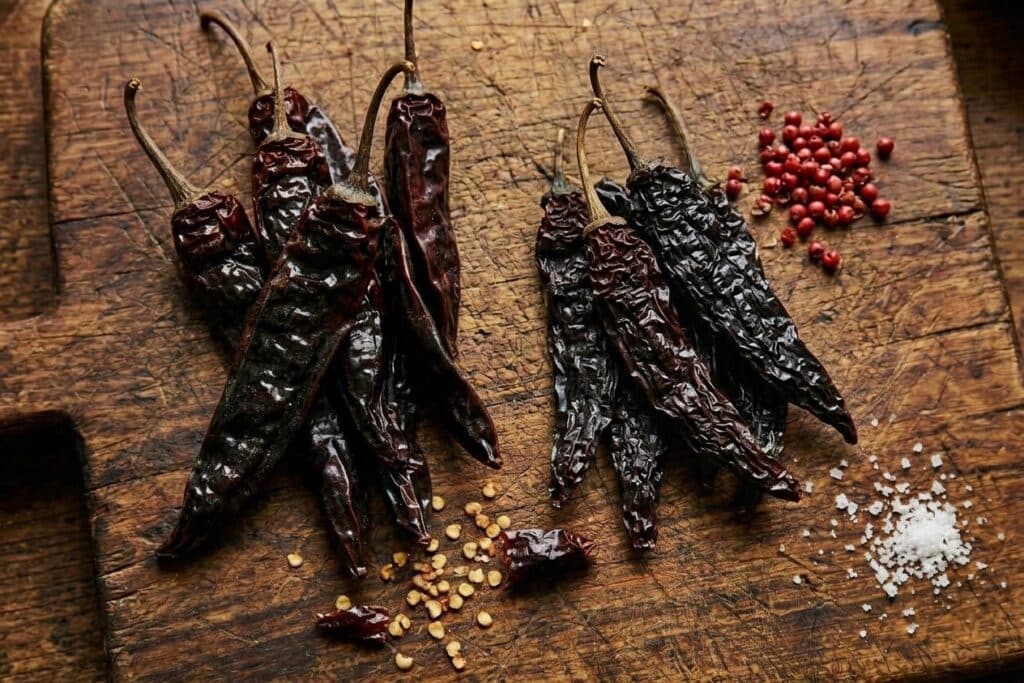
They’re both long, dark, and wrinkled, and both can run six to eight inches, so looks alone won’t settle it. The regular pasilla is sometimes sold as chile negro or pasilla negro. The pasilla de Oaxaca’s a dark reddish-brown, close to burgundy.
The label’s your best bet. A bag that just says “pasilla” is almost certainly the regular kind. The Oaxacan chili is usually sold as pasilla de Oaxaca, pasilla oaxaqueño, or pasilla mixe.
Which is easier to find?
The regular pasilla, easily. It’s one of the most common dried chilies in Mexican cooking, and you’ll find it bagged in the Mexican aisle of many grocery stores or online.
The pasilla de Oaxaca’s a different story. It’s grown only in the Sierra Mixe, by a small number of growers, so the supply is tiny. You’ll mostly find it at specialty spice shops and online, and it costs a good deal more than other dried chilies.
Which is more useful in the kitchen?
For everyday cooking, the regular pasilla. It’s mild enough for the whole table, and it’s a classic mole chili. It’s great in salsas, adobos, enchilada sauces, and stews too, anywhere you want deep, sweet flavor without much heat.
The pasilla de Oaxaca’s the one to buy for Oaxacan cooking or when you want smoke and heat in the same chili. It shows up in Oaxacan moles, in tomatillo salsas, in beans, and stuffed whole as chiles rellenos. Slice one into vinegar for a smoky chili vinegar, too.
Can you swap one for the other? Sort of. Using a regular pasilla in place of the Oaxacan chili, add a morita (chipotle) for the smoke and some heat. Going the other way, use fewer pasillas de Oaxaca than the recipe calls for, and expect the dish to come out smokier and a lot hotter.
Overall: same family, very different heat
The regular pasilla’s the everyday chili: mild, sweet, earthy, and easy to buy. The pasilla de Oaxaca’s the rare one, with the same dark fruit plus real smoke and real heat. If you cook a lot of Mexican food, keep regular pasillas in the pantry. If you can find the Oaxacan ones, they’re worth trying at least once.
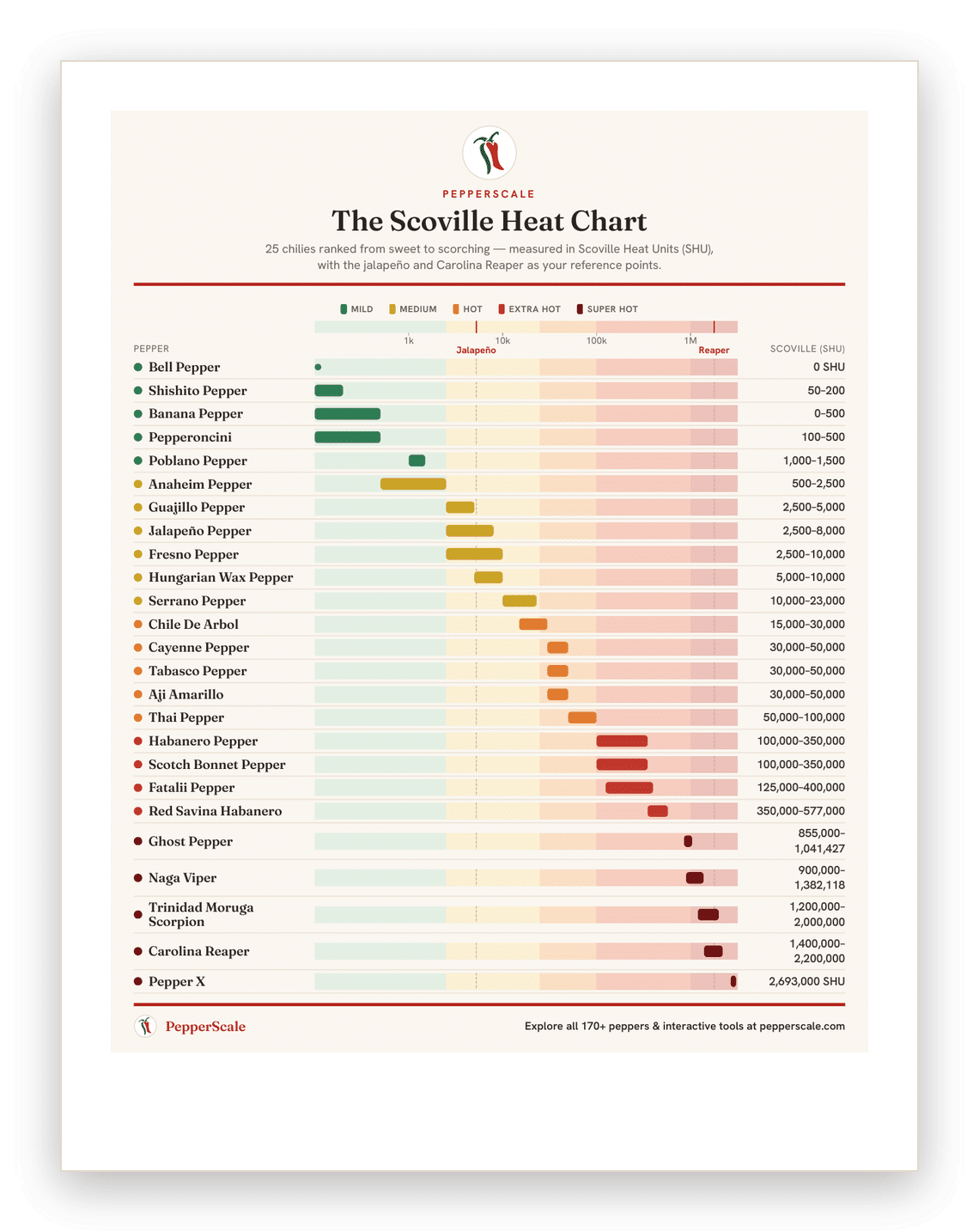
Get the free PepperScale Scoville Heat Chart
A printable, at-a-glance ranking of 25 chilies from sweet to scorching — with the jalapeño and Carolina Reaper as your reference points. Join the newsletter and we’ll send it straight to your inbox.
No spam — just Wicked Wednesday recipes and occasional extra dashes of chili pepper inspiration. Unsubscribe anytime.
Related Reading
- The Hot Pepper List: Explore 170-plus chilies, searchable by name, flavor, heat, and origin.
- Pasilla de Oaxaca Substitute: What to use when you can’t find the smoked Oaxacan chili.
- Our Hot Sauce Rankings: 100-plus hot sauce reviews, searchable by the chilies used in each one.