The question of how to thicken hot sauce can be tricky due to the fact that many recipes contain high levels of acid. Acids can cause some thickeners to lose their thickening properties. Even so, there are quite a few options for giving your sauce more body without affecting its flavor.
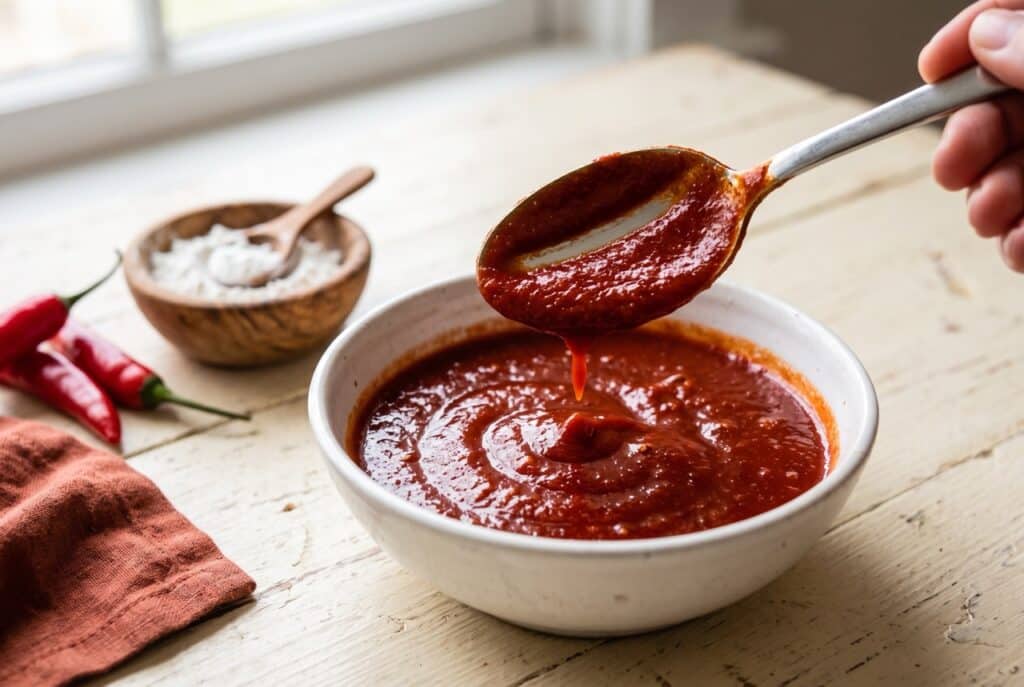
Which thickener should you use?
Short answer: xanthan gum if you want it fast, reduction if you’d rather not add anything at all. The rest comes down to how much heat your sauce still has to go through, and how much vinegar is already in it.
| Thickener | Holds up in acid? | What to watch |
|---|---|---|
| Reduction | Yes, nothing added | Slowest option, and it concentrates the salt and heat along with everything else |
| Xanthan gum | Yes, pH 1 to 12 | Works cold and in seconds. Very easy to overdo |
| Arrowroot | Yes | Won’t take prolonged heat. Stir it in at the end and pull the pan off |
| Pectin | Yes, but buy the right kind | Standard jam pectin needs roughly 55% sugar to set. Look for low-methoxyl |
| Cornstarch | Poorly | Acid breaks starch down, so the set you get in the pan may not last in the bottle |
Reduction
If you want to know how to thicken hot sauce in the simplest possible way, this is it. Reduction means simmering it until moisture evaporates. The result will be a more concentrated and flavorful version of the sauce. It does not require any additional ingredients and is easy to control.
Use a gentle flame when reducing your hot sauce and constantly stir to ensure that it does not burn. Keep in mind that you will be lessening the quantity of the sauce when you do this, so you may want to make a bigger batch to ensure that you wind up with the right amount.
Fruits/Vegetables and a blender
The addition of fruits and vegetables can greatly enhance a hot sauce. Mangos and peaches can add a little sweetness and fruitiness to complement the heat, while celery and onion can add savory notes. You can pour the vegetables into a regular stationary blender or use an immersion blender. This method works well when used along with the reduction method.
Pectin
Pectin is a carbohydrate derived from fruits. It comes from the skin and core of fruits and turns into a gel when cooked. If you have made jams or jellies in the past, you may be familiar with it as it is commonly used to set preserves. Pectin is useful for thickening other foods as well, including hot sauce. In addition to its thickening benefits, it stabilizes. As a stabilizer, it will keep your sauce from separating.
For thickening, you will use about 1/8 teaspoon for each cup of hot sauce and boil for about 30 seconds. Note that using too much pectin will cause your sauce to set like a jam.
Check the box before you buy, because there are two kinds and only one of them works here. Most pectin on the shelf is high-methoxyl, the jam-making sort, and it needs roughly 55% sugar plus a pH between 3.0 and 3.4 before it’ll set. Your hot sauce has the acidity covered and almost none of the sugar, so you can stir in high-methoxyl pectin and wait a long time for a set that never turns up. Low-methoxyl pectin sets with calcium instead of sugar, and that’s the one you want. The label will say low-methoxyl, or just LM.

Last update on 2026-09-25. We earn a commission if you make a purchase, at no additional cost to you.
Xanthan gum
Xanthan gum is made from grain that has been fermented with a particular strain of bacteria. It is the thickener used in commercial hot sauces that contain thickeners. Xanthan gum can act as both a thickener and stabilizer for your hot sauce and has a completely neutral taste. In addition, it has the benefit of providing you with near-instant results. No heat will be needed to alter your sauce’s texture.
To use xanthan gum, you will need to add it to the sauce while it is being blended. Avoid adding to a stationary liquid, or it will solidify instantly and give you a lumpy sauce. Use 1/8 teaspoon per cup of hot sauce for light thickening and 1/4 teaspoon for heavier thickening.
While xanthan gum is very effective, note that it may not be the easiest product to find in a brick-and-mortar store; you will most likely have to purchase it online.


Last update on 2026-09-25. We earn a commission if you make a purchase, at no additional cost to you.
Arrowroot
An effective substitute for cornstarch, arrowroot is derived from a tropical tuber. As with the other thickeners above, it will make your hot sauce thicker without affecting its flavor. It will also give it a glossy sheen that may make it more visually appealing.
To use arrowroot, make a slurry with it and add it to your sauce, then heat gently. For light thickening, mix one teaspoon with two teaspoons of water for each cup of hot sauce. For a thicker sauce, simply double the quantities of both the arrowroot and the water.
Note that while arrowroot does not break down in acidic liquids the way that cornstarch can, it does not stand up to heat very well. Too much heat will cause your hot sauce to thin back out.
Cornstarch
Cornstarch is the thickener most people already have in the cupboard, and it’s the one that struggles most with hot sauce. Acid breaks starch down, so the thickening you get in the pan doesn’t necessarily stay put in the bottle. The more vinegar in your recipe, the bigger the problem. That’s why arrowroot keeps getting suggested as the swap.
If it’s what you’ve got, make a slurry with cold water first so it doesn’t go lumpy, stir that in, and take the pan off the heat the moment it thickens. Long simmering makes the problem worse, not better. Then check it again the next day before you decide you’re done.
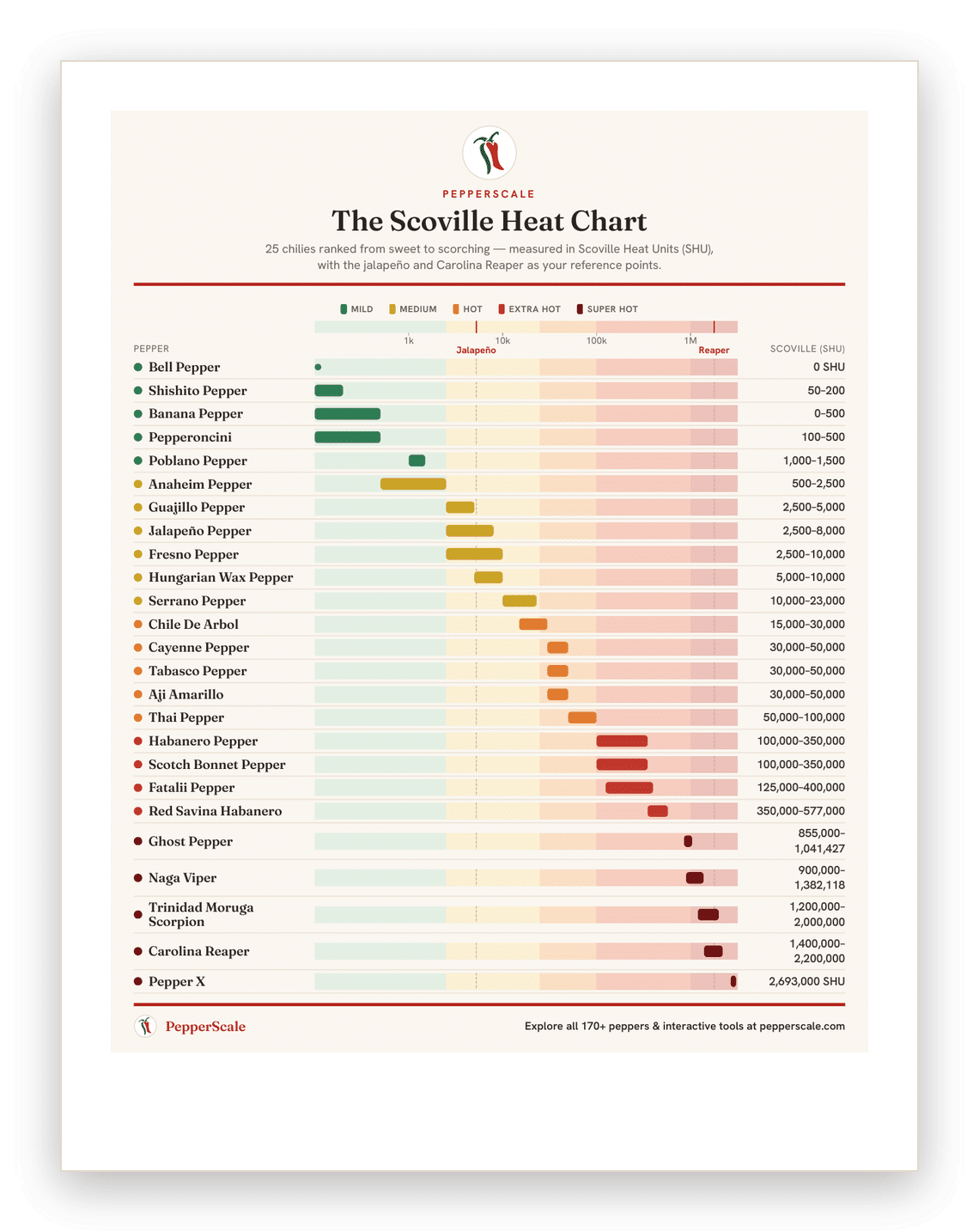
Get the free PepperScale Scoville Heat Chart
A printable, at-a-glance ranking of 25 chilies from sweet to scorching — with the jalapeño and Carolina Reaper as your reference points. Join the newsletter and we’ll send it straight to your inbox.
No spam — just Wicked Wednesday recipes and occasional extra dashes of chili pepper inspiration. Unsubscribe anytime.
Must-read related posts
- Why Do Hot Sauces Separate? And what can you do about it?
- Fermented Vs. Unfermented Hot Sauce: How do they compare?
- Can You Freeze Hot Sauce? Is it a viable way of storing your extras for the longer term?
How do these methods affect the keeping qualities of the sauce?