You won’t find two peppers on the Scoville scale more alike than the scotch bonnet and the habanero. They carry the same searing heat, they belong to the same flavor family, and side by side in a cooked dish most people can’t tell them apart. That makes them a rare pairing where the interesting question isn’t which pepper is hotter or better, but the smaller stuff: how to spot the difference at the market, the subtle ways their flavor parts ways, and when you’d reach for each.

Last update on 2026-09-11. We earn a commission if you make a purchase, at no additional cost to you.
| Scotch Bonnet | Habanero | |
|---|---|---|
| Scoville range | 100,000–350,000 | 100,000–350,000 |
| Median SHU | 225,000 | 225,000 |
| Vs. jalapeño | 43× a jalapeño | 43× a jalapeño |
| Aroma family | Fruity & Tropical | Fruity & Tropical |
| Origin | Caribbean | South America |
| Uses | Culinary | Culinary |
| Loudest notes | Fruity, Sweet, Earthy | Fruity, Sweet, Smoky |
Same heat, same flavor family
Start with the heat, because there’s nothing to separate them: both run from 100,000 to 350,000 Scoville heat units. That’s roughly 12 to 140 times hotter than a jalapeño and well past the cayenne on your spice rack, yet both stop just short of true super-hot territory, at the very top of what most cooks consider a culinary chili. Go much hotter and the heat starts drowning out the flavor. (A few habanero varieties do cross the line, like the chocolate habanero and the Red Savina, but the everyday orange habanero matches the scotch bonnet pod for pod.)
They share more than heat. here at PepperScale, we sort chilies by their loudest aroma, and both of these sit squarely in the Fruity & Tropical family: sweet, ripe, and almost juicy underneath the fire. That shared family is why swapping one for the other barely registers. You’re changing the intensity of nothing and the flavor by a whisper.
The one real difference: a lean toward sweet
Taste them side by side and a small distinction shows up. Both are fruity and tropical, with a touch of earthiness, but the scotch bonnet leans a touch sweeter, while the habanero is a hair brighter and more citrus-forward, with a slightly sharper edge that leans towards smoky. That extra sweetness is why the scotch bonnet is the soul of so many Caribbean dishes, and why the habanero, being a little less sweet, slots into a wider range of salsas and sauces. It’s a real difference, but a subtle one. Cook either into a stew and you’d be hard-pressed to name which went in.
Telling them apart on sight
The quickest tell is shape. A habanero is a smooth, lantern-like pod, one to three inches long, most often ripening to bright orange (though reds, whites, and browns all exist). A scotch bonnet is squatter and rounder, one and a half to two inches, with the pinched, folded look of a squished tam-o’-shanter hat. Both age into gorgeous oranges and reds, so lean on that little hat shape rather than color to sort them out.


Where each comes from, and why you’d choose it
For most cooks, this is the real deciding factor. The scotch bonnet is Caribbean to its core, the pepper behind Jamaican jerk, Trinidadian pepper sauce, and West Indian cooking across the islands. The habanero is the pride of Mexico, especially the Yucatán, and the backbone of countless habanero salsas and hot sauces. Reach for a scotch bonnet when you want that authentic island character and its extra sweetness; reach for a habanero for Mexican dishes, or simply when it’s the one you can find.
And availability often makes the call for you. The habanero has become a common supermarket sight well beyond regions with large Caribbean communities, while the scotch bonnet tends to dwell in urban and Caribbean markets. It’s telling that the habanero is searched more than three times as often as the scotch bonnet: it’s the better known of the two, and the one most stores stock if they carry anything this hot at all.
How to cook with either one
Because they share a flavor family, they take to the same partners, and both reward the same handling.
- Lean into fruit. Their sweet, tropical aromatics amplify real fruit, so mango, pineapple, passion fruit, peach, and citrus are natural matches. It’s no accident that the best-loved sauces for both peppers pair them with tropical fruit.
- Bring fat and acid. At this heat, fat isn’t optional. Coconut milk, avocado, dairy, and oil wrap the burn and carry the flavor across your palate, while a squeeze of lime brightens everything and pulls your attention off the sting.
- Chase the sweet-heat spark. These peppers are built for the sweet-plus-heat combinations that turn into something greater than their parts: a fruit salsa, a habanero-mango hot sauce, or a proper jerk marinade of scotch bonnet, allspice, thyme, and lime.
One technique note that matters at this level: those prized fruity aromatics are fragile and fade with long cooking. Add the pepper late, use it raw, or infuse it into oil or a sauce near the end, so you keep the fruit and not just the fire. And always glove up. At six figures on the Scoville scale, the oils are not forgiving.
Can you substitute one for the other?
Easily. This is the most painless swap on the hot end of the scale: same flavor family, same heat, so use them one for one. You’ll trade a little sweetness and some regional authenticity, but not the character of the dish. If a recipe calls for a scotch bonnet and none are nearby, a habanero steps right in (here are the best scotch bonnet substitutes for when you’re out of both). Just watch for the super-hot habanero varieties above, which run hotter than a standard scotch bonnet; the everyday orange habanero is the true match.
The bottom line
The scotch bonnet and the habanero are as close as two peppers get: twins separated mostly by passport. Choose the scotch bonnet for Caribbean soul and a touch more sweetness, the habanero for Mexican brightness or easy availability, and swap them freely when you need to. Whichever you cook with, protect that fragile fruit and give the heat the respect it’s earned.
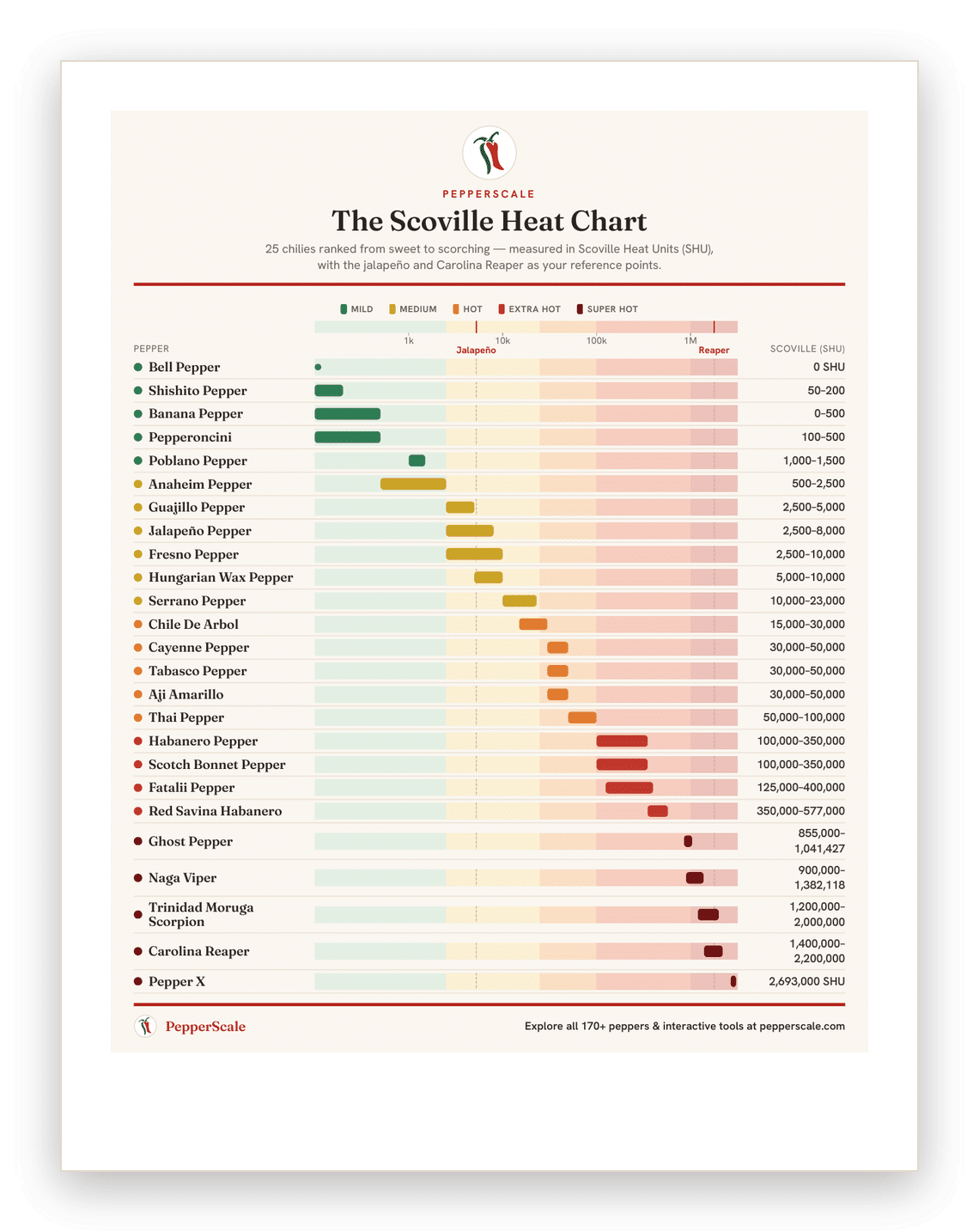
Get the free PepperScale Scoville Heat Chart
A printable, at-a-glance ranking of 25 chilies from sweet to scorching — with the jalapeño and Carolina Reaper as your reference points. Join the newsletter and we’ll send it straight to your inbox.
No spam — just Wicked Wednesday recipes and occasional extra dashes of chili pepper inspiration. Unsubscribe anytime.
Related reading
- Simple Scotch Bonnet Hot Sauce: Let the scotch bonnet’s natural fruitiness lead, without burying it under tropical fruit.
- Ghost Pepper vs. Habanero: What changes when you step up from the habanero into genuine super-hot territory.
- The Hot Pepper List: These two are among 150-plus chilies we profile, searchable by name, heat, flavor, and origin.
When I was in Panama I was introduced to the Caribbean pepper sauce. I have really taken a liken to this pepper sauce and found that the pepper used was the scotch bonnet pepper. I was able to find some Caribbean pepper sauce in some specialty markets but it isn’t too common. Habanero pepper sauce is more common but just isn’t at all the same. I bought some peppers that were labeled as scotch bonnet peppers but they ended up tasting exactly like the habanero pepper sauce I made. I think I was sold habanero peppers labeled in correctly as… Read more »