The serrano and the jalapeño are the two great fresh green chilies of Mexican cooking, so alike in flavor that they’re often used interchangeably. Both are Capsicum annuum, both are picked and eaten green well before they’d ever ripen to red, and both belong to our Green & Grassy flavor family, which means the real differences come down to heat and shape rather than what they taste like at the core. Still, reach for the wrong one in the wrong dish and you’ll notice: one brings a sharper, faster heat, the other a rounder, milder one. Here’s how to tell them apart, and when it actually matters which you pick.

Last update on 2026-10-15. We earn a commission if you make a purchase, at no additional cost to you.
| Serrano | Jalapeño | |
|---|---|---|
| Scoville range | 10,000–23,000 | 2,500–8,000 |
| Median SHU | 16,500 | 5,250 |
| Vs. jalapeño | 3.1× a jalapeño | 1× a jalapeño |
| Aroma family | Green & Grassy | Green & Grassy |
| Origin | Mexico | Mexico |
| Uses | Culinary | Culinary |
| Loudest notes | Fresh, Tangy | Fresh, Bitter, Sweet |
Which is hotter, the serrano or the jalapeño?
The serrano is the hotter of the two, and by a clear margin. It runs 10,000 to 23,000 Scoville heat units, while the jalapeño sits at 2,500 to 8,000 SHU. That makes the serrano roughly two to three times hotter on average, and up to about nine times hotter at the extremes. For scale, a bell pepper measures zero SHU and a habanero starts around 100,000, so both of these sit comfortably in the middle of the heat spectrum: real, noticeable spice, but nothing that should scare off a casual eater.
How does each taste?
Because they both share space in the Green & Grassy flavor family, this is a same-group comparison: the two differ in degree, not in character. Both are bright, crisp, and grassy when green, built around that same fresh, vegetal core. The serrano leans further into it, with a cleaner, sharper snap and a slightly tangier edge. The jalapeño is a notch rounder and, thanks to its thicker, meatier walls, carries a touch more bitterness. Neither is a fruity or floral pepper; what you’re tasting in both is essentially the same green backbone, just tuned differently.
Ripen either one to red and the balance shifts: the sharp edges soften and a mild sweetness comes forward, which is why red jalapeños and red serranos both show up candied, pickled, or dried into flakes. In most savory dishes, though, you’re working with the green version, and swapping one for the other changes the heat far more than it changes the flavor. If a recipe calls for a fistful of chopped serrano and you’ve only got jalapeño, use more of it rather than looking for a different pepper entirely.


What does each look like?
Visually, the two are easy to tell apart once you know what to look for. The serrano is slim and torpedo-shaped, two to four inches long and thin all the way through, with thin walls and almost no interior cavity around the seeds. The jalapeño is shorter and noticeably stouter, usually smoother-skinned, with thicker, meatier flesh and a roomier cavity inside. Both start out a deep, glossy green and will ripen to red on the vine if left long enough, though almost everything you see in a grocery store is picked green.
Which is easier to find?
The jalapeño wins on availability. It’s one of the most widely grown chilies in the world and shows up in essentially every supermarket produce section, often year-round thanks to greenhouse and import supply. The serrano is common too, especially anywhere with a solid Mexican or Latin American grocery section, but it’s a step less universal outside those aisles, and smaller stores sometimes carry it only seasonally, heaviest from late spring through fall. Prices track closely for both, so cost rarely decides the choice.
If you can’t find serranos locally, jalapeño is both the easiest substitute and the closest in flavor. Both are also easy, productive plants for a home garden if you’d rather grow your own: compact, heat-tolerant, and reliable producers through a full summer, which is worth considering if you go through either one regularly.
Which is more useful in the kitchen?
Both are fresh, everyday workhorses, and the rule of thumb is simple: anywhere you’d use one, the other works, adjusting for heat. The serrano is the pick for fresh salsas, pico de gallo, guacamole, and salsa verde, where its thin skin needs no roasting and its extra heat and grassiness shine raw. The jalapeño is the better choice for poppers and stuffed dishes, and for anyone who wants that same green flavor at a gentler heat; its thicker walls hold up better to baking and grilling without collapsing.
Both take well to roasting or charring, which mellows the raw bite and adds a smoky depth neither has fresh, and both pickle beautifully for topping tacos, sandwiches, and nachos. One extra fact worth knowing: a ripe, red jalapeño that’s been smoked and dried becomes a chipotle, one of the most useful dried chilies in Mexican cooking, while serranos are almost never smoked or dried commercially. So if a recipe wants dried, smoky heat, that route runs through the jalapeño, not the serrano. For less heat from either one, halve the pepper lengthwise and scrape out the pith and seeds with a spoon before chopping.
Overall: same family, different heat
The serrano and the jalapeño are close cousins that mostly differ in intensity and build, not in what they fundamentally taste like. Choose the serrano when you want more heat and a cleaner, grassier bite, especially raw in something like salsa or pico. Choose the jalapeño when you want a milder version of that same green flavor, a sturdier pepper for stuffing and grilling, or the raw material for homemade chipotle. And because they’re so alike at the core, the jalapeño is the go-to serrano substitute in a pinch. Just use more of it, roughly double, to close the heat gap, and taste as you go.
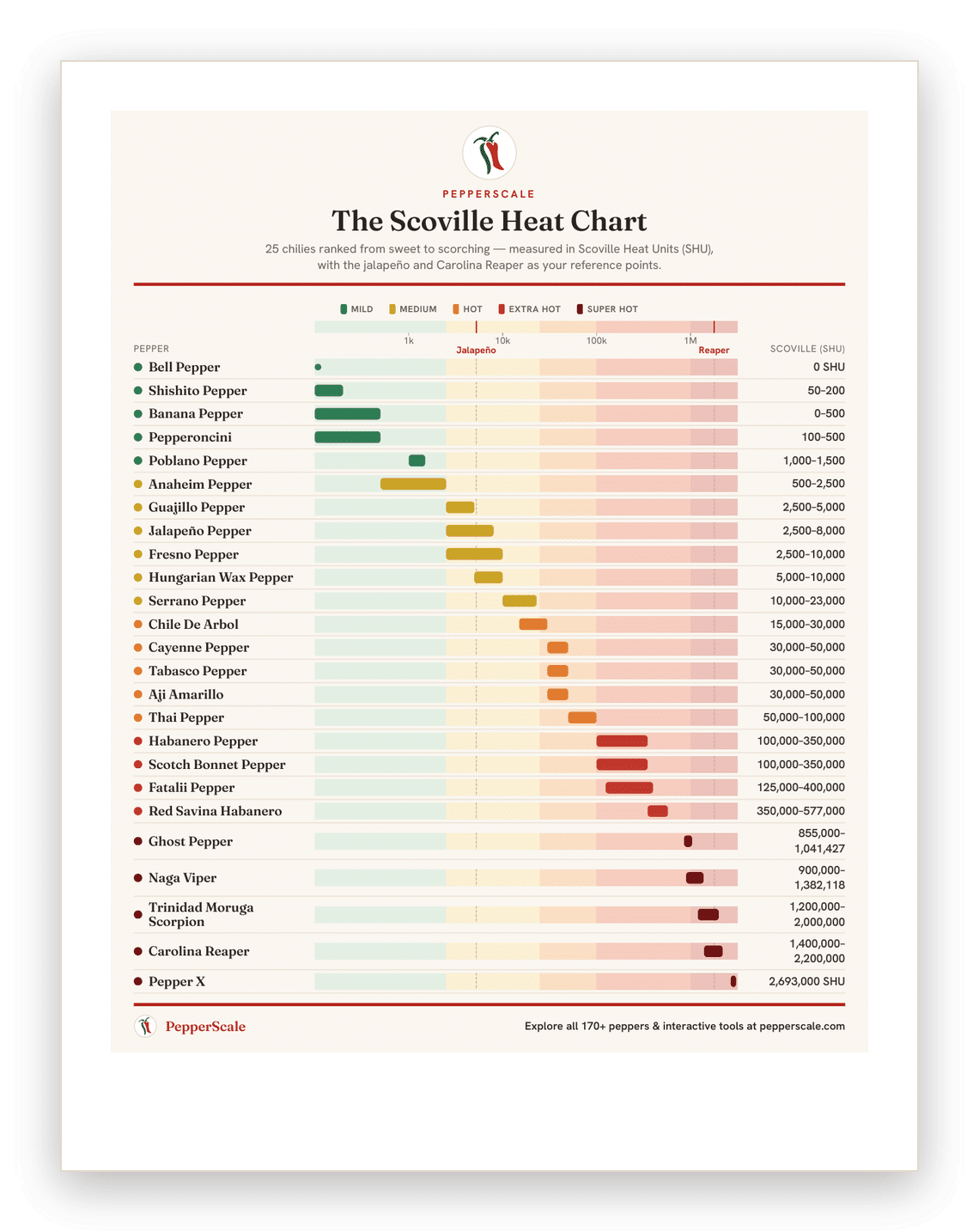
Get the free PepperScale Scoville Heat Chart
A printable, at-a-glance ranking of 25 chilies from sweet to scorching — with the jalapeño and Carolina Reaper as your reference points. Join the newsletter and we’ll send it straight to your inbox.
No spam — just Wicked Wednesday recipes and occasional extra dashes of chili pepper inspiration. Unsubscribe anytime.
Related reading
- Serrano Vs. Cayenne: A step up in heat, but absolutely different in flavor. Learn how they compare.
- The Hot Pepper List: Explore 170-plus chilies, searchable by name, flavor, heat, and origin.
- Our Hot Sauce Rankings: 100-plus hot sauce reviews, searchable by the chilies used in each one.
I love the Jalapeno because it is usually a reliable, mild-med heat. My family loves cream cheese stuffed, bacon wrapped jalapenos. With this pepper, I use green as the mild (kid) version, and more ripe orange/red for the heat lovers. Due to their size and uniformity, they are super easy to work with. When making salsa, I use jalapeno, split the batch and add serranos and/or aji charapita to 1/2. VOILA!