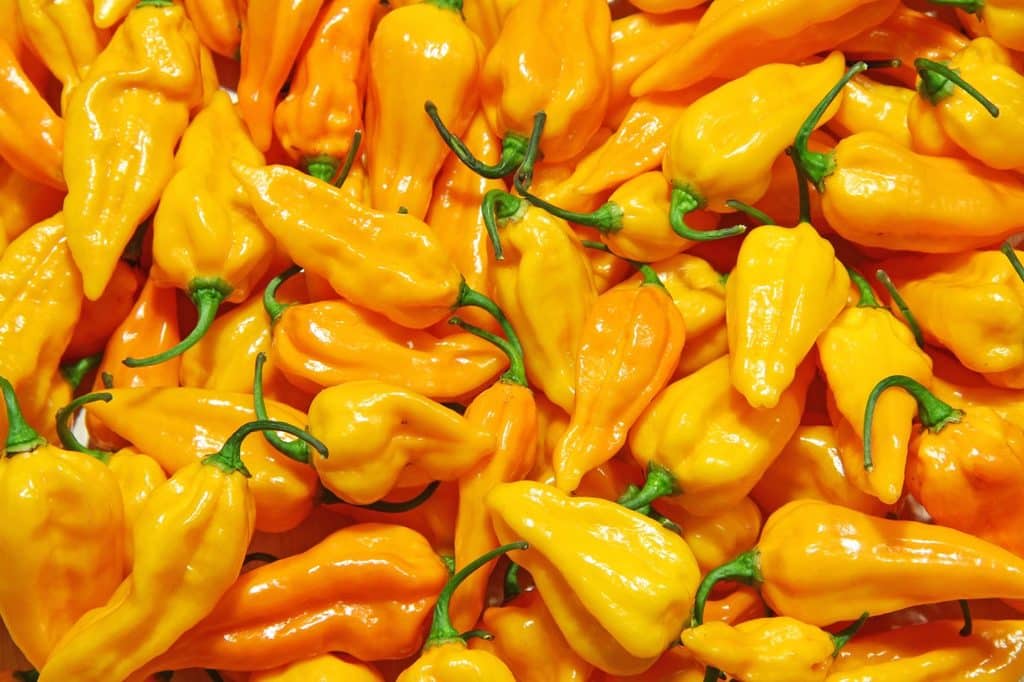
The fatalii is a yellow, extra-hot chili from Africa with a flavor that sets it apart from its habanero cousins: lemon. It runs 125,000 to 400,000 Scoville heat units, a touch hotter than a habanero, and ripe pods are wrinkled and about 3 inches long.
That citrus is what makes it worth seeking out. Fatalii peppers shine in citrus hot sauces and salsas, and in dishes built around lemon or lime. Fresh pods are hard to find in stores, but the compact plants grow well in a pot or garden bed.

Last update on 2026-11-15. We earn a commission if you make a purchase, at no additional cost to you.
- Species
- C. chinense
- Origin
- Africa
- Uses
- Culinary
How hot is a fatalii pepper, really?
The fatalii runs 125,000 to 400,000 Scoville heat units (SHU). That’s a little hotter than a habanero (100,000 to 350,000 SHU) at both ends, and at the top, it gets close to a chocolate habanero (425,000 to 577,000 SHU).
Against a jalapeño, the gap is huge. The fatalii is 16 to 160 times hotter, and at the midpoints of the two ranges, it’s about 50 times hotter. You’ll sometimes see it called one of the hottest peppers in the world, but that’s long out of date. The ghost pepper’s floor, about 855,000 SHU, is more than double the fatalii’s ceiling, and Pepper X, the current record holder (as of 2023), averages about 2.69 million.
What a fatalii pepper actually tastes like
Think lemon first. A ripe fatalii is sweet and fruity, but its fruit leans hard toward citrus, and that sets it apart within the Fruity & Tropical family it shares with the habanero and the scotch bonnet. Next to those two, we rate it about as fruity, a little less sweet and noticeably more tart, with a touch more floral lift.
Its cousins each add a darker note: smoke in the habanero, an earthy streak in the scotch bonnet. The fatalii usually doesn’t, so the citrus stays out front, and lemon and lime are what you’ll pick out.
How to pair a fatalii pepper
Since its fruit leans toward lemon, the fatalii goes best with partners that share that citrus streak. Lemongrass is the classic match, and ginger works the same way.
For contrast, give that sharp heat something rich or bright to play against. Coconut milk and red palm oil soften the burn, and a squeeze of lime frames the citrus heat. One tip: the fatalii’s lemony flavor can stand in for some of the acid, so you may need less lime than usual.
For a main ingredient, pick something mild that lets the citrus heat lead, like white fish or chicken. Our Chili Pepper Flavor Pairing Tool has the full list of fatalii partners.
Cooking with fatalii peppers
Most recipes that call for habaneros or scotch bonnets will take a fatalii, but expect the dish to taste more like citrus. That makes it a natural in citrus hot sauces and lime-heavy salsas, and less of a fit where you want a habanero’s smoky side. Our honey habanero sauce, scotch bonnet orange hot sauce and mango pico de gallo all work with a fatalii swapped in.
You can also dry fatalii peppers and grind them into flakes or powder. Dried, the citrus fades and the heat concentrates, so a pinch goes a long way.
- Wear gloves, and think about goggles. At this heat level, the capsaicin can burn your skin, and chopping fatalii peppers can sting your eyes.
- Start small. Use half of what a recipe calls for, taste, then add more. Pods vary, and a hot one can take over a dish.
- Know your fix. Milk works better than water on a burning mouth, and here’s how to treat chili burn on your hands before it happens.
Yellow, red, white and chocolate fatalii peppers
Fatalii peppers ripen from green to yellow, some closer to golden orange. Ripe pods run about 2 to 3½ inches long, wrinkled all over, wide at the top and tapering to a point. How does that compare with a habanero? It’s longer and slimmer than the habanero’s squat lantern shape.
You’ll also find red, white and chocolate fatalii seed. These are color variations sold under the fatalii name. Despite claims you may see, there’s no good evidence any of them run hotter than the yellow, and one seed grower describes the white as milder.
Where does the fatalii pepper come from?
The fatalii is usually traced to the Central African Republic, though nobody has recorded who first brought its seed to gardens elsewhere, or when. Its species, Capsicum chinense, is native to the Americas, and it reached Africa through trade, probably carried on ships from the Caribbean.
As for the name, nobody knows its source. It’s easy to assume it’s a nod to “fatal,” but there’s no record of who named it or why.
Growing fatalii peppers
Thinking of growing your own? Fatalii plants are compact, usually 2 to 4 feet tall, and they do well in pots, where you can bring them inside for the winter. The pods ripen 90 to 100 days after transplanting, so they make it before frost in most of the U.S. Our fatalii pepper planting guide covers everything from starting seeds to picking, and its planner gives you dates for your zip code.
The best fatalii pepper substitute
What’s the best fatalii substitute? A habanero, which matches the heat almost exactly, and a little lime or lemon zest brings back some of the citrus. A scotch bonnet works the same way. For the citrus without the heat, try a lemon drop pepper (15,000 to 30,000 SHU), and use more of it. For more swaps at this heat level, see our habanero substitute guide.
The bottom line
The fatalii is a habanero-hot pepper that tastes like lemon. Use it where citrus already belongs, start with less than you think you need, and wear gloves. And if you can’t find it fresh, the compact plants make it a good one to grow yourself.
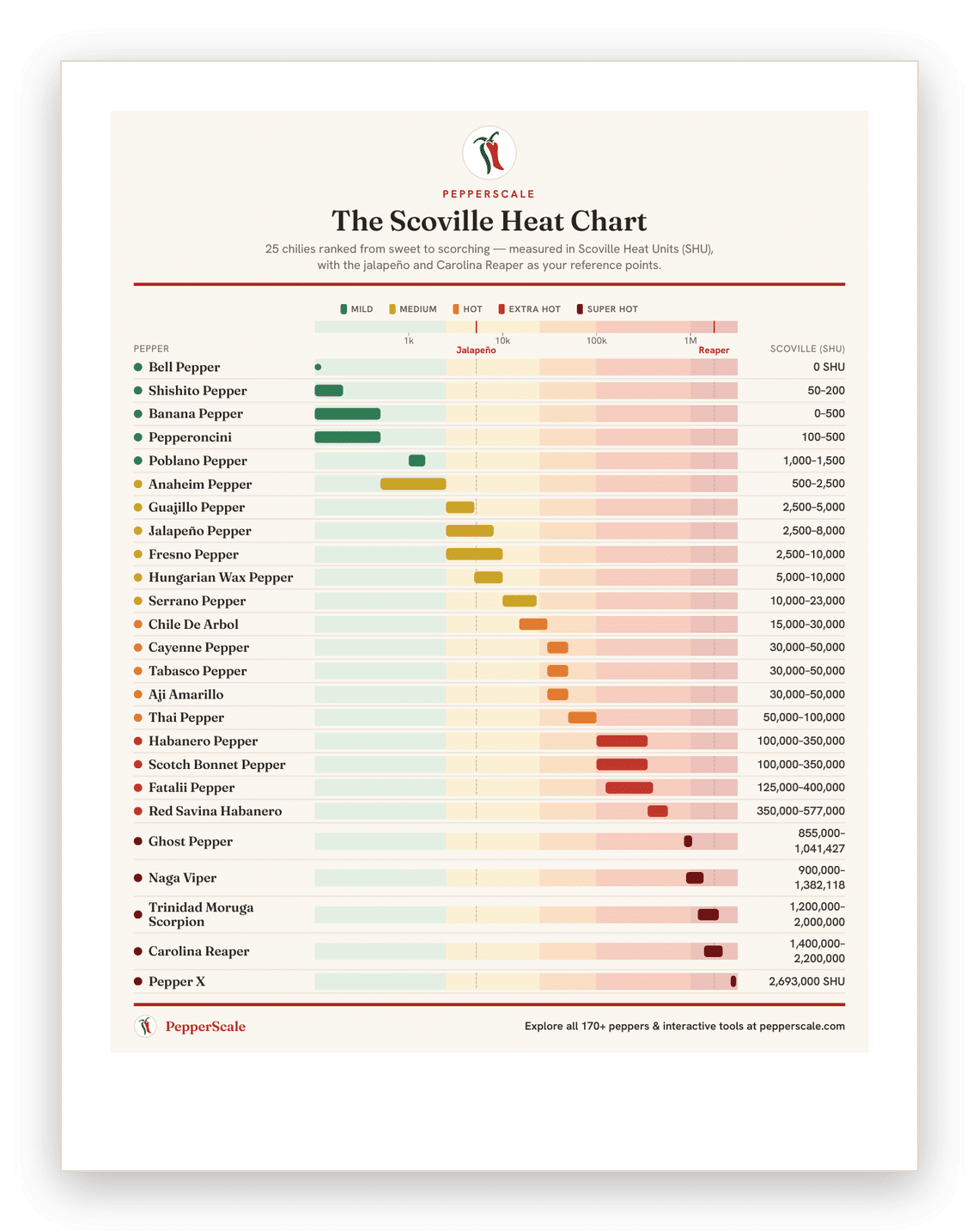
Get the free PepperScale Scoville Heat Chart
A printable, at-a-glance ranking of 25 chilies from sweet to scorching — with the jalapeño and Carolina Reaper as your reference points. Join the newsletter and we’ll send it straight to your inbox.
No spam — just Wicked Wednesday recipes and occasional extra dashes of chili pepper inspiration. Unsubscribe anytime.
Related reading
- Yellow Peppers: The fatalii and other chilies that ripen yellow, from mild to scorching.
- The Hottest Peppers In The World: The superhots that leave the fatalii far behind.
- The Hot Pepper List: Compare the fatalii with 170-plus other chilies on heat and flavor.