Pasilla peppers are one of the “Holy Trinity” of Mexican mole chilies, so with the rise in popularity of authentic Mexican cuisine, the pasilla’s popularity is also rising around the world. But, depending on where you live, they can be tough to find.
So what are your options if this chili isn’t at hand? What’s a good pasilla pepper substitute that’ll work? The good news is that you can turn to the other members of the Holy Trinity of dried Mexican chilies, but each has its own unique flavor profile and heat considerations, so consider carefully when subbing into recipes.

Last update on 2026-10-15. We earn a commission if you make a purchase, at no additional cost to you.

| Pepper | Scoville | Vs. Pasilla | Use |
|---|---|---|---|
| Pasillawhat you're replacing | 1,000–2,500 | — | — |
| Ancho Earthy Closest match | 1,000–1,500 | ~1.4× milder | 1.4× as much |
| Mulato Earthy Closest match | 2,500–3,000 | ~1.6× hotter | 1.6× less |
| California Chile Earthy Dials the heat down | 500–2,500 | about the same | 1:1 |
| Guajillo Earthy Easy to find | 2,500–5,000 | ~2.1× hotter | 2.1× less |
- Cayenne Sharp Brings the heat without the earthy and sweet that carries Pasilla.
The best alternative: Ancho pepper
Ancho chilies are far and away the most popular of the three dried chilies that make up the Mexican Holy Trinity. You can find them at specialty shops, and many supermarkets now carry these dried chilies.
In terms of heat, the pasilla (1,000 – 2,500 Scoville heat units) and the ancho (1,000 to 1,500 SHU) are close to one another. They are both mild chilies, with the pasilla having the potential to reach near mild jalapeño heat. Overall, it’s a slight bump in overall spiciness that most won’t notice.
Considering flavor: Both are earthy, with the ancho being a little smokier and the pasilla fruitier, with more of a raisin and cocoa undertone. There is a difference, and depending on your recipe (and how authentic you want it), this could affect the taste. Still, if you are going to substitute in any dried chili for the pasilla, the ancho is your best bet. Our ancho vs. pasilla showdown compares the two in more detail.
Your next best bet (but harder to find): Mulato pepper
Mulato peppers are close cousins to the ancho. Both are dried poblano peppers, just two different varieties. They have a slight heat bump over the ancho (2,500 to 3,000 SHU) which places them at the lower-end of medium-hot chilies. Along with the ancho and the pasilla, they round out the classic mole trio, so they’re right at home in any mole that calls for pasillas.
The mulato’s flavor is earthy, too, but a bit smokier with a hint of chocolate. That cocoa undertone may make the difference to your recipe, so if you have mulato peppers available and you are good with the additional spiciness, then give these chilies a go.
A big jump in spiciness: Guajillo pepper
The guajillo pepper makes some lists of the Holy Trinity, though the classic mole trio is ancho, mulato and pasilla. It’s a common dried chili in Mexican cooking, and it turns up the temp on any meal with a Scoville heat range from 2,500 to 5,000 SHU. They are often as hot as most jalapeño peppers you find. Or, as another heat comparison against a product many have tried, the guajillo shares the same heat range as Tabasco Original Red Sauce.
It, too, has an earthy flavor, but with hints of tea and cranberry. It has a pungent sweetness that many people love. But depending on your recipe, the spiciness may be too much as a pasilla alternative.
Next to a pasilla, it’s tangier and a little less sweet. That brightness is great in a salsa, but it won’t give a mole the same dark, deep base.
Milder and easy to find: California chile
California chiles are dried Anaheim peppers, picked red and dried to a deep brick color. They run 500 to 2,500 SHU, so they top out right where the pasilla does and can come in a good bit milder.
The flavor’s close, too. They’re sweet like dried fruit and gently earthy, and that fruitiness is a big part of what a pasilla brings. What you’ll miss is some of the pasilla’s darker side, the cocoa and tobacco notes that make it so good in mole.
They’re usually easy to track down. Check the Mexican or international aisle, where they’re often bagged alongside the anchos and guajillos.
In a pinch: Crushed red pepper or cayenne
Both of these substitutes are here for two simple reasons: They are dried chilies and they are common on most spice racks. Beyond that, there are some significant differences to the pasilla that you’ll need to consider carefully.
Both crushed red pepper and cayenne will be much hotter than the mild pasilla. In the case of ground cayenne (30,000 to 50,000 SHU) it’s a large jump. You won’t want to use cayenne or crushed red pepper in a 1:1 ratio. This is more of a “start with a few pinches and go from there” solution on both fronts.
Secondly, both cayenne and crushed red pepper have a neutral, peppery flavor, but not much depth beyond that. The pasilla (as with other members of the Mexican Holy Trinity) is known for its earthy, sweet flavor. These aren’t a flavor match. But if you’re simply looking for spiciness, these can help since one or the other (or both) are sitting in your spice rack.
When to use each? Consider their form. A powder will permeate a dish more, while flakes tend to sit atop food and offer less overall spiciness due to it. And crushed red pepper tends to be less spicy overall. Our crushed red pepper vs. cayenne comparison covers how they differ.
Match the substitute to the dish
- Mole: Ancho and mulato together. They’re the other two chilies in the classic mole trio, so using both gets you as close as you’ll come to a mole built on all three.
- Red chile and enchilada sauces: Ancho or California chile. Both blend into a smooth, sweet sauce, and the California’s the better pick if you’re keeping the heat low for everyone at the table.
- Salsas and table sauces: Guajillo, if you don’t mind a little more heat. Its tang and brighter flavor wake up a salsa, and you can use fewer chilies to keep the heat in check.
- Stews, braises and beef dishes: Ancho or mulato. These dishes lean on the pasilla’s depth, and the mulato’s hint of chocolate gets closest to the pasilla’s cocoa note.
- A finishing dust or dry rub: Ground ancho. Sprinkle it on the way you’d use ground pasilla, over a seared steak, roast potatoes or anything else that could use some earthy warmth.
- When you just need some heat: A few pinches of cayenne or crushed red pepper, added a little at a time. You’ll get the warmth, but none of the pasilla’s sweetness or depth.
How much should you use?
Pasillas are mild, so most of these swaps are close to one for one. Go by weight when you can, since they’re shaped very differently.
- Ancho for pasilla: One for one by weight, plus a little extra if you’d like to match the pasilla’s heat, since an ancho runs a bit milder. It’s much wider, too, so you’ll need fewer anchos than the number of pasillas listed.
- Mulato for pasilla: A little less than the pasilla’s weight. It runs hotter, so start lighter and taste as you go if you’re cooking for anyone who’s shy about heat.
- Guajillo for pasilla: Start with about half and taste before you add more. At up to twice the heat, a straight swap turns a mild dish into a noticeably warmer one.
- California chile for pasilla: One for one by weight. It can run milder than a pasilla, so there’s no harm in adding an extra chili if you’d like a deeper color and flavor.
- Cayenne or crushed red pepper for pasilla: A few pinches to start, then taste and go from there. At 30,000 to 50,000 SHU, it doesn’t take much cayenne to match a pasilla’s heat.
Our pepper conversion tool handles the heat math for any two chilies, and our guide to rehydrating peppers works for every dried chili on this list.
Pulling it all together
Start with the ancho. It’s easy to find, close in heat, and earthy and sweet like a pasilla, just a bit smokier and less fruity. Making mole? Add mulato alongside it and you’ve got two-thirds of the classic mole trio covered. The California chile’s the easy, milder backup, and the guajillo’s there when you’d like a little more heat. Save the cayenne and crushed red pepper for when heat’s all you need.
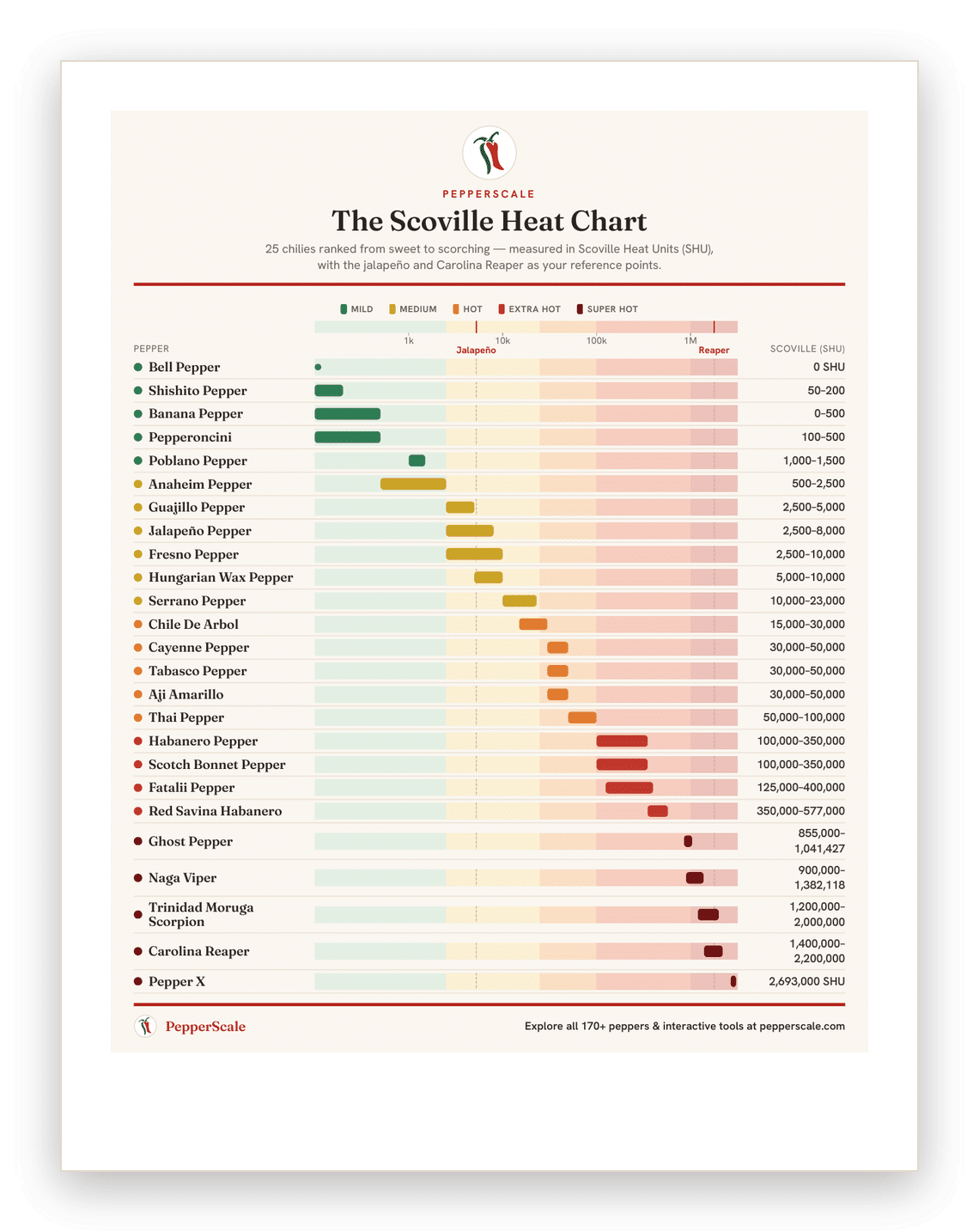
Get the free PepperScale Scoville Heat Chart
A printable, at-a-glance ranking of 25 chilies from sweet to scorching — with the jalapeño and Carolina Reaper as your reference points. Join the newsletter and we’ll send it straight to your inbox.
No spam — just Wicked Wednesday recipes and occasional extra dashes of chili pepper inspiration. Unsubscribe anytime.
Related reading
- Are Dried Chilies Hotter Than Fresh?: If a fresh chili pepper is dried, does its spiciness jump? Learn the answer.
- The Hot Pepper List: We profile and list over 150 different hot peppers. Search our dynamic list by name, heat level, flavor, use case, and more.
- How Long Do Dried Peppers Last?: Do dried peppers go bad? And what’s their shelf life?