The poblano and the serrano are both cornerstones of Mexican cooking, but they sit at opposite ends of the mild-to-medium range and get used in almost opposite ways: one a big, mild pepper made for stuffing and roasting, the other a small, punchy chili made for fresh salsa. Both are Capsicum annuum, the same species behind jalapeños and cayennes, but few pairs of common chilies diverge this much in size, heat, and job in the kitchen. Here’s how they compare, and why reaching for the wrong one changes more than just the spice level.

Last update on 2026-10-01. We earn a commission if you make a purchase, at no additional cost to you.
| Poblano | Serrano | |
|---|---|---|
| Scoville range | 1,000–1,500 | 10,000–23,000 |
| Median SHU | 1,250 | 16,500 |
| Vs. jalapeño | about 4× milder than a jalapeño | 3.1× a jalapeño |
| Aroma family | Green & Grassy | Green & Grassy |
| Origin | Mexico | Mexico |
| Uses | Culinary | Culinary |
| Loudest notes | Fresh, Earthy, Bitter | Fresh, Tangy |
Which is hotter, the poblano or the serrano?
The serrano is much hotter. It runs 10,000 to 23,000 Scoville heat units, while the poblano is a gentle 1,000 to 1,500 SHU, making the serrano roughly seven to twenty times hotter. The poblano is about as mild as a chili gets while still bringing noticeable heat (more a simmering warmth) and flavor; the serrano is a solid medium heat. If you’re choosing on spice, this is a big gap.
For scale, a jalapeño runs 2,500 to 8,000 SHU and a habanero starts around 100,000, so the poblano sits at the very bottom of the heat scale, just above a bell pepper’s zero, while the serrano lands solidly in the middle. That gap is also why the poblano gets described as a flavor pepper first and a heat pepper second: you’re meant to taste it, not brace for it. The serrano flips that ratio; heat is a real part of the experience, not an afterthought.
How does each taste?
Both belong to our Green & Grassy flavor family, so they share a fresh, vegetal foundation, but they express it differently. The poblano is mild and earthy, with a deeper, almost meaty richness that blooms when roasted. The serrano is bright, crisp, and sharply grassy, at its best raw. So while they’re in the same flavor family, the poblano leans earthy-and-mellow and the serrano leans bright-and-hot: a shared green backbone, very different intensities.
Some of that gap comes down to what each pepper becomes later in life. A poblano left to ripen fully to red and then dried turns into an ancho pepper, one of the most-used dried chilies in Mexican cooking, prized for a raisin-like sweetness and mild, fruity depth in moles and enchilada sauces. The serrano rarely gets that treatment; it’s grown, sold, and eaten almost entirely fresh and green. So while the two share a flavor family raw, only one of them has a whole second life dried.


What does each look like?
They don’t look remotely alike. The poblano is large, wide, and heart-shaped: think a darker, flatter bell pepper, with thick walls and a big cavity. The serrano is a slim, tapered pod two to four inches long with thin walls and almost no cavity. That size-and-wall difference is the whole story of how each gets used.
Both are usually picked and sold green, though either will ripen to red on the plant if left long enough. On a poblano, that red stage is what eventually gets dried into ancho; on a serrano, red typically means a slightly sweeter, still-hot pod, since it’s less often dried. Size is the easiest tell at a glance: a poblano’s broad, lobed shoulders and glossy, near-black-green skin are unmistakable next to a serrano’s slim, uniform pod, no need to look twice.
Which is easier to find?
Both are common in any store with a decent Mexican produce section, and neither is a specialty hunt. Poblanos are especially easy to spot thanks to their size, often sold near the bell peppers; serranos sit with the other small fresh chilies. Availability rarely decides between these two; the dish does.
Both hold up well in the fridge for a week or two, though the poblano’s thicker walls make it the more forgiving of the two; a serrano’s thin skin means it wrinkles and softens faster once cut or bruised. If you’d rather grow your own, both do well in a home garden and are relatively low-maintenance, heat-tolerant plants; poblanos in particular reward the space, since one plant produces a steady supply of good-sized peppers through the season.
Which is more useful in the kitchen?
Their builds send them to opposite jobs. The poblano’s size, thick walls, and mild flavor make it the classic pepper for stuffing and roasting: chiles rellenos, rajas, and roasted strips folded into everything. The serrano’s thin skin, small size, and bright heat make it the fresh salsa and pico chili, chopped in raw for a clean, grassy kick.
One unique aspect to the poblano compared to serranos and other chilies: it has a waxy outer skin that can be a point of contention for some. This tough, glossy layer can be unappealing in texture and slightly bitter, which is why many prefer to remove it. Fortunately, the skin is easily peel-able after roasting the pepper. When exposed to high heat, the skin blisters and separates from the flesh, making it simple to peel away. This process not only improves the texture but also enhances the pepper’s natural sweetness, making it more palatable and versatile in a variety of dishes.
That skin habit is also why poblanos and anchos show up so often in sauces meant to be blended smooth: roasting and peeling gets you all of the flavor with none of the tough, bitter wrapper. The serrano needs no such prep; its thin skin is barely noticeable once chopped, which is part of why it’s the faster, lower-effort pepper of the two for a quick salsa or pico.
Overall: mild-and-meaty vs. bright-and-hot
Choose the poblano when you want a big, mild, earthy pepper to roast or stuff. Choose the serrano when you want small, bright, grassy heat to chop into something fresh. They’re not really substitutes for each other: the heat and structure are too far apart. But they’re perfect complements in a Mexican kitchen. For closer swaps, see our serrano substitutes guide.
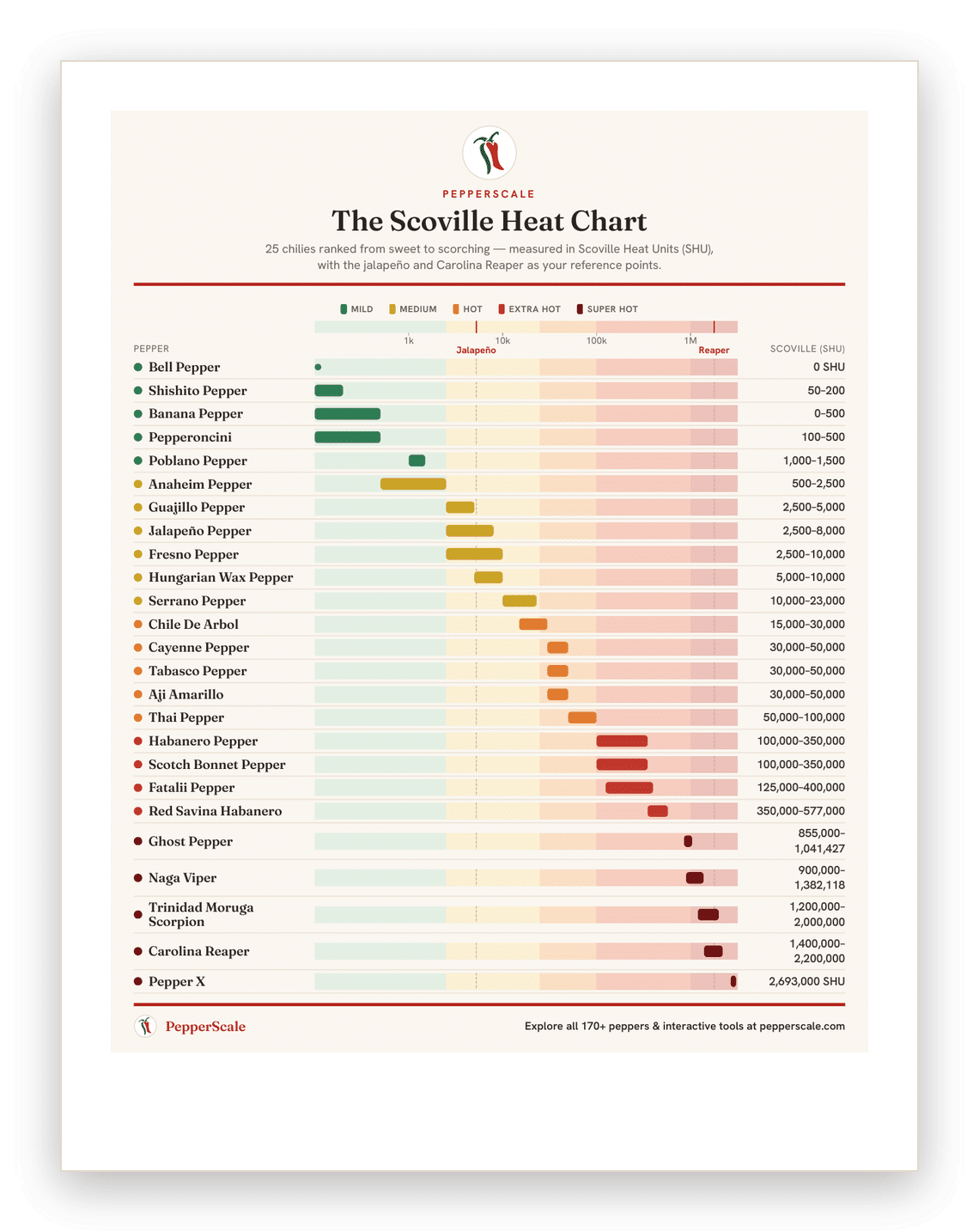
Get the free PepperScale Scoville Heat Chart
A printable, at-a-glance ranking of 25 chilies from sweet to scorching — with the jalapeño and Carolina Reaper as your reference points. Join the newsletter and we’ll send it straight to your inbox.
No spam — just Wicked Wednesday recipes and occasional extra dashes of chili pepper inspiration. Unsubscribe anytime.
Must-read related posts
- The Hot Pepper List: Explore 170-plus chilies, searchable by name, flavor, heat, and origin.
- Bacon, Egg, And Cheese Quiche With Serrano Peppers: A delightful brunch or light dinner where the serrano really shines.
- Our Hot Sauce Rankings: 100-plus hot sauce reviews, searchable by the chilies used in each one.