The Anaheim and the jalapeño are two of the easiest chilies to find in an American grocery store, and you’ll often find them side by side in the produce aisle. They’re closer than they look, too. Both are fresh green chilies with the same grassy character, and the jalapeño’s heat range starts right where the Anaheim’s ends. So choosing between them is mostly about how much heat you want and how big a pepper you need. Here’s how they stack up.
| Anaheim | Jalapeño | |
|---|---|---|
| Scoville range | 500–2,500 | 2,500–8,000 |
| Median SHU | 1,500 | 5,250 |
| Vs. jalapeño | about 4× milder than a jalapeño | 1× a jalapeño |
| Aroma family | Green & Grassy | Green & Grassy |
| Origin | Mexico | Mexico |
| Uses | Culinary | Culinary |
| Loudest notes | Fresh, Sweet, Fruity | Fresh, Bitter, Sweet |
Which is hotter, the Anaheim or the jalapeño?
It’s the jalapeño. The Anaheim runs 500 to 2,500 Scoville heat units, and the jalapeño picks up right where it leaves off, at 2,500 to 8,000 SHU. Compare the middle of each range, 1,500 against 5,250, and the jalapeño is about three and a half times hotter.
At the edges, the gap can be anything from nothing to a lot. Draw the hottest Anaheim and the mildest jalapeño and they’re equal. Draw the mildest Anaheim and the hottest jalapeño and the jalapeño is 16 times hotter.
Neither will have you sweating buckets while eating. The Anaheim’s at the upper end of mild, and the jalapeño’s at the lower end of medium. Both vary from pod to pod, though, so it’s smart to taste a sliver before you add the rest of the pepper to a dish.
How does each taste?
They’re more alike in taste than the heat numbers suggest, since both belong to our Green & Grassy flavor group. So they differ in degree, not character. The jalapeño is the louder of the two: bright and grassy, with a faint vegetal bitterness and a crisp snap. The Anaheim is milder in every sense. It’s peppery with a light sweetness, closer to a green bell pepper with a little warmth.
Both change as they ripen. A red jalapeño sweetens and sheds most of its bitter edge (here’s more on red jalapeños versus green), and a mature red Anaheim takes on more sweetness and some fruitiness. Roasting changes them too. Charred and peeled, the Anaheim turns smoky and sweet, and that’s how it’s most often cooked.
Next to other fresh chilies, that green, grassy character is what sets them apart. A habanero leans fruity and tropical (not to mention the extreme heat difference), a Thai chili is sharp, and even the poblano, the Anaheim’s usual stand-in, tastes earthier and less sweet. The jalapeño and the Anaheim stay clean and green, so either one works in most recipes that call for fresh green chilies, and they’ll both blend easily into salads and salsas.


What does each look like?
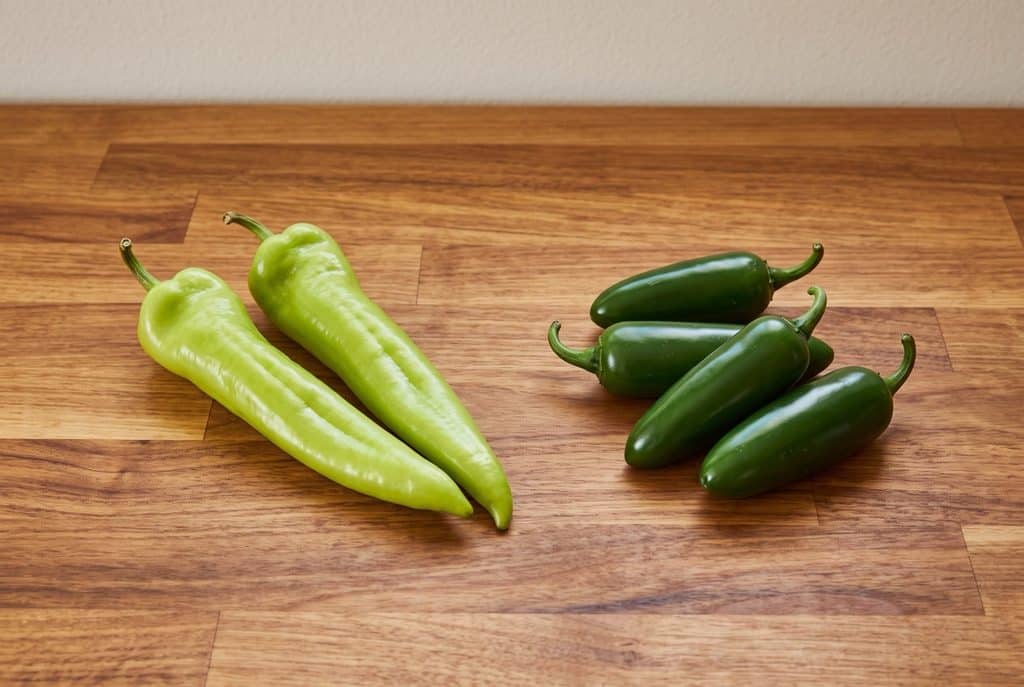
Side by side, you won’t confuse them. Anaheims are long and slender with a gentle curve, usually somewhere between 4 and 10 inches long. They’ve got broad shoulders and a pointed tip, and their green tends to be lighter and brighter. Jalapeños are 2 to 3½ inches long and plump, with rounder shoulders, a blunt tip and a deeper green.
Both ripen from green to red, and green is how you’ll usually find them in stores. The jalapeño’s walls are thick enough to stuff, so poppers work. Anaheims get stuffed too, thanks to their size, but they’re usually roasted and peeled first.
Which is easier to find?
The jalapeño, though neither is hard to find. The jalapeño’s the most common chili in American grocery stores of all sizes, and you’ll see it fresh, pickled, canned and dried. Anaheims are common too, they just aren’t at the jalapeño’s level.
The Anaheim has a trick of its own, though. If you’ve bought a can of mild green chiles, you’ve probably bought Anaheims. Ortega says the chiles in its cans are commonly known as Anaheim chiles, and that its founder, Emilio Ortega, brought the chile from New Mexico to Southern California in 1894. Ripened and dried, the Anaheim also turns up as the California chile.
Which is more useful in the kitchen?
Both are everyday workhorses, but they do different jobs. The jalapeño’s the one you’ll slice onto nachos, dice into pico de gallo, pickle by the jar and stuff for poppers. Try our cream cheese jalapeño poppers or sausage-stuffed jalapeños if you want a place to start.
The Anaheim’s more of a cooking chili. It’s at its best fire-roasted and peeled, then folded into salsas, sauces, soups and tacos. It’s also a classic for chiles rellenos, and its size makes it a good stand-in for a bell or poblano pepper in stuffed pepper recipes. Raw, it adds crunch and a little warmth to salads.
Put simply, grab the jalapeño when you want the heat to come through, and the Anaheim when you want plenty of green chili flavor without much burn.
Can you substitute one for the other?
Yes, but think about which direction you’re going. Putting an Anaheim in place of a jalapeño? That’s the safe swap. The flavor’s close, and the dish just gets milder. Since one Anaheim’s a lot bigger than a jalapeño, measure by volume rather than counting peppers.
Going the other way, jalapeño for Anaheim, watch the heat. Cup for cup, chopped jalapeño can be up to 16 times hotter, so start with less and taste as you go. Our pepper conversion tool will do that math for you. For stuffing, they don’t swap well at all: one’s popper-sized, and the other is nearly a meal unto itself.
If neither one is what you need, we rank the alternatives for both in our Anaheim pepper substitutes and jalapeño substitutes guides.
Overall: same flavor, different jobs
Don’t let the size gap fool you: the jalapeño and the Anaheim are close cousins. They share the same green, grassy character, and the jalapeño mostly turns the heat up. So if you want the bite-sized heat, go jalapeño. If you want the meal-sized mild, try the Anaheim. Both, though, are very versatile in the kitchen.
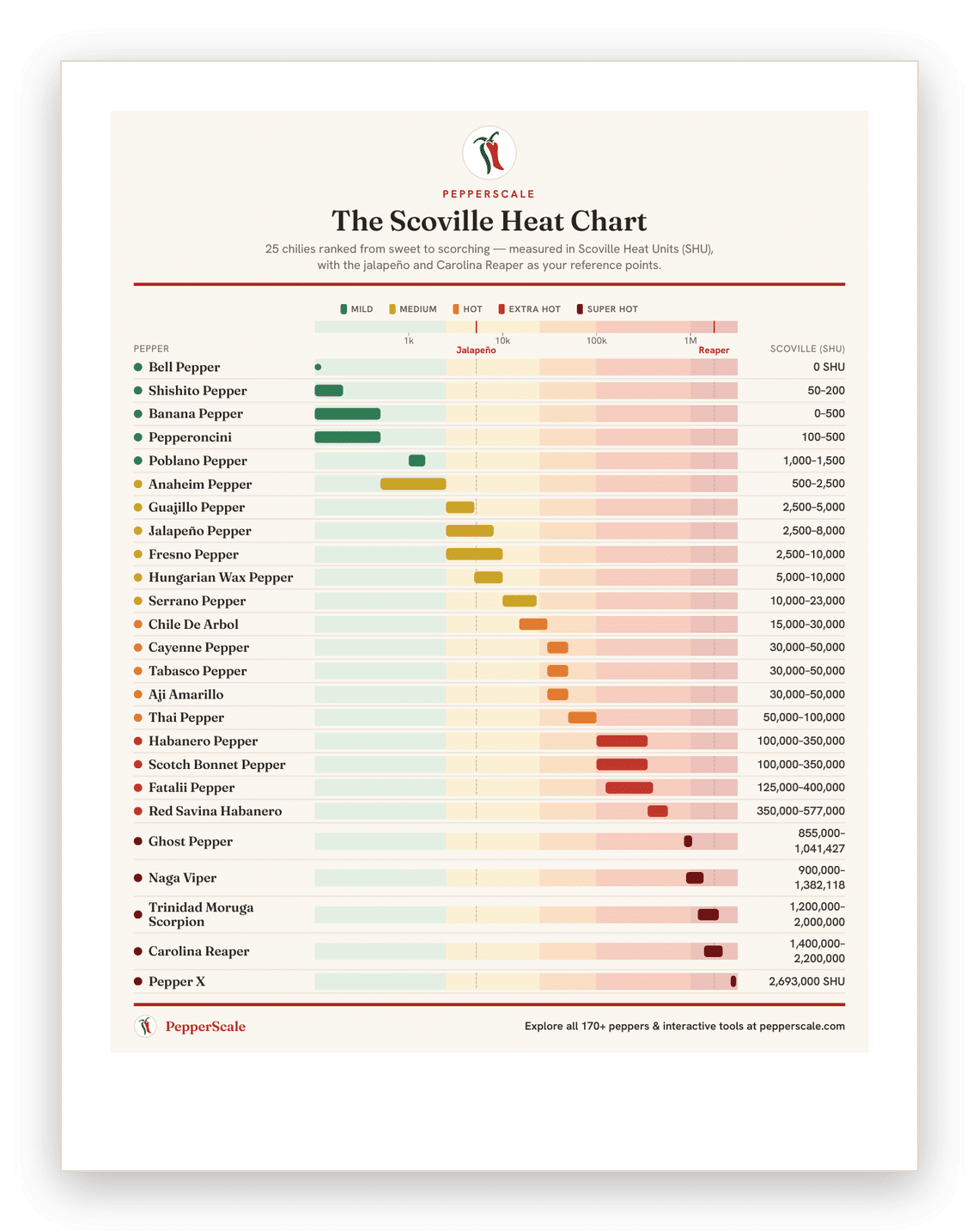
Get the free PepperScale Scoville Heat Chart
A printable, at-a-glance ranking of 25 chilies from sweet to scorching — with the jalapeño and Carolina Reaper as your reference points. Join the newsletter and we’ll send it straight to your inbox.
No spam — just Wicked Wednesday recipes and occasional extra dashes of chili pepper inspiration. Unsubscribe anytime.
Related reading
- The Hot Pepper List: Sort more than 170 chilies by heat, flavor and how you’d use them.
- Poblano Vs. Anaheim: The Anaheim’s other close rival, and the one most often traded for it in chiles rellenos.
- Serrano Vs. Jalapeño: What happens when you take the jalapeño one step hotter instead.