Habanero peppers are hot, make no mistake. They’ll kick you around. But a Carolina Reaper? It’s like a solar flare erupted in your esophagus. Yes, there is a humongous heat difference here: at the middle of each range, the Reaper is about eight times hotter. But is there more to compare? How different do they taste, and are they related? They are, closely. The Reaper has a habanero in its family tree, and the two share a sweet, fruity streak under all that fire.

Last update on 2026-11-20. We earn a commission if you make a purchase, at no additional cost to you.
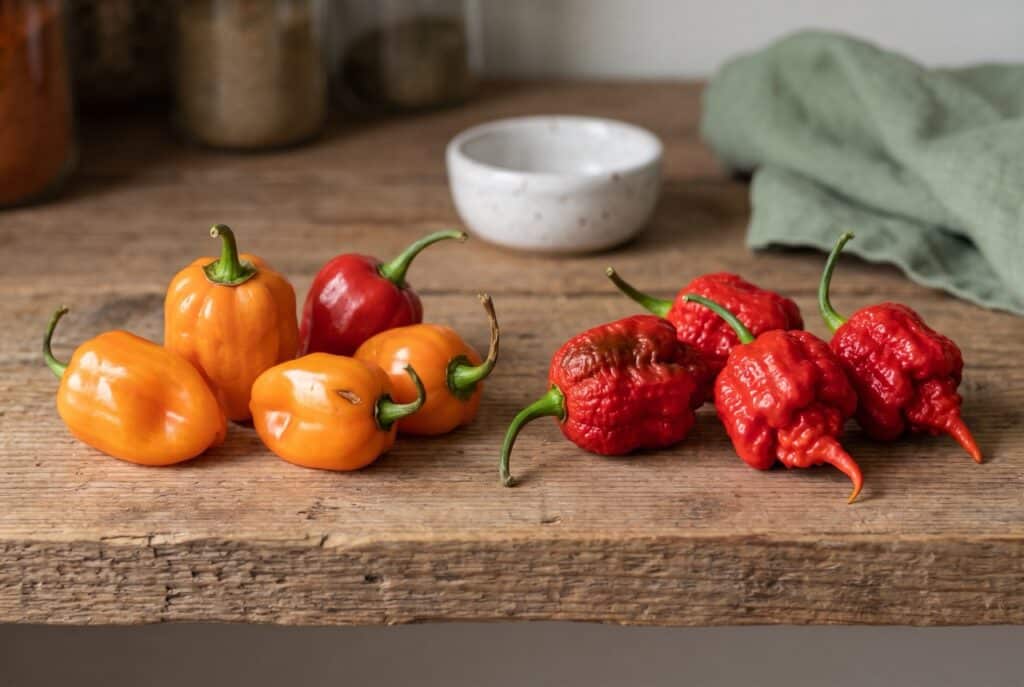
| Carolina Reaper | Habanero | |
|---|---|---|
| Scoville range | 1,400,000–2,200,000 | 100,000–350,000 |
| Median SHU | 1,800,000 | 225,000 |
| Vs. jalapeño | 343× a jalapeño | 43× a jalapeño |
| Aroma family | Fruity & Tropical | Fruity & Tropical |
| Origin | United States | South America |
| Uses | Culinary | Culinary |
| Loudest notes | Fruity, Sweet | Fruity, Sweet, Smoky |
Which is hotter, the Carolina Reaper or the habanero?
Let’s start with the numbers, since they tell the tale of the heat difference simply enough. The habanero sits between 100,000 and 350,000 Scoville heat units (SHU). That is significant spiciness, up to 140 times hotter than a mild jalapeño.
And then there is the Reaper. The low end of its range is 1.4 million SHU, and the top is 2.2 million. It’s like the Reaper is carrying a bazooka to the habanero’s knife fight. Compare the medians, 1.8 million against 225,000, and the Reaper is about eight times hotter. Put the hottest Reaper against the mildest habanero, and the gap grows to as much as 22 times.
Even the closest matchup is lopsided, since the mildest Reaper still runs four times hotter than the hottest habanero, so their ranges never overlap. Measured against a jalapeño, a typical habanero is about 43 times hotter, and a typical Reaper about 340 times.
Needless to say, wear gloves, a mask and protective eye gear if you ever handle Reapers raw. Chili burn is bad enough at jalapeño strength. At Carolina Reaper strength, it will have you rolling on the floor, so know the fixes for chili burn before you slice into one.
Is the Carolina Reaper related to the habanero?
In a way, yes. Both peppers are Capsicum chinense, and the habanero is one of the Reaper’s parents. When Guinness World Records certified the Reaper as the world’s hottest pepper in 2013, its announcement named the parents: a sweet habanero crossed with the Naga Viper, itself a one-time record holder. Ed Currie, the breeder behind PuckerButt Pepper Company, spent about a decade getting the cross right.
The habanero has its own place in that record book. A habanero variety, the Red Savina, was the hottest pepper on record from 1994 until 2006. The Reaper held the title from 2013 until Currie’s own Pepper X replaced it in 2023, so neither is the record holder today.
How does each taste?
Closer than the heat suggests. The two share our Fruity & Tropical aroma family, and our ratings put fruit at the top for each, with sweetness right behind and a faint floral note. The habanero adds a light smoky edge. The heat sets them apart, then, far more than the flavor does.
The Carolina Reaper is sweeter than you would expect. In its 2013 record write-up, Guinness picked out notes of cinnamon and chocolate under the sweetness. But it takes so little Reaper to heat a dish that the flavor barely registers before the fire takes over.
So which one will you taste more of in a finished dish? The habanero, since you can use enough of it for its fruit to come through, and that makes it the taste king in this matchup. It has sweet undertones as well, not as sweet as its scotch bonnet cousin, and it is a favorite with tropical fruit.

What does each look like?
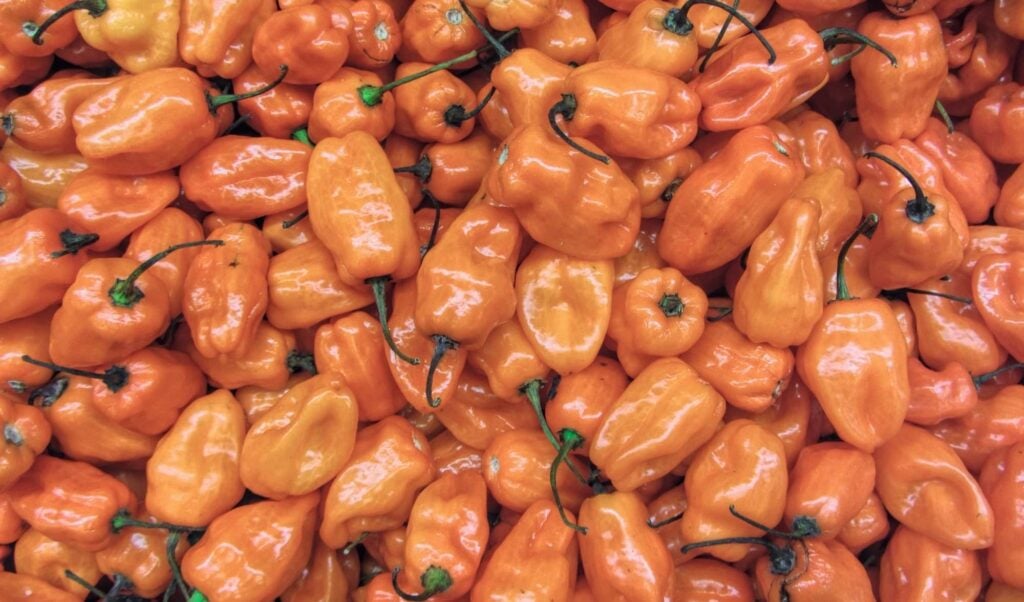
You won’t mix these two up. The habanero is rounded, slightly puckered, but relatively smooth, a lantern-shaped pod an inch or two long. It looks like a pepper you want to eat. Orange habaneros are the most common, though reds, whites and browns exist too.
The Carolina Reaper is round-ish, gnarled and twisted, about 1½ to 2½ inches long, and it ripens a bright red. It ends in a pointed, stinger-like tail, much like the tails that gave the scorpion peppers, like the Trinidad Moruga Scorpion, their name. This is a chili that screams danger.
Which is easier to find?
The habanero, by a mile. You will find it in many grocery store produce sections, especially where Latin American and Caribbean cooking is common, and you can buy it dried, powdered and bottled in countless hot sauces.
The Carolina Reaper, on the other hand, will likely never find aisle space next to the bell peppers. Fresh pods are hard to come by, so most people meet it dried, as a powder, or in a hot sauce. Want fresh Reapers? Growing them yourself is the surest way, and our Carolina Reaper and habanero planting guides cover both peppers.
In bottles, both are everywhere. On the habanero side, we have reviewed sauces like Secret Aardvark Habanero. On the Reaper side, there is Torchbearer Garlic Reaper, and AKA Miso Ghost Reaper pairs it with the ghost pepper.
Which is better for cooking?
For cooking, the habanero wins easily. It is hot, but it is still a pepper you can chop into a salsa, a marinade or a hot sauce and taste. And it is especially good with fruit, as in our habanero marmalade and orange habanero sauce.
The Reaper is for hot sauce and for dishes built around heat. Start with a sliver, or a pinch of powder, then taste and decide whether the dish needs more.
Can you swap a habanero for a Carolina Reaper?
Only if you mind the math. You won’t go swapping a habanero for a Carolina Reaper one for one, since at the median you’d be making the dish about eight times hotter. Start with an eighth as much Reaper, or less, and work up from there.
Going the other way is the safer direction. The fruit carries over, so a habanero makes a reasonable stand-in for a Reaper, and the dish simply gets milder. Matching a Reaper’s heat takes roughly eight times as much habanero. For exact amounts between any two chilies, try our pepper conversion tool.
Overall: same family, different leagues
They share a species and even a family tree, but they belong to different leagues. Both are hot, just one much, much closer to the sun. If you’re a fan of big heat, try ramping up to the habanero, which has one of the best heat-to-flavor ratios around. If you dance with the Reaper, proceed with caution. Its spot on the pepper scale should be warning enough.
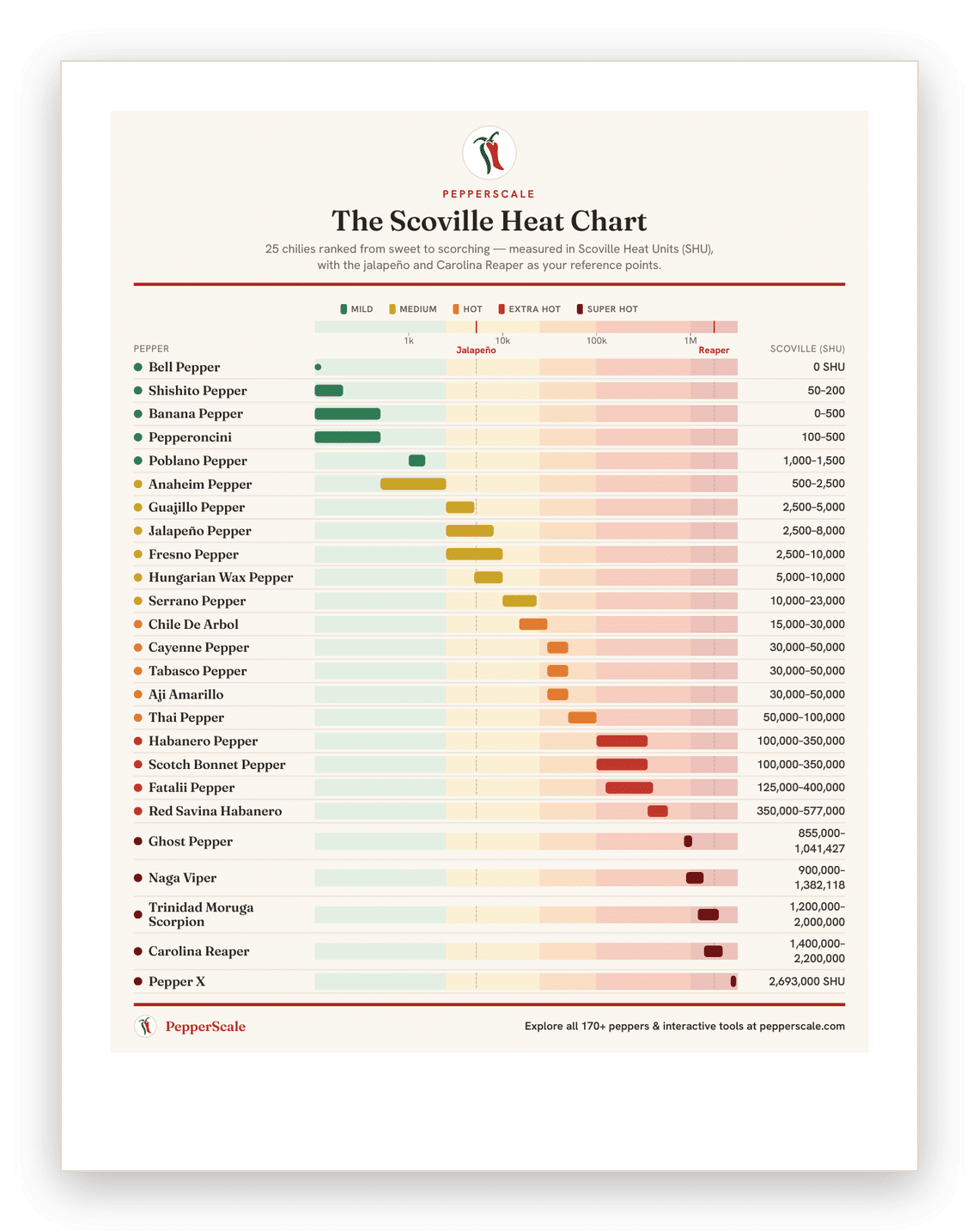
Get the free PepperScale Scoville Heat Chart
A printable, at-a-glance ranking of 25 chilies from sweet to scorching — with the jalapeño and Carolina Reaper as your reference points. Join the newsletter and we’ll send it straight to your inbox.
No spam — just Wicked Wednesday recipes and occasional extra dashes of chili pepper inspiration. Unsubscribe anytime.
Related reading
- Ghost Pepper Vs. Habanero: The habanero against the ghost pepper, the first chili certified past a million SHU.
- Scorpion Pepper Vs. Carolina Reaper: Two super-hots that are near twins in flavor and heat.
- The Hot Pepper List: Every chili we cover, searchable by heat, flavor and origin.