Chipotle chili flakes are a convenient way to use chipotle chilies without the hassle of grinding them yourself. They’re turning up in more grocery stores than they used to, but there’s still no guarantee that yours carries them. So what do you reach for instead? Here are your best alternatives, ranked by how close they actually get.

Last update on 2026-10-16. We earn a commission if you make a purchase, at no additional cost to you.
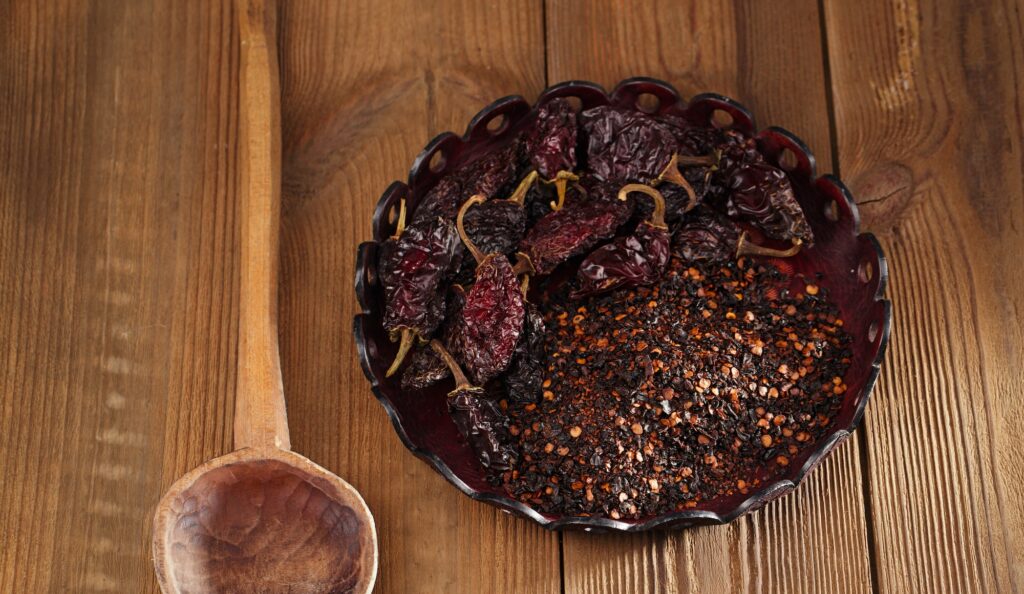
Your best bet: Standard crushed red pepper
Most spice racks already have crushed red pepper, also sold as red pepper flakes, and that’s most of why it sits at the top of this list. The form’s right, too. You get coarse flakes that behave the way chipotle flakes behave, whether you’re scattering them over a pizza or stirring them into a pot.
Two things are different. Crushed red pepper’s built on cayenne-type peppers, so it’s hotter: cayenne runs roughly seven to eight times the heat of a jalapeño, while chipotle sits right about at jalapeño level, since a chipotle is a smoked jalapeño. Start with less than the recipe asks for. The bigger gap is smoke, and you don’t get any. Crushed red pepper is close to straight heat, where chipotle flakes carry smoke and a dried-fruit sweetness underneath.
You can put some of that smoke back with a dash or two of liquid smoke stirred into the flakes before they go in. It’ll work better in some dishes than others, so judge it by what you’re making rather than treating it as a straight fix.
Your next best alternative: Chipotle powder
Chipotle powder isn’t as common on spice racks as cayenne or paprika, but it’s getting there. On flavor it’s the closest thing on this page, because it’s the same pepper: same smoke, same sweetness, same heat. For most uses, and especially for dry rubs, it does everything you need.
So why isn’t it first? Form. A teaspoon of powder holds a lot more pepper than a teaspoon of coarse flakes, so it’s not a one-for-one swap. Powder also spreads through a dish rather than sitting in it as separate specks, which is why soups and salsas come out hotter and more evenly seasoned than the same measure of flakes would leave them. That isn’t always what you want. Sometimes the point of a flake is that one bite has heat and the next one doesn’t.
The grinding solution: Whole chipotle pepper or pasilla de Oaxaca
You can also make your own. Buy whole dried chipotles and pulse them in a spice grinder or a food processor, stopping while they’re still coarse. A few seconds too long and you’ve made powder instead, which puts you back in the section above.
Pasilla de Oaxaca works here too, and it’s an underrated answer. It’s a smoked Oaxacan chile, so it comes from the same place chipotle does: smoke, dried fruit, real depth behind the heat. Two differences matter. It’s smokier than chipotle, and it’s considerably hotter, reported at around 15,000 to 20,000 SHU against chipotle’s 2,500 to 8,000. Use meaningfully less than your recipe calls for, not slightly less. Then taste before you add more.
One warning. Don’t confuse it with plain pasilla, sometimes labeled pasilla negro or chile negro. That’s a different chile altogether, much milder at 1,000 to 2,500 SHU, and it isn’t smoked at all.
In a pinch solutions: Chipotle in adobo sauce or chipotle paste
Chipotle in adobo looks like it ought to be the best answer on this page. It’s the same pepper, and you’ll find a can in just about every grocery store. The trouble is everything else about it.
Those chipotles have been rehydrated, so they’re soft and wet instead of flaky, and they’re sitting in adobo sauce that brings its own vinegar, tomato and garlic along for the ride. To get anywhere near the flavor of dry flakes you’d rinse the sauce off and puree the peppers, and even then you’re adding moisture the recipe didn’t plan for.
Chipotle paste is the same story with less work in front of it. It’s dried chipotles reconstituted and pureed, so the flavor lands right and moisture’s the only catch. In a soup or a sauce that’s no problem. In a dry rub it is one. It’s also the hardest thing here to find unless you shop somewhere that carries Mexican ingredients.
Other alternatives
Smoked paprika gives you the smoke without the heat or the texture. It’s ground fine, so it won’t sit on a dish the way a flake does, and most smoked paprika is mild enough that you’ll need heat from somewhere else. Paired with crushed red pepper, though, it covers exactly the gap that crushed red pepper leaves.
Chili powder is a blend, usually built on ground ancho with cumin behind it. Ancho brings a sweet, raisiny earthiness and a smokiness of its own, though anchos are dried rather than smoked, so it’s a softer version of what chipotle does. The cumin adds warmth on top of that. What the blend won’t give you is actual smoke, so treat it as a flavor stand-in rather than a match, and don’t forget it’s carrying garlic and oregano too.
Match the substitute to the dish
- Dry rubs: Chipotle powder, every time. It’s the same pepper, and in a rub the dryness matters far more than the coarseness does. Crushed red pepper’ll do if you can live without the smoke.
- Soups, stews and chili: Chipotle paste or chipotle in adobo, since the extra moisture just disappears into the pot. Rinse the adobo off first unless you want its vinegar and tomato in the finished dish as well.
- Pizza, pasta and anything you finish at the table: Crushed red pepper. This is the one job where the coarse flake matters more than the flavor match, because you want visible specks and heat that hits in some bites and not others.
- Salsas and blended sauces: Chipotle powder, but cut the amount back. Powder disperses through a blended sauce far more thoroughly than flakes do, and it will taste hotter than the same measure of flakes.
- Marinades: Chipotle in adobo, pureed. It’s already wet, and that’s no drawback here, so you keep the adobo’s acidity working for you instead of rinsing it down the drain.
How much should you use?
These are starting points, not conversions. Taste as you go, because the batch in your cupboard is its own thing and there’s no substitute for checking.
- Chipotle powder for chipotle flakes: Start at about half. A teaspoon of powder packs more pepper than a teaspoon of flakes and it spreads further through the dish, so half is a safer opening bid than a straight swap.
- Crushed red pepper for chipotle flakes: Start at about half as well, but for the opposite reason. Here it’s heat rather than density, since cayenne-based flakes run several times hotter than chipotle does.
- Pasilla de Oaxaca for chipotle flakes: A third to a half, and taste before you commit to more. It overshoots on two counts at once rather than one, since it’s both smokier and hotter than the chipotle you’re replacing.
- Smoked paprika for chipotle flakes: Match the measure, then add heat separately. Paprika’s bringing smoke and color rather than burn, so a one-for-one swap gets the flavor roughly right and leaves the heat entirely up to you.
Our pepper conversion tool will do the heat math for any two chilies, and the dish heat calculator tells you where the whole pot lands before you commit.
Pulling it all together
There isn’t a perfect chipotle chili flake substitute, because the flake carries two things at once: a specific smoked-jalapeño flavor, and coarse pieces you can see and bite. Chipotle powder gets the flavor and loses the texture. Crushed red pepper gets the texture and loses the flavor. Which one you reach for comes down to which half matters more in the dish in front of you. And if you’ve got both on the rack, crushed red pepper with a little smoked paprika stirred through lands closer than either one manages alone.
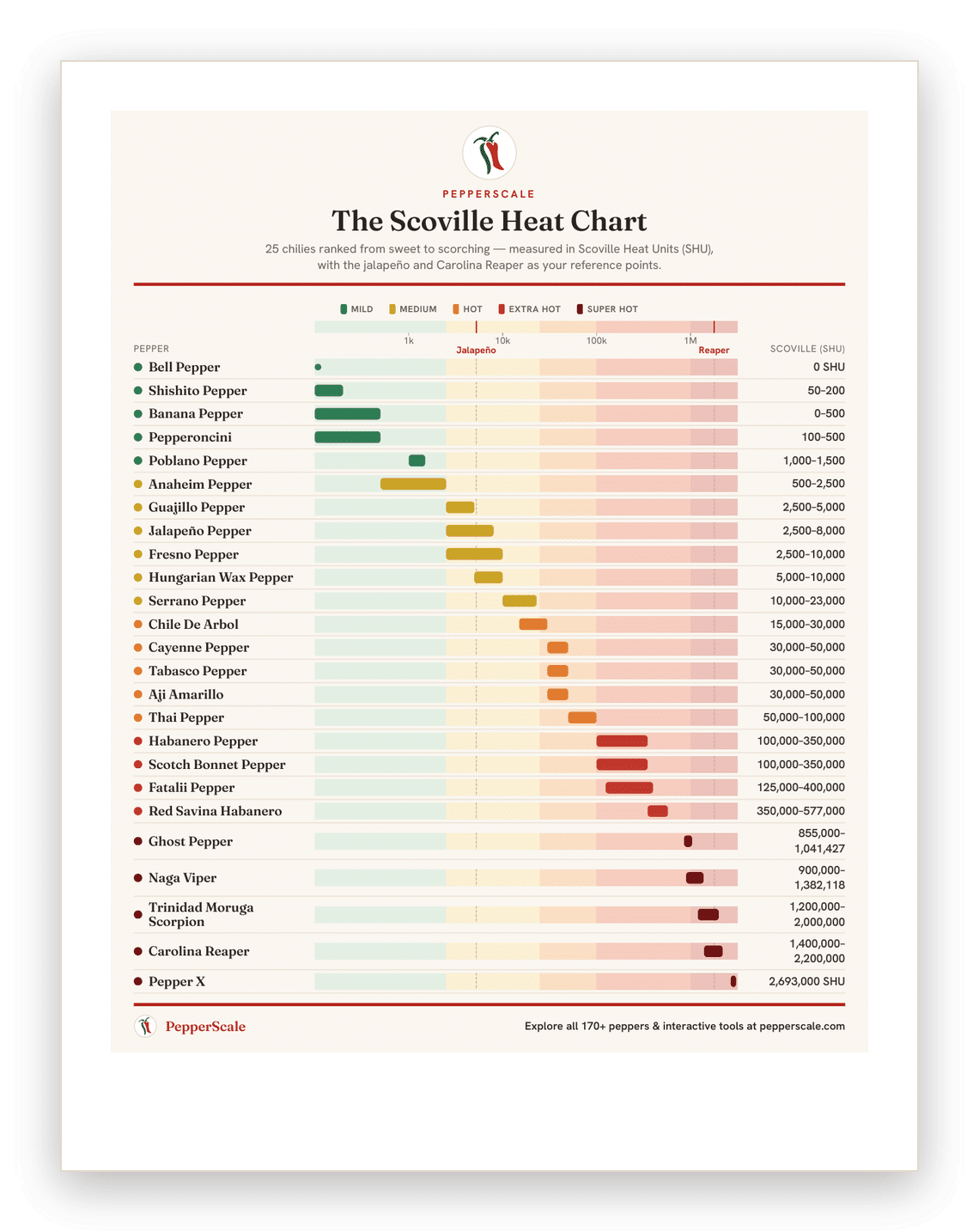
Get the free PepperScale Scoville Heat Chart
A printable, at-a-glance ranking of 25 chilies from sweet to scorching — with the jalapeño and Carolina Reaper as your reference points. Join the newsletter and we’ll send it straight to your inbox.
No spam — just Wicked Wednesday recipes and occasional extra dashes of chili pepper inspiration. Unsubscribe anytime.
Related reading
- Chili Flakes Vs. Chili Powder: This isn’t specific to chipotle, but you get a good general idea of how these two different ingredients react in foods.
- Are Dried Peppers Hotter Than Fresh? What should you expect when using this dried form of a jalapeño? Will it be hotter?
- How Long Do Dried Peppers Last? If you purchase whole dried chilies, what should you expect with their shelf life (and how do you maximize it?)