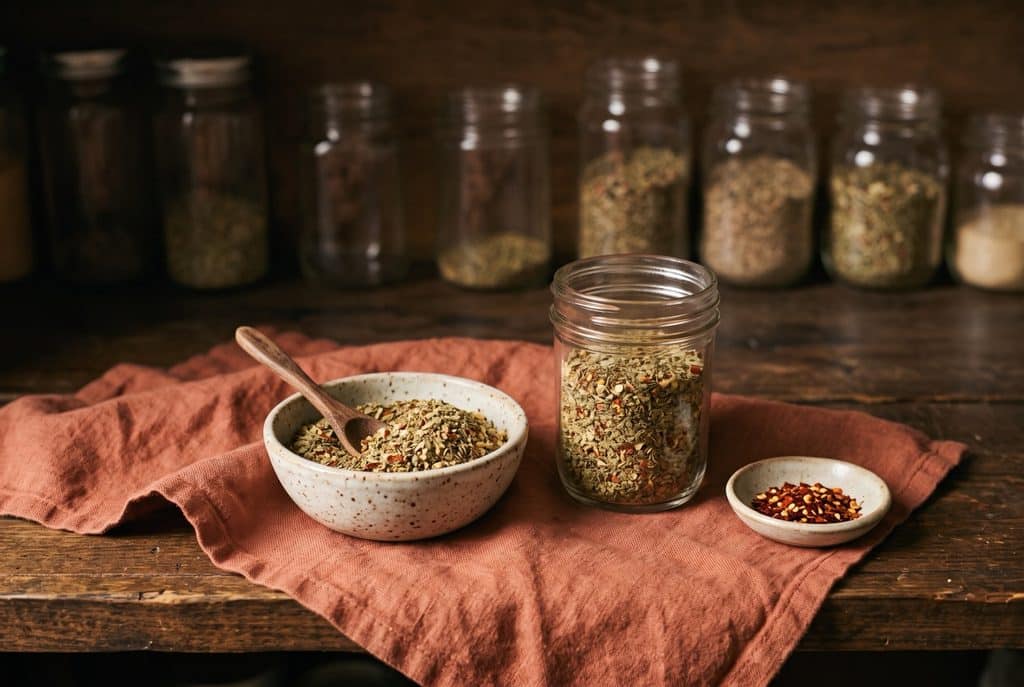
Traditional Italian seasoning is one of the most popular spice mixes around. There’s good reason for that: it’s a tasty mix that uses some of the most popular herbs from the spice rack. But how about making it a little spicier? You can do that easily. This spicy Italian seasoning recipe adds a bit of flavor pop (via crushed red pepper) to the traditional recipe. Try mixing it in a marinara sauce for your next pasta, or sprinkle some on your next Italian hoagie.
🌶️ Quick recipe snapshot
| Flavor profile | Sweet, herbal marjoram up front, with oregano, basil and thyme, savory onion and garlic, and a light kick of crushed red pepper and black pepper. |
| Primary heat source | 1/2 teaspoon of crushed red pepper. About 15,000 to 30,000 SHU. |
| Heat level | Mild. You’ll notice a little warmth, but it won’t overpower the herbs. |
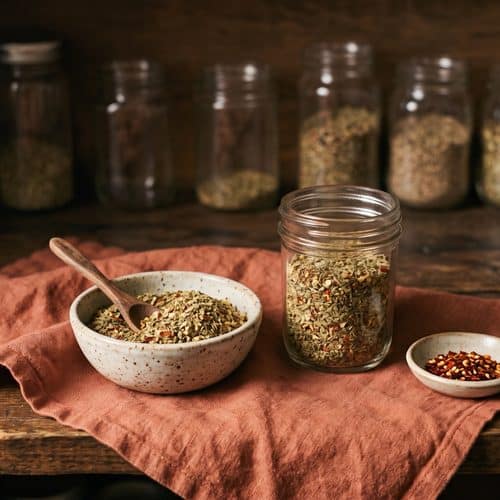
| Texture | A coarse, crumbly mix of dried herb flakes with small bits of dried onion, garlic and red pepper. |
| Best uses | Marinara and pizza sauce, meatballs, garlic bread, vinaigrettes and roasted vegetables. |
| Customization ideas | More crushed red pepper, a little rosemary or sage, smoked paprika, or a finer grind. |
| Before you start | About 5 minutes. Crush a pinch of each dried herb first, and if one smells faint or dusty, it’s time for a new jar. |
Flavor notes
There’s no fixed recipe for Italian seasoning. Most store-bought blends mix four or five dried herbs, and which ones lead changes from brand to brand. And as SPICEography’s guide to Italian seasoning points out, the bottled blend is most likely an American invention. In Italy, you’re far more likely to find fresh herbs in the kitchen.
This one leads with marjoram. There’s a full tablespoon of it, three times as much as any other herb, and McCormick’s blend leads with marjoram too. Marjoram’s a milder, sweeter cousin of oregano, so it gives the blend a soft, herbal base. The teaspoon of oregano adds that bolder, pizza-parlor edge, and basil and thyme fill in around both.
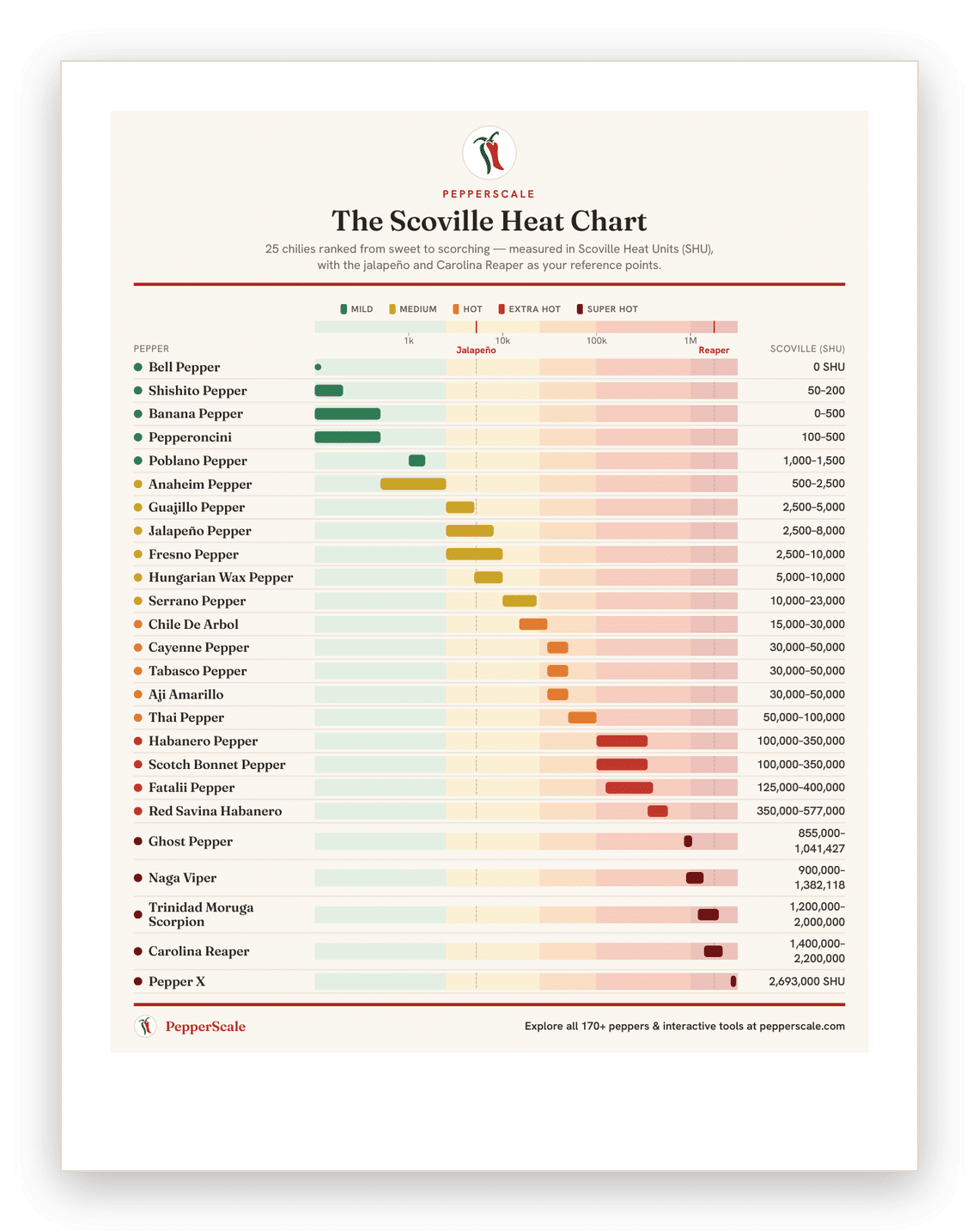
The heat’s all in the half teaspoon of crushed red pepper and the black pepper. Crushed red pepper usually runs around 15,000 to 30,000 Scoville heat units, but spread through nearly 3 tablespoons of dried herbs, it’s a gentle warmth. Black pepper adds a sharper bite, and the paprika brings a little sweet pepper flavor and a hint of color.
The dried minced onion and garlic make it more savory than a herbs-only blend, and many store-bought ones are just herbs. They’re small dried bits, not powder, so you’ll be able to see them in the jar. There’s no salt in it either, so you can season the dish however you like.
Add it early to sauces and soups, and give it time to simmer so the herbs soften. For a dressing or a marinade, stir it into the oil first. And if you’re using it in place of a store-bought Italian seasoning, you can swap it in one for one. Just know it’s a bit hotter.
Adaptation ideas
Most of these change the heat or move it closer to a bottled blend.
- Want more heat? Use 1 teaspoon of crushed red pepper, or add 1/4 teaspoon of cayenne.
- Want it milder? Cut the crushed red pepper to 1/4 teaspoon and keep everything else the same.
- Want it closer to store-bought? Add 1 teaspoon of dried rosemary, crumbled fine, and a pinch of dried sage.
- Want it smoky? Use smoked paprika in place of the regular paprika.
- Want a finer blend? Pulse the finished mix a few times in a spice grinder, and it’ll shake out of a shaker jar more easily.
- Want to make your own flakes? Try our homemade crushed red pepper, and you can pick the chilies and the heat yourself.
Serving ideas
Use it anywhere you’d use Italian seasoning, and taste as you go.
- In tomato sauce. Start with a teaspoon in a pot of marinara or pizza sauce, then add more after it’s simmered a while.
- In meatballs and sausage. Mixed into ground beef, pork or turkey before you shape it.
- On garlic bread. Stirred into softened butter with fresh garlic, then spread on the bread before it goes in the oven.
- In a vinaigrette. Whisked into olive oil and red wine vinegar with a pinch of salt.
- On roasted vegetables. Tossed with zucchini, potatoes or peppers, oil and salt before roasting.
- On a hoagie. Sprinkled over the meats and cheese with a drizzle of oil and vinegar.
Storage notes
Keep it in a small airtight jar in a cool, dark cupboard, away from the heat and steam of the stove. Dried herbs won’t spoil, but they’ll lose their aroma over time. So make a batch you’ll use within a few months.
To check an older jar, crush a pinch between your fingers and smell it. If it smells faint or dusty, most of the flavor’s gone, and it’s time to mix a fresh batch. Always use a dry spoon, too, so no moisture gets into the jar.
Like this recipe? You’ll love these too:
- Spicy Italian Meatballs: Beef and pork meatballs with Parmesan, crushed red pepper and cayenne.
- Penne All’arrabbiata: A fiery tomato sauce built on six fresh red chilies, tossed with penne.
- Garlic Pepper Seasoning: Another shake-on blend, built on garlic powder and black pepper.
A globe-spanning collection of 100 bold, fiery recipes — soups, fiery mains, curries, handhelds, snacks, sauces, even brunch — drawn from over a decade of PepperScale favorites.
Wicked Wednesday subscribers save 15% — join free.
Spicy Italian Seasoning
Ingredients
- 1 tablespoon dried marjoram
- 1 teaspoon dried basil
- 1 teaspoon dried oregano
- 1 teaspoon dried minced onions
- 1/2 teaspoon dried thyme
- 1/2 teaspoon dried minced garlic
- 1/2 teaspoon crushed red pepper
- 1/2 teaspoon ground black pepper
- 1/2 teaspoon paprika
Instructions
- Measure everything into a small bowl. If your dried herbs are in large leaves, crumble them between your fingers as they go in.
- Stir for about a minute, until the crushed red pepper, onion and garlic are spread evenly through the herbs.
- Use it right away, or spoon it into a small airtight jar and store it in a cool, dark cupboard.