Let me run through some of what launched in the past year or so.
Hershey put out Jolly Rancher Heat Wave gummies in January, coated in what the company calls a “chili inspired finish.” Health-Ade released a strawberry mango chili kombucha. Dairy Queen built an entire promotional menu around it, FlameThrower chicken strips and a pineapple lemonade with Tajín included. Freddy’s teamed up with Mike’s Hot Honey for a chicken sandwich and tenders. Kellogg’s put hot honey in a breakfast cereal in the UK. In Australia, Twisties and Capilano launched a hot chili honey snack. And in June, the Original Louisiana Brand, a name first sold in 1928, put out a hot honey.
Five of those seven brands used the word “swicy” in their own press materials. The other two had it supplied for them by the trade press.
If you spend any time around hot sauce, you have probably felt two things about this at once. First, that it’s nice to see the rest of the world catch up. Second, that a lot of what’s being sold as sweet heat is really just sweet, with heat as a garnish.
Both of those feelings are correct. Let me explain what’s actually going on, because the trend is more interesting than the marketing, and there’s a genuinely useful takeaway in it for anyone who cooks with chilies.
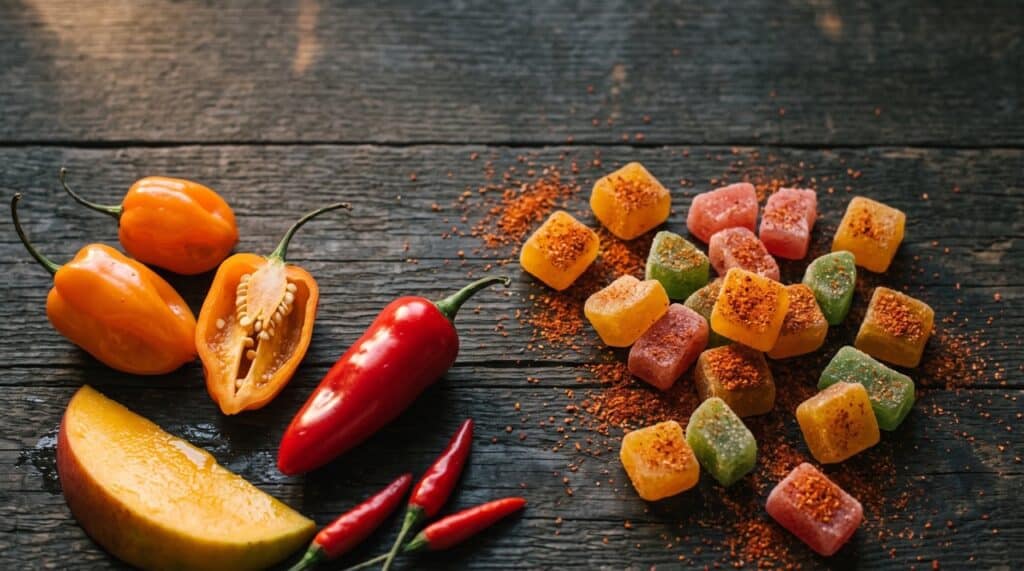
What swicy means, and where it came from
Swicy is a portmanteau of sweet and spicy. That’s the whole thing.
It doesn’t appear to have been coined by any one brand or person. It surfaced organically online and had reached the point of being explained in the mainstream food press by August 2023, when TODAY ran a piece noting it had “officially ascended to portmanteau status.” Since then it’s become the standard industry shorthand for a flavor pairing that is, obviously, thousands of years old.
Because here’s the thing. Sweet heat is not a 2020s invention. Thai sweet chili sauce. Mexican candy dusted with chili and lime. Hot pepper jelly on a cheese board. Mango habanero wings. Chinese sweet and sour dishes with dried chilies. Chamoy. Even sriracha lists sugar as its second ingredient, right behind the chilies. Any chilihead reading this has been eating swicy food their entire life without needing a name for it.
What’s new isn’t the flavor. It’s that large food companies finally have a fun word for it, and a word is what unlocks a marketing budget.
The numbers say “swicy” isn’t a fad
The data is clear. To steal a Zoolander turn of phrase, spicy is so hot right now.
The research firm Datassential reports that roughly 95% of US restaurant menus now carry at least one spicy option, up from about 92% in 2015. On their figures, “spicy” appears on more menus than any word except “fruit” and “vegetable,” which puts it ahead of chicken. Around 9.4% of all individual menu items now include something spicy, and over half of diners say they’re likely to order an item specifically labeled spicy, up from 39% a decade ago.
On sweet heat specifically, that TODAY piece cited Datassential clocking sweet and spicy menu pairings up 38% in a single year, with hot honey projected to outgrow nearly every other flavor in food and beverage by 2027. Datassential’s own hot honey profile puts numbers to it: 5.6% menu penetration heading to a projected 9.6% by 2027.
The hot sauce market itself is worth somewhere in the region of $5 billion a year, though I’d treat any precise figure with caution. Published 2025 estimates cluster between roughly $3.5 billion and $5.7 billion depending on whose report you read, with projected annual growth anywhere from 4% to 11%. That’s a 60% spread on the same market, which mostly tells you the firms disagree about what counts as hot sauce. The direction is consistent even if the decimal points aren’t.
That’s not a fad shape. Fads spike and collapse. This is a slow, broad climb across every category at once, which is what a lasting change in the national palate looks like.
Now the uncomfortable part
Here’s my problem with most commercial swicy products: the ratio is wrong.
Sweet heat works when the two halves are actually arguing with each other, and there’s science underneath that. Sweetness measurably reduces how much burn you perceive. A 1986 study tested sugar, salt, acid and bitter compounds against capsaicin irritation and found sucrose was effective at making the fire fade faster, and a 2022 experiment found a sugar rinse beat water at cutting capsaicin pain.
Worth knowing that this is a perception effect rather than a chemical one. Sugar doesn’t dissolve or neutralize capsaicin the way the fat and casein in dairy do. It just changes how much of the burn your brain bothers to report. Which is exactly why balance matters so much here: you’re not cancelling the heat out, you’re tuning how loudly it arrives.
What a lot of big-brand swicy delivers instead is a candy product with a dusting of chili on the outside, or a sauce that’s mostly corn syrup with enough cayenne to register as a novelty. The heat isn’t a partner in the flavor. It’s a talking point on the label.
You can usually spot it before you buy. If the ingredient list opens with sugar, corn syrup, or honey and the only pepper reference is a vague “chili powder” or “spices” near the bottom, that product was built from a marketing brief, not by a cook. The good stuff names its pepper.
Which brings me to the part that actually matters for anyone who cooks.
Some chilies are already swicy on their own
This is the bit the trend coverage always misses. You don’t have to add sugar to get sweet heat. Several chilies bring genuine fruit and sweetness with them, and if you build with those, you get a far more interesting result than anything you can manage by dumping honey into cayenne.
The habanero is the obvious one. Under all that heat it’s a sweet, fruity, tropical pepper with a smoky edge, which is exactly why mango habanero became a permanent fixture on wing menus. Its Caribbean cousin the scotch bonnet shares the same 100,000 to 350,000 SHU range but reads sweeter, with notes of tomato, apple and cherry, and it’s a big part of why jerk marinades taste the way they do.
Aji amarillo is a personal favorite in this category. It’s thoroughly engrained in Peruvian cooking, and it carries real passion fruit and raisin notes. At 30,000 to 50,000 SHU it runs four to twenty times hotter than a jalapeño. It’s fruity, not gentle.
Calabrian chilies are fruity with an underlying smokiness and a hint of saltiness, at a friendlier 25,000 to 40,000 SHU, which is why they turn up in so much southern Italian cooking. The manzano is worth knowing too, at 12,000 to 30,000 SHU. Be aware the “apple” in its name (manzano is Spanish for “apple tree”) refers to the shape rather than the taste. We describe the flavor here the flavor as citrusy sweet, like a richer, spicier bell pepper. Don’t confuse it with the rocoto, which is a close relative but can run several times hotter.
For everyday cooking, the Fresno is probably the most useful pepper here. It sits at 2,500 to 10,000 SHU, so it closely mirrors a jalapeño, but the two diverge as they ripen. A red Fresno turns sweet, fruity and slightly smoky in a way a red jalapeño never quite does. It’s the one I reach for most.
And if you want the fruit with almost no burn at all, look at the seasoning peppers: aji dulce and Trinidad perfume. Both are habanero relatives that kept the tropical flavor and lost the heat, sitting at roughly 0 to 1,000 and 0 to 500 SHU. They give you that habanero aroma in a dish the whole family can eat.
Build with any of those and the sweetness is already in the pepper. Whatever sugar you add is just amplifying something that’s there, instead of covering for something that isn’t.
What’s next? Come on down fricy?
In June, Sporked ran a piece arguing that the next thing is “fricy,” meaning fruit plus spicy. Their definition: it builds directly on the swicy wave, but swaps refined sugar for real fruit, mango and watermelon and passion fruit and pineapple and citrus, while keeping the heat.
I have a complicated reaction to this.
On one hand, the food industry inventing a second portmanteau while the first one is still being explained to people is a fairly good sign we’ve hit peak trend-naming, and I don’t intend to start writing “fricy” with a straight face.
On the other hand, the underlying move is correct, and it’s the exact point I just made. Real fruit beats refined sugar for this. Mango and habanero belong together because they’re both tropical and both a bit floral, not because one is sweet and the other is hot. That’s a flavor relationship, not an arithmetic one.
So the industry is slowly working its way toward what chiliheads have been doing since forever. It just needs to name it twice on the way.
There’s a broader version of this happening too. A lot of people in the sauce business will tell you the growth is now being driven by flavor rather than raw Scoville: fruit-forward sauces, garlic-heavy sauces, fermented sauces, smoked-pepper sauces. Take that with the appropriate pinch of salt, since the people saying it are usually selling those sauces. But it lines up with what I see on shelves and in my inbox, and after a decade of superhot one-upmanship, a market rediscovering that a sauce has to taste good on actual food seems about right.
Honestly, that’s the better story of 2026. Swicy is a symptom of it.
How to actually do this at home
Four things that will get you further than any product on this list.
Start with a fruity pepper, not sugar. Habanero, scotch bonnet, aji amarillo, or ripe red Fresno, depending on how much heat you want. The fruit should come from the pepper first and the sweetener second.
Use fruit instead of straight sugar where you can. Mango, peach, pineapple and apricot bring acid and body along with sweetness, which sugar alone doesn’t. A roasted peach and habanero sauce will beat a honey and cayenne sauce every time.
Add acid or it will taste flat. This is the step people skip. Lime juice or a splash of vinegar keeps sweet heat from turning syrupy and makes both halves taste sharper. Nearly every sweet chili sauce you like has meaningful acid in it.
Make hot honey properly. Warm the honey gently and steep whole dried chilies or fresh sliced ones in it, then strain. Steeping times vary enormously by recipe, from a couple of minutes on the stove to three days on the counter, so taste as you go rather than trusting a number. The one rule everybody agrees on is don’t let it boil, which scorches the honey. A splash of vinegar stirred in off the heat at the end brightens the chili flavor. Arbol and Calabrian both work well, and our own spicy honey recipe walks through it with red jalapeño, Fresno or habanero.
Tying it together
Swicy is real, it’s growing, and it isn’t going away, whatever the industry decides to call it next year. The menu data and the market data both point the same direction, and they’ve been pointing that way for years.
But most of what’s marketed to you under that label is a sweet product wearing a chili costume. The genuinely good version has been available the whole time, and it starts with picking a pepper that already tastes like fruit rather than reaching for the sugar jar.
If a single thing from all this makes it into your kitchen, make it a ripe red Fresno if you’re cooking for a crowd, or aji amarillo if you’re cooking for yourself and don’t mind cayenne-level heat. Either one will do sweet heat better than anything a cereal company is going to sell you.
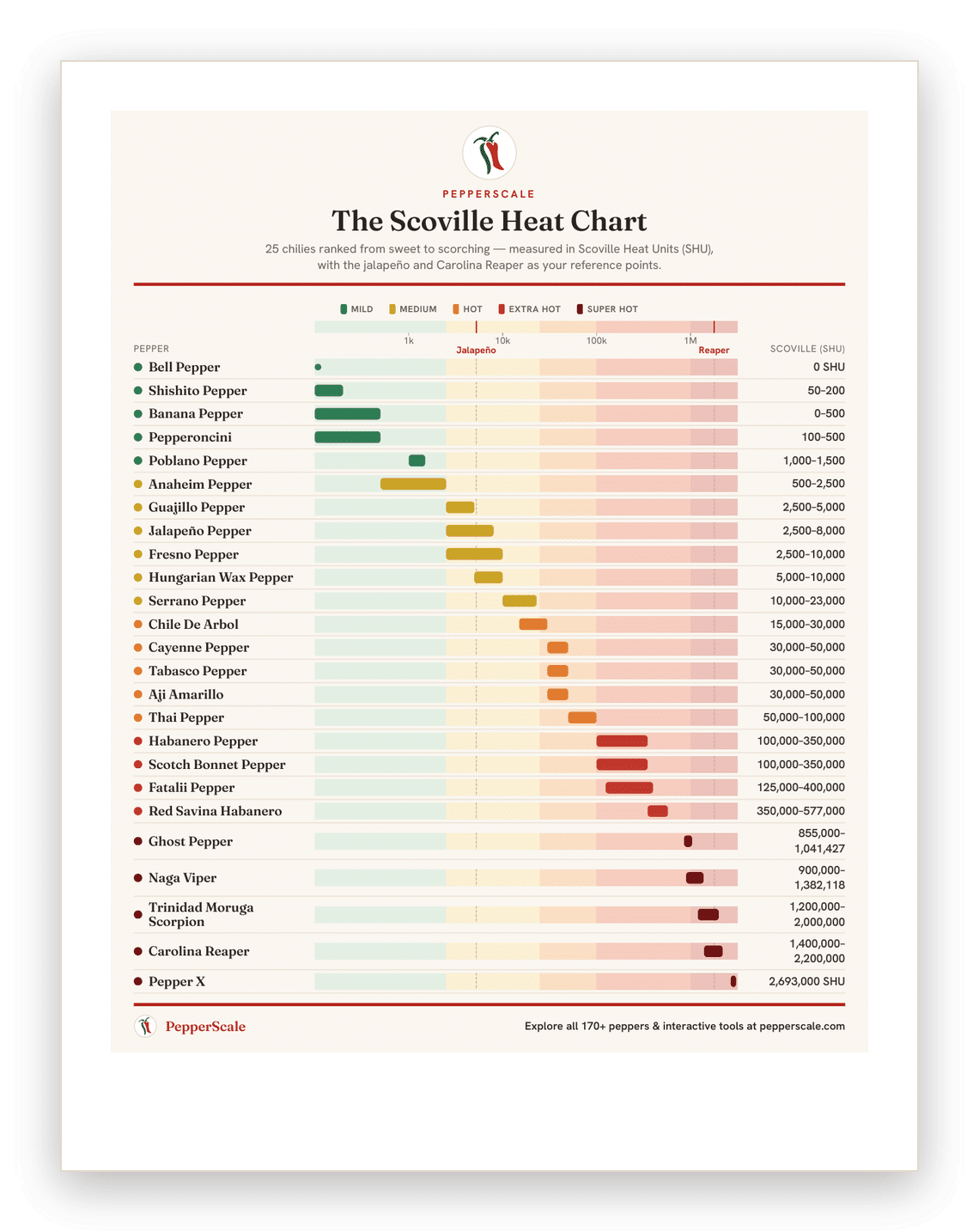
Get the free PepperScale Scoville Heat Chart
A printable, at-a-glance ranking of 25 chilies from sweet to scorching — with the jalapeño and Carolina Reaper as your reference points. Join the newsletter and we’ll send it straight to your inbox.
No spam — just Wicked Wednesday recipes and occasional extra dashes of chili pepper inspiration. Unsubscribe anytime.