Sweet peppers are peppers with little or no heat. The best-known is the bell pepper, which rates 0 Scoville heat units, but the term covers a lot more than bells. Pimientos, banana peppers, cubanelles, shishitos and a long list of heirloom frying and roasting peppers all count. Generally speaking, any pepper that isn’t hot could be considered sweet. Below, we’ll look at what makes a pepper sweet and why some have no heat at all. Then we’ll go through which peppers belong in the group and whether a sweet pepper can ever turn hot.
What makes a pepper a sweet pepper?
Sweet peppers have little to no capsaicin, which is the compound that makes chilies hot. Put a sweet pepper next to a chili and most of the difference you’ll notice is capsaicin. Bell peppers don’t have any, and the rest of the sweet group has just a trace, from 0 up to about 1,000 Scoville heat units. A jalapeño, for comparison, runs 2,500 to 8,000.
The sweetness isn’t only about sugar, though. In USDA’s data, ripe red bell peppers have about 4.2 grams of sugar per 100 grams and green ones about 2.4. But a raw jalapeño has 4.1 grams, nearly the same as a red bell. So a sweet pepper doesn’t always have more sugar than a hot one. What sets it apart is the missing heat.
So the sweet category takes in both bell types with zero capsaicin and a number of chili varieties with very little heat. That’s not to say hotter chilies can’t taste sweet (many do). It’s the combination of mild to no heat and sweetness that marks these. Many sweet peppers are also large and thick-walled, like bells and pimientos, but not all of them are. Cubanelles and shishitos have thin walls.
Why do some sweet peppers have no heat at all?
Capsaicin is made in the pepper’s placenta, the white ribs that hold the seeds, and it takes a working gene to make it. Bell peppers don’t have one. Researchers traced their missing heat to a single gene called Pun1, and a bell pepper inherits a broken copy of it from both parents, so its fruit never makes capsaicin.
That’s why a bell pepper is 0 SHU every time, no matter how it’s grown. The mildest chilies aren’t the same. Shishitos, for example, aren’t bells with a broken gene. Their low heat comes from several genes acting together, and it can shift with growing conditions, which we’ll come back to below.
Sweet peppers from other species don’t always lose their heat the same way, either. In Capsicum chinense, the habanero species, researchers have found a different broken version of the same gene in some heatless peppers.
Which peppers are sweet peppers?
There are many. Here are the sweet and near-sweet peppers you’ll find in our profiles, with their heat ranges.
| Pepper | Heat (SHU) | Species |
|---|---|---|
| Bell pepper | 0 | C. annuum |
| Carmen | 0 | C. annuum |
| Gypsy | 0 | C. annuum |
| Melrose | 0 | C. annuum |
| Peperone di Senise | 0 | C. annuum |
| Habanada | 0 | C. chinense |
| Shishito | 50 to 200 | C. annuum |
| Banana pepper | 0 to 500 | C. annuum |
| Jimmy Nardello | 0 to 500 | C. annuum |
| Trinidad Perfume | 0 to 500 | C. chinense |
| Pepperoncini | 100 to 500 | C. annuum |
| Pimiento | 100 to 500 | C. annuum |
| Ají dulce | 0 to 1,000 | C. chinense |
| Cubanelle | 100 to 1,000 | C. annuum |
| Padrón | 500 to 2,500 | C. annuum |
Below are six of the most popular.
Bell peppers (0 SHU)
Bell peppers are the best-known sweet pepper, and they’re a flat 0 SHU. You can use any bell pepper in salads or for stuffing. Green bells are unripe, while red bell peppers have gone all the way through the ripening process, and that gives them more sugar than green ones: about 4.2 grams per 100 grams against 2.4. (Here’s why bell peppers come in different colors.)
Mini sweet peppers (little to no heat)
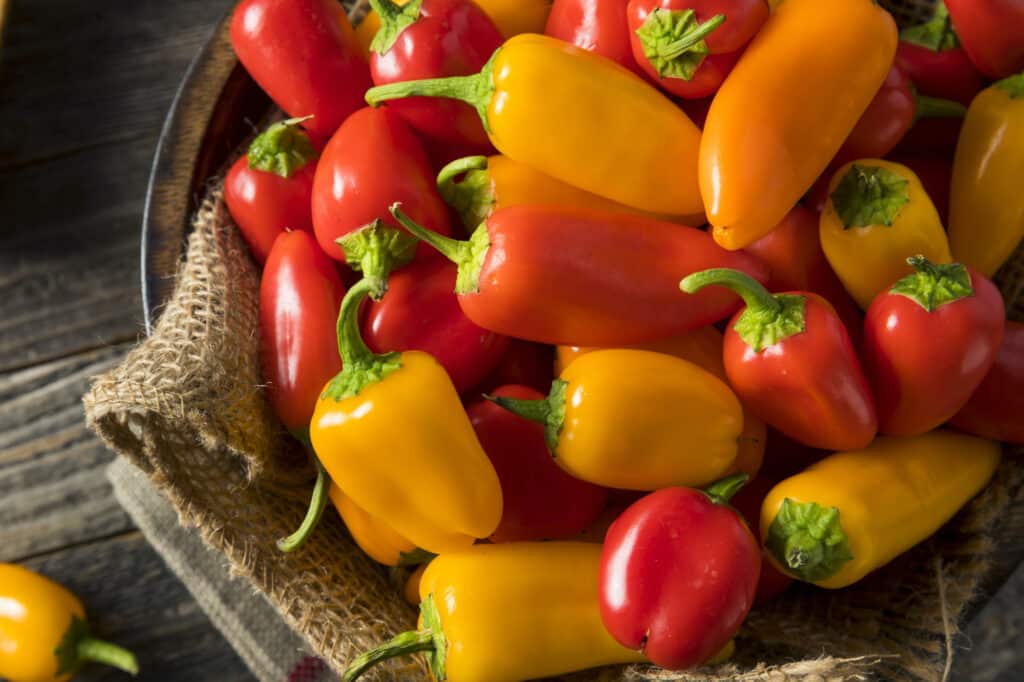
Mini sweet peppers look like tiny bells, but they aren’t just bells picked small. They’re their own type of small, mostly hybrid pepper, bred to be eaten raw as a snack. Enza Zaden, one of the seed companies behind them, described its line as selected from crosses of Hungarian sweet types and jalapeño types. You’ll usually find them in mixed bags of red, orange and yellow.
Cubanelles (100 to 1,000 SHU)
Cubanelles have relatively thin walls similar to many spicier chilies, but they’re sweet and have a flavor similar to that of bells. They’re often sold as Italian frying peppers, and the thin walls cook down quickly when you put them in a skillet.
Banana peppers (0 to 500 SHU)
The banana pepper gets its name from its long, curved shape and yellow color. Left on the plant, it ripens from yellow to orange and then red. While banana peppers look like hot Hungarian wax peppers, they’re sweeter in flavor and much milder. Hungarian wax peppers run 5,000 to 10,000 SHU, so check the label before you bite. You can use banana peppers in salads or pickle them, and they’re easy to mix up with pepperoncini, too (here’s how those two compare).
Pimientos (100 to 500 SHU)
Pimientos (also spelled pimentos) are thick-fleshed red peppers, best known as the red stuffing in green olives. They’re also the pepper in pimento cheese, and they’re mild and sweet. Just know that “pimento” can also mean allspice, which is a different spice altogether.
Shishitos (50 to 200 SHU)
Shishitos are from Japan and have a distinctive elongated shape and thin, wrinkly walls. They’re often blistered in a hot pan or on the grill, and in Japan they’re also fried as tempura. While shishito peppers are usually mild, every so often you’ll bite into a hot one. You’ll often hear that about one in ten is hot, but nobody’s measured it. Spain’s padrón peppers play the same game with a little more heat, at 500 to 2,500 SHU.
Are there sweet versions of hot peppers?
Yes. Most sweet peppers belong to Capsicum annuum, the same species as jalapeños and cayenne, but you’ll find low-heat peppers in other species too.
Habanadas are heatless habaneros, developed at Cornell University by plant breeder Michael Mazourek. You get the habanero’s fruity, floral flavor without the burn.
Ají dulce is a Capsicum chinense pepper with little to no heat. It’s popular in Puerto Rico, Venezuela and across the Caribbean, where it’s a key seasoning in sofrito. In a University of Puerto Rico study, local varieties measured just 34 to 80 SHU. Trinidad Perfume is another Caribbean pepper in the same species, at 0 to 500 SHU.
Can sweet peppers become hot?
Not this year’s peppers. All peppers can cross-pollinate, but a hot pepper growing next to your bells won’t make this season’s bells hot. The fruit on plants that weren’t kept apart stays the same, and only the seeds inside it carry the cross, as University of Illinois Extension explains.
Cross-pollination is only a problem for gardeners who plan to take seeds from their peppers to plant again the following year. Plants grown from those seeds can be a hybrid of both parents, so a bell crossed with a chili could give you bell-shaped peppers with some real heat.
That’s why seed growers keep varieties apart. Illinois Extension lists an isolation distance of 300 to 1,600 feet for peppers, and Seed Savers Exchange suggests half a mile when you’re preserving a variety. A few feet won’t do it. For home seed saving, the easier fix is to cover a few flowers with fine mesh blossom bags before they open, or cage the plant, and save seed only from those peppers.
Growing conditions are a different story. They can’t give a bell pepper heat, since it doesn’t have the working gene. But they can push up the heat in mild chilies. Japanese researchers found that shishito fruits without seeds tended to carry more capsaicinoids than normal ones, and the same study notes shishitos sometimes turn very hot depending on how they’re grown. For more on that, see how to grow hotter peppers.
Is a sweet pepper the same as a bell pepper?
Not quite. Every bell pepper is a sweet pepper, but plenty of sweet peppers aren’t bells. In everyday use the two often mean the same thing, and what you call them depends on where you live. In the UK, a bell pepper is usually just a pepper, as in a red pepper or a green pepper. In Australia, New Zealand and India, it’s a capsicum, after the genus name.
You’ll see seed catalogs use sweet pepper in the broader sense. Under that heading, they’ll usually list bells alongside frying, roasting and snacking peppers like the ones above.
Is sweet paprika made from sweet peppers?
Yes. Paprika is made from dried, ground Capsicum annuum peppers, and pimientos are one of the peppers used. The sweet kind comes from mild peppers, but paprika also comes in hotter grades, like Spanish pimentón picante. So check the label if it’s the sweet kind you’re after. There’s more in our guide to what paprika is.
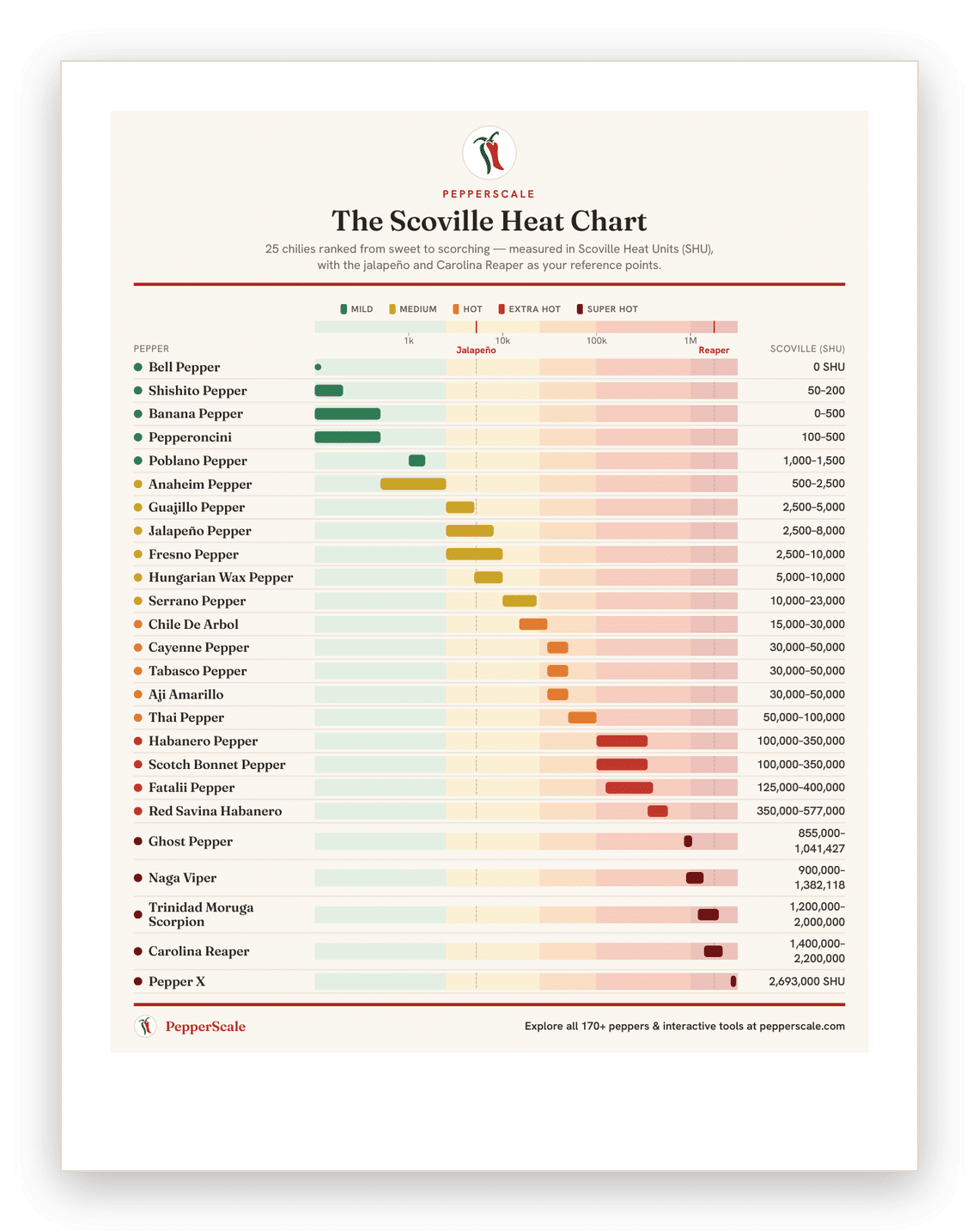
Get the free PepperScale Scoville Heat Chart
A printable, at-a-glance ranking of 25 chilies from sweet to scorching — with the jalapeño and Carolina Reaper as your reference points. Join the newsletter and we’ll send it straight to your inbox.
No spam — just Wicked Wednesday recipes and occasional extra dashes of chili pepper inspiration. Unsubscribe anytime.
Related reading
- Are Bell Peppers Spicy, Ever?: When a bell pepper can surprise you with heat, and why.
- What Is The Scoville Scale?: How pepper heat is measured, from 0 SHU bells to the superhots.
- The Hot Pepper List: More than 170 peppers you can sort by heat, flavor and how you’d use them.