A recipe tells you to add “a teaspoon of cayenne” and you freeze. Is that a pleasant warmth or a five-alarm mistake you can’t take back? It’s one of the most common stumbling blocks in a home kitchen. Cayenne is potent, it’s irreversible once it’s in the pot, and almost nobody has a real sense of what a given measure actually does to a dish.
Here’s the honest answer: a teaspoon of cayenne holds a fixed amount of heat, but how hot it makes your dish is anything but fixed. That part depends entirely on what you stir it into.
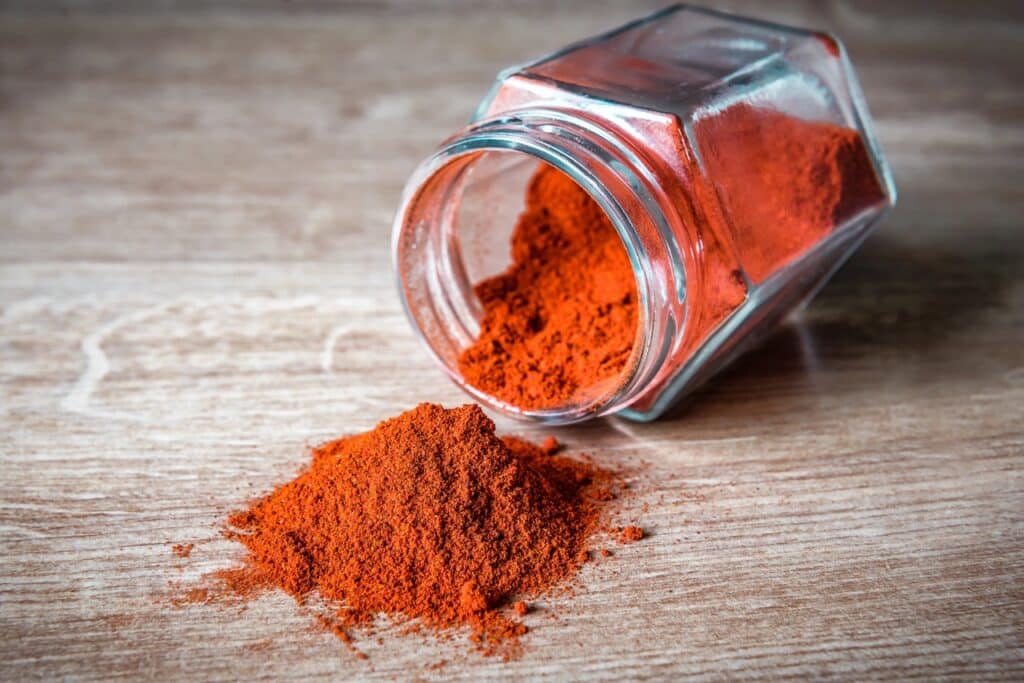
First, what’s the raw heat we’re working with?
Ground cayenne pepper sits at roughly 30,000 to 50,000 Scoville heat units (SHU). For the math below we’ll use a middle-of-the-road 40,000 SHU, which is typical for the supermarket stuff.
This is where most people go wrong. The Scoville scale measures concentration, not a total amount of heat. A 40,000 SHU rating tells you how potent the pepper material is by weight. It says nothing about how that potency spreads once you dilute it into a few pounds of food. That distinction is the whole game.
In modern lab terms, 40,000 SHU works out to about 0.25% capsaicinoids by weight. (Those are the compounds, capsaicin chief among them, that create the burn.) A level teaspoon of ground cayenne weighs roughly 1.8 grams, so one teaspoon carries only about 4.5 milligrams of actual heat compounds. That tiny payload then gets smeared across your entire dish.
How hot is a teaspoon, really?
Because heat is about concentration, the same spoonful behaves completely differently depending on how much food it has to flavor. Below is the same set of measures dropped into two scenarios: a single bowl of soup (about 350g) versus a family-sized dish serving four (about 1,400g).
| Cayenne amount | Weight | Heat compounds | In one bowl (~350g) | In a family dish (~1,400g) |
|---|---|---|---|---|
| 1 teaspoon | ~1.8 g | ~4.5 mg | ~205 SHU | ~50 SHU |
| ½ teaspoon | ~0.9 g | ~2.3 mg | ~100 SHU | ~25 SHU |
| ¼ teaspoon | ~0.45 g | ~1.1 mg | ~50 SHU | ~13 SHU |
| ⅛ teaspoon | ~0.23 g | ~0.6 mg | ~25 SHU | ~6 SHU |
Look at what happens. That “scary” teaspoon of 40,000 SHU cayenne ends up producing an effective dish heat of around 50 SHU once it’s spread through a family meal. That’s milder than a pepperoncini on the Scoville scale. Drop the same teaspoon into a single bowl and you’re up around 205 SHU, which is genuinely noticeable warmth. Same spoon, four times the kick, purely because of dilution.
So the most useful question isn’t “how much cayenne?” It’s “how much cayenne per serving?” A teaspoon in a big pot of chili for six is a gentle background hum. A teaspoon in a single skillet of eggs is a wake-up call. The spoon didn’t change. The denominator did.
For a practical starting point, about ¼ teaspoon per four servings gives most dishes a clear but friendly warmth. Scale up from there based on your crowd, and remember you can always add more on the next bite. You can’t pull it back out.
Why ground cayenne behaves nothing like a fresh pepper
A fresh cayenne pod and a jar of cayenne powder might share the same Scoville range, but they deliver heat in completely different ways. Understanding why will make you a better cook.
A fresh pepper is mostly water, with its capsaicin concentrated in the white pith and the seeds. When you chop one into a dish, the heat stays fairly localized. You get bursts. One bite lands on a piece of pepper and lights you up, and the next bite is mild. The burn is punchy and uneven, and a lot of it rides along with the pepper pieces themselves.
Drying and grinding changes everything. Removing the water concentrates the capsaicin, so gram for gram the powder is far more potent than the same weight of fresh flesh. That’s exactly why a quarter teaspoon does so much work. Grinding also shatters the pepper’s cell walls and exposes all that capsaicin to the dish. Stir it in and it disperses evenly. Instead of hot-spot bursts, you get a uniform, all-over warmth where every single bite carries the same heat.
There’s a chemistry reason the powder spreads so thoroughly. Capsaicin is fat- and alcohol-soluble, not water-soluble. In a dish with any oil or fat, the cayenne’s capsaicin dissolves into that fat and travels everywhere the fat goes, coating the whole dish. It’s also why blooming cayenne in hot oil at the start of cooking gives you a rounder, more integrated heat than dumping it into a watery broth at the end. The fat acts as a delivery vehicle.
So when you swap fresh peppers for cayenne powder, or the other way around, you aren’t just adjusting the heat level. You’re changing the texture of the heat, from sharp and sporadic to smooth and pervasive.
The second-day problem: why leftovers bite harder
You make a perfectly balanced pot of chili, eat a bowl, and refrigerate the rest. The next day it tastes noticeably hotter, and you didn’t add a thing. What happened?
Two things, working together.
The heat keeps spreading. Capsaicin doesn’t break down in the fridge. As the dish rests overnight, the capsaicin keeps migrating through the fats and liquids, distributing more completely than it did during the rush of cooking. More of every bite ends up carrying heat. The total amount of capsaicin hasn’t changed. It’s just more thoroughly woven through the dish.
The competing flavors fade. On day one, bright aromatics, fresh herbs, and volatile sweet and savory notes partially mask the burn by giving your palate other things to notice. As a dish sits, a lot of those delicate compounds dissipate or mellow. The capsaicin, stubborn and stable, stays exactly where it was. With less to distract from it, the heat steps forward and takes over.
The practical takeaway is simple. If you’re cooking something you plan to eat as leftovers, go a little light on the cayenne the first day. What feels just right out of the pot can edge into “too much” by tomorrow. That goes double for stews, curries, chilis, and braises, the long-simmering, fat-rich dishes where cayenne has both the time and the fat it needs to fully come into its own.
A quick field guide to using cayenne well
Think in heat per serving, not in absolute spoonfuls. Dish size is the hidden variable that decides whether a teaspoon is mild or fierce. Bloom your cayenne in oil or fat early in the cook for smooth, even warmth, or add it later for a sharper edge. Build gradually and taste as you go, because cayenne only forgives you in one direction. And when you’re cooking ahead, leave a little room, since the dish you season today will be hotter than the dish you eat tomorrow.
Cayenne isn’t unpredictable once you understand it. It just rewards cooks who think in concentrations instead of spoonfuls.
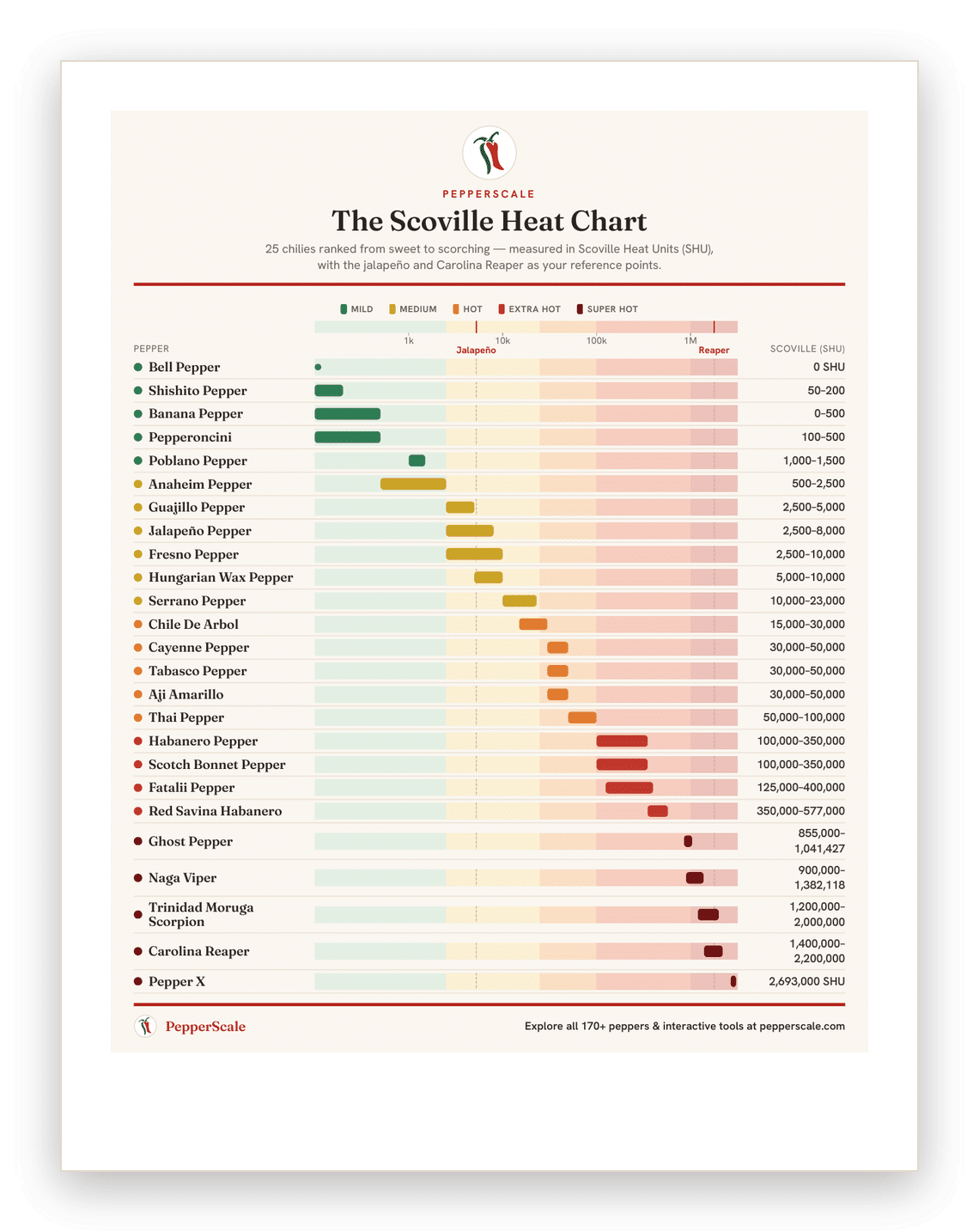
Get the free PepperScale Scoville Heat Chart
A printable, at-a-glance ranking of 25 chilies from sweet to scorching — with the jalapeño and Carolina Reaper as your reference points. Join the newsletter and we’ll send it straight to your inbox.
No spam — just Wicked Wednesday recipes and occasional extra dashes of chili pepper inspiration. Unsubscribe anytime.
Related reading
- The Hot Pepper List: We profile 170+ chili peppers, both culinary and ornamental, covering heat, flavor, pairings, and more.
- Too Much Cayenne? Let’s Fix The Dish: Many of the principles here play into how to salvage a heavy hand.
- Crushed Red Pepper Vs. Cayenne: Both have secured places on the spice rack, but how do they differ?