Most of us pick between grinding and chopping a dried chili based on what’s already sitting in the kitchen drawer. Got a spice grinder? Grind it. Got a sharp knife and ten minutes? Chop it. And that’s fine. Both will get heat and flavor into your food. But treating it as a convenience question misses something: the way you break down a dried pepper is one of the biggest levers you have over how a dish tastes. Same chili, two roads, two very different results on the plate.
Here’s what’s going on, and how to use it.
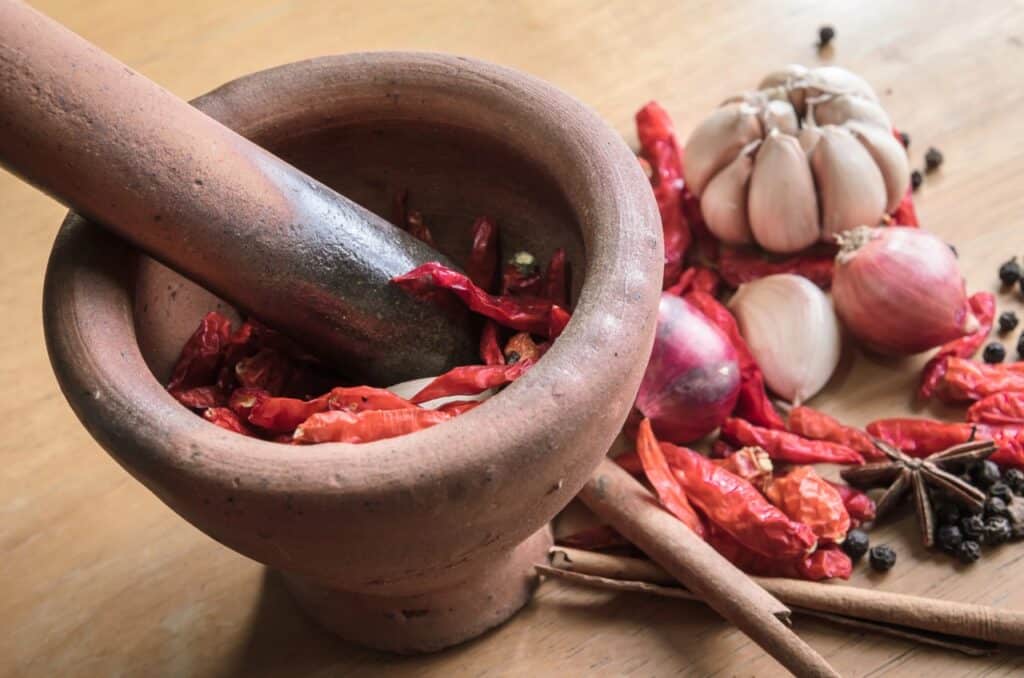
It all comes down to surface area (and where the heat lives)
Capsaicin — the compound responsible for chili heat — isn’t spread evenly through a pepper. It’s concentrated in the placenta, the pale, pithy tissue that the seeds cling to. (The seeds themselves are mostly innocent bystanders; they pick up heat by sitting next to the source, which is why “remove the seeds” is really shorthand for “remove the pith too.”) Flavor, meanwhile, lives largely in the flesh and skin, along with the aromatic oils that give each chili its character.
When you chop a dried chili, you create relatively large pieces — say, quarter-inch flakes. Most of the capsaicin and aromatic oil stays locked inside those pieces, with only the cut edges exposed. When you grind, you’re shattering the whole thing into particles a fraction of a millimeter across, and suddenly nearly all of that interior is exposed to the air, the oil, and the liquid in your dish.
The difference isn’t small. Drop your particle size from a quarter-inch flake down to a fine powder and you increase the exposed surface area by something like twenty-five times. That’s twenty-five times more capsaicin and flavor compound ready to release on contact. It’s the same reason freshly ground coffee hits harder than whole beans, and it drives almost everything that follows.
What grinding does
Grinding front-loads everything. Because so much surface area is exposed, the heat releases fast and releases completely — capsaicin is fat-soluble, so it dissolves readily into the oil and fat in your pan and spreads evenly through the whole dish. The result is a smooth, uniform background heat with no hot spots. Bite to bite, it’s consistent.
The aromatic side gets the same treatment. All those volatile flavor oils are exposed at once, which is why a fresh grind smells so loud. The catch is that “all at once” also means “starting to fade immediately.” Ground chili loses its punch noticeably within a few months, where whole pods hold for a year or more. Grind what you’ll use soon.
Grinding also makes a chili easy to hide, for better and for worse. A teaspoon of fine cayenne disappears into a sauce and you’d never spot it, but you’ll feel it. That’s a gift when you want seamless heat, and a trap when you’ve got a heavy hand.
What chopping does
Chopping does the opposite. The heat and flavor stay mostly trapped inside each piece and leach out slowly as the chili cooks and rehydrates. In a long braise that’s perfect — the pieces have time to soften and surrender what they’ve got. In a quick dish, they may never fully give up the goods, which can be exactly what you want or a missed opportunity depending on your goal.
The signature of chopped chili is the pocket. Heat and flavor aren’t uniform; they’re concentrated in bites. You’ll hit a soft, smoky piece of chipotle and get a burst, then a few mild forkfuls, then another burst. For some dishes that unpredictability is the whole charm. For others it’s a flaw. Chopped pieces also bring texture and visible flecks that a powder can’t.
And because most of the chili stays sealed inside larger pieces until you use it, chopped or torn chilies keep their character a bit longer than ground. Though once you’ve cut them, the clock starts.
Three chilies, two ways
This is where it gets fun, because the grind-or-chop decision matters differently depending on what you’re working with.
Ancho (a dried poblano) is the gentle giant — somewhere around 1,000 to 1,500 Scoville heat units, which is barely a tickle. Nobody cooks with ancho for the burn. They cook with it for the deep, sweet flavor: raisin, prune, a little dried fig, a whisper of chocolate and coffee. Because the heat is a non-issue, your prep decision is purely about flavor delivery. Ground ancho gives you that fruity-bitter sweetness woven evenly through a rub or a pot of beans. But ancho is one I love to chop or tear and rehydrate, then blend into a sauce or mole, because soaking the pieces preserves more of that round, jammy body — grinding it can leave you somewhere drier and brighter, and you lose a little of the fruit. With ancho, low heat means you’ve got total freedom to chase the flavor.
Chipotle (a smoked, dried jalapeño) sits in the medium range, roughly 2,500 to 8,000 SHU, and its calling card is smoke. Here’s the thing about smoke: those smoky compounds behave like the volatile aromatics they are, so grinding releases them fast and spreads them everywhere. Ground chipotle lays an even sheet of smoke and warmth across a dish — terrific in a dry rub or stirred into a pot of pintos. Chop a chipotle instead (or pull one out of a can of adobo and dice it) and you get the opposite: concentrated smoky-hot bombs scattered through the food, each one a little event. I’ll grind chipotle when I want it to be the background music and chop it when I want it to be the solo.
Cayenne is the one where prep really moves the heat needle, because at 30,000 to 50,000 SHU it’s got serious firepower and not much else — clean, sharp heat with a faint grassy, slightly sour edge and very little flavor body. With cayenne, you’re mostly managing burn. Ground cayenne is the standard for a reason: a small, even dose of pure heat that melts invisibly into a dish. It’s also the easiest of the three to overshoot, so measure. Chopped or crushed cayenne (think along the lines of crushed red pepper) gives you a slower, pocketed heat that builds as you eat and brings a little crunch. If you want heat you can feel arriving rather than heat that’s just there, crush it instead of grinding it.
Why this matters for the whole dish
Step back and the real decision is about heat balance — how the burn is distributed across what you’re serving.
Ground chili gives you integrated heat. It becomes part of the base: evenly spread, predictable, and easy to dial in by the teaspoon. If you’re building a sauce, a chili, a marinade, a rub — anywhere you want every bite to taste the same — grinding is your friend.
Chopped chili gives you pocketed heat. The burn lives in discrete pieces, so the experience changes bite to bite and tends to build over a meal as those pieces release. If you want texture, surprise, and a dish with some peaks and valleys — a chunky salsa, a brothy pozole, a rustic stew where you’ll fish out the pieces or eat around them — chopping delivers something grinding never can.
One myth worth killing while we’re here: heat doesn’t “cook off.” Capsaicin is remarkably heat-stable and doesn’t break down at any temperature you’ll reach in a normal kitchen. What changes during cooking isn’t the amount of heat, it’s how much of it gets extracted and how evenly it spreads. That’s a prep-and-technique story, not a temperature one.
Making it work in your kitchen
A few practical notes, whichever route you take.
Toast first. A quick stint in a dry skillet — thirty seconds or so a side, just until fragrant and slightly puffed — wakes up the aromatic oils in any dried chili before you grind or chop it. Watch it like a hawk, though; scorched chili turns bitter and acrid in seconds, and there’s no saving it.
For grinding, stem and (usually) seed the toasted chilies, tear them into pieces, and run them through a dedicated spice grinder or a mortar and pestle. Store the powder airtight, away from light and heat, and use it within a few months for full impact. If you want maximum heat and flavor extraction, bloom the powder in a little warm oil before you add the rest of your ingredients. Since capsaicin and a lot of the flavor compounds are fat-soluble, the oil pulls them out and carries them through the dish.
For chopping, kitchen shears are easier than a knife on leathery dried pods. Snip them straight into pieces. If you’re after a softer result for a sauce or stew, rehydrate the chopped pieces in hot water for fifteen or twenty minutes first. And keep whole pods whole until you need them; they hold their flavor far longer in the pantry than anything you’ve already broken down.
So which one?
My rule of thumb: grind when I want the chili woven invisibly and evenly through everything, chop when I want it to show up as texture, surprise, and pockets of flavor. With a flavor-first, low-heat chili like ancho, I lean toward chopping and rehydrating to protect the fruit. With a smoke bomb like chipotle, I let the dish decide — even smoke or smoky bursts. And with a heat engine like cayenne, I grind for clean control and crush when I want the burn to build.
Same pepper, two roads. Now you know where each one leads.
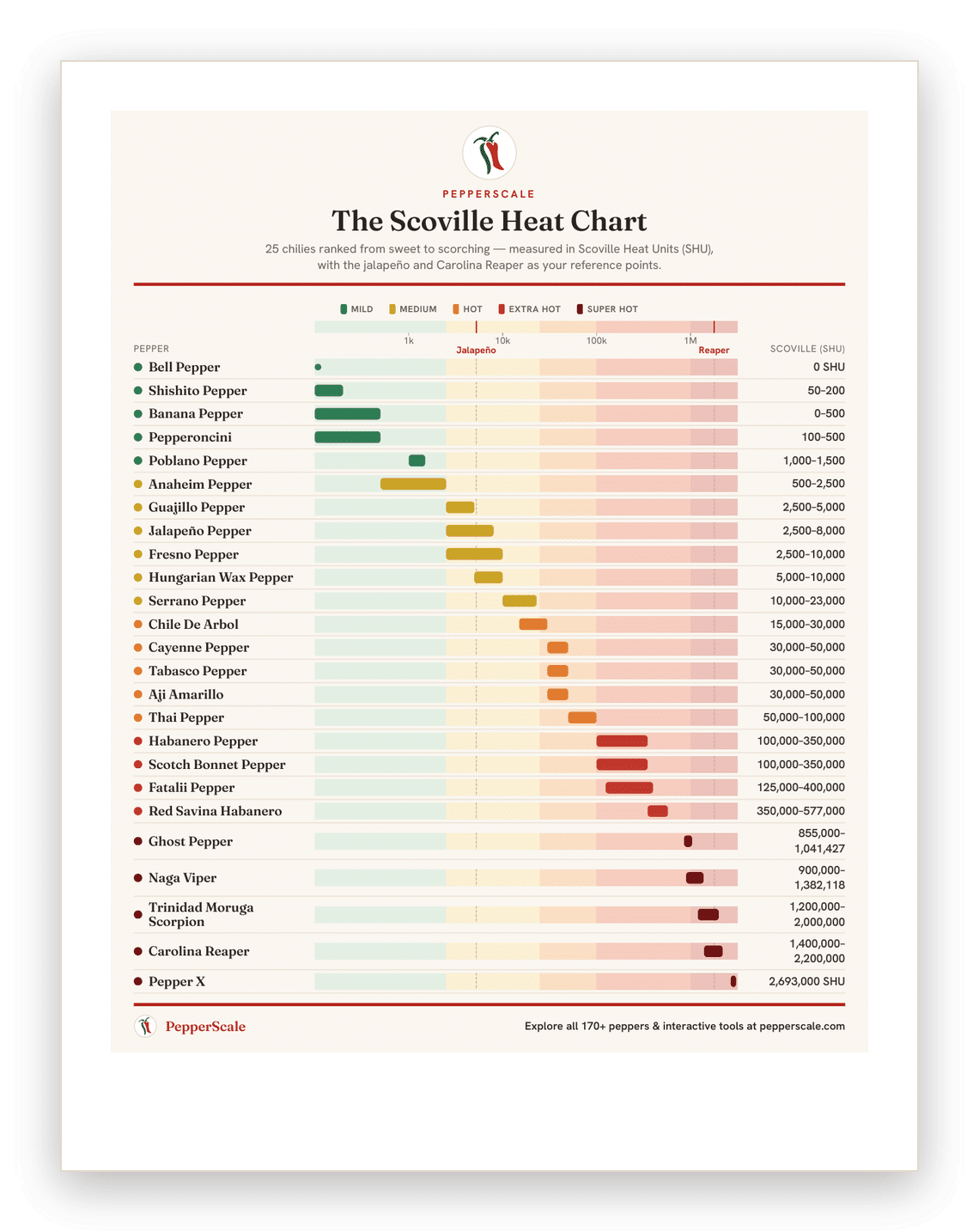
Get the free PepperScale Scoville Heat Chart
A printable, at-a-glance ranking of 25 chilies from sweet to scorching — with the jalapeño and Carolina Reaper as your reference points. Join the newsletter and we’ll send it straight to your inbox.
No spam — just Wicked Wednesday recipes and occasional extra dashes of chili pepper inspiration. Unsubscribe anytime.
Related reading
- How Much Cayenne Should You Use? Is a tablespoon too much? Too little? There are many things to consider.
- Are Dried Peppers Hotter Than Fresh? What really happens to heat when water is removed?
- How Long Do Dried Peppers Last? We dive into the shelf life you should expect.