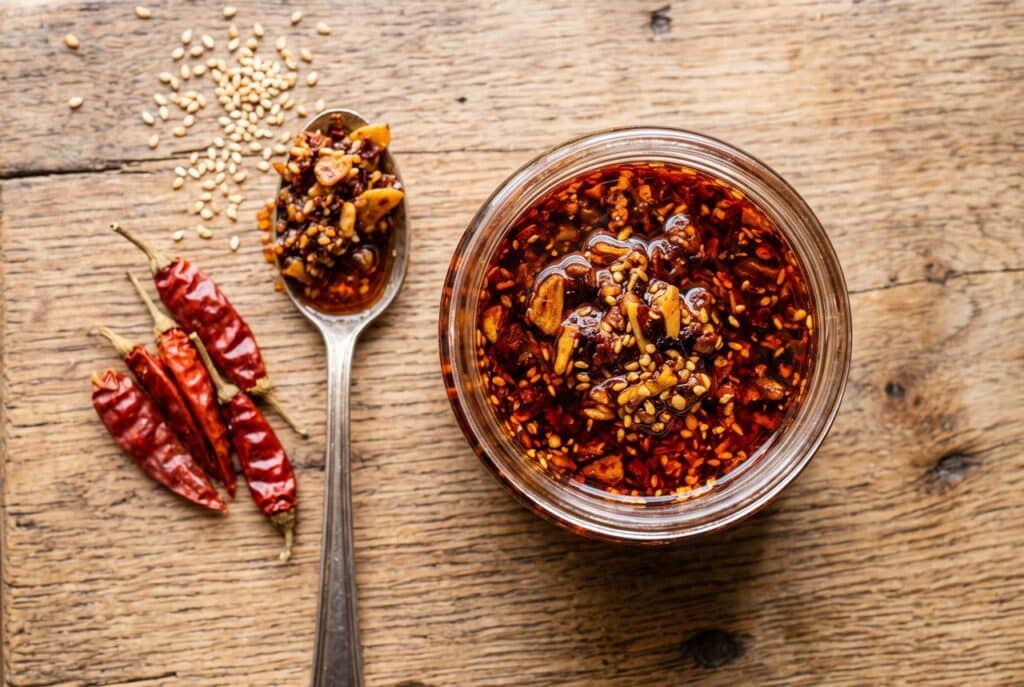
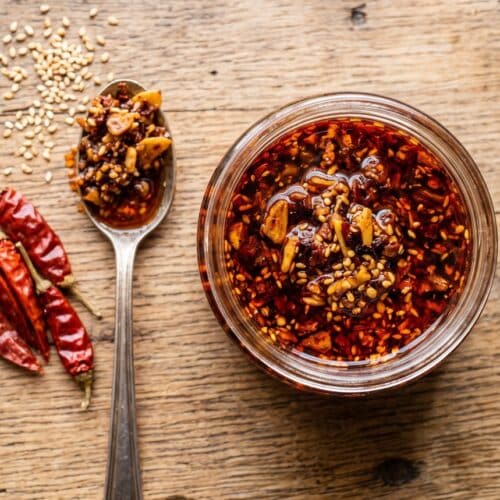
A jar of chili crisp earns its spot in the fridge fast. It’s the condiment that makes you rethink what a spoonful of oil can do: crunchy fried garlic and shallots, a slow numbing tingle from Sichuan peppercorn, deep savory chili heat, and just enough salt and sugar to keep you reaching for more. The jarred versions are great, but this homemade one beats them easily, because you control the heat, you get far more of the crunchy bits, and it all comes together in under an hour. Spoon it over a fried egg once and you’ll start putting it on everything.
🌶️ Quick Recipe Snapshot
| Flavor Profile | Savory and toasty up front, with layered chili warmth, nutty crunch, and a bright, citrusy tingle from Sichuan peppercorn |
| Primary Heat Source | Dried red chili flakes (mild gochugaru for body, chile de árbol for the bite) |
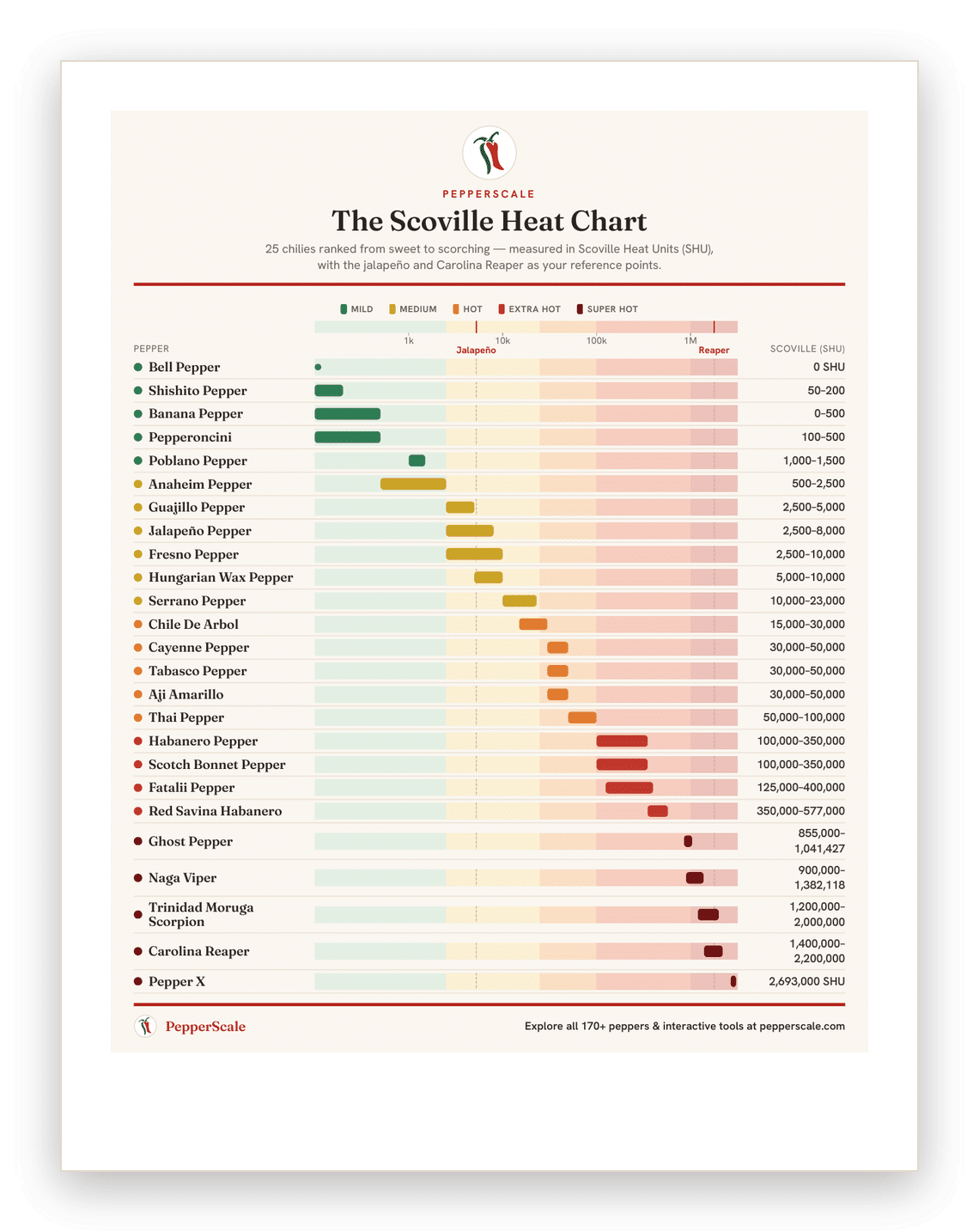
| Heat Level | Medium as written. The heat comes from dried chile de árbol (roughly 15,000 to 30,000 SHU) cut with mild gochugaru, and because it’s carried in oil rather than water, it arrives rounded and in step with the flavor instead of as a sharp, detached burn |
| Texture | Crunchy fried garlic and shallots suspended in a glossy, spoonable chili oil |
| Best Uses | Eggs, noodles, rice, dumplings, roasted vegetables, grilled meats, even a scoop of vanilla ice cream |
| Customization Ideas | Scale the chili blend up or down for heat; skip the Sichuan peppercorn or fermented black beans if you can’t find them |
Flavor Notes
Chili crisp works because of what it’s built on, which is oil. A chili’s deepest flavors are oil-loving: the toasty, nutty, faintly sweet notes that water can’t pull out. That’s the real difference between a chili oil and a water-based hot sauce. Frying the garlic, shallots, and whole spices, then blooming the chili flakes in that hot oil, dissolves all of it into a fat that goes on to coat whatever you spoon it over. The same oil suspends the crunchy solids that give chili crisp its name. Chili oil is smooth; chili crisp carries the crunch. You’ll see the same thing sold as “chili crunch.”
Taste a good one and you’ll notice it works in layers. There’s a deep savory floor from the fermented black beans, soy, and toasted sesame, an aromatic heart of dried chili and fried garlic and shallots, and a bright spark on top from the Sichuan peppercorn. That top note isn’t heat at all. It’s a citrusy, buzzing, gently numbing tingle, and it’s what makes real chili crisp feel alive on the tongue. Leave it out if you must and you’ll still have a great crisp, just without the spark.
The chili itself works best as two peppers, not one. A mild, coarse flake like Korean gochugaru or Sichuan chili flakes carries the color and fruity body without much heat, while a smaller hit of crushed chile de árbol brings the actual bite. One thing matters more than any measurement: bloom the flakes in oil that’s hot but not smoking. Scorched chili turns acrid in a way you can’t undo, so you want the oil hot enough to toast the flakes and release their flavor, never hot enough to burn them.
Adaptation Ideas
- Make it hotter: Bump the chile de árbol to ¼ cup, or stir a pinch of ground cayenne or a superhot chili powder into the base. For a real kick, add a little ground ghost or scorpion pepper.
- Make it milder: Drop the hot flakes to 1 tablespoon and lean on the gochugaru, which is mild on its own.
- No Sichuan peppercorn? Leave it out. You lose the signature tingle but still get a great crisp.
- Keep it pantry-simple: Skip the fermented black beans and whole spices. Garlic, shallot, and the two-chili blend still make something you’ll fight over.
Serving Ideas
This is a spoon-it-on-everything condiment. A few places to start:
- On a fried or jammy egg: The classic first bite, and the one that gets people hooked.
- Through noodles or fried rice: A spoonful stirred in at the end does more than any sauce.
- Over dumplings or steamed fish: Crunch and heat where you’d usually just reach for soy.
- On roasted vegetables or grilled meat: Brushed on in the last minute for a savory, spicy finish.
- Over vanilla ice cream: Sweet, salty, hot, and crunchy all at once, and better than it sounds.
- Mind the temperature: On piping-hot food the heat reads louder, since warmth and chili heat hit your senses together. Spooned over something cool or room temperature, the aroma and flavor land first and the heat blooms slowly behind. It’s an easy way to steer how fiery a bite feels.
Storage Notes
Store your chili crisp in a clean, airtight jar in the refrigerator, and always serve it with a clean, dry spoon. Kept cold with the solids submerged under the oil, it holds its flavor for about a month. One thing worth taking seriously: because this crisp contains fresh garlic and aromatics cooked in oil, it belongs in the fridge and not on the counter. Garlic held in oil at room temperature can, over time, create conditions for botulism, a rare but serious risk, so keep the jar cold and enjoy it within the month.
Like This Recipe? You’ll Love These Too:
- Easy Homemade Gochujang: A no-fermentation take on the Korean chili paste, ready in an afternoon.
- Homemade Crushed Red Pepper: Make your own chili flakes, with full control over the heat and freshness.
- Spicy “Hot” Honey: The sweet-heat drizzle that belongs on pizza, fried chicken, and biscuits.
50 quick, bold sauces and salsas: classic salsas and fun twists, BBQ sauces with a kick, and dippers with bang. Simple to make, big on flavor.
Wicked Wednesday subscribers save 15% — join free.
Homemade Chili Crisp
Ingredients
Oil and aromatics
- 2 cups neutral high-heat oil avocado, peanut, canola, vegetable, or grapeseed; not olive or toasted sesame
- 10 garlic cloves thinly sliced
- 1 medium shallot thinly sliced (about ⅓ cup)
- 1 2-inch piece fresh ginger, sliced into coins
- 2 star anise pods
- 1 2-inch piece cassia bark or 1 small cinnamon stick
- 2 bay leaves optional
Chili and spice base
- ¾ cup coarse gochugaru or Sichuan chili flakes mild, for body and color
- 3 tablespoons crushed chile de árbol or crushed red pepper flakes for the heat
- 2 teaspoons ground Sichuan peppercorn optional, for the numbing tingle
- 1 tablespoon toasted sesame seeds
- 2 teaspoons sugar
- 1½ teaspoons kosher salt
- ¼ teaspoon MSG optional
To finish
- 2 tablespoons fermented black beans douchi, rinsed and roughly chopped (optional, for deep umami)
- 2 tablespoons soy sauce
- 1 teaspoon toasted sesame oil
- 3 tablespoons roasted peanuts roughly chopped (optional)
Instructions
- In a large heatproof bowl (ceramic or metal, not thin glass), stir together the gochugaru, árbol flakes, Sichuan peppercorn, sesame seeds, sugar, salt, and MSG. Use a bowl with plenty of headroom, since the oil foams up when it hits the flakes. Set a fine-mesh strainer and a paper-towel-lined plate nearby.
- Combine the oil and sliced garlic in a saucepan over medium-low heat. Bring to a gentle sizzle and cook, stirring often, until the garlic is pale gold, about 6 to 10 minutes. Scoop it out onto the paper towels; it crisps as it cools.
- Add the shallot to the same oil and fry until golden brown, about 5 to 8 minutes. Scoop it out to join the garlic.
- Add the ginger, star anise, cassia, and bay to the oil. Raise the heat to medium and let it all sizzle gently until very fragrant and the ginger looks dry and lightly browned, about 5 to 8 minutes. Fish out and discard the whole aromatics.
- Bring the infused oil up to hot but not smoking, around 350°F. Carefully pour about a third of it over the chili mixture, stirring as it crackles and foams. Wait 30 seconds, then pour in the rest and stir well.
- Stir in the fermented black beans, soy sauce, and sesame oil, then fold in the reserved fried garlic and shallot along with the peanuts. Taste carefully and adjust salt or sugar.
- Let it cool completely, then transfer to a clean jar. It’s ready right away, but better after a night in the fridge.
Notes
- Don’t walk away from the garlic. It goes from gold to burnt quickly and keeps cooking off the heat, and burnt garlic turns the whole batch bitter. Pull it at pale gold.
- Mind the oil temperature at the bloom. Too cool and the flakes taste raw; too hot and they scorch. Hot but not smoking is the target, and pouring in two stages gives you the toasty edge without burning anything.
- Give it a day if you can. The flavor settles and deepens overnight.
Keep the solids submerged under the oil in the jar. If they poke above the surface, stir in a little more warm neutral oil to cover. - Heat and swaps: see Adaptation Ideas above for hotter, milder, and pantry-simple versions.