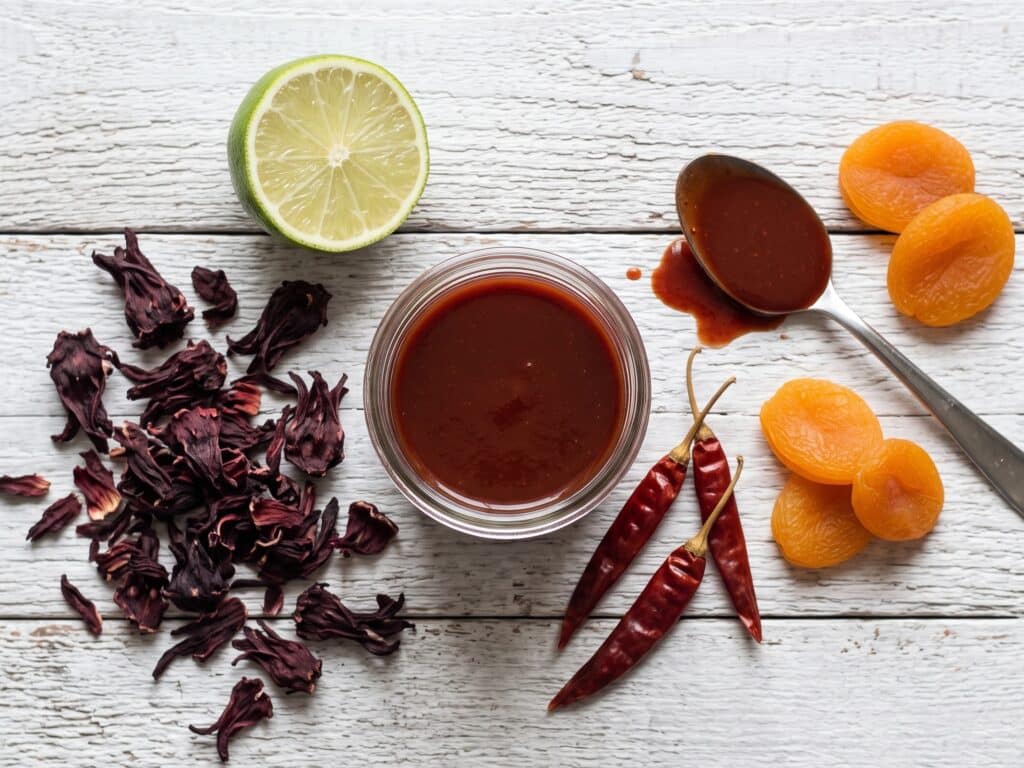
Chamoy is the sweet, sour, salty, mildly spicy sauce that ends up on fruit cups, mangonadas, shaved ice, and the rim of a michelada. And homemade versions nearly all start the same way: dried apricots and dried hibiscus simmered down with chilies until the whole thing turns deep red. That fruit base is what sets it apart from the thinner, more vinegar-forward bottled sauces. This one leans salty and sour rather than candy-sweet, which is the direction chamoy is supposed to go, and it needs about forty minutes, most of it a pot simmering on its own.
🌶️ Quick recipe snapshot
| Flavor Profile | Sweet-tart apricot with a hard sour edge from hibiscus and lime, and enough salt to make it read as a condiment rather than a jam |
| Primary Heat Source | Chile de árbol |
| Heat Level | Mild by design. Four árbol pods across two cups of sauce is background warmth, not a hot sauce |
| Texture | Smooth and pourable after straining, roughly like a thin syrup. Thickens as it cools |
| Best Uses | Fresh fruit, mangonadas, shaved ice, drink rims, gummy candy |
| Customization Ideas | More árbol for real heat, tamarind or dried mango in the fruit base, less water for a thick paste |
Flavor notes
Chamoy is one of the few sauces that runs four flavors at full volume at the same time. Sweet, sour, salty, spicy, and none of them gets to be the quiet one. That balance is the whole point, and it’s also the thing many homemade versions miss, usually by going too sweet and too timid with the salt.
The apricots carry the sweetness and most of the body. Dried apricots concentrate down to something jammy, and once they simmer soft and go through a blender they give the sauce enough thickness that you don’t need a thickener. Hibiscus, sold as jamaica in Mexican groceries, is doing three jobs: it deepens the color to that dark red chamoy is known for, it brings a sharp tartness that reads more like cranberry than citrus, and it adds a faint astringency that keeps the fruit from turning cloying. Steep it too long and that astringency takes over, which is why it goes into the pot late rather than at the start.
Then there are two kinds of sour stacked on top of each other. Fresh lime is the aromatic one, bright and immediate, and it goes in off the heat so it stays that way. Citric acid, if you use it, is the flat sustained sourness underneath that keeps the sauce puckering after the lime has faded. It’s optional, but it’s the closest thing to a shortcut to the bottled stuff’s staying power.
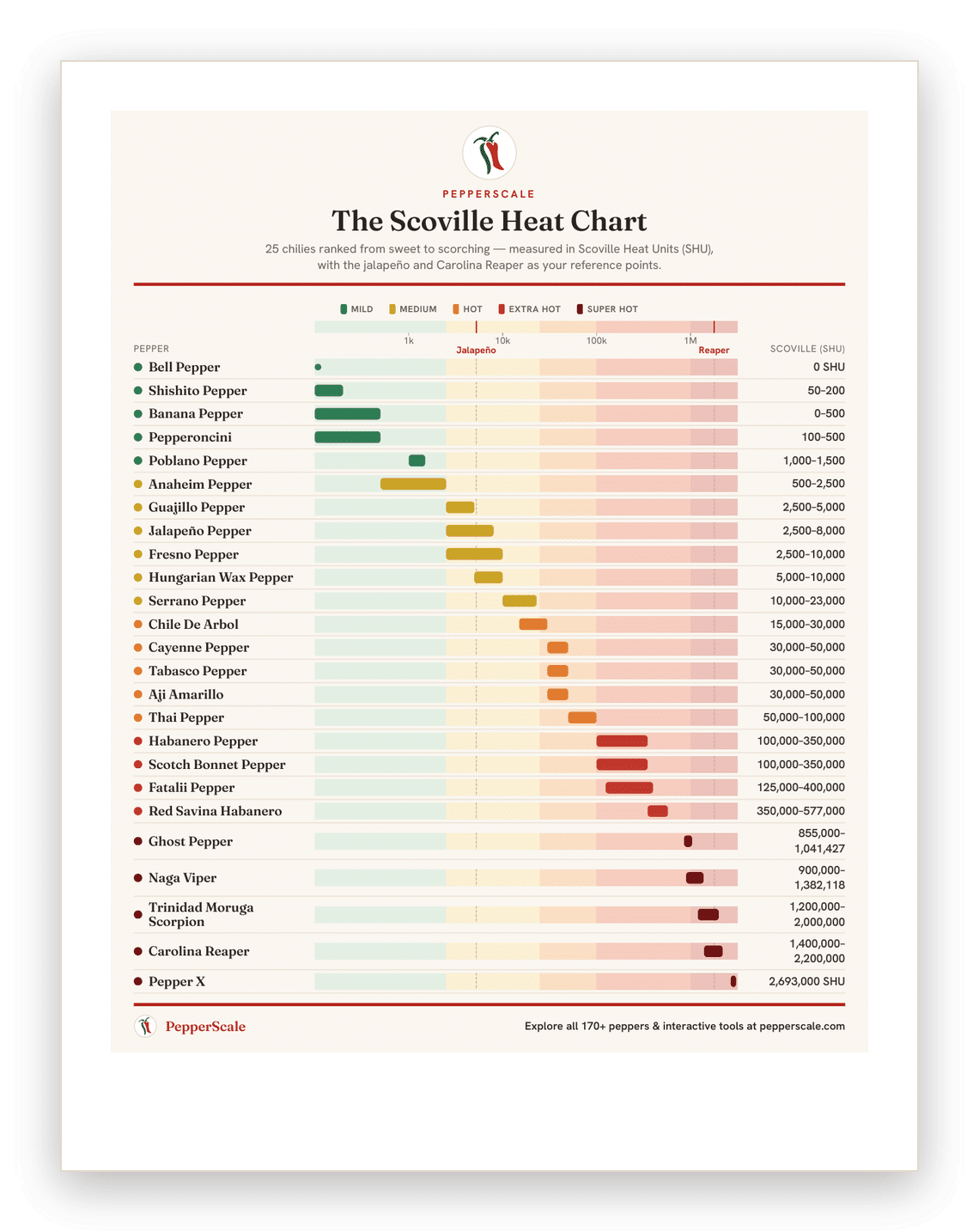
Heat is arguably the smallest part of the picture. Chiles de árbol run 15,000 to 30,000 Scoville heat units on their own, but four pods spread across two cups of finished sauce is a long way from that. What you get is warmth that arrives late, after the sour has already landed. Árbol is the right chili for it, too, since it’s clean and sharp with none of the smoke or raisin sweetness a dried ancho or chipotle would bring.
Adaptation ideas
- Turn up the heat: Six to eight chiles de árbol instead of four moves this from background warmth to a sauce that noticeably bites, which is much closer to how street versions in Mexico tend to run. Leave the seeds in rather than adding more pods if you want a smaller step up.
- Push it sweeter or drier: A quarter cup of sugar is the starting point, not the ceiling. Candy-shop chamoy runs considerably sweeter, so add another two tablespoons at a time and taste. Going the other way, cut the sugar to two tablespoons and lean harder on the lime for a sharper sauce that suits savory food better.
- Change the fruit base: Prunes deepen it and add a darker, almost molasses-like note. Dried mango pushes it tropical. Tamarind paste, a tablespoon or two stirred in at the end, adds its own sourness and is a common addition. Swap any of these in for up to half the apricots rather than adding them on top, or the sauce gets too thick.
- Make it a paste instead of a sauce: Skip the last addition of water and reduce a few minutes longer. You end up with something thick enough to smear inside a glass or coat a rim, which pours badly but sticks beautifully.
- Leave out the citric acid: It isn’t traditional in every household version, and the sauce works without it. You’ll want another tablespoon of lime if you skip it.
Serving ideas
Chamoy is a topping first and an ingredient second, and the classic uses are all about putting sour and salty against something sweet:
- Pour it over fresh fruit: Mango, pineapple, watermelon, jicama, and cucumber all work. Cut them into spears, hit them with chamoy, then dust with a chili-lime seasoning like Tajín on top.
- Build a mangonada: Blend frozen mango into a thick slush, then layer it into a glass alternating with chamoy so it streaks through. A tamarind straw and a chili-lime rim finish it.
- Rim a glass: Wipe chamoy around the rim, roll it in chili-lime seasoning, and use it for micheladas, palomas, or straight beer with lime.
- Drizzle it over shaved ice: Raspados take chamoy the same way they take syrup, and the salt keeps a very sweet ice from going flat.
- Dress up candy: Gummy worms and gummy bears tossed in chamoy and chili-lime seasoning are a whole category of Mexican candy on their own, and homemade chamoy makes a better version than the pre-coated bags.
- Use it as a glaze: Brushed onto grilled chicken or shrimp in the last minute or two of cooking, it behaves like a sweet-sour barbecue glaze. Any earlier and the sugar burns.
Storage notes
Keep chamoy in a sealed jar in the refrigerator, where it holds for about a month. It freezes well for up to six months, and freezing it in an ice cube tray is the practical move since you rarely want more than a few tablespoons at once. Expect it to thicken noticeably as it chills, so judge the consistency after it’s cold rather than while it’s still warm, and thin it with water a tablespoon at a time if it sets up firmer than you want.
This is a refrigerator sauce, not a canning recipe. The acidity here has not been tested against a canning standard, and fruit purées are exactly the kind of low-acid, dense product where guessing goes wrong, so do not water-bath process it and do not store it at room temperature. If a jar smells fermented, looks fizzy, or shows any mold, throw it out rather than scraping and tasting.
Like this recipe? You’ll love these too:
- Mango With Chili Powder: The simplest version of the sweet-fruit-plus-chili idea chamoy is built on, and a good place to start if you’re new to it.
- Homemade Chili Lime Seasoning: Our own blend rather than a Tajín copycat, and making it yourself means you set the salt level in everything you dust it over.
- Mango Habanero Jam: Another fruit-and-chili preserve, sweeter and considerably hotter, and excellent on a cheese board.
50 quick, bold sauces and salsas: classic salsas and fun twists, BBQ sauces with a kick, and dippers with bang. Simple to make, big on flavor.
Wicked Wednesday subscribers save 15% — join free.
Homemade Chamoy
Ingredients
- 2 cups water
- 1 cup dried apricots about 5 ounces
- 4 dried chiles de árbol stems removed
- ⅓ cup dried hibiscus flowers jamaica, about ½ ounce
- ¼ cup granulated sugar plus more to taste
- 1 teaspoon fine sea salt or table salt use 2 teaspoons if measuring coarse kosher salt
- 2 tablespoons chili-lime seasoning such as Tajín
- ½ teaspoon citric acid optional
- ¼ cup fresh lime juice about 2 limes
Instructions
- Combine the water, dried apricots, and chiles de árbol in a small saucepan. Bring to a boil, then reduce to a low simmer and cook for 15 minutes.
- Rinse the dried hibiscus under cold water to wash out any grit, then add it to the pan. Simmer for 10 minutes more, until the apricots are very soft and the liquid has turned deep red. Remove from the heat and let it cool for 10 to 15 minutes.
- Transfer everything, liquid included, to a blender. Blend for 60 to 90 seconds, until as smooth as it will go.
- Set a fine-mesh strainer over the saucepan and pour the purée through it, pressing on the solids with a spatula to push through as much as you can. Discard what’s left in the strainer.
- Return the pan to low heat. Stir in the sugar, salt, chili-lime seasoning, and citric acid if using. Simmer gently for 5 minutes, stirring, until everything has dissolved.
- Take the pan off the heat and stir in the lime juice. Taste and adjust: more sugar for sweetness, more chili-lime seasoning for salt and tang, more lime for sharpness. Thin with water a tablespoon at a time if it’s thicker than you want.
- Cool completely before jarring. It thickens as it cools, so judge the final consistency cold. Refrigerate in a sealed jar.